Gemini 4 Neon Hands-On: Can It Challenge Opus 5.5?

Gemini 4 Neon matches Opus 5.5 on real tasks at half the cost, as frontier competition shifts to aesthetics and intent.
Google released four Gemini 4 models (Argon, Carbon, Hydrogen, Neon) in 49 days, with Neon essentially a cheaper, faster Carbon in the same family branch as Opus 5.5. On third-party coding agent indices and the author's flagship test prompts, Neon ties Opus 5.5 at roughly half the per-task cost. Finding standard benchmarks no longer differentiate frontier models, the author switched to a real video production task: Neon and Opus 5.5 produced comparable quality, while other models lagged. The conclusion: frontier competition is shifting from coding ability to aesthetic decision quality and intent understanding. For subscriptions, Gemini Pro offers Neon at a lower barrier than Claude Pro; monthly is fine during promotions, but annual plans warrant caution.
Google's Model Blitz
Google has been releasing models at a dizzying pace lately: Argon on September 30, Carbon at the end of October, Hydrogen on November 12, and then Neon on November 18—four Gemini 4 models rolled out over just 49 days. Neon, released last week, has sparked a lot of discussion in the community, with more than one post claiming the experience of using this model surpasses Opus 5.5 and that people should switch from their other subscriptions to Gemini.
The last time Gemini generated this kind of buzz was a year ago when Gemini 3 launched, when everyone thought Google had finally stood up in AI and would stay strong from then on—but the following year turned out to be a long quiet stretch. Honestly, when I first saw these posts recommending Neon, I was fairly skeptical. Everyone has suffered under Opus 5.5 for a long time, but since its release, although models with higher leaderboard scores have come out, none has yet emerged that beats it as a daily driver.
So in this episode we'll focus on two things: first, whether Neon can actually take down Opus 5.5; and second, whether it's worth opening a new Gemini subscription for.
Neon's Family Lineage: A Cheaper, Faster Carbon
According to Google's model card, Carbon is based on Argon, and Hydrogen and Neon are both adapted from Carbon, so these four models are really one family. I ran all four models through the prompts I previously used to test flagships, and found their output styles are identical—even their failure modes are highly consistent. For example, when building a Super Mario game, they all share a bug where the max speed parameter doesn't actually take effect, confirming they indeed belong to the same branch.
The official division of labor is: Carbon handles the hardest long tasks, Hydrogen focuses on speed, and Neon strikes a balance between reasoning depth and efficiency. Loosely mapped, Carbon corresponds to Ultra and Fiber, while Neon corresponds to Opus and Sol. Third-party data tells a similar story: in Artificial Analysis's composite index, Neon scores only one point higher than Carbon, but costs less per task and is considerably faster.
So my initial understanding of Neon was that it isn't something entirely new—more like a cheaper, faster version of Carbon.
Model Card is a technical document published alongside a model by its release party, typically covering training data sources, capability boundaries, known limitations, applicable scenarios, and safety evaluation results. For multiple models in the same family that are fine-tuned or adapted from a shared base, the model card explicitly notes each one's derivation relationships and positioning differences. Readers can use the model card to determine whether a model is an entirely new architecture or a variant of an existing one—which is exactly the basis for confirming in this article that Neon, Hydrogen, Carbon, and Argon belong to the same branch.
The Artificial Analysis composite index is a leaderboard metric maintained by third-party model evaluation firm Artificial Analysis. It aggregates scores from multiple standardized benchmarks into a single comparable score, while also tracking inference cost and output speed (tokens/s) for each task. The index therefore reflects not only capability but also cost-effectiveness. The article's judgment that "Neon scores only one point higher than Carbon but is cheaper and faster" comes precisely from this side-by-side comparison of capability, cost, and speed in that index.
Leaderboards and Standard Evaluations: On Par with Opus 5.5
So how does a cheaper, faster version like this convince so many people that it's better than Opus 5.5?
Looking at third-party benchmarks, in the coding agent index, Neon's scores on anti-gravity tasks are essentially in the same tier as Opus 5.5 and Fiber 5.2 in Cloud Code, yet the cost per task is roughly half of Opus. Running our own flagship test prompts again, whether it's web visual tasks or agent coding tasks, whatever Opus 5.5 can get right, Neon gets right too; on Shuback's agent tasks, Neon also scored full marks all three times. In other words, whether you look at leaderboards or our own prompts, Neon's performance is on par with Opus 5.5.
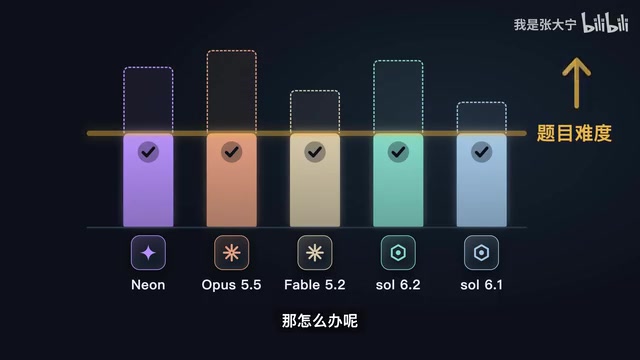
But there's a problem here: everyone being able to get it right proves they're equally strong—but it could also mean the prompts aren't hard enough.
Standard Evaluations Have Stopped Working
This is actually a question I've been pondering lately. About a month ago I noticed that using standard evaluation prompts to test these frontier models makes it hard to see any differences anymore. Even some professional third-party evaluation organizations are facing this problem now—test sets get updated version after version, and then quickly get saturated. Without digging into testing details, it's hard to articulate what a one- or two-point score difference actually represents.
I tried collecting and even rewriting harder coding problems to increase difficulty, with the goal of preventing models from getting full marks, but the results were disappointing. Models at Opus 5.5's level seem to reach a point where, as long as there's a standard answer, they rarely make mistakes. At this point I felt this kind of testing had nearly reached a dead end.
Benchmark contamination and saturation are core dilemmas facing current model evaluation. On one hand, public benchmark questions may have already entered models' training data, meaning the model has effectively "seen the answers"; on the other hand, vendors optimize specifically for popular leaderboards, inflating scores. The result is that leaderboard scores keep approaching perfection and discriminative power drops rapidly. Common countermeasures in the industry include: using private holdout sets, regularly rotating questions, adopting human blind evaluation or arena-style comparisons (such as LMSYS Chatbot Arena's Elo rankings), and—as in this article—switching to real production tasks where standard answers can't be prepared in advance.
Testing with a Real Video Production Task
Then it hit me: why had I always felt Opus 5.5 was irreplaceable? You see, I use several models simultaneously for different tasks—besides Opus, there's Source and DeepThink—because for video work alone, every other model I've tried falls short of Opus 5.5's results. Either the visuals are ugly with too many problems, or there are all sorts of other small issues.
So since other test prompts can't reveal differences, why not just test directly with my own scenario this time?
I got right to it. From a previous video on distillation, I picked a roughly one-minute segment that I'd made with Opus 5.5 and was fairly satisfied with. I put the audio transcript, assets, and tools for that segment into a brand-new project, and had the model go from designing visuals all the way to producing a finished cut, then compared it side by side with the original published version. The results surprised me somewhat: Nia and Opus 5.5, under identical conditions, produced work at basically the same level—neck and neck. I also had Opus 5.5 do it separately in Cursor and in Cloud Code, with similar results, so the framework used doesn't matter much.
Under the same assets, environment, and task requirements, what Source 6.1 and 6.2 produced fell noticeably short—the visuals were overall flat and rather rough, and the original cut was still the best. Though I went back through the records and saw I'd given revision notes for that segment, and the first half had been redone. If I swapped in the first version before revisions, it was actually about the same as what was produced today.
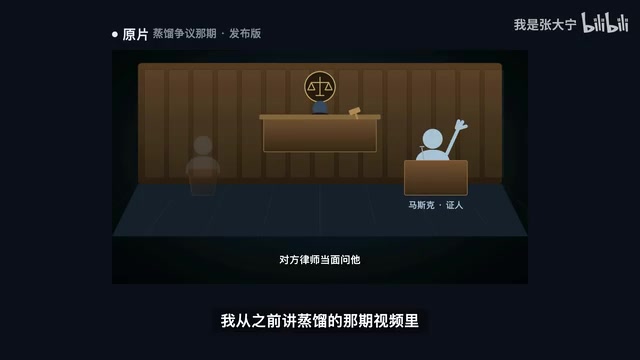
Agent-style coding tools (Cursor, Claude Code, etc., mentioned in the article) differ from ordinary chat interfaces: they can read and write project files, execute commands, run builds and previews, and self-correct errors across multiple iterations. So the same underlying model may perform differently in different tools, often because of differences in context management, tool-calling capabilities, and iteration counts. In the article, having Opus 5.5 do it separately in Cursor and Claude Code and getting similar results shows that on this task, framework differences aren't the deciding factor—the model's aesthetics and intent understanding are the main variables.
The Gap Isn't in Coding, but in Aesthetics and Intent Understanding
After this round, I have a feeling: the gap between these frontier models is no longer reflected in coding ability—it's more about the quality of aesthetic decisions and the understanding and grasp of human intent, and these things become much clearer in real tasks like video production.

Subscription Advice: Monthly Is Fine, Annual Requires Caution
Finally, subscriptions. If you use the official Gemini app or anti-gravity with a Pro plan, you can access Neon. Current usage limits are decent—though still short of Opus 5.5's usage in the Cloud Pro plan, the barrier to access is much lower.
Gemini happens to have a promotion running: existing users can enjoy Black Friday deals early before the 26th, with discounts up to half off; new user promotions start on the 27th, though the specific terms are unclear, so keep an eye out. Overall, my personal advice is that paying monthly is fine, but be cautious with annual plans.
An Open Question
Testing with my own real tasks this time felt much more interesting than grinding through benchmark questions, and it revealed differences more clearly. But everyone's daily work tasks vary enormously, and there are many professional scenarios I don't understand. So if there's a task at work you feel current models still can't do well, or where different models perform noticeably differently, please tell me in the comments—ideally explaining what you'd consider doing it well, so our future tests can be more instructive.
Related articles

Former Inmate Reveals Psychopath Ratio in Prison: About 200 Out of Every 880
Former inmate Larry Lawton shares on Lex Fridman's podcast that about 200 of 880 life-sentence inmates are psychopaths—a 23% ratio. He explores the blurred line between good and evil, social dynamics in prison, and wisdom from dark experiences.

Getting Started with Local AI: A Practical Guide to Inkling, Qwen, and Unsloth
A beginner's guide to local AI, explaining the roles of Inkling, Qwen, and Unsloth in local LLM deployment and fine-tuning, covering model selection, quantized inference, lightweight fine-tuning workflows, and trade-offs between local and cloud solutions.

Open Social Web Alliance Launched: A New Starting Point for Decentralized Social
The Open Social Web Alliance has emerged, sparking heated discussion on Hacker News. This article outlines its positioning, the core disagreements in community discussion, and the real-world challenges facing the open social web in interoperability, content governance, and identity migration.