Gemini 4 Neon Hands-On: Half the Price, Takes on Opus 5.5 — But There's a Secret
Gemini 4 Neon delivers frontier-level capability at half the price and double the speed, but deleted architecture details raise questions.
Google DeepMind launched Gemini 4 Neon, ranking third globally on the Artificial Analysis Intelligence Index at 61, leading Claude Opus 5.5 on the coding agent index and Cursor Bench, outputting ~110 tokens/sec at ~$6.86 per task — less than half its rivals. It shows major gains in UI design, front-end, and 3D generation, and pairs with AntiGravity's Slash Swarm for multi-agent parallel orchestration, ranking second on Agent Arena. But Opus 5.5 still narrowly leads Terminal Bench 4.1 and Frontier Code 2.0. Before launch, Google deleted the description of Neon being built on Gemini 4 Hydrogen, raising community questions that it's essentially a reinforced Flash-tier model priced at mid-tier rates. Overall, Neon is the best value daily driver right now — but not a clean sweep.
Google DeepMind quietly launched Gemini 4 Neon, taking direct aim at Claude Opus 5.5, GPT 6.2 Sol, and even Fable 5.2. On paper, Neon scores 61 on the Artificial Analysis Intelligence Index, beats Opus 5.5 on coding agent benchmarks, and completes complex tasks at half the cost of its rivals. But hours before launch, researchers noticed that Google quietly deleted two key lines from Neon's description — and Opus 5.5 still holds the lead in some coding tests.
Speed and Cost: The Real Numbers Behind the Half-Price Tag
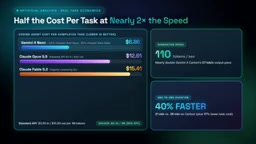
According to Artificial Analysis data, Gemini 4 Neon outputs at roughly 110 tokens per second — nearly double Gemini 4 Carbon's 57 tokens/sec — cutting end-to-end multi-step task time from 36 minutes to 21 minutes, a 40% reduction. On Google Cloud and AI Studio, Neon is priced at $3 per million input tokens and $15 per million output tokens, with cached input enjoying a 95% discount down to $0.15.
More intuitive for developers is the per-task cost. In actual coding agent runs, Neon averages $6.86 per task, compared with $15.61 for Cloud Opus 5.5 and $15.41 for Fable 5.2 in tested comparisons. That means frontier-level output at over 50% lower cost.
Prompt caching is the key to understanding the 95% discount mentioned above. When the request prefix (system prompt, codebase context, long documents) matches a recent request, the server can reuse the already-computed key-value cache, skip the repeated prefill stage, and bill only at the cache-read price. For scenarios like coding agents that repeatedly carry the same repository context, cache hit rates tend to be high, so the actual bill for the advertised $3 per million input tokens may be far lower. Developers should pay attention to the cache's minimum token threshold, time-to-live (TTL), and whether writes incur extra charges — these details determine whether the discount can be realized. Meanwhile, output tokens get no discount, and long replies remain the main cost driver.
Design and Front-End Capabilities: From Criticized to Stunning
If you've ever been disappointed by older Gemini models' messy layouts and ignored instructions in UI design, Neon's performance is a complete turnaround. In the Xbox controller SVG prompt comparison, Neon's geometry is cleaner, gradients are smoother, and structure is more compact — outperforming both GPT 6.2 Sol and Gemini 4 Hydrogen, and even surpassing Opus 5.5 in detailed creativity.
In motion graphics and web front-end, Neon reaches 1700 ELO in visual and presentation quality, 45 points above the previous leader Sonnet 5.5. Tests showcased a smooth pelican-riding-a-bicycle animation, a modern scroll-triggered webpage layout, and a single-prompt generated 3D scene of a rainy Tokyo night. To be honest, though, ultra-high-difficulty builds like the "rainy city" still took 39 minutes, and Fable 5.2 remains slightly richer in detail on the medieval 3D test.
Full Benchmark Table: Wins and Losses
In ultra-high reasoning mode, Gemini 4 Neon ranks third globally on the Artificial Analysis Intelligence Index with 61 points, ahead of Opus 5.5's 59 and GPT 6.2 Sol's 57. It ranks first on the Artificial Analysis Coding Agent Index with 58.6 points, has a VALS index of 70.9%, and leads across legal, tax, finance, and spreadsheet benchmarks. On Cursor Bench it cleanly beats Opus 5.5, 65.4 to 58.1, and scores 37.9 on King Bench 4.
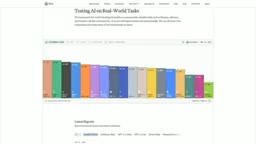
But Opus 5.5 holds a narrow lead on Terminal Bench 4.1, 65.8% to 65.2%, and maintains its edge on Frontier Code 2.0, 47.3 to 46.2. Fable 5.2 and GPT 6.2 also have slight advantages on maximum-ceiling tasks, and some developers note that Neon may still trust outdated API syntax.
The Artificial Analysis Intelligence Index cited repeatedly in this article is a composite benchmark maintained by the independent evaluation firm Artificial Analysis. It converts scores from dozens of subject and reasoning subtests — MMLU-Pro, GPQA, LiveCodeBench, and others — into a single score using item response theory (IRT), making cross-model comparison easy. The index also reports output speed, first-token latency, and price per million tokens, so it's often used as the vertical axis of "intelligence vs. cost" scatter plots. Note that the weights of such aggregate indices are set by the evaluator, are sensitive to tasks like coding and math, and have limited coverage of long-context or tool-calling abilities; scores are also re-measured after model version updates, so confirm the snapshot date when comparing across periods. The 61-to-59 gap (about 3%) in this article falls within the index's margin of error and shouldn't be interpreted as an absolute lead.
The Mysterious Pre-Launch Edit: What Architecture Is Neon, Really?
Before launch, tracker Lentils discovered that Google's original model documentation stated Neon was built on Gemini 4 Hydrogen using reinforcement learning, offering Flash-level speed and cost. But on the eve of release, Google quietly removed both mentions. Reddit, OpenRouter, and developer communities are debating: Is Neon essentially a heavily reinforced Flash-tier architecture being sold at mid-tier $3/$15 pricing? Especially considering Carbon's temporary discount expires on November 30.
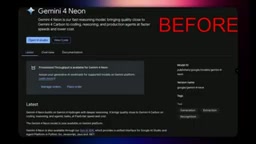
Whatever the underlying architecture, mastering Neon's tuning tricks can save real money. It offers a unified 1M-token context window, 64,000 synchronous output (up to 1M with background decoding), and four thinking modes: low, medium, high (default), and ultra-high. Keep it at medium-low for everyday editing, and use ultra-high only for complex architecture tasks.
Understanding this controversy requires distinguishing "model architecture" from "model tier." Gemini's Flash series is positioned as high-throughput models with low latency and low cost, while the Pro/Ultra series targets high-reasoning-budget scenarios; different models in the same generation typically share a pretrained base and are then refined through reinforcement learning and distillation at different scales. "Built on Hydrogen" means Neon may reuse a Flash-tier base and push capabilities close to flagship level through RLHF, rejection sampling, and inference-time compute scaling, rather than training a new architecture from scratch. Vendors commonly remove such statements from model cards to avoid revealing parameter scale, training recipes, or substitutability with models already on sale, lest they disrupt the pricing structure of products like Carbon.
Paired with AntiGravity: From Good Model to Workflow Weapon
When Neon is no longer an isolated chatbot but combined with agent frameworks like Google AntiGravity, its power multiplies. Inside AntiGravity, Neon can unlock Slash Swarm, acting as a sharp orchestrator that splits large repository tasks into parallel slices and dispatches fast Hydrogen workers to build simultaneously. This explains why Neon ranks second on the global Agent Arena with 1336 points, ranks second in mid-task user steerability, and sets Google's lowest hallucination rate to date. On workflow automation benchmarks, it ranks first on the Zapier automation test (56.3%), first on Vending Bench 2, and beats GPT 6.2 solo on Agent's Last Exam.
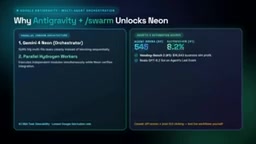
A practical reminder: API automation scores don't automatically prove pixel-level desktop clicking ability. Before trusting it unsupervised, test your own real browser workflows.
AntiGravity is Google's IDE and runtime environment for "agent-first" development. Its core philosophy is to make models no longer completion tools but orchestrators that can plan, decompose, and dispatch subtasks. Slash Swarm is the multi-agent mode built on this philosophy: the main model slices large repository tasks into parallelizable chunks, assigns them to lighter worker models for concurrent execution, and then aggregates the results. This "orchestrator-worker" layering can significantly lower per-task costs, since heavy exploration and building are handled by cheap models while the expensive model only makes decisions. The trade-off is added scheduling overhead and risk to result consistency; errors amplify at each level in long-chain tasks, so human checkpoints are needed mid-way.
Final Verdict: Worth Switching?
If you want a daily driver for coding agents, clean front-end UI, massive 1M-token documents, and fast autonomous loops without burning a flagship budget, Gemini 4 Neon may be the smartest value pick in AI right now. Keep Claude Opus 5.5 or Fable 5.2 for scenarios demanding absolute maximum terminal accuracy or ultra-refined architectural taste, and switch to GPT 6.2 Sol when raw token cost is the tightest constraint.
Neon doesn't dominate across the board, but delivering frontier-level capability at half the price is enough for most development teams to reconsider their subscription strategy.
Related articles
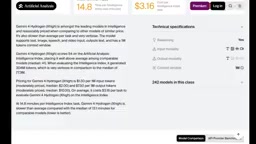
Qwen 4 Max vs Gemini 4 Hydrogen: A Hands-On Test of Who's Better at Game Development
Hands-on comparison of Qwen 4 Max Preview, Gemini 4 Hydrogen, and Gemini 4 Argon at game development: from Minecraft clones to 3D shooters and SVG interactivity—the highest-scoring model isn't always the best.
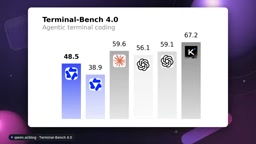
Qwen 4 Max Released: Low Pricing, Mixed Benchmark Results; Google Gemini New Models Leaked
Qwen 4 Max launches: 2.4T-parameter MoE, 1M-token context, sharply cut API prices but lagging on agentic tasks vs Opus. Meanwhile Google's Gemini 4 Oxygen and Krypton leak, and GPT-6.2 Sol may be in canary.
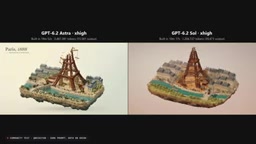
GPT-6.2 Astra Released: Rebuilding Paris, Million-Scale Game Generation, and NVIDIA's Robot Revolution
Weekly AI roundup: OpenAI launches GPT-6.2 Astra and Sol, Google tests Gemini 4 Oxygen and Neon, Alibaba Qwen4Max and Tencent HY4 Flash generate full games at low cost, NVIDIA Groot 2 lets robots learn from demos, and California sues OpenAI.