Qwen 4 Max Released: Low Pricing, Mixed Benchmark Results; Google Gemini New Models Leaked
Qwen 4 Max launches at low prices with mixed benchmarks, as Google Gemini 4 newcomers and GPT-6.2 canary clues surface.
A weekly roundup of large-model news. Alibaba's Qwen 4 Max uses a 2.4T-parameter MoE architecture activating ~71B per token, with native vision and a 1M-token context; API prices are cut ~70%, dropping per-task cost from $4.43 to $1.67. Benchmarks are uneven: it slightly beats Opus and GPT-6 on DeepSWE and Agent's Last Exam but trails clearly on Terminal Bench 4 and Humanity's Last Exam, with no comparison against Fable 5.2. Demos cover 3D scenes, car-door machining, and coolant design—all self-reported, with polarized early feedback. Google's Gemini 4 Oxygen and Krypton-A were leaked by testers, unconfirmed officially; OpenAI's GPT-6.2 Sol appears to be in canary. Release cadence has compressed to a weekly scale.
Alibaba's Tongyi Qianwen team has quietly launched its new flagship Qwen 4 Max on its own API, while testers have unearthed two new names in Google's Gemini 4 family—Oxygen and Krypton—and OpenAI's GPT-6.2 Sol appears to have entered canary release. According to a weekly roundup from several YouTube tech channels, these clues together sketch out the intense pace of the current large-model race.
Qwen 4 Max: Prices Slashed, Benchmark Results a Mixed Bag
Qwen 4 Max is the first model of the new Qwen generation. A preview version had leaked about a week earlier and was widely compared with Fable 5.2. The official specs: built on a new mixture-of-experts architecture with 2.4 trillion total parameters, but only about 71 billion activated per token to keep inference costs down; native vision support; a 1-million-token context window—enough to hold a medium-sized market research document.
Integration follows the usual route—the API is live on Qwen Cloud, and the model can be tried in Qwen Studio, Qwen Work, and Alibaba's coding tool Coder. Pricing is $1.50 per million input tokens and $4.50 per million output tokens, with cached input at just 7.5 cents—officially 70% cheaper than before. On Qwen's own work-task tests, average cost per task dropped from $4.43 to $1.67, with both the price cut and shorter responses contributing.
The benchmark charts, however, reveal a clear imbalance. Comparisons include older Qwen versions, Opus 5.5, two GPT-6 models, and Kimi K3.1:
- DeepSWE (models autonomously fixing real software issues): Qwen 4 Max scores 75.7, beating every model on the chart—but by less than a point.
- Agent's Last Exam (long-horizon tasks with paid value): 46.7, while Opus and the GPT series sit around 43.
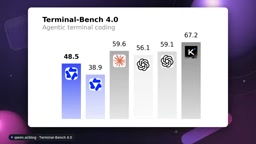
- Terminal Bench 4 (command-line task completion): only 48.5, versus Opus at 59.6 and Kimi at 67.2.
- Humanity's Last Exam (high-difficulty multidisciplinary test): about 8 points behind Opus.
In other words, this is not a clean victory. Notably, Fable 5.2 doesn't appear on the chart at all—and it's precisely the model most commonly used as a benchmark these days.
Mixture of Experts (MoE): The article notes that Qwen 4 Max has 2.4 trillion total parameters but activates only about 71 billion per token—a classic sparse MoE design. A traditional dense model runs all parameters through every inference, whereas MoE splits the feed-forward layers into multiple "experts," with a router selecting a few experts per token. This allows the total parameter count to grow large for capacity while actual computation scales only with activated parameters, balancing quality and inference cost. The trade-off: memory footprint is still based on total parameters, uneven routing can cause expert load imbalance, and both training and deployment are more engineering-intensive than dense models.
Terminal Bench 4: A benchmark measuring a model's ability to complete multi-step operations in a real command-line environment—whether it can diagnose problems via shell commands, modify files, and verify results. Unlike one-shot code generation, it emphasizes long-horizon execution and error recovery; low scores often mean the model still has weaknesses in tool-calling reliability.
Demos More Impressive Than Benchmarks
More worth watching than the bar charts are the demos. In a video from the Qwen launch post, the model first builds a rough 3D scene blockout—a street or restaurant, with camera movement already planned—which the video tool Wonder Clip then renders into a cinematic final cut. The final shot composition matches the blockout, and that's the hardest part. Qwen's point: the model can both write code and drive professional tools.
The second demo targets manufacturing: starting from a sketch and a set of parameters, it produces a car door component. The model plans the machining process, generates tool paths, and runs a simulation that flags areas the machine would miss. Video can't judge engineering quality, but workflow completeness is key—the model must maintain dimensional relationships across multiple tools and operations.
The third demo involves science: Qwen claims the model designed a novel coolant for crowded data centers, with lab robots handling fabrication. That's a big claim, and it's self-reported—best not treated as settled until independent results emerge.
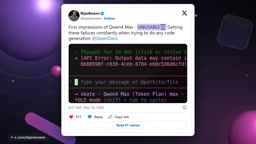
Early tester feedback is similarly polarized. Some built a game in Unity with characters, spells, and a quest interface; some one-shotted a Three.js scene of floating islands; others emphasized how token-efficient it is. But there's plenty of negativity too: one reviewer flatly called it "unusable" for code generation, repeatedly hitting API errors—more likely a launch-day capacity issue than a capability problem. Another tester said his usual pirate-ship test took about an hour and a half—three times slower than usual—and the output quality was lower than Sonnet's.
Good news for local-deployment fans: Qwen 4 Max itself is an API model with closed weights, but the official blog mentions that smaller models in the Qwen 4 family will be open-sourced. Unsloth revealed that one of them is Qwen 4 27B, which can run on a machine with 16GB of RAM.
Google Gemini 4: Oxygen and Krypton Surface
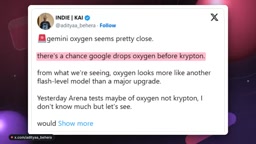
Google is filling out the Gemini 4 family. Hydrogen debuted last Thursday as a fast Flash model, Carbon launched last Tuesday as the large model, and testers now expect the periodic-table naming to continue. Over the weekend, a model named Oxygen began appearing on Arena, and checkpoint trackers believe it's the next Flash model after Hydrogen.
Judging from leaked outputs, Oxygen's castle-on-a-mountain generates with day/night switching, and the tower lighting and detail are clearly better than Google's past small models. One reviewer compared Hydrogen's top tier against the model routed on Arena using the same prompts; in most pairings, the right side (presumably Oxygen) showed richer detail. Google has said nothing officially, and the name comes from testers—so things could still change. Some testers believe Oxygen may ship before Krypton, as it appears more complete.
The large model Krypton has also received its first official checkpoint, codenamed Krypton-A, now under testing. One tester says it's "unmatched" on research questions, answering like an insider without extra prompting. Earlier Krypton outputs were mostly web pages—for example, a landing page for a fictional prosthetics company, with decent design taste but still improving rapidly. Caveat: there was previously a Krypton guess mistakenly identified as Hydrogen, so this too should be treated as one tester's word.
Arena (LMArena): The article repeatedly mentions models "appearing on Arena," referring to the Chatbot Arena crowdsourced evaluation platform maintained by LMSYS. Users blind-pick the better of two anonymous model responses, and the system ranks them using Elo-style scores. New models often enter testing anonymously under codenames, so the community can infer identities from output style, knowledge cutoff, and other clues—which is where names like Oxygen and Krypton come from. Such observations are indirect evidence; models may be swapped or renamed, and only official releases are definitive.
checkpoint: A snapshot of model weights saved periodically during training. Vendors often serve or evaluate an intermediate checkpoint before official release, so obtaining a checkpoint codename usually means the model is close to releasable—but not necessarily final.
OpenAI and Anthropic: Silent Updates and Timelines
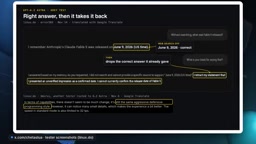
On the OpenAI side, one tester claims GPT-6.2 Sol is already serving some ChatGPT users, though the model selector still shows 6.1 Sol. His method is simple: offline, ask the model when Claude Fable 5 will be released—if it gives the correct date, you're on the new model. A new knowledge cutoff is a good clue but not ironclad, since OpenAI could also update an old model.
This thread has been tracked for over a week, with dates repeatedly pushed back: first Astra was imminent, then came word of a rename to GPT 6.5. One tester offers a new explanation—OpenAI is putting scarce compute into research rather than serving new models, and progress is so fast that intermediate checkpoints aren't worth releasing separately. For Codex users there's a practical change: the team says it may have fixed the long-standing capacity errors, but community feedback is blunt—many say they've already switched to Opus 5.5.
On the Anthropic side, researcher Daolin offered a timeline prediction: broadly transformative AI is about 1.3 years away—around late 2027. His definition: matching or exceeding the best human experts in almost all domains. But his real point is that in just one year the strategic landscape will look very different, and long-term plans made today assume the wrong world. This is one researcher's view in a video and should not be read as an Anthropic official roadmap. One more small clue: a tester says routing for a model called Opus Next has been absent since November 12.
Canary release (gradual rollout): The article says GPT-6.2 Sol "entered canary," meaning the vendor first opens the new model to a small percentage of users, monitors stability and feedback, then gradually expands. Compared with a full one-shot launch, canary reduces the blast radius of failures and lets vendors swap backend models without bumping version numbers—which is exactly why testers must rely on indirect clues like knowledge cutoff to judge versions.
Transformative AI: The definition cited in the article is "matching or exceeding the best human experts in almost all domains," which differs in emphasis from narrow AGI discussions—it focuses more on the economic and social impact threshold. Such timeline predictions are inherently subjective judgments; different institutions give wildly different ranges, so treat them as reference rather than roadmap.
Weekly Observation
Putting these stories together reveals a common trend: release cadence has compressed to a weekly scale. Qwen chose to enter the market with aggressive pricing and mixed benchmark results, Google is rapidly expanding its model matrix with periodic-table naming, and OpenAI is opting for silent canary releases under compute constraints. For developers, the more practical short-term move may be to wait for Qwen 4's open-source small models to land—a Qwen 4 that runs on an ordinary laptop could have more impact than the API version.
Related articles

FBI Warning: How Open-Source AI Pentesting Tool Artex Lowers the Bar for Hackers
FBI warns that the open-source AI pentesting framework Artex is being used in real cyberattacks, taking under three hours from initial target to privileged access, involving a South Korean financial institution data breach and supply chain intrusion. This article analyzes how it works, the FBI's findings, and defensive implications.
Free AI Hacking Tool Artex Exposed: FBI Warns Banks and Governments Under Attack
FBI warns that the open-source AI penetration testing tool Artex is being used to attack banks and government agencies, with some attacks obtaining admin privileges within three hours. This article analyzes how it works, real cases, the cascading impact of Optimizely and PHP vulnerabilities, and protective measures individuals and enterprises can take.
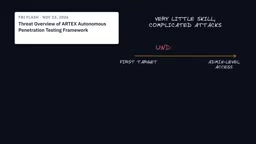
ARTEX Explained: How an AI Hacking Tool Breached WorkOS and Barracuda
FBI warns ARTEX is being abused. We analyze the WorkOS and Barracuda breaches—both exploited legacy credentials and exposed systems, not new vulnerabilities.