Gemini 4 Neon Hands-On: How a Mid-Tier Model Outperforms Flagships

Google's mid-tier Gemini 4 Neon beats flagships on multiple benchmarks with strong agentic skills and low cost, but 3D generation and writing style fall short.
Google released the mid-tier Gemini 4 Neon, which in hands-on testing ranks first on multiple benchmarks including GraphWox, LiveBench, and VendingBench, surpassing Claude Opus and GPT 6.2 flagships on some metrics—all accessible via a Pro subscription at significantly lower cost. In agentic tests, synchronized dual-browser piano performance, video transition reverse engineering, and Blender architectural reconstruction stood out, the last taking only 21 minutes versus over an hour for frontier models; however, generating a 3D game character from scratch was a clear weak spot, scoring only 4.5/10 after four revision rounds. In the chat interface it failed the find-the-frog test, and deep research lacked citations and was verbose. The Gemini 4 family has the lowest hallucination rate but slightly lower factual accuracy. Overall, it delivers a near-flagship agentic experience at a mid-tier price.
Title
Gemini 4 Neon Hands-On: How a Mid-Tier Model Outperforms Flagships
Meta Description
Gemini 4 Neon hands-on: this Google mid-tier model beats Claude Opus and GPT 6.2 on agentic coding and knowledge-work benchmarks at lower cost with the lowest hallucination rate—but 3D character generation and verbose output remain weak spots.
Article Content
Google has clearly picked up the pace on model releases. Last week it launched two models, Carbon and Hydrogen; this week it dropped Gemini 4 Neon, positioned as a mid-tier offering. According to hands-on testing by a YouTube review channel, this "middle-tier" model outperforms the Claude Opus and GPT 6.2 flagship series on multiple benchmarks while maintaining lower cost and higher efficiency.
1. Positioning and Specs: Mid-Tier in Name, Flagship in Practice
In Google's product lineup, Gemini 4 Neon sits between Carbon and Hydrogen and is not one of Google's Frontier models. But according to the channel's testing, it actually beats the best Opus and GPT 6.2 on agentic coding, knowledge work, and scientific tasks.
The barrier to entry is also relatively friendly: Neon is available to Pro and Ultra subscribers, meaning the cheapest Pro plan is enough to use it, whereas Carbon requires an Ultra subscription (over $100/month). In addition, Neon can be accessed via API and Google AI Studio (paid plans).
Under the reviewer's Ultra plan, running all the tests in the video consumed only about 11% of the weekly usage quota—quite an impressive level of efficiency.

2. Agentic Testing: From Dual Pianos to Cell Animation
The reviewer primarily tested through Google's own agent framework, anti-gravity, on the grounds that frontier models perform best on complex tasks requiring manipulation of multiple files and folders when paired with an agent framework.
Computer Operation: Dual-Browser Piano Duel
The first task was to have Neon open two separate browsers, each loading an online piano, compose a roughly one-minute Chopin-style fast piano duet, and perform it in real-time synchronization. Neon completed the task after about 10 minutes of "thinking," and the reviewer called the result "unbelievable," clearly better than GPT 6.2 Astra's performance.
Video Reverse Engineering
A video containing fast zooms, shakes, Polaroid transitions, chromatic aberration glitches, cross-zooms, and other effects was uploaded, with Neon asked to reverse-engineer and reproduce these transitions. After 17 minutes, Neon had essentially perfectly reproduced all the effects, with the only minor flaw being that the ending transition used a radial zoom blur, slightly different from the original.
Educational Animation Generation
Neon was asked to generate, without external animation tools, an immersive educational animation from scratch that flies through an animal cell and explains each organelle one by one. Neon worked for 24 minutes (notably faster than Opus and GPT 6.2), and the first version was fairly basic, improving after additional detail requests. However, the reviewer noted that some shapes still looked like basic geometric primitives with overlapping edges, and overall it was on par with GPT 6.2 Astra.

Music Creation and DAW Operation
Neon was asked to create a roughly three-minute upbeat futuristic song, with English female vocals and a theme of accelerating toward the singularity, with vocals generated in ACE Studio and accompaniment produced in a DAW using VST plugins and additional samples, requiring professional mixing and mastering. It produced a first version in 15 minutes, then worked for several more minutes after feedback to adjust the vocal-accompaniment fit and boost the chorus volume. The final product included lead vocals, harmonies, multiple synthesizers, Rhodes piano, percussion, vocal chops, and more. The reviewer felt the vocals were too loud and the pitch too high, but overall it was better than GPT 6.2 Astra.
3D Game Development: The Hardest Level
This was the most difficult task in the review: building a 3D game from scratch in Unreal Engine, with character models, rigging, and animations all self-made. The female protagonist needed to realistically match a reference image (including hair and clothing dynamics), the opponent was a ninja, both needed to run, jump, dodge, and swing swords, the scene was the interior of an ancient Chinese palace, generated in Blender and rendered in Unreal, with a scoring loop wired in—below 8.5 points meant up to four rounds of revision.
Neon worked for about 40 minutes, and after four rounds the scoring agent gave it only 4.5 out of 10. Character joints were misaligned, the sword grip was wrong, both animation and rigging had obvious problems, and running the game threw errors. The reviewer acknowledged the prompt was extremely difficult but felt GPT 6.2 Astra did better on this one.
Blender Architectural Reconstruction: A Pleasant Surprise
Given a set of Airbnb listing photos, Neon was asked to infer the spatial layout and reconstruct the entire building and interior in Blender, then program a camera path for a virtual tour. Neon completed it in just 21 minutes, whereas frontier models like GPT and Opus took over an hour on similar tasks. The first version was fairly basic, but after additional detail requests, details like the sofa, pillows, dining table, bedroom, and ceiling fixtures were all well reproduced, and the spatial layout (including the exterior) was correct. The reviewer's verdict: "Pretty good for a mid-tier model."
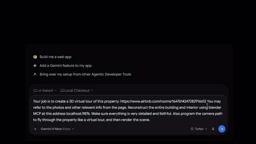
anti-gravity is an agent framework released by Google, whose core design lets large models autonomously call tools and operate the file system and applications within a controlled sandbox environment, thereby completing tasks that require multi-step planning and execution. Unlike ordinary chat interfaces, an agent framework allows the model to decompose goals, loop through an "observe—act—feedback" process, and self-correct when errors occur. The reviewer chose anti-gravity rather than a general chat interface to test Neon precisely because such frameworks can more fully unlock frontier models' potential on complex multi-file, multi-folder tasks, and more closely match the scenarios in which developers actually build automated workflows.
3. Shortcomings and Highlights in the Chat Interface
In an ordinary chat interface, Neon's performance was a mix of highs and lows.
Find-the-frog test: An image with a hidden frog was uploaded, with no hint that an animal was present—only the question "Is there an animal in the image? If so, identify and circle it." Neon failed to find the frog. The reviewer also complained that the chat interface doesn't show thinking logs.
Brain tumor identification: Six brain scan images containing early-stage brain tumors were uploaded, with Neon asked to identify the tumor type in each. Neon got 1.5 out of 6 correct (one counted as half a point), while GPT 6.2 Astra got all of them wrong and the strongest model, Fable 5.2, got only two right.
Deep research: Neon was asked to describe the molecular drivers of a certain type of leukemia, the evolution of targeted therapies, and compare resistance mechanisms and survival outcomes. Neon produced detailed drug comparison tables and flowcharts but did not include citations, and the writing was verbose—the reviewer explicitly disliked the writing style of Gemini models, calling it "too wordy and not punchy enough."
Creative ideation: Neon was asked to propose three new solutions that are scalable, cost-competitive, and capable of handling mixed contaminated plastic waste. Neon gave three solutions (reactive vitrification, supercritical water refining, tandem bio-funnel cascades) with flowcharts, but the jargon was piled on heavily, and the reviewer said flatly, "I have absolutely no idea what this means."
4. Benchmark Data: Multiple Firsts, Impressive Cost
The benchmark results cited in the review are quite convincing:
- GraphWox long-context benchmark: Neon scored about 95.2%, versus 67 for Opus and 80 for GPT 6.2—a significant gap.
- Artificial Analysis index: Neon surpassed Gemini 4 Carbon (even though Carbon is the larger model), as well as the best Opus and GPT 6.2 Sol.
- VendingBench (virtual vending machine business simulation): Neon ranked first, ahead of Carbon and other models.
- Val's Index (knowledge work in finance, programming, law, etc.): Neon ranked second, extremely close to Fable 5.2—essentially tied for first—at far lower cost than competitors.
- KernelBench (low-level GPU code): Neon ranked second.
- LiveBench (Abacus AI): Neon ranked first by a large margin.
- MazeBench (maze navigation): Neon ranked fifth, ahead of Carbon but behind Claude Fable and GPT 6.2.
In terms of speed, Neon's per-task time isn't as fast as GPT 6.2 Astra but is faster than Opus and Claude Fable; the reviewer's subjective experience was that it's comparable to GPT 6.2. On cost, Neon is much cheaper than the Claude series, but the Extra High version is more expensive than GPT 6.2 Astra—the reviewer noted that GPT 6.2 was always positioned as extreme cost-effectiveness rather than maximum intelligence.
One notable difference is the hallucination rate: Neon's factual accuracy (omniscience accuracy) is slightly lower than the best Claude and GPT models, but all three models in the Gemini 4 family have the lowest hallucination rates—that is, when they don't know the answer they tend to honestly say they don't know rather than making things up. Claude and GPT models are notably more inclined to "make things up" in this respect.
The "hallucination rate" and "omniscience accuracy" that appear repeatedly in this article are two related but distinct metrics. Hallucination rate measures a model's tendency to fabricate information when it doesn't know the correct answer; the lower the value, the more the model tends to acknowledge uncertainty. Factual accuracy measures the proportion of questions with known answers that the model gets right. A model can have a very low hallucination rate (doesn't fabricate) but only average factual accuracy (doesn't know enough); conversely, it can be very knowledgeable yet prone to forcing an answer when uncertain. The Gemini 4 family performs best on hallucination rate, meaning its "know what you know, and know what you don't know" calibration is more reliable, but on pure knowledge coverage it still lags slightly behind the strongest Claude and GPT models.
The GraphWox long-context benchmark specifically tests a model's ability to locate, integrate, and reason over information in extremely long inputs (hundreds of thousands to over a million tokens)—for example, finding scattered key facts across long documents or multi-turn conversations and performing cross-paragraph reasoning. Long-context capability is especially critical for agentic tasks, because agents need to continuously retain historical operations, file contents, and feedback while executing multi-step tasks. Neon's roughly 95.2% on this benchmark, far ahead of Opus's 67 and GPT 6.2's 80, shows its advantage in "remembering and finding" during long-horizon tasks, which also explains its stable performance in multi-step agentic testing.
5. Conclusion: A Fast, Frugal All-Rounder
Overall, Gemini 4 Neon, positioned as mid-tier, delivers results close to—and in some cases surpassing—flagships. It performs excellently on agentic coding, browser operation, and architectural reconstruction, leads on many benchmarks, and costs significantly less than the Claude camp; its weaknesses are concentrated in 3D character generation, citation practices in deep research, and an overly verbose output style.
For developers, the most practical signal is this: the cheapest Pro subscription is enough to access this model, and its agentic capabilities are sufficient to support fairly complex multi-step tasks. Google's current release cadence is rapidly pushing "flagship-grade experience" down to mid-tier prices.
One-line Summary
Google's mid-tier Gemini 4 Neon beats flagships on multiple benchmarks with strong agentic skills and low cost, but 3D generation and writing style remain weak spots.
Paragraph Summary
Google released the mid-tier Gemini 4 Neon, which in hands-on testing ranks first on multiple benchmarks including GraphWox, LiveBench, and VendingBench, surpassing Claude Opus and GPT 6.2 flagships on some metrics—all accessible via a Pro subscription at significantly lower cost. In agentic testing, synchronized dual-browser piano performance, video transition reverse engineering, and Blender architectural reconstruction stood out, with the last taking only 21 minutes versus over an hour for frontier models; however, generating a 3D game character from scratch was a clear weak spot, scoring only 4.5/10 after four revision rounds. In the chat interface it failed the find-the-frog test, and deep research lacked citations and was verbose. The Gemini 4 family has the lowest hallucination rate but slightly lower factual accuracy. Overall, it delivers a near-flagship agentic experience at a mid-tier price.
Related articles

Jingle Jam 2026 Registration Opens: Lewis Uses Old Footage to Rally Volunteers for Fundraising
Jingle Jam 2026 fundraising registration is open. Lewis uses old footage edited into a new video, calling on viewers to create fundraising pages at jingle jam.tiltify.com to support eight charities. The event takes place in the first two weeks of December.
Gemini 4 Neon Hands-On Test: Can It Replace Claude Opus 5.5?
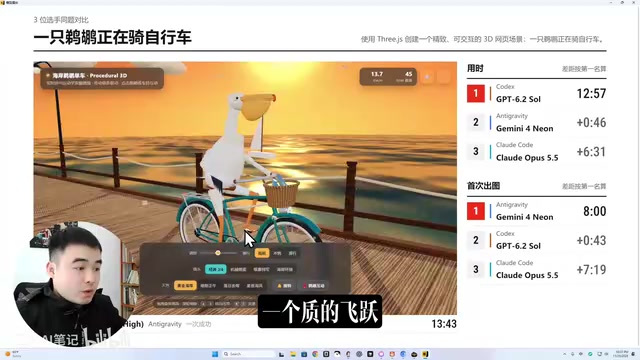
A Bilibili creator tests Gemini 4 Neon, Claude Opus 5.5, and GPT 6.2 across three coding Agent challenges—pelican animation, 3D racing, and code-generated video—to see if Gemini can replace Opus.
FBI-Warned Artex: How an AI Attack Framework With No In-House Model Pries Open Enterprise Doors
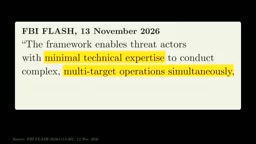
The FBI-warned open-source AI attack framework Artex has no model of its own—it plugs into Claude, GPT, and other external LLMs to drive an agent loop, turning ordinary tools like Nmap into an automated attack pipeline. This article examines three real cases—South Korean finance, ConnectWise, and Barracuda—analyzes the three drivers of speed, cost, and noise, and outlines defenses such as exposure inventory and short-lived credentials.