Gemini 4 Neon In-Depth Review: Better Than the Flagship but Cheaper?

Gemini 4 Neon, a mid-tier model, slightly out-scores the flagship and shines on long-context and creative tasks, but its long thinking time drags down end-to-end efficiency.
Gemini 4 Neon is the fourth model in Google's Gemini 4 family, with a 1M token multimodal context and a quality score of 61, slightly above the flagship Carbon's 60. It performs solidly on creative tasks like SVG animation, spreadsheet pixel art, and Three.js physics simulation, leads Opus by a wide margin on GraphWalks (95.2% vs. 66.8%), and ranks first on the coding agent index. Per-task cost is 32% lower than Carbon, though it outputs 15% more tokens, so the savings come mainly from unit price. Speed cuts both ways: tokens per second are about double Carbon's, but more thinking tokens and high first-token latency mean end-to-end time isn't necessarily better than Opus or Soul. Google released four overlapping models in quick succession, with Neon effectively replacing Argon, so users should weigh options by scenario.
Google has released several Gemini 4 series models in quick succession, and the latest arrival, Gemini 4 Neon, is positioned as a mid-tier option—yet it outperforms its own flagship in multiple tests. It emphasizes speed and low cost, but does the real-world experience live up to the marketing? Based on an in-depth hands-on review from a Bilibili creator, combined with data from multiple sources, this article breaks down Neon's actual performance.
Model Positioning and Core Capabilities
Gemini 4 Neon is the fourth member of the Gemini 4 family, derived from the Carbon model. It supports a 1 million token context window, can handle text, images, audio, and video, and has a knowledge cutoff of March this year. It offers four thinking levels—Low, Medium, High, and Extra High—with High enabled by default. Regular users need a Google AI Pro or Ultra subscription and can access it by selecting "Deeper Analysis" from the model menu in the Gemini App; developers can call the API through AI Studio, and paid Pro and Ultra users can also use it in Anti-Gravity.
Interestingly, Google's official comparison chart shows Neon scoring 61 on quality, while the flagship Carbon scores 60—the mid-tier model actually edges out the flagship. That positioning is somewhat unexpected.
Tokens and Context Window: A token is the basic unit of text a model processes, roughly equivalent to a word fragment. A 1 million token context window means the model can "remember" roughly 700,000 to 800,000 English words, or a comparable amount of multimodal content, in a single conversation—enough to hold an entire book, a long video, or a large codebase. Longer context lets the model reason across paragraphs within the material, but it also significantly increases compute and memory overhead, which is why long-context capability is often evaluated alongside inference cost and information retention accuracy.
Hands-On Cases: Creativity and Execution on Display
The creator tested Neon's practical abilities across several tasks. The first was generating an SVG animation of a flamingo riding a unicycle, with requirements that the wheel spin, the feet pedal, the background move, and the flamingo stay balanced. Neon completed it in one shot in 9 minutes, with a polished look and rounded edges that made it hard to tell it was pure SVG. When sea breeze interference was added, the flamingo swayed more dramatically and even flapped its wings to keep balance—a solid grasp of physics.
The second variant asked for an SVG animation of Qin Shi Huang touring the six states on a bicycle. Neon took 10 minutes, presenting the scenes of Xianyang, Han, Zhao, Wei, Chu, Yan, and Qi in sequence, with the dragon robe and flags swaying in the wind and bamboo slips and the Imperial Seal in the basket. The details were thoughtful: upon reaching Yan, the sky darkened and the headlight turned on automatically; the pedal chain and wheels moved in sync; and the background used a seamless parallax scroll connecting landmarks across the states.
The third task was to replicate the Gemini 4 Neon launch image pixel-by-pixel using cells in Google Sheets, with images forbidden—only formulas and cell fill colors allowed. Neon took about 10 minutes, requiring only the installation of one add-on and authorization, then completed everything automatically. The main sheet had 240 columns and 99 rows—23,760 cells in total—each filled with a single color, producing an image essentially identical to the original. It also proactively created three additional sheets: one using formulas to calculate brightness, gamma, and other parameters in real time; one summarizing a 16-color palette analysis; and one storing brightness data. No images were inserted and no Apps Script was used throughout—strict adherence to the requirements.
The fourth task was 3D plus physics simulation: using Three.js to create a scene of several hundred balloons lifting a small wooden cabin floating over a grassland valley, where pressing the spacebar cuts the balloons to see whether the house sinks or tilts. The task was completed in three stages over about ten-plus minutes in total. The visuals were attractive and the interaction worked: after cutting balloons, the house visibly sank and swayed, sinking more the more balloons were cut, and floating back up when balloons were replenished, with no misalignment during 360-degree rotation. There were only two minor flaws: the clouds' shape and proportions looked off, and when balloons were replenished the house floated up first—physically, the balloons should rise first and then lift the house.
Benchmarks and Testing: Strengths and Concerns Side by Side
On the independent evaluator Artificial Analysis's Intelligence Index, Neon's top tier scored 61, ranking third overall—behind only OpenAI's GPT 6.2 Astra and Anthropic's Claude Fable 5.2. On the coding agent index, Neon ranked first.
Google's own comparison table pits Neon against Claude Opus 5.5 and GPT 6.2 Sol, with Neon winning 16 of 19 tests. Note, however, that the latest Astra and Fable 5.2 are not included. The three losses were the terminal task Terminal Bench, the coding task Frontier Code (both to Opus), and professional chart reading (to Sol), with gaps of under two percentage points in each.
In the long-context GraphWalks test, where Neon had to trace relationship-network answers layer by layer through 250,000 to 1 million tokens of material, it scored 95.2%, versus just 66.8% for Opus—showing outstanding information retention over long materials. In the coding test SWE Sweep, Neon scored 39% versus Opus's 10.1%, an apparent gap of nearly 4x; but when tested with a common toolset, Neon scored 12.8%, close to Sol's 11.6%. This suggests the 39% result benefits from Google's own Anti-Gravity tooling rather than reflecting pure model capability.
On the Arena agent leaderboard, based on more than 4,200 real-world usage ratings, Neon placed second with 1,336 points, behind only Fable 5.2's 1,453 and just 1 point ahead of Opus 5.5. But Neon's median cost per completed task was $2.82—more than half cheaper than Opus.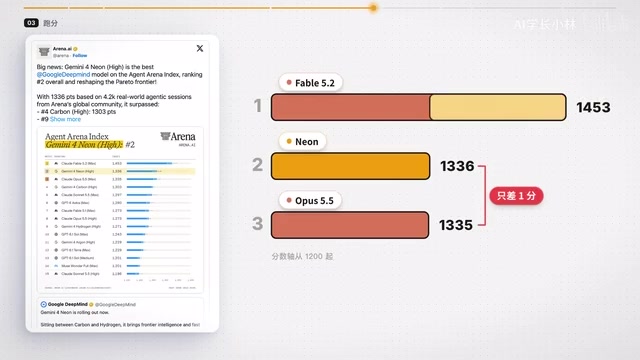
SWE-bench and the Agentic Index: SWE-bench-style benchmarks have models locate and fix issues in real code repositories, testing the closed loop of "read code—change code—run tests" rather than single-turn Q&A. The Agentic Index places models in multi-step tool-calling environments to measure planning, execution, and error correction. Both emphasize coordination between the model and external tools (terminal, editor, browser), which is why the same model can score very differently across toolchains—precisely why Neon scores far higher with its own Anti-Gravity tooling than with generic tools in this article.
Cost and Speed: The Gap Between Marketing and Reality
On price, Neon costs $3 per million input tokens and $15 per million output tokens. Google emphasizes per-task calculations, claiming that in default High mode the cost to complete the same task is 32% lower than Carbon. Artificial Analysis's data is similar: $6.44 per task at the top tier versus $7.76 for Carbon, about 17% cheaper. But the firm also found that Neon outputs 15% more tokens per task than Carbon, so the savings come mainly from lower unit prices rather than token efficiency.
Speed presents two sides. Compared with Carbon, Neon outputs about 110 tokens per second versus just 57 for Carbon—nearly twice as fast—with an average task time of 21 minutes versus 36 for Carbon. But against other models, the advantage disappears. Developer Elliot tested 8 mainstream models on the same CUDA debugging problem and found Neon consumed 3 to 20 times more thinking tokens than Opus, Fable, and Astra, so the same problem took Astra and Opus about 20 seconds but Neon 76 seconds. In the creator's own tests, the problems weren't especially hard, yet each took about 10 minutes on average, with long silent stretches of thinking at the start. Artificial Analysis's page shows that in top-tier mode the first character appears only after 56.51 seconds, and its performance rank is just 73rd out of 95 models.
An X user compared Neon and GPT 6.2 Soul at their top tiers: on the same prompt, Neon took 20 minutes and cost about $1.60, while Soul took 9 minutes and cost $0.53, with comparable output quality. So "fast" can be measured two ways: Neon is indeed fast in tokens per second, but in end-to-end time from prompt to completion, its extra thinking means it isn't necessarily ahead. It beats Carbon on both metrics, but has no edge over Opus or Soul.
Time to First Token and Thinking Tokens: Time to First Token (TTFT) is the time from sending a request to the model outputting its first character—a key metric for interactive experience. Thinking tokens are the reasoning steps a model generates internally before giving its final answer; they usually aren't part of the user-visible output but do count toward cost and latency. Reasoning-oriented models often trade more thinking tokens for higher accuracy, which raises TTFT and total time. So "tokens per second" only reflects the generation phase and doesn't represent the end-to-end efficiency users perceive—evaluation should consider first-token latency, total time, and task cost together.
Release Cadence and Buying Advice
A DeepMind employee summed up Google's recent release cadence: want something smarter, Argon shipped; want a bit smarter, Carbon four weeks later; want fast, Hydrogen two days after that; want smart and fast, Neon six days later. The four models' positioning overlaps, making it hard for users to choose. Neon effectively replaces Argon's slot—smarter, at three-quarters of Argon's original price.
For existing Google AI Pro subscribers, selecting "Deep Analysis" in the menu gives access to Neon at no extra cost—worth trying for research, reading documents, and writing. Developers already using Carbon can stay put while the discount period lasts; after December, Neon will be cheaper and performs well, so it's worth running your own tasks through both for comparison. If speed matters especially, don't just look at tokens per second—time how long each model actually takes to finish the same task.
Overall, Gemini 4 Neon has genuine strengths in intelligence and cost, with standout long-context and creative-task performance, but its long thinking time means end-to-end efficiency isn't necessarily better. The rapid model iteration also creates choice confusion, so users should weigh options against their own use cases.
One-line Summary
Gemini 4 Neon is a mid-tier model that slightly out-scores the flagship, shines on long-context and creative tasks, but its long thinking time drags down end-to-end efficiency.
Paragraph Summary
Gemini 4 Neon is the fourth model in Google's Gemini 4 family, supporting a 1 million token multimodal context and scoring 61 on quality—slightly above the flagship Carbon's 60. In hands-on tests it performed solidly on creative tasks like SVG animation, spreadsheet pixel art, and Three.js physics simulation; it led Opus by a wide margin on the GraphWalks long-context test (95.2% vs. 66.8%) and ranked first on the coding agent index. Per-task cost is 32% lower than Carbon, but it outputs 15% more tokens, so the savings come mainly from unit price. Speed cuts both ways: output per second is about double Carbon's, but more thinking tokens and high first-token latency mean end-to-end time isn't necessarily better than Opus or Soul. Google released four overlapping models in quick succession, with Neon effectively replacing Argon—users need to weigh options by scenario.
Related articles

Jingle Jam 2026 Registration Opens: Lewis Uses Old Footage to Rally Volunteers for Fundraising
Jingle Jam 2026 fundraising registration is open. Lewis uses old footage edited into a new video, calling on viewers to create fundraising pages at jingle jam.tiltify.com to support eight charities. The event takes place in the first two weeks of December.
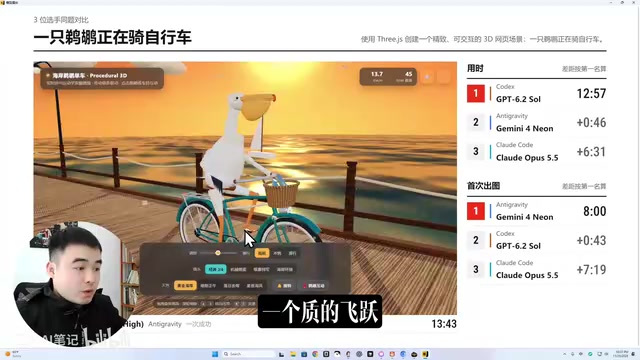
Gemini 4 Neon Hands-On Test: Can It Replace Claude Opus 5.5?
A Bilibili creator tests Gemini 4 Neon, Claude Opus 5.5, and GPT 6.2 across three coding Agent challenges—pelican animation, 3D racing, and code-generated video—to see if Gemini can replace Opus.
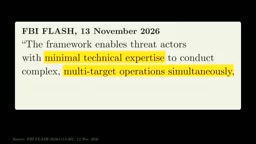
FBI-Warned Artex: How an AI Attack Framework With No In-House Model Pries Open Enterprise Doors
The FBI-warned open-source AI attack framework Artex has no model of its own—it plugs into Claude, GPT, and other external LLMs to drive an agent loop, turning ordinary tools like Nmap into an automated attack pipeline. This article examines three real cases—South Korean finance, ConnectWise, and Barracuda—analyzes the three drivers of speed, cost, and noise, and outlines defenses such as exposure inventory and short-lived credentials.