Gemini 4 Neon In-Depth Review: The New Value King of Coding Agents

Gemini 4 Neon delivers near-flagship coding and reasoning at a lower price, ushering in the multi-model routing paradigm.
Google released Gemini 4 Neon on November 18, 2026, positioned as the elemental family's speed-cost sweet spot. It tops the Artificial Analysis Coding Agent Index at 58.6, scores 65.2% cheat-corrected accuracy on Terminal Bench 4.1, and hits about 61 on the Intelligence Index at its highest reasoning tier — surpassing the Carbon flagship. With four thinking tiers, 1M context, native multimodality, and $3/$15 pricing (25% below Carbon, caching as low as $0.15), the article notes high thinking tiers add reasoning tokens and latency, recommends choosing tiers per task, and advocates routing with Neon as lead architect and Hydrogen as sub-agent.
Google officially launched Gemini 4 Neon on November 18, 2026, making it the fourth member of the Gemini 4 elemental family after Hydrogen, Argon, and Carbon. The positioning is clear: deliver programming, reasoning, and long-running agent capabilities close to the Carbon flagship, but faster and cheaper.
The Elemental Naming Scheme: Neon Sits at the Sweet Spot
To understand Neon's positioning, you first need to see Google's periodic-table-style product matrix. At the lightweight end is Gemini 4 Hydrogen: extremely fast at roughly 190 tokens/second, inexpensive, and aimed at everyday coding and parallel sub-agents. The middle tier is Gemini 4 Argon, released earlier in the fall, a balanced frontier model for enterprise knowledge work, legal research, and cybersecurity. At the top sits Gemini 4 Carbon, the heavy-reasoning "deep thinker" built for the hardest architectural problems.
Neon slots neatly between Hydrogen and Carbon, targeting production-grade software engineering, multi-file debugging, and autonomous agent loops. In other words, it isn't a watered-down mini model — it's an architecture redesigned for real-world engineering scenarios.
Benchmarks: The Fast Model That Overtook the Flagship
The most talked-about number on launch day came from the Artificial Analysis Coding Agent Index, where Neon took first place overall with 58.6 points. On Terminal Bench 4.1 — the grueling test that actually makes models execute shell commands, repair broken environments, and patch real repositories — Neon scored 65.2% cheat-corrected accuracy, putting it on par with heavyweights like Claude Opus 5.5. On Frontier Code 2 with default high settings, Neon scored 46.2%.
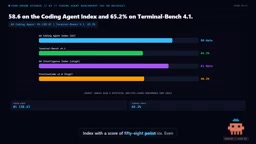
The real plot twist came when reasoning intensity was maxed out. When Neon switches to its highest reasoning tier, it scores about 61 on the Artificial Analysis Intelligence Index, landing in the industry's top three and even slightly edging past Carbon's 59–60 range — while still costing less per completed task. That means faster models are no longer inherently inferior to flagships on deep reasoning.
Terminal Bench 4.1 is a benchmark that evaluates a coding agent's ability to execute tasks in a real terminal environment, requiring models to use shell commands to repair environments and patch repositories. Its "cheat-corrected accuracy" refers to true performance after excluding scores obtained through unintended means such as hardcoding answers or exploiting test environment loopholes, making it a better reflection of a model's generalizable engineering ability.
Artificial Analysis Intelligence Index is maintained by the independent evaluation firm Artificial Analysis and aggregates scores across reasoning, coding, and knowledge tasks, serving as an important industry reference for measuring a model's general intelligence. The index is updated regularly; scores are not directly comparable across versions, but models can be compared horizontally within the same version.
Engineering Optimizations Built for Long Development Sessions
Anyone who has run an AI coding agent has seen this: the same 500-line file gets re-read six times. Google clearly trained Neon specifically for this pain point. Neon significantly reduces redundant file reads during long development sessions, keeps context compaction clean even after dozens of turns, and can act as a high-judgment planner and debugger in multi-agent environments (such as Google Anti-Gravity), dispatching boilerplate writing and test suite runs to fast Hydrogen sub-agents for parallel execution.
Four Thinking Budget Tiers: The Developer's Most Practical Control Lever
Neon offers four adjustable thinking budget tiers — low, medium, high, and X-high — one more ceiling than Argon's three. Google's official advice is refreshingly pragmatic: don't blindly attach every API call to X-high. Use low or medium for quick UI edits, summary generation, and simple scripts where latency matters; make high your daily setting for multi-file refactoring; and only spend extra thinking tokens on tough architectural bugs, ML engineering, or complex STEM proofs.
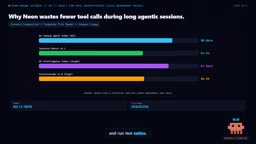
Thinking budget refers to the upper limit of internal reasoning tokens a model may consume before generating its final answer. Raising the budget leads to longer chain-of-thought reasoning, typically improving accuracy on complex tasks but increasing latency and output billing; lowering it speeds up responses and cuts costs. Developers should adjust it dynamically based on task complexity rather than always using the highest tier.
Pricing: A Quarter Cheaper Than the Flagship, Caching Nearly Free
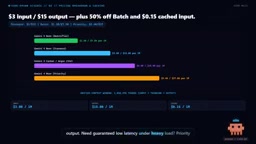
Neon launches as a paid model on Google AI Studio, Vertex AI, and OpenRouter, at $3 per million input tokens and $15 per million output tokens — 25% below Carbon and Argon's standard $4/$20. If workloads can run asynchronously, the Batch and Flex tiers halve costs again to $1.50 input and $7.50 output. For heavy loads that demand low latency, Priority routing costs $5.40 input and $27 output. The standout is context caching: repeated input prompts drop to just $0.15 per million tokens.
The entire Gemini 4 lineup shares a unified 1-million-token context window — precisely 1,048,576 tokens — dynamically allocated across prompts, internal thinking, and output. Native multimodal capabilities remain fully intact: a single prompt can hold an entire codebase, audio, video, PDFs, images, and even Office and open document files. On the consumer side, the Gemini app is simultaneously opening up to Google AI Pro and Ultra subscribers, replacing the old Gemini 3.1 Pro tier.
Context caching allows developers to pre-store long, reused prompts (such as system instructions or codebase context) and reuse cached content on subsequent calls, billed at a very low unit price. This can significantly reduce input costs in multi-turn conversations or long-running agent loops, and is especially suited to scenarios where the same repository or document is read repeatedly.
The Hidden Cost: The Verbosity Tax of High Thinking Tiers
Independent evaluator Artificial Analysis flagged an important caveat on launch day: at high and X-high tiers, Neon generates noticeably more internal reasoning tokens than the historical median before delivering its final answer. Reasoning tokens count toward output billing and latency, so choosing the right thinking tier per task isn't optional — it's mandatory. Switching everyday prompts to low or medium can dramatically cut both your bill and your wait time, with almost no perceptible quality loss.
Model Routing Is the Real Paradigm of 2026
The bigger trend Neon reveals is this: the era of one model ruling everything is ending. Take building a full-stack app or automating a video pipeline — you can have Neon serve as lead architect and debugger at high or X-high, reading repository structure, catching edge cases, and designing clean interfaces, while handing 20 parallel unit tests, data file formatting, and rapid UI iterations to Hydrogen at nearly 200 tokens/second. Multi-model combinations compress both wall-clock time and API spend.
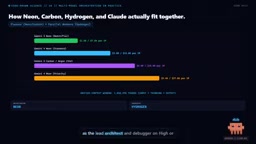
In real workflows, the pattern is already clear: in multi-file TypeScript, Python, and WordPress projects, Neon is noticeably crisper than Carbon at terminal debugging loops, fixing builds, writing migrations, wiring REST APIs, and navigating unfamiliar repositories — with nearly equal first-try correctness. What Carbon still owns are the scenarios that run only once and demand maximum thinking depth: gnarly one-off theoretical proofs, complex security audits, deep multi-document synthesis. For the vast majority of iterative engineering loops, Neon now sits on a new Pareto frontier of intelligence, cost, and speed.
For developers building coding agents, running terminal workflows, and wanting Carbon-class reasoning without Carbon-class price and latency, Neon is a ready-to-use choice. Leave Hydrogen for lightning-fast batch sub-agents, leave Carbon for the hardest one-off research problems, and give the main engineering loop to Neon — High for everyday refactoring, Medium when you need speed, and X-High only when you're grinding on a bug.
Model routing refers to dynamically dispatching requests to models of different sizes or specialties based on task type, latency requirements, and cost budget. For example, assigning high-judgment planning tasks to Neon while dispatching parallel subtasks to the fast Hydrogen, thereby optimizing the overall balance of quality, speed, and expense. This paradigm relies on a unified API interface and observable call orchestration capabilities.
Related articles

A 19-Year-Old's Rental Horror Story: Ceiling Collapse, Bug Infestation, and the Lessons It Taught Me
At 19, my first off-campus rental brought bug infestations, no heat, a collapsed ceiling, and a ruined laptop with no renter's insurance. Here are the hard-won lessons for first-time student renters.

Veda Nurse's Cranial Nerve Exam: Why ASMR Role-Play Is Going Viral
Bilibili creator Veda's cranial nerve exam ASMR video goes viral, blending humor and sensory triggers through nurse role-play. This article analyzes its unique appeal and the audience psychology behind ASMR role-play.

LG Cinebeam AI Review: 120-Inch Giant Screen + 3000 Lumens, a New Choice for the Living Room Theater
LG Cinebeam AI projector review: 3000 ANSI lumens, 4K, 100 inches from about 8 cm and 120 inches from about 18 cm. Built-in webOS, AI Concierge voice recommendations, AI Sound Pro 11.1.2 virtual surround, and Game Optimizer—positioned for fixed living room installation, complementing the portable Cinebeam S.