Gemini 4 Neon Review: Benchmark Scores Rival Carbon, API Cost-Performance Analysis
Gemini 4 Neon performs close to Carbon in tests and surpasses it in quota efficiency, but compute bottlenecks and ban risks remain.
Google's new model Gemini 4 Neon is officially live, positioned between Carbon and Hydrogen, but real-world performance exceeds expectations. On AA benchmarks, Neon is extremely close to Carbon—even one point higher—and can replace about 90% of Carbon scenarios. API pricing is twice that of Hydrogen (3/15 vs 1.5/7.5), but in Antigravity, Neon consumes 1x quota while Carbon consumes 3x, making Neon more quota-efficient in practice. User tests show Neon can generate high-quality video and game demos in one pass, but slow speeds due to insufficient compute and zero-buffer issues persist. On channels, complimentary Pro subscriptions are limited to AI Studio and Gemini App, and using 2API leads to account bans with only one unban opportunity. The 2:1 price ratio between Neon and Hydrogen suits an Orchestrator combination strategy.
Google's latest model, Gemini 4 Neon, is now officially live. The company positions it between Carbon and Hydrogen, but real-world performance has been surprising. This article compiles an in-depth review from the YouTube channel DPGem9 along with feedback from multiple users, covering benchmark scores, pricing, quota mechanics, and hands-on experience to paint a realistic picture of Neon.
Benchmarks and Positioning: Neon Catches Up to Carbon
According to official benchmark data, Neon's results are impressive. On the Artificial Analysis (AA) leaderboard, Neon's score is extremely close to Carbon's—in some cases even one point higher. This creates a subtle contrast with the official positioning between Carbon and Hydrogen.
According to testing by the YouTube channel DPGem9, Neon can replace about 90% of Carbon's usable scenarios in practice, often feeling like a "faster Carbon." This performance also puts the higher-tier GPT 6.2 in an awkward spot—when Neon offers near-Carbon capability at a lower price, the competitiveness of the mid-tier is significantly weakened.
The Artificial Analysis (AA) leaderboard is a relatively authoritative independent benchmark aggregation platform in the AI model evaluation space. It combines multiple test suites such as MMLU, HumanEval, and GPQA, and produces a weighted overall score by capability dimension. Because AA continuously updates its question bank and publishes model rankings, it is often used for cross-vendor comparisons of overall model strength. However, AA scores mainly reflect performance on standardized tasks and have limited coverage of real-world scenarios like multi-turn dialogue, long context, and tool calling—so similar scores do not necessarily mean identical real-world experience. The article's mention of Neon and Carbon scoring extremely close, even surpassing by one point, is based on this leaderboard's public data.
API Pricing and Quota Mechanics: The Key Details Behind Cost-Effectiveness
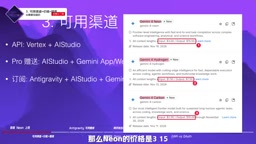
Neon's API is available on both Vertex and AI Studio channels, priced at roughly twice that of Hydrogen. From the official price table, Hydrogen is priced at 1.5/7.5, while Neon is 3/15—the price relationship is clear.
What really deserves attention is the quota consumption rules within the Antigravity subscription. According to community testing and conclusions from BG, a long-time Antigravity researcher, Neon and Hydrogen consume quota at 1x their API list price, while Carbon consumes at 3x. This means that in practice, Neon's quota durability far exceeds expectations—although its unit price is twice that of Hydrogen, because Carbon carries a 3x multiplier, Neon actually becomes the more quota-efficient choice.
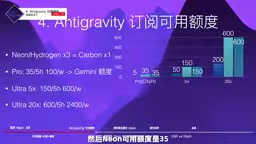
From the bar charts of five-hour and weekly quotas, across Pro and Ultra tiers, Neon and Hydrogen offer noticeably more usable quota than Carbon. For users who have long struggled with insufficient quota, this is undoubtedly a substantive benefit.
Antigravity is Google's AI coding and agent platform for developers (similar in positioning to Cursor or Windsurf). Subscribers can invoke Gemini series models within it for code generation, task orchestration, and more. Its quota mechanism is not simply based on call count; instead, each request's token consumption is converted to a multiple of the API list price and deducted from the subscription quota. Therefore, even if two models have different API unit prices, different multiplier coefficients can reverse the actual "quota efficiency"—this is precisely why Neon (1x coefficient) is more durable than Carbon (3x coefficient). Understanding this mechanism is essential to correctly evaluating the true usage cost of each subscription tier.
Hands-On Experience: Good and Fast, but Compute Bottlenecks Remain
Multiple users have provided real-world test cases of Neon in Antigravity. Community member Luoyide33 used Neon in X-High plus Swim mode to generate a "sky fox riding a bicycle" video demo in one shot, with surprisingly detailed results. Another author, Cangtiange, used Neon to produce a shooting game demo in one pass, with impressive operational details and polish.
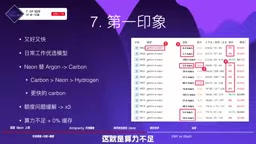
DPGem9's first impression of Neon is summed up as "good and fast," and he explicitly states he will prioritize it in daily work, even replacing Carbon. However, slow speeds caused by insufficient compute and zero-buffer issues still persist. From request screenshots, response speeds for some requests have noticeably degraded, and the zero-buffer problem has not been fully resolved.
Channel Restrictions and Account Ban Risks: 2API Is Not the Way
Neon's availability is clearly tiered by subscription. The complimentary Pro subscription can only be used in AI Studio and the Gemini App; paid Pro and above, or Ultra subscriptions, are required to invoke it in Antigravity. This restriction has led some users to turn to 2API solutions, but community feedback shows that using 2API ultimately results in account bans.
In his video, DPGem9 explicitly warns against using 2API and provides the only unban opportunity after a ban—submitting a form via a designated page. He also suggests to the official team that, given Antigravity's current state, they consider opening OAuth as a transitional solution.

2API refers to third parties reverse-engineering or scraping web interfaces to wrap model services that don't officially offer an API into a standard API for others to call. Such solutions typically bypass official subscription tiers and usage limits, violating terms of service, so vendors use risk controls to identify abnormal call patterns and ban accounts. The OAuth mentioned in the article is an officially supported authorization protocol that allows third-party apps to securely access a user's account resources with their permission—a compliant access method. DPGem9's suggestion to open OAuth is essentially a hope to provide developers with more flexible invocation paths within a compliant framework, replacing high-risk 2API solutions.
Combination Strategy and Competitive Landscape
In terms of model combinations, Neon and Hydrogen have a 2:1 price ratio, which creates room for the Orchestrator pattern—Neon handles orchestration and scheduling, while Hydrogen executes specific tasks. Use Neon for scenarios requiring strong capability, and Hydrogen for execution stages, balancing cost and performance.
From a competitive standpoint, Neon's release solidifies Google's second-place position across price, speed, quota, and ease of use. Meanwhile, open-source full-model vendors are facing increasing time and space pressure—as leading vendors iterate models at such density, the window for challengers is narrowing.
Neon is a generally well-received model: fast, broad in scope, and quota-durable. But it is not without shortcomings: the Antigravity experience drags it down, about 10% of scenarios are still not as good as Carbon, and long-standing compute issues have not been eradicated. For developers choosing a primary model, Neon is worth trying first, but reasonable expectations about stability are needed.
The Orchestrator pattern is a multi-model collaboration architecture: a more capable or flexible model acts as the "orchestrator," responsible for decomposing tasks, planning steps, and distributing them to lower-cost "executor" models to complete specific subtasks. The core advantage of this pattern is dynamically allocating compute based on task difficulty, ensuring quality at key stages while keeping overall costs down. The 2:1 price ratio between Neon and Hydrogen makes "Neon orchestrates, Hydrogen executes" an economical combination—using Neon as a fallback for high-capability scenarios and delegating repetitive execution to Hydrogen, striking a balance between cost and performance.
One-line Summary
Gemini 4 Neon performs close to Carbon in tests and surpasses it in quota efficiency, but compute bottlenecks and ban risks remain.
Paragraph Summary
Google's new model Gemini 4 Neon is officially live, positioned between Carbon and Hydrogen, but real-world performance exceeds expectations. On AA benchmarks, Neon is extremely close to Carbon—even one point higher—and can replace about 90% of Carbon scenarios. API pricing is twice that of Hydrogen (3/15 vs 1.5/7.5), but in Antigravity, Neon consumes 1x quota while Carbon consumes 3x, making Neon more quota-efficient in practice. User tests show Neon can generate high-quality video and game demos in one pass, but slow speeds due to insufficient compute and zero-buffer issues persist. On channels, complimentary Pro subscriptions are limited to AI Studio and Gemini App, and using 2API leads to account bans with only one unban opportunity. The 2:1 price ratio between Neon and Hydrogen suits an Orchestrator combination strategy.
Related articles

Gemini 4 Hydrogen Hands-On: Google's Fastest and Cheapest AI Model
Hands-on with Gemini 4 Hydrogen: the fastest, cheapest model in the Gemini 4 family. We break down the Carbon/Argon/Hydrogen split, API pricing traps, free-tier limits, and the cost trade-offs of four thinking levels—with a real bug-debugging demo.

Gemini 4 Hydrogen vs Sonnet Comparison Test: Uses Only 1% of Weekly Quota, Performance on Par
Hands-on test: Gemini 4 Hydrogen vs Sonnet on the same CRUD task—Hydrogen used only 1% weekly quota with comparable performance and better UI details, while Anthropic's model used 7%. Developer says daily tasks don't require expensive models.
Gemini 4 Neon Released: Beats Opus 5.5 on Multiple Benchmarks, Google Returns to the Top Tier
Google DeepMind releases Gemini 4 Neon: 61 on the Artificial Analysis intelligence index (3rd) and 1st on the coding index, beating Opus 5.5 on multiple benchmarks. $3/$15 per million tokens; available in the Gemini API and AI Studio.