Gemini 4 vs Opus 5.5: Which Is Better for 3D Design? Real Test Results and the Cost Truth

Real-world testing of Gemini 4's 3D and game dev skills: cheap and usable, but no match for Opus 5.5.
The article compares Google Gemini 4 and Opus 5.5 through 3D design, animation, and game development tests. Gemini 4 is basically usable for simple architecture and wallpaper generation at about one-tenth the cost, but clearly lags in character animation, complex models, and long-workflow game development. Opus 5.5 wins on visual quality and one-shot capability at roughly ten times the price. The article also covers benchmark gaps, poor speed rankings, the Google Ultra subscription requirement, and the missing deep-thinking mode.
Introduction: When Gemini 4 Meets Blender, Can It Really Compete?
Google has finally released Gemini 4, and its official demo showed off its ability to build polished 3D models in Blender, raising expectations sky-high. But how does it actually perform? A YouTube creator ran a series of tests covering 3D design, animation, and game development, and brought in the formidable Opus 5.5 as a comparison. The results were partly impressive and partly full of details worth pondering.

Test Methodology and Benchmarks: The Gap Between Brickroll and Official Benchmarks
The creator first used the community-favorite Brickroll benchmark, but found that Opus 5.5 came out ahead on subjective evaluation. Yet the official benchmark showed Gemini 4 scoring higher than GPT-6 Astro and Opus 5.5 on most items. This disconnect between official data and personal experience is partly explained on the third-party platform Artificial Analysis: Gemini 4 doesn't rank high on speed and didn't even make the speed leaderboard, but its price advantage is clear—about 53% of GPT-6's, on par with Fable 5.1 Max.
The creator noted: "The official benchmark says it's good, but in real use, Opus 5.5 often delivers a more visually pleasing result on the first try."
Artificial Analysis is an independent third-party AI model evaluation platform that benchmarks major language and multimodal models through standardized tests, covering metrics such as inference speed, output quality, and price efficiency. Unlike vendor-published benchmarks, Artificial Analysis evaluations typically use a unified prompt set and scoring mechanism, so they're regarded as a reference closer to real-world usage. The article notes that Gemini 4 ranks low on this platform's speed ranking and didn't make the speed leaderboard, indicating its response latency isn't competitive among peers; but at about 53% of GPT-6's price, its per-token cost is significantly lower. This "slow but cheap" positioning directly affects its real-world experience in 3D generation tasks that require multiple iterations—users may spend less per run, but pay more in time cost due to waiting and repeated tuning.
3D Architecture and Scene Generation: Glass Villa and Underwater Wallpaper
To verify whether the official demo was genuine, the creator asked Gemini 4 to generate 3D data for a two-story glass villa based on two blueprints. In the result, the placement of trees and objects was basically reasonable, but the stairs didn't fit well against the walls, and the overall visual effect was "unattractive." The version generated by Opus 5.5 was clearly more beautiful, with more natural lighting and layout.
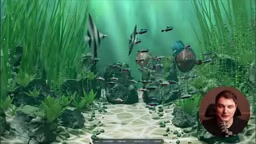
In the "aquarium wallpaper" test, Gemini 4 generated a dynamic wallpaper in a style reminiscent of Windows XP, including a 3GS version that could be paused but not rotated. Opus 5.5's version had richer detail and higher visual quality. Interestingly, Gemini 4's cost was only about one-tenth of Opus 5.5's.
Character Animation and Complex Models: A Crushing Defeat in the Sea Dragon Test
The creator prepared an elaborate sea dragon model and asked both AIs to animate it. Gemini 4's performance was a disaster—the animation was missing and the model was barely touched. Opus 5.5 not only connected all the fronds but also called Higgs Field's 3D AI generation capability, generated auxiliary models, and completed the animation.

Opus 5.5 won this round handily, but at a higher cost: Gemini 4 cost only about $2 (calculated by API), while Opus 5.5 cost $15. The creator remarked: "Gemini 4 produced nothing at all—that money was wasted."
Higgs Field is an AI platform for 3D content creation, offering text/image-to-3D model generation, automatic rigging and animation, and aggregating API access to several top models. In the article, Opus 5.5 "called Higgs Field's 3D AI generation capability" in the sea dragon animation test, meaning the model could autonomously invoke external tools or platform capabilities to compensate for its own shortcomings during task execution—for example, first generating auxiliary models and then completing skeletal animation. This tool-calling ability is key to distinguishing "one-shot success" from "repeated tuning": models with tool orchestration can break down complex workflows and execute them automatically, while models lacking this ability tend to stall or output incomplete results on long workflows. Higgs Field also serves as a third-party subscription channel, letting users access Gemini 4 and other models without binding to Google Ultra—this is also the alternative access method suggested in the article.
Game Development and Real-Time Scenes: Rocket League and Minecraft
In a Rocket League-style game test, Gemini 4 quickly generated a playable simple version, but the graphics were described as "GPT-5 level." Opus 5.5's version had better vehicle and scene detail and smoother controls, but took 58 minutes and cost nearly 10 times as much.
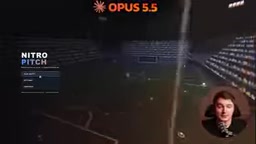
In the Minecraft-style test, Gemini 4's version had crude animation but basic interaction worked; Opus 5.5's version had more realistic textures, animated water, and better lighting. The cost comparison was stark: Gemini 4 took $1.5 and 45 minutes; Opus 5.5 took $21.35 and 2 hours.
Price and Subscription Traps: Is the Ultra Plan Worth It?
Although Gemini 4's API price is low, accessing it through official channels requires a Google Ultra subscription, with a minimum monthly fee of $100 ($230 in the creator's region), while Claude's subscription is $200. More confusingly, the Gemini 4 Argon version only offers a "high" reasoning tier and lacks the deep-thinking feature found in the Pro version.
The creator also tried Google's Anti-Gravity platform but encountered 401 errors and multiple crashes—a terrible experience. In contrast, subscribing through Higgs Field gives access to Gemini 4 and other top models without needing an extra Google subscription.
Reasoning effort is a common design in current large-model APIs that lets users choose how much thinking depth the model invests—low/medium/high: higher tiers run longer internal reasoning chains, producing higher output quality but with greater latency and cost; lower tiers respond faster and cheaper. The article notes that the Gemini 4 Argon version only offers a "high" reasoning tier and lacks the deep-thinking feature of the Pro version, meaning users can't flexibly adjust based on task difficulty—simple tasks still incur high-tier time and cost, while long tasks requiring deep planning may be limited by the absence of a specific thinking mode. This difference in tier design directly affects the model's controllability and cost-effectiveness in multi-step tasks such as 3D modeling and game development.
Conclusion: A Cost-Effective Choice or a Compromise?
Overall, Gemini 4 can handle basic work in 3D design tasks at extremely low cost, making it suitable for users with limited budgets who are willing to iterate through multiple prompts. But on complex tasks (such as character animation and long-workflow game development), Opus 5.5 still holds the advantage thanks to its one-shot quality. The creator's final advice: if you're after high-quality 3D output, Opus 5.5 is more reliable; if you're cost-sensitive and the task is simple, Gemini 4 is worth a try—but don't expect it to replace long-task tools like Claude Code.
"Doing game development with Gemini 4 would be crazy, because it can't handle long tasks the way Claude Code can."
Would you choose the cheap but multi-round-tuning Gemini 4, or the expensive but hassle-free Opus 5.5? Share your thoughts in the comments.
One-line Summary
Real-world testing of Gemini 4's 3D and game development capabilities: cheap and usable, but no match for Opus 5.5.
Paragraph Summary
The article compares the real-world performance of Google Gemini 4 and Opus 5.5 through a series of 3D design, animation, and game development tests. The results show that Gemini 4 is basically usable for simple architecture and wallpaper generation at about one-tenth the cost of its rival, but clearly lags in character animation, complex models, and long-workflow game development—the sea dragon animation test produced almost no valid result. Opus 5.5 holds the advantage through higher visual quality and one-shot capability, at the cost of roughly ten times the price and longer time. The article also reveals the gap between official benchmarks and third-party evaluations, Gemini 4's poor speed ranking, the need for a Google Ultra subscription for access, and the lack of a deep-thinking mode, and suggests that budget-sensitive users with simple tasks can try Gemini 4, while those seeking high-quality output should choose Opus 5.5.
Related articles

When Did Paid Childcare Become the Norm? Working Mothers and the Evolution of Childcare
When did paid childcare become the norm? This article traces the evolution from the rise of childcare centers in the 1970s–80s and the 1990s linking of federal subsidies to work requirements, to declining stigma and rising costs, and explores advocates' 25-year effort to catch up with other countries on childcare and paid parental leave.

Red Flags for Product-Market Fit: A Practical Guide from Top VCs and the Superhuman Founder
Investors from Iconiq and Sapphire Ventures and Superhuman founder Rahul Vohra share PMF red flags and practical methods, including the 40% disappointment rule, retention curves, and acquisition costs.

What Task Should AI Agents Take Over Most? Heated Reddit Discussion
Reddit discussion: Which task do you most want AI agents to take over completely? Cross-app data migration, CRM updates, and report generation top the list, but insufficient reliability and the trust gap are the biggest obstacles to automation adoption.