Gemini Agentic Video Understanding: 88% Token Reduction, 66% Cost Savings — A Complete Breakdown
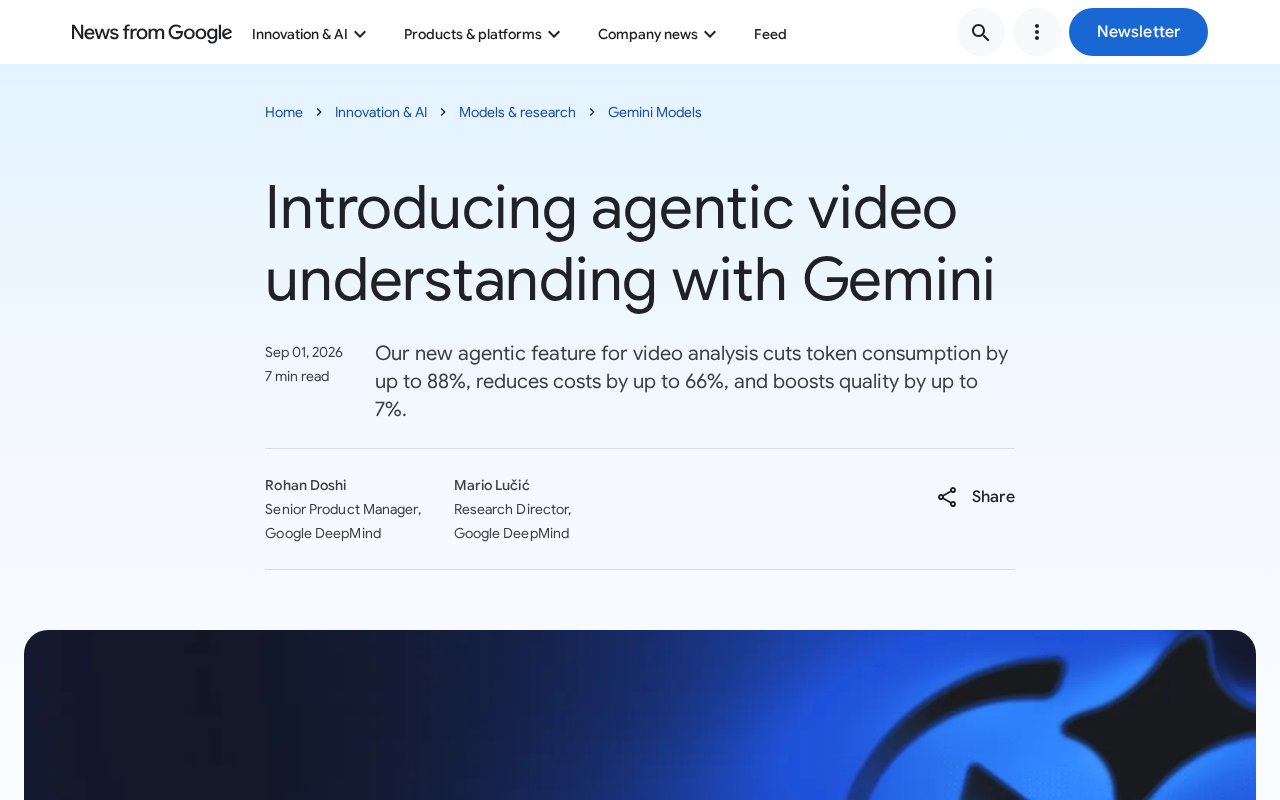
Gemini's agentic video understanding slashes tokens 88% and costs 66% while boosting accuracy 7%.
Google DeepMind introduced Agentic Video Understanding for the Gemini model family, replacing static frame-by-frame processing with an intelligent agentic loop that actively decides what to watch, at what frame rate, and through which modality. Benchmarks show up to 88% Token reduction, 66% cost savings, and 7% quality improvement, with Gemini 3.7 Flash leading on the Pareto frontier. The feature enables sub-second retrieval, long-video search, anomaly detection, and action counting — accessible via a single API config switch.
Video Understanding Enters the "Agentic" Era
Google DeepMind recently launched Agentic Video Understanding for the Gemini model family, covering three models: Gemini 3.7 Flash, 3.6 Flash, and 3.5 Flash-Lite. The most striking aspect of this capability is that while improving analysis accuracy, it can reduce Token consumption by up to 88%, cut costs by up to 66%, and boost quality by up to 7%.
In the ecosystem of large language models and multimodal models, Tokens are the fundamental unit of billing and computational resource consumption. For text, one Token corresponds to roughly 4 English characters or one Chinese character; for video and images, each frame is encoded into hundreds or even thousands of Tokens. Take a 60-minute video sampled at 1 FPS as an example — 3,600 frames can generate millions of Tokens, and based on mainstream API pricing (typically several to tens of dollars per million Tokens), a single video analysis could cost tens of dollars. Understanding this cost structure makes it easy to see what an 88% Token reduction and 66% cost decrease mean for developers.
For developers who have long struggled with the exorbitant costs of long-video processing, this is a breakthrough with real substance. Traditional video analysis either burns through budgets or is forced to discard critical details — and the agentic approach aims to break this dilemma.
From "Static Ingestion" to "Active Scanning": Core Mechanism Explained
Limitations of Traditional Video Processing
Current mainstream video processing uses a static approach: the model ingests video content frame by frame at a fixed frame rate (1 FPS by default, adjustable via API). This means the model "spreads its effort evenly" across all frames regardless of content importance, consuming Tokens uniformly. For a 10-minute tutorial, a 90-minute lecture, or hours-long footage, static processing quickly accumulates staggering Token costs.
Frame rate (FPS, Frames Per Second) determines how many frames per second the model extracts from the video for analysis. The human eye typically needs 24–30 FPS to perceive smooth video, while the 1 FPS commonly used in AI video analysis means only one frame per second. This downsampling may suffice for slow-paced lecture videos, but in fast-action scenarios (such as sporting events, industrial quality inspection, or sudden incidents in security surveillance), critical information may exist within a 0.1–0.5 second window — making it extremely easy for 1 FPS sampling to miss these moments entirely.
Worse still, to control costs, developers often need to reduce the sampling rate, which in turn causes critical momentary details to be lost — it's a forced choice between high cost and low quality. This is the fundamental contradiction of static frame-rate sampling: increasing the frame rate causes Tokens to skyrocket, while decreasing it leads to information loss.
How the Agentic Loop Works
Agentic Video Understanding draws on the prior agentic vision approach, combining code execution capabilities with Gemini's native multimodal understanding. It casts the model in the role of an "active, goal-oriented observer" that autonomously decides:
- What to look at: locating video segments relevant to the query
- At what speed to look: dynamically adjusting the frame rate, upsampling key moments
- Through which modality to look: flexibly switching between visual frames, audio, and text transcripts
The concept of "selective modality loading" here deserves further explanation. Modern video contains three primary information modalities: visual frames (image content), audio (speech, sound effects, background music), and text transcripts (subtitles, OCR-recognized on-screen text). Traditional processing typically feeds all three modalities into the model simultaneously, causing Token consumption to multiply. A key innovation of Agentic Video Understanding is selective modality loading: for instance, when analyzing spoken content in a lecture video, the model may prioritize audio transcription over frame-by-frame visual analysis; when analyzing a sports video, it primarily relies on visual frames. This strategy of selecting modalities on demand essentially engineers the attention-allocation mechanism humans use when watching video.
The Agent paradigm is one of the most important technology trends in AI during 2024–2025. Unlike the traditional single input-output pattern, agentic AI possesses capabilities for autonomous planning, tool invocation, and multi-step reasoning. It draws on the Perception-Decision-Action Loop from reinforcement learning, allowing the model to actively decide what information to acquire next rather than passively receiving all input. In the context of video understanding, this means the model can first quickly browse a low-resolution overview of the video, identify potentially key segments, and then perform high-frame-rate detailed analysis on those segments — similar to how humans fast-forward through a video and then pause to replay when they spot something interesting.
Through an agentic loop, the model invokes internal tools to load relevant portions of the video file on demand, retrieving only the signals it truly needs. This essentially internalizes the "selective retrieval" logic that developers previously had to implement manually, dramatically reducing development complexity.
Benchmark Results: Performance on the Cost-Quality Pareto Frontier
According to official data, on standard video analysis benchmarks, Gemini models with agentic understanding enabled can reduce analysis costs by up to 66%, Token consumption by up to 88%, while improving accuracy by up to 7%.
These efficiency gains are particularly pronounced in long-video scenarios. Taking LongVideoBench, a benchmark for long-video understanding, as an example, Gemini 3.7 Flash achieved a simultaneous win in both massive Token reduction and accuracy improvement after enabling agentic mode. LongVideoBench is a standardized benchmark test suite designed by the academic community in recent years to evaluate AI models' performance on long-video understanding tasks. It contains videos ranging from a few minutes to several hours, covering multiple genres including lectures, movies, and tutorials, with test items spanning challenging tasks such as temporal localization, causal reasoning, and cross-segment information integration. Unlike short-video benchmarks (such as ActivityNet and MSRVTT), LongVideoBench specifically tests a model's information retrieval and reasoning abilities when facing extremely long contexts, making it a key metric for measuring the practical utility of long-video AI processing.
A notable detail: while all three models benefit from this capability, Gemini 3.7 Flash performs best — it leads in overall quality and sits on the Pareto Frontier for the combination of accuracy and cost efficiency. The Pareto Frontier is a core concept in economics and optimization theory, referring to the set of solutions in multi-objective optimization where it's impossible to improve one objective without sacrificing another. In AI model evaluation, cost and accuracy typically form a trade-off pair: spending more money (more Tokens, larger models) generally yields higher accuracy. A model on the Pareto Frontier means it represents the optimal trade-off in the two-dimensional space of cost and quality — no other model can simultaneously surpass it on both dimensions. In other words, no model is more accurate at the same cost, and no model is cheaper at the same accuracy level.
Four New Capabilities Unlocked by Agentic Video Understanding
Agentic Video Understanding isn't just about "saving money" — it also unlocks processing scenarios that were previously difficult to achieve:
Sub-Second Moment Retrieval
The model can precisely pinpoint transient state changes and tight shot-transition boundaries that are easily missed at 1 FPS sampling, making automated video editing and other fine-grained tasks possible. Specifically, in agentic mode, the model can rescan suspicious time segments at 10 FPS or higher, elevating temporal resolution from the second level to the hundred-millisecond level, thereby capturing transition frames, flashing text, or momentarily appearing objects.
"Needle in a Haystack" Search in Long Videos
When facing hours of video, the model can answer complex queries without consuming millions of Tokens as static processing would require. This directly addresses the core pain point of long-video content retrieval. The agentic loop enables the model to first build a "content map" of the video through a low-frame-rate quick scan, then precisely jump to relevant segments for deep analysis based on the user's query — behavioral logic similar to how humans use video scrub bars and chapter markers for targeted searching.
Anomaly Detection and Fine-Grained Analysis
The model can resample "time windows of interest" at higher frame rates to capture fast motion and subtle visual artifacts — first scanning the big picture broadly, then inspecting specific areas closely. This two-stage strategy of "coarse-grained scanning + fine-grained focusing" has enormous application value in industrial quality inspection (detecting momentary defects on production lines), medical imaging analysis (capturing anomalous frames in ultrasound or endoscopy), and security surveillance (identifying the initial moments of abnormal behavior).
Action and Object Counting
By repeatedly scanning video at different frame rates, the model can accurately track repetitive physical actions and distinct objects. Official demos show that Gemini 3.7 Flash can accurately count fast-paced actions through adaptive frame rates. This capability has direct commercial application prospects in fitness coaching (counting exercise repetitions), manufacturing (counting product quantities), and retail analytics (tracking foot traffic).
Gemini API Integration Guide: Getting Started Quickly
This feature is now available through the Gemini API in Google AI Studio and the Gemini Enterprise Agent Platform, supporting both video uploads and YouTube videos as input. It uses standard Gemini API Token pricing with no additional feature fees.
Developers simply need to set the processing mode to "agentic" in the API configuration to enable it:
from google import genai
client = genai.Client()
interaction = client.interactions.create(
    model="gemini-3.7-flash",
    input=[
        {
            "type": "video",
            "uri": "https://youtu.be/7Z5Vy9JBANs",
            "processing": "agentic"
        },
        {
            "type": "text",
            "text": "What are the 3 most important announcements in this keynote?",
        },
    ],
)
print(interaction.output_text)
It's worth noting that the client.interactions.create() interface used in the code example represents a new-generation interaction paradigm for the Google Gemini API. Unlike traditional single-turn generation interfaces such as generate_content(), the Interactions API natively supports multi-step agentic loops, tool invocation, and state management. Within a single interaction, the model may execute multiple internal tool calls (such as video segment loading, frame rate adjustment, and modality switching), while developers simply wait for the final output. This interface design encapsulates complex agent orchestration logic on the API backend, enabling developers to access agent-level processing capabilities without building their own Agent framework.
With just a single processing: "agentic" configuration switch, you gain the full suite of efficiency and quality improvements — migration cost is minimal.
From Developer API to Billions of Users
Google's ambitions extend beyond developer tools. The company has stated that the efficiency and quality improvements brought by Agentic Video Understanding will soon be rolled out to the Flash and Flash-Lite models available to all users in the Gemini App.
Even more noteworthy, in the coming months, this capability will also power the "Ask YouTube" feature on YouTube video watch pages, leveraging Gemini to provide higher-quality answers based on visual content. YouTube generates over 1 billion hours of video viewing per day, making it the world's largest video platform. Currently, YouTube's search and recommendation systems primarily rely on metadata such as titles, tags, and subtitles, with limited ability to understand the visual content of videos themselves. The Ask YouTube feature will allow users to ask questions about the video they're watching in natural language and receive precise answers based on the video's actual content (not just subtitle text). Given YouTube's advertising and subscription revenue scale (exceeding $36 billion in 2024), any technology that can increase user dwell time and interaction depth carries enormous commercial value.
This means Agentic Video Understanding will evolve from an API feature into a foundational capability underlying the daily video experience of billions of users.
Conclusion: A Paradigm Shift in Video AI Processing Efficiency
The significance of Agentic Video Understanding lies not only in its impressive cost and Token numbers, but more importantly in the paradigm shift it represents for video AI processing — from "passive uniform ingestion" to "active intelligent retrieval." When models learn to "fast-forward, replay, and zoom in on points of interest" like humans do, long video — previously a cost black hole for AI processing — finally has a scalable solution path. For enterprises and developers who need to process massive volumes of video content, this may be the critical step toward making video AI applications commercially viable.
Related articles
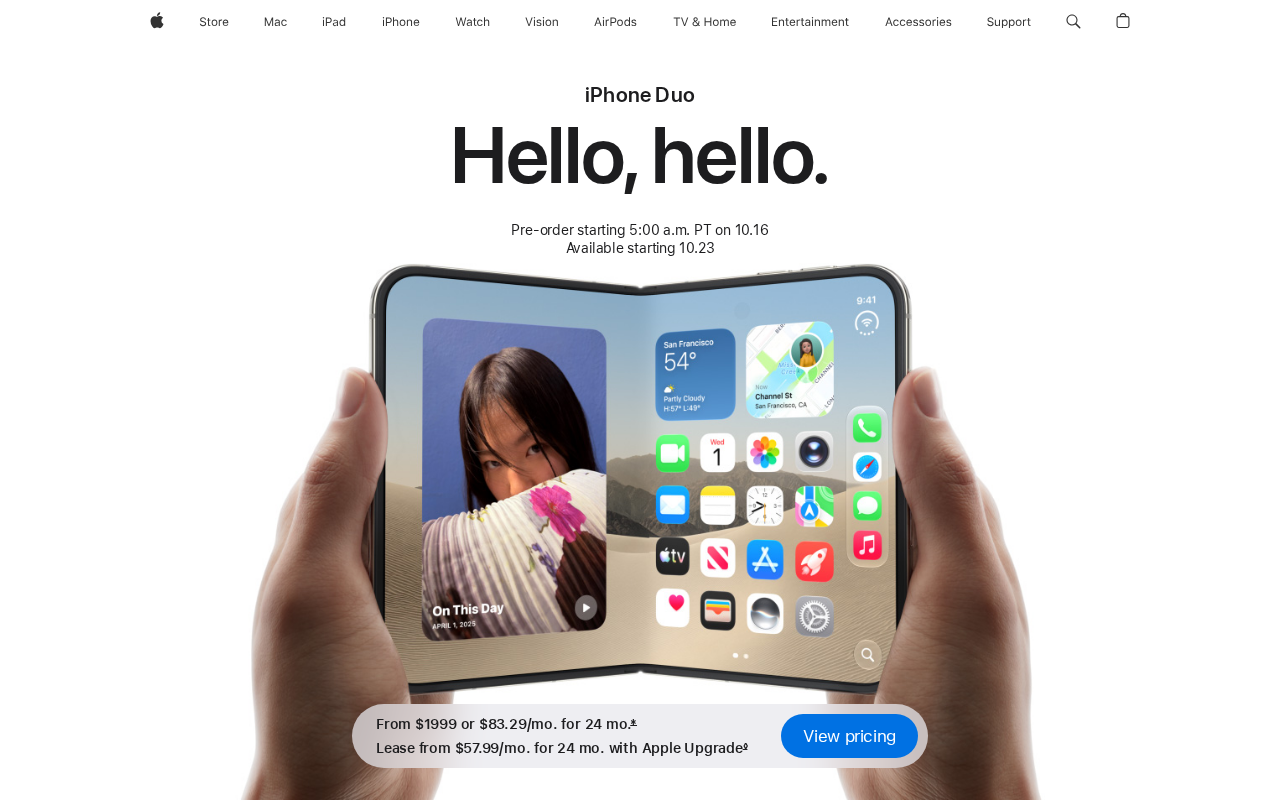
iPhone Duo Dual-Screen Foldable Phone Explained: Apple Enters the Foldable Market
Apple's iPhone Duo page sparks buzz. Deep dive into Apple's dual-screen foldable phone: product design, tech specs, market positioning, and community reactions.
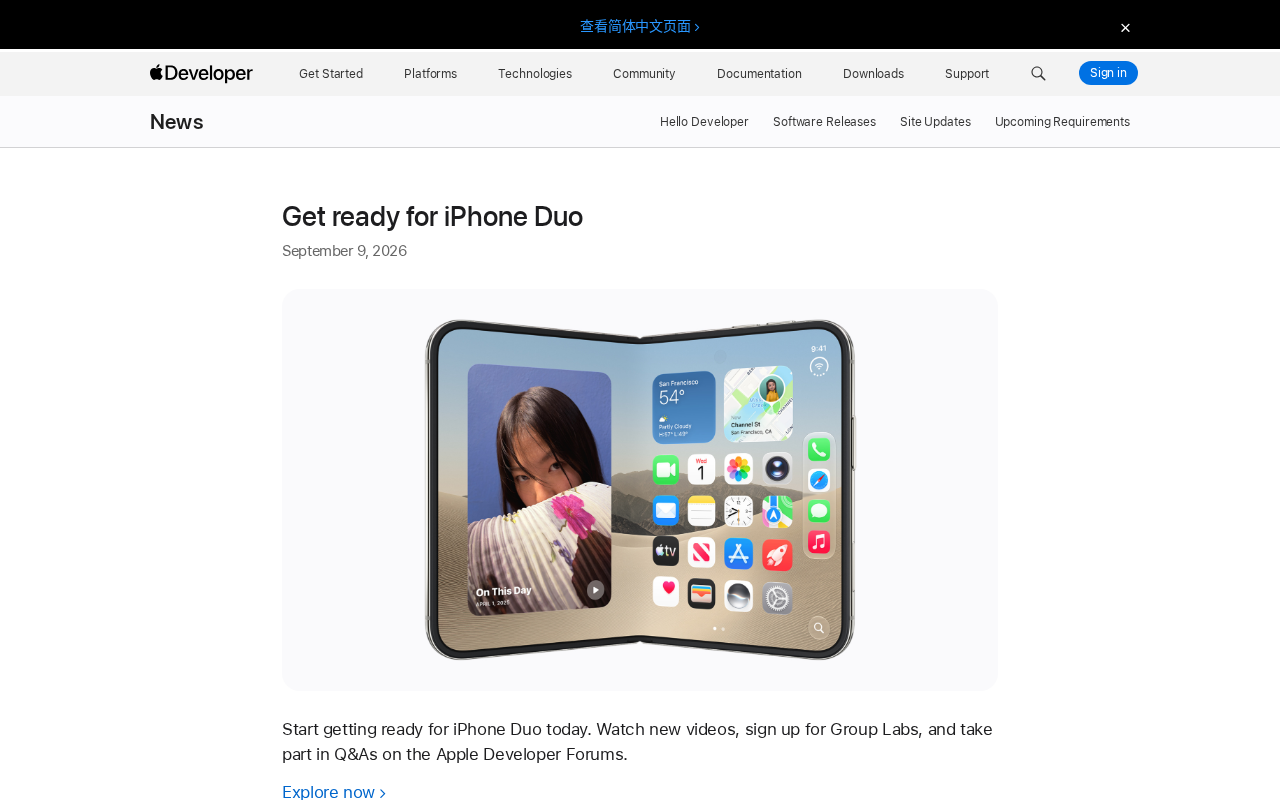
iPhone Duo: Apple's Foldable Phone Development in Full Swing
Apple launches iPhone Duo foldable phone developer preview with tech videos, Group Labs, and forums. Learn about its dual-screen design and dev preparation.
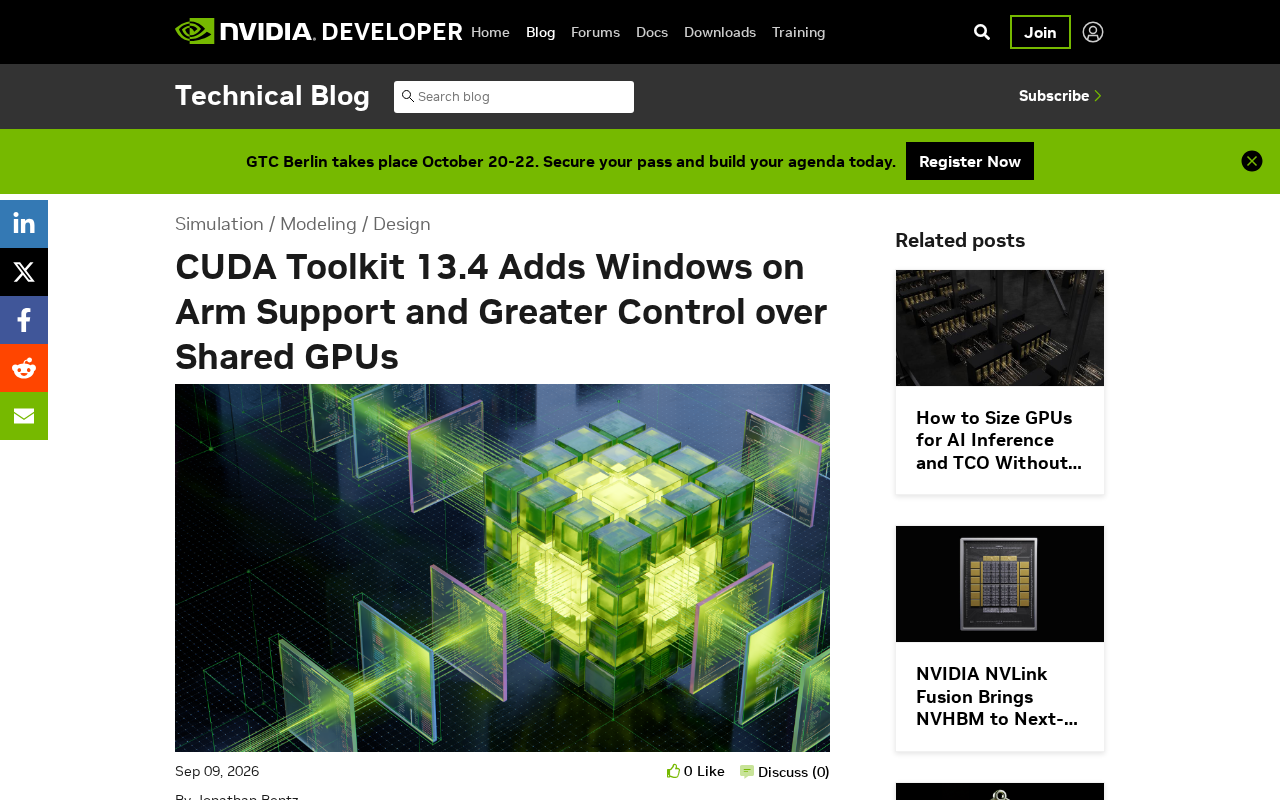
CUDA Toolkit 13.4 Released: Windows on Arm Support and Fine-Grained GPU Resource Control
NVIDIA CUDA Toolkit 13.4 adds native Windows on Arm support and fine-grained shared GPU management. A deep dive into cross-platform development and multi-tenant resource optimization.