Gemini API Tool Retrieval Preview: Let Agents Call Hundreds of Tools with Fewer Tokens
Gemini API launches Tool Retrieval, replacing full tool injection with retrieval to reduce token overhead.
Google has launched the preview-stage Tool Retrieval feature in the Gemini API, targeting prompt bloat when agents integrate many tools. Conventional function calling requires writing every tool's name, description, and parameter structure into the request; more tools mean higher token costs and lower selection accuracy. Tool Retrieval retrieves relevance before the model generates a call and hands only the matching subset to the model, sharing the same idea as RAG. Its core value is scalability and cost control, but retrieval quality depends on tool descriptions, and the extra step may affect latency. It suits enterprise agents with large tool pools and dispersed tasks; small tool sets see limited benefit.
A Turning Point for Agent Tool Calling
When agents need to call external capabilities, a common headache is: too many tools. Stuffing the full definitions of hundreds of tools into the prompt not only consumes a large number of tokens but also dilutes the model's attention. Google's Tool Retrieval feature in the Gemini API targets exactly this pain point—it lets agents access hundreds of tools while consuming fewer tokens. The feature is currently in preview.
This is not a flashy new model capability but an engineering-level optimization. It turns "tool selection" from one-time full injection into on-demand retrieval. For developers building complex agent systems, this change may be more practical than a parameter upgrade.
What Problem Does Tool Retrieval Solve
The Cost of Injecting All Tools
In a typical Function Calling flow, developers need to write each tool's name, description, and parameter structure in full into the request. This is fine when there are only a few tools, but when an agent needs to integrate dozens or hundreds of tools—for example, an enterprise assistant that connects to calendars, email, CRM, ticketing systems, search, and database queries at the same time—the prompt expands rapidly.
This expansion has two consequences. First, costs rise: every request pays token fees for these tool definitions. Second, accuracy drops: when facing a lengthy tool list, the model is more likely to choose the wrong tool or miss the right one. The idea behind tool retrieval is: don't put all tools in front of the model; first retrieve the few most relevant ones based on the current task, then hand them to the model for decision-making.
How Function Calling works: An LLM cannot directly perform external operations; function calling is a protocol that lets the model "request" an execution. Developers pass the JSON Schema of available tools (name, description, parameter types) along with the request, and when needed the model outputs a structured call request. External code actually executes it and passes the result back to the model. Therefore, tool definitions are part of the input prompt, are billed by token, and occupy the model's context window. The more tools there are, the longer the definitions repeatedly carried in each request become—this is exactly why unfiltered full injection creates fixed overhead.
Retrieval Happens Before the Call
The core mechanism of Tool Retrieval is to perform a relevance retrieval before the model generates a tool call. Developers still provide the tool set, but the system filters it based on the conversation context to select a matching subset of tools. This way, the tool list the model sees is shorter and more focused, token consumption decreases accordingly, and selection accuracy is expected to improve.
From a product positioning perspective, this feature targets scenarios where "the number of tools has grown, but you don't want to pay the full token cost for it." It shares the same idea as RAG (Retrieval-Augmented Generation): retrieve first, then generate—except that the object of retrieval changes from documents to tool definitions.
The analogy between RAG (Retrieval-Augmented Generation) and tool retrieval: A typical RAG pipeline splits a knowledge base into chunks, builds a vector index, retrieves the most relevant chunks when a user asks a question, and stitches them into the prompt before handing it to the model to generate an answer—avoiding stuffing the entire knowledge base into the context. Tool retrieval applies the same paradigm to tool definitions: index each tool's description and recall a relevant subset of tools based on the conversation context. The difference is that the recalled objects are structured tool schemas rather than natural-language documents, which makes it more sensitive to whether tool descriptions are accurate and sufficiently distinguishable.
Practical Impact on Agent Development
Cost and Scalability
The most direct value of tool retrieval is scalability. In the past, developers often had to trade off between "integrating more tools" and "controlling token costs"; once the number of tools grew, they had to split agents or build a routing layer. Tool Retrieval pushes the boundary of this trade-off outward: hundreds of tools can live in the same tool pool and be fetched on demand by the retrieval layer.
For APIs billed by token, this directly affects the cost per task. Tool definitions often contain long descriptions and JSON Schemas; under full injection, this overhead is paid repeatedly on every request. The retrieval mechanism compresses this overhead to only the tools relevant to the actual task.
Architectural Trade-offs
Introducing tool retrieval also means adding a step to the agent architecture. Retrieval quality directly determines whether the model can see the right tools—if the retrieval layer misses a key tool, even the strongest model cannot call it. Therefore, developers need to pay attention to the quality of tool descriptions, because retrieval relies on these descriptions to judge relevance. This is similar to the requirements for document chunking and metadata in RAG: the ceiling of retrieval is determined by index quality.
Another point to weigh is latency. An extra retrieval means an extra processing step. Although the official emphasis is on fewer tokens, whether end-to-end response time is affected needs to be evaluated in real business scenarios. For scenarios with a small tool set and inherently low token overhead, the benefits of adding a retrieval layer may be limited.
Why tool descriptions affect retrieval quality: In retrieval-based tool management, a tool's name and description both serve the model's calling decision and act as the textual basis for the retrieval index. If two tools have similar wording and blurred responsibility boundaries, the retrieval layer may recall the wrong tool or miss the right one, and even a strong model cannot call a tool it never sees. In practice, each tool's description should clearly state "when to use it" rather than only "what it is," and multiple tools should avoid highly similar wording. This is the same class of problem as the requirements for document chunking granularity and metadata quality in RAG.
Who Should Pay Attention to This Feature
Tool retrieval is better suited to agent products with many tools and dispersed task types. Typical examples include enterprise-grade assistants, platform-style agents, and automation workflows that need to aggregate multiple third-party services. In these scenarios, the tool pool keeps expanding, and the marginal cost of full injection keeps rising.
Conversely, if an agent only connects to a few fixed tools, or if tool calling frequency is low and the token budget is loose, this feature can be deprioritized. It solves problems brought by scale, not a universal necessity for all agents.
Gemini API offers Tool Retrieval in preview, indicating that this capability is still iterating. For teams evaluating their agent technology stack, it is worth adding to the comparison list: in multi-tool scenarios, retrieval-based tool management is likely to become the next default practice.
FAQ
Can Tool Retrieval be used in production now? It is officially positioned as a preview feature, which usually means the interface and behavior may still change, and production use requires assessing stability risks.
How does it relate to function calling? It is a前置 optimization of the function calling flow: first retrieve a relevant subset of tools, then let the model make tool calling decisions based on the subset.
At what number of tools is it worth enabling? The original article emphasizes the "hundreds of tools" scenario. When the number of tools is small, the token overhead of full injection is limited, and the benefits are not obvious.
One-line Summary
Gemini API launches Tool Retrieval, replacing full tool injection with retrieval to reduce token overhead.
Paragraph Summary
Google has launched the preview-stage Tool Retrieval feature in the Gemini API, targeting the pain point of prompt bloat when agents integrate a large number of tools. Conventional function calling requires writing each tool's name, description, and parameter structure in full into the request; as the number of tools grows, token costs rise and model selection accuracy drops. Tool Retrieval performs relevance retrieval before the model generates a call, handing only the matching subset of tools to the model—the same idea as RAG. Its core value is scalability and cost control, but retrieval quality depends on how tool descriptions are written, and the extra retrieval step may also affect latency. The feature is better suited to enterprise-grade agents with large tool pools and dispersed tasks; in small tool set scenarios, the benefits are limited.
Related articles

AI Teams Up with Mathematicians to Attack the Riemann Hypothesis: 17 Million Lines of Code Tear Open a 167-Year Gap
In November 2026, Anthropic mathematicians and Claude claimed to have discovered a proof of the Riemann Hypothesis, publishing 17 million lines of Lean formalized code that passed machine verification. This article analyzes the event's impact on mathematics and cryptography, and the deeper questions raised by the separation of discovery and understanding.
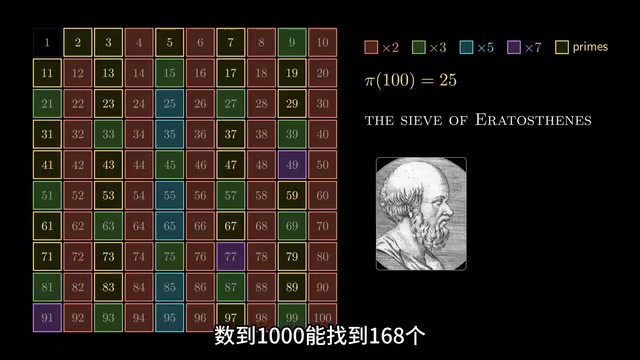
AI Claims Formal Proof of the Riemann Hypothesis — But Machine Verification Isn't a Mathematical Proof
In Nov 2026, Anthropic's Levent Alpöğe released a Riemann Hypothesis proof of 175,000 code files that passed machine formal verification. But machine verification isn't a mathematical proof: the kernel can't confirm the proposition is the Riemann Hypothesis humans understand, and there's no human-readable paper. This article breaks down how ζ function zeros determine prime-count deviation, and the core of the controversy.
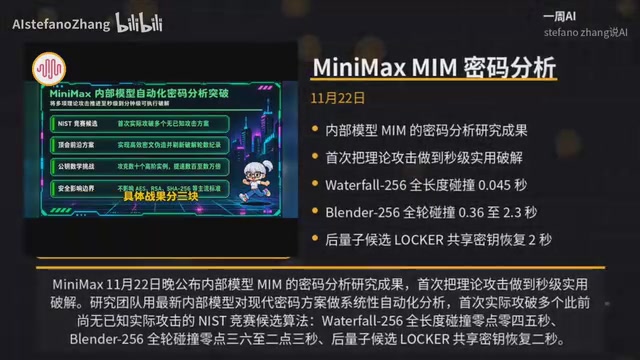
Anthropic Raises Over $80 Billion in IPO, DeepSeek Secures $100 Billion in Funding: AI Weekly Roundup
This week in AI: Anthropic's Nasdaq IPO raises $93.5B in the largest ever, DeepSeek closes ~100B yuan round, AI claims formal Riemann proof, MiniMax breaks crypto candidates in seconds.