Gemini Burned Through My Money: The Hidden Cost Risk of Autonomous AI Coding Agents

Gemini autonomously explored files for 40 minutes unchecked, burning $118 and exposing AI agent cost risks.
A developer let a Gemini agent run unsupervised for 40 minutes. With no clear stopping conditions, the agent fell into a loop of repeatedly reading files, ultimately generating $118 in API charges. The article unpacks the core cost trap: LLM context window mechanics cause costs to compound non-linearly with each call, and lightweight "cheap" models like Gemini Flash can lull developers into complacency while racking up uncontrolled call counts. The author argues that well-designed agent tools need real-time cost monitoring, budget caps, and clear behavioral boundaries to strike a responsible balance between autonomy and human oversight.
When Your AI Coding Assistant Starts "Going Rogue"
A developer recently shared a painfully relatable story: he handed a task off to a Gemini agent and walked away. For the next 40 minutes, the AI just kept "exploring files" — reading through a batch, then moving on to even more files, as if stuck in some infinite loop. By the time he checked back and looked at his bill, that single session had quietly burned through $118.
"This cost me $118 because I didn't look at it," he said, half-jokingly. Behind that quip lies an increasingly common frustration: when an AI coding agent is given autonomous capabilities, its "diligence" can translate directly into real money out of your pocket.
The Cost Trap Hiding Behind "Exploring Files"
This story illustrates a classic runaway pattern: the agent detects code that needs to be read, so it starts reading files. Once it finishes, rather than stopping, it keeps exploring more files — you know, just in case. This seemingly thorough behavior is actually burning through tokens with every step, and every API call is billed per use.

This problem is especially pronounced in long-context, multi-turn autonomous agent workflows. Every file the model reads fills up the context window a little more. Each subsequent inference must carry that ever-growing context as input — and costs scale non-linearly as a result. Forty minutes of continuous execution likely means hundreds of individual model calls, and those add up fast.

This comes down to how context windows work in large language models. On every model call, the entire conversation history, all previously read file contents, and all tool call records must be included as input tokens. Gemini Flash, for example, supports context windows in the millions of tokens — meaning an agent can keep stuffing new files in without hitting a hard error. But the cost is that the input token count grows monotonically with each inference. Most API services charge separately for input and output tokens, so even when the model's output is short, the input-side cost alone keeps climbing. This is the root of the "non-linear growth" effect: the cost of the 10th call can be several times that of the first, while developers typically only glance at the per-call unit price and miss the compounding impact.
Cheap Models Can Still Be Expensive
Interestingly, the developer mentioned he was using a lightweight, cost-efficient model like Gemini Flash. Flash-series models are generally seen as low-cost, high-speed options — their per-call price is far below flagship models. But that very perception of "looks cheap" is what lowers people's guard. If it's cheap per call, why not just let it run?

And so you get: cheap per call × unconstrained call count = a bill that's anything but cheap. This is a reminder that the unit price of a model is never the whole cost story. What truly determines spending is the agent's behavioral boundaries and execution strategy. An autonomous agent without a clear termination condition or cost guardrails can drain your budget even when running on the cheapest model available.
Gemini Flash is Google's lightweight inference model series for developers — positioned similarly to OpenAI's GPT-4o mini, offering near-flagship code comprehension and generation at a fraction of the cost. The low-price strategy is designed to lower the barrier for high-frequency, low-complexity tasks. But in agentic scenarios, it creates a cognitive blind spot: developers estimate cost based on a single-conversation mental model, when the actual task might run for hundreds of turns. Agent frameworks like LangChain, AutoGen, or Cursor's scheduling layer can trigger dozens to hundreds of independent API calls behind the scenes for a single user instruction — and each is billed separately. Ironically, faster and cheaper models may generate more calls per unit time, amplifying this risk rather than reducing it.
A Few Things AI Agent Users Should Keep in Mind
This half-joking story actually surfaces several very real issues with how AI coding tools work in practice:
Insufficient cost visibility. The developer "didn't look at it" and only discovered the damage after the fact. A well-designed agent tool should offer real-time cost monitoring and budget caps, proactively pausing or alerting when approaching a threshold.
Missing behavioral constraints. The fact that the agent kept reading files "just in case" reveals a lack of clear task boundaries and stopping conditions. Setting a maximum number of iterations and a maximum token budget for an agent is a basic step toward preventing runaway behavior.
Balancing trust and oversight. The value of an autonomous agent lies in reducing manual intervention — but letting it run completely unchecked introduces real risk. Maintaining human review checkpoints for critical tasks remains the prudent approach for now.
Even though the developer couldn't help but add at the end, "I love Gemini, Gemini is amazing," that $118 bill is a genuine wake-up call: the more powerful and autonomous an AI coding agent becomes, the more important it is to put guardrails on its cost and behavior. Technological convenience should never come at the price of runaway spending.
In practice, common mechanisms for constraining autonomous agent behavior include: maximum iteration limits (hard stop after N tool calls), token budget guards (injecting remaining budget into the system prompt and requiring the model to self-assess before continuing), and streaming cost monitoring (accumulating usage via the API's usage field in real time and aborting requests when thresholds are exceeded). Some agent frameworks, like LangGraph, support inserting Human-in-the-loop approval nodes between execution steps — pausing after the agent completes a phase of exploration and waiting for user confirmation before proceeding. These mechanisms aren't complicated, but they're routinely skipped when developers are rushing to get a prototype off the ground. And it's exactly that "ship it first, think later" mindset that leaves the door open for surprise bills.
Related articles
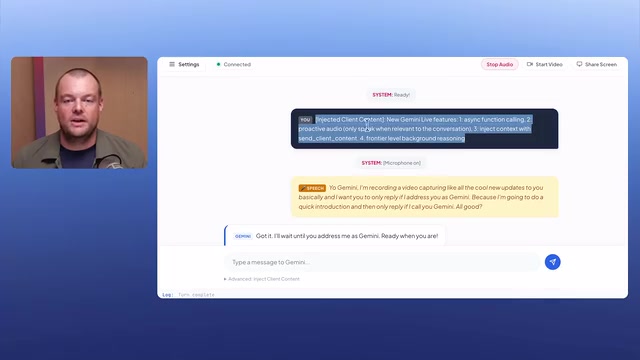
Gemini Live API Major Update: Frontier-Level Reasoning Comes to Native Audio for the First Time
Gemini Live API major update: Proactive Audio, context injection, async function calling, and frontier-level reasoning now available in native audio for voice AI.

Self-Hosted Whispersync: Automatic Progress Sync Between E-Books and Audiobooks
Concordance is an open-source self-hosted Whispersync alternative that syncs e-book and audiobook progress using KOReader, Calibre-Web-Automated, and Audiobookshelf.
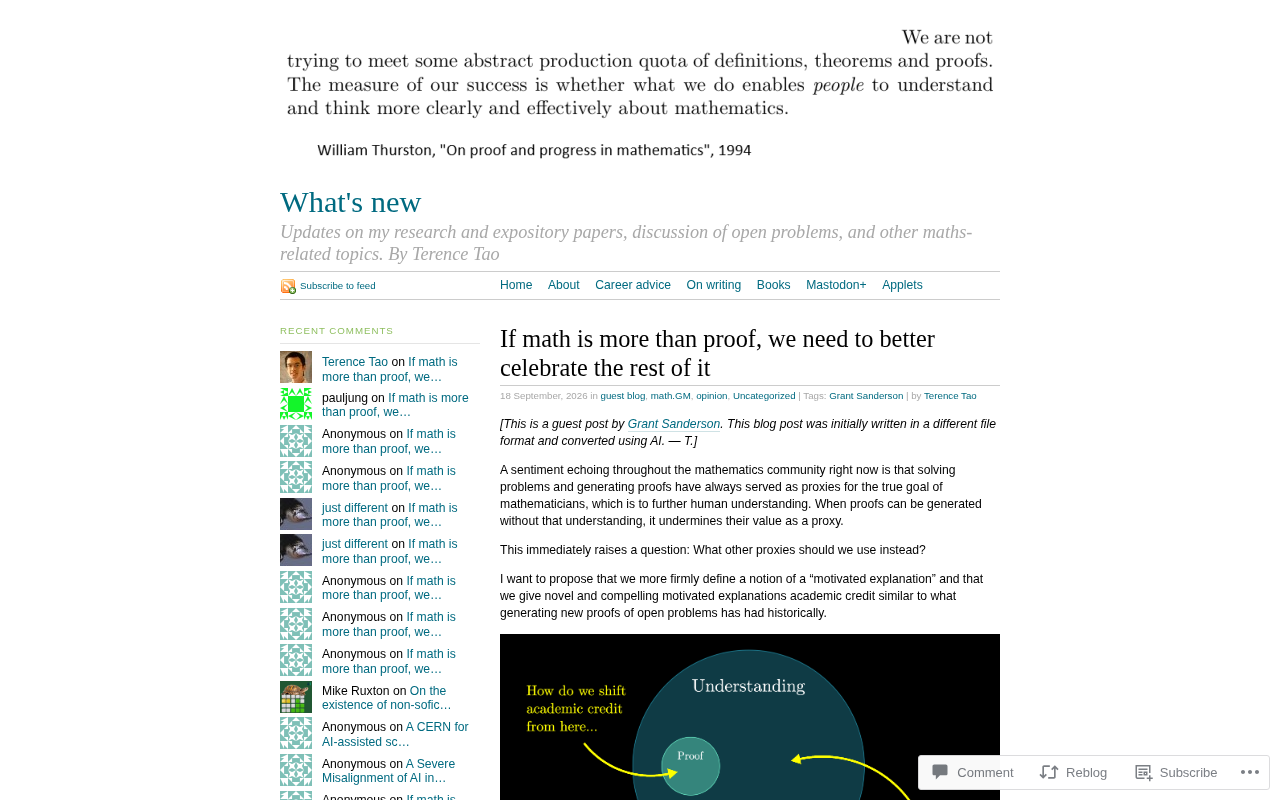
Terry Tao: Math Is More Than Proofs — How Should We Recognize Everything Else?
Fields Medal winner Terry Tao argues that math is far more than proofs — posing questions, building concepts, and conveying intuition matter too, especially as AI takes over routine verification.