Gemini CLI: The AI Development Powerhouse in Your Terminal, Ending Tool Fragmentation

Google's open-source Gemini CLI brings AI agent power to your terminal, ending tool fragmentation.
Gemini CLI is Google's open-source AI terminal tool that integrates Gemini models into the command line. It supports code generation, file operations, Shell execution, and MCP protocol extensions, offers 1,000 free daily requests, and has surpassed 100,000 GitHub stars—helping developers escape the productivity drain of constant tool switching.
Fragmented Toolchains Are Eroding Your Productivity
For every developer, daily work often means jumping back and forth between multiple tools: opening an IDE to write code, switching to a browser to check documentation, and opening yet another web page to ask an AI when problems arise. Every window switch is an interruption to focus—context is constantly reset, and complex tasks require shuffling between multiple tools.
Research in cognitive science shows that each task switch takes an average of 23 minutes to fully recover deep focus—a figure derived from years of workplace tracking studies by Professor Gloria Mark at the University of California, Irvine, which quantified the true cost of task interruptions on cognitive efficiency through direct field observation. The study employed the "Experience Sampling Method" methodology, in which researchers directly observed the actual behavioral patterns of information workers on-site rather than relying on self-reported questionnaires, giving the data high ecological validity. The "Flow" theory proposed by psychologist Mihaly Csikszentmihalyi points out that when a person is fully immersed in a task, they enter a psychological state of optimal efficiency—and frequent tool switching is precisely the primary culprit that disrupts flow.
Triggering the flow state requires three key conditions: clear goals, immediate feedback, and a delicate balance between challenge and skill. Neuroscience research further reveals that during the flow state, activity in the brain's prefrontal cortex diminishes (a phenomenon known as "Transient Hypofrontality"). This occurs because the brain reallocates its limited metabolic resources away from the prefrontal cortex—responsible for self-monitoring and rational analysis—to the sensorimotor cortex and basal ganglia directly involved in task execution. This actually makes creative thinking more fluid and automated execution more efficient. Cognitive Load Theory reveals the nature of switching costs from another dimension: the capacity of human working memory is extremely limited (psychologist George Miller's classic research suggests roughly "7±2" chunks of information), and every forced context switch clears this precious buffer. For developers, each jump from IDE to browser to AI chatbox forcibly interrupts the carefully maintained code logic and debugging trains of thought in working memory, and rebuilding those mental connections consumes additional precious cognitive resources.
It's worth noting that Cognitive Load Theory divides load into three categories: intrinsic load (the inherent complexity of the task itself, such as understanding a complex algorithm), extraneous load (extra complexity introduced by poor tool design, such as memorizing different tools' operating methods), and germane load (effective cognitive investment used to build long-term understanding and internalize skills). All three categories compete for limited working memory capacity—the higher the extraneous load, the less room left for truly valuable germane load. Tool switching brings precisely this typical "extraneous load"—it is unrelated to the task itself yet continuously consumes cognitive bandwidth that could otherwise be devoted to deep thinking. Fragmented toolchains are essentially a systemic productivity tax, quietly levied in every developer's daily work.

This fragmented toolchain may seem like just a scattering of minor inconveniences, but in reality it quietly consumes a developer's most precious resources—creativity and flow. Google's open-source Gemini CLI aims to use a unified terminal interface to end this fragmented working model.
What Is Gemini CLI
Gemini CLI is an open-source AI terminal tool from Google that brings the capabilities of Gemini models directly into the command-line environment. Developers can complete an entire workflow—from code generation and documentation queries to command execution—without ever leaving the terminal.
Its positioning is not merely a "command-line chatbot," but rather an AI Agent deeply integrated into the development environment. To understand the significance of this positioning, it helps to review the evolution of AI tools: the first generation of language models could only handle single-turn Q&A; the second generation introduced multi-turn conversational memory; and the AI agent represents the third-generation paradigm—it can not only "speak" but also "act." Traditional chatbots operate purely at the linguistic level with an "input-output" model, lacking the ability to perceive and act upon the real world. AI agents, however, introduce a "perceive-decide-act" closed-loop architecture: they can read the file system, execute shell commands, call external APIs, and dynamically adjust their next steps based on execution results—upgrading from "advisor" to true "executor."
This paradigm shift has profound engineering implications. An AI agent's "ability to act" depends on the Tool Use mechanism—the model not only outputs natural language text but also outputs structured "intent instructions" (typically function call descriptions in JSON format), which are parsed by the runtime framework and mapped to real system calls (file reads/writes, process launches, HTTP requests, etc.). The tool's return results are then serialized and re-injected into the prompt context, driving the model into the next round of reasoning. This mechanism requires the underlying language model to have precise Instruction Following capabilities and semantic understanding of tool return results, rather than merely generating fluent natural language—which is why different models' actual performance in Agent scenarios varies far more than in pure conversation scenarios.
At the engineering implementation level, Gemini CLI adopts the currently mainstream ReAct (Reasoning + Acting) paradigm. This paradigm was formally proposed by Princeton University and Google Research in their 2022 paper "ReAct: Synergizing Reasoning and Acting in Language Models." Its core insight is that pure Chain-of-Thought reasoning tends to produce hallucinations and gradually drift from reality without external feedback, while pure action execution lacks sufficient reasoning depth. ReAct combines the two: the model progressively advances tasks through an iterative loop of "Thought → Action → Observation," where each round's action output serves as new context input driving the next decision. The breakthrough of this architecture is that errors can be observed and corrected in real time, rather than accumulating without feedback—transforming the language model from a closed "text generator" into an executing agent capable of interacting with a real computing environment.
It's worth mentioning that ReAct did not emerge from nowhere. It stands on the shoulders of the "Chain-of-Thought (CoT)" prompting technique: CoT was proposed by the Google Brain team in 2022, and by requiring the model to explicitly output reasoning steps before giving an answer, it significantly improved accuracy on complex reasoning tasks. ReAct's contribution lies in connecting this "internal chain of thought" with real actions in the external world—allowing each reasoning step to potentially trigger a query or operation on the real environment, thereby extending the model's knowledge boundary from training data to real-time external information sources. From a practical standpoint, each step of the ReAct loop involves the model fully re-comprehending the context: the Observation phase injects the raw data returned by tools (such as command-line output, file contents, API responses) into the prompt, and the model must splice this with the historical reasoning chain before regenerating its next thought. This mechanism enables Gemini CLI, when facing multi-step complex tasks, to dynamically correct early erroneous assumptions rather than executing a fixed, predefined script. You can think of Gemini CLI as an AI collaborator residing in your terminal—one that both understands your intent and can actually operate on your project hands-on.
Core Capabilities at a Glance
Gemini CLI comes with a series of practical capabilities geared toward development scenarios:
- Google Search Grounding: AI responses incorporate real-time web search results, effectively reducing outdated information and hallucination issues;
- File Operations: Directly read and modify project files, saying goodbye to manual copy-paste;
- Shell Command Execution: Let the AI run commands for you, stringing together automated workflows;
- MCP Protocol Support: Achieve unlimited capability expansion through the Model Context Protocol, connecting to all kinds of external tools and services.

Among these, MCP protocol support is especially critical. The Model Context Protocol (MCP) is an open protocol proposed and standardized by Anthropic in late 2024. To understand MCP's value, one must first understand the pain point it aims to solve: before MCP existed, every AI application wanting to call external tools (such as databases, code execution environments, or internal enterprise APIs) had to develop a separate adaptation layer for each tool. N AI applications integrating with M tools produced N×M integration points, and maintenance costs exploded exponentially with scale. MCP's design philosophy echoes that of the early internet's HTTP protocol: by defining a universal request-response specification, it reduces this N×M problem to an N+M standard-interface problem.
At the technical architecture level, MCP uses JSON-RPC 2.0 as its underlying communication protocol—a lightweight remote procedure call specification that describes requests and responses statelessly with JSON as its carrier, making it easier to implement and debug across languages than XML-RPC or gRPC. The core design of JSON-RPC 2.0 encodes "which method to call, what parameters to pass, and what return is expected" completely into a single JSON message; the server parses it, executes the corresponding logic, and returns a result or error object. The entire interaction requires no session state, naturally suiting tool-calling scenarios in distributed environments. On top of this, MCP defines three categories of standard primitives: Resources—contextual data the model can read (such as file contents, database query results); Tools—executable functions the model can invoke (such as running terminal commands, initiating HTTP requests); and Prompts—reusable prompt templates. The server only needs to implement these three categories of primitives once to be callable by any compatible client. At the transport level, MCP supports both local inter-process communication (stdio mode, suitable for local tool integration with extremely low latency) and HTTP-based remote service calls (SSE mode, i.e., Server-Sent Events, suitable for cloud API access with strong scalability). This dual-mode design accommodates both low-latency local scenarios and highly scalable distributed scenarios.
Compared with OpenAI's earlier Function Calling approach, MCP's key advantage lies in its cross-vendor, cross-model universality—Function Calling is a proprietary API specification for each platform, and tool adaptation code written by a developer for one platform cannot be directly reused on another. MCP, however, is an open standard for the entire industry: implement once, use everywhere. This distinction carries significant weight in engineering practice: a tool ecosystem built on Function Calling has a strong platform lock-in effect, whereas every tool server in the MCP ecosystem naturally possesses cross-platform portability. Currently, major AI vendors including Anthropic, Google, and Microsoft have successively announced MCP support, and mainstream IDEs such as VS Code and Cursor have also joined the ecosystem. MCP is evolving from a single-vendor proposal into a genuine industry standard. Developers only need to implement an MCP server once to reuse it across any MCP-supporting AI client, truly achieving "interconnection" of the tool ecosystem. This means Gemini CLI is not a closed tool but an open platform that can continuously grow—developers can connect databases, APIs, private tools, and more according to their own needs, giving the AI in the terminal truly business-relevant capability boundaries.
Model Foundation and Free Quota
Gemini CLI is built on the Gemini family of models, and one of its biggest highlights is its ultra-long context at the million-token level. A token is the basic unit through which large language models process text—a tokenizer uses algorithms such as Byte Pair Encoding (BPE) or SentencePiece to split raw text into the smallest semantic units in the vocabulary, with typically 1 token corresponding to about 3-4 English characters or 1-2 Chinese characters. The early GPT-3 had a context window of only 4,096 tokens, whereas Gemini 1.5 Pro was the first to expand it to 1 million tokens, with the latest version reaching 2 million tokens.
Behind this leap lies a fundamental engineering challenge of the attention mechanism. The self-attention computation complexity of a standard Transformer grows at O(n²) with sequence length—meaning that when processing each token, the model must compute relevance weights with all other tokens in the sequence, so the longer the sequence, the more the computation and memory footprint balloon at a quadratic rate. Expanding context from 4,096 to 1 million tokens increases the theoretical computation by about 60,000 times, which is simply impossible under traditional architectures. Gemini models broke through this bottleneck through the synergy of multiple techniques: adopting linear attention variants to reduce complexity to O(n); using Chunked Attention to split long sequences into fixed-size blocks processed sequentially, reducing peak memory usage per computation; combining IO-aware algorithms such as Flash Attention to optimize memory read/write efficiency (Flash Attention performs attention computation in blocks placed within the GPU's high-speed SRAM, greatly reducing read/write operations to slow HBM memory; its core insight is that GPU computation speed far exceeds memory IO speed, and the bottleneck of traditional attention implementations lies precisely in the large number of memory accesses rather than the floating-point computation itself—by rearranging the computation order to keep intermediate results in on-chip cache as much as possible, Flash Attention reduces memory bandwidth requirements by several times without altering mathematical equivalence); and performing deep distributed-parallel optimization on Google's proprietary TPU v5 hardware, all of which made this leap achievable within a practical cost range.
Moreover, long context also brings the "lost in the middle" problem—a 2023 Stanford University study showed that when input text is too long, early language models exhibited a systematic tendency to forget information located in middle positions, being more inclined to rely on content at the beginning and end of the sequence for reasoning. This phenomenon stems from the uneven distribution of attention weights in long sequences: the relative-distance effect of positional encoding causes tokens in middle positions to systematically receive lower weights in attention computation. Gemini's training strategy specifically introduced long-document understanding tasks and improved its positional encoding scheme (such as long-range extrapolation optimization of RoPE rotary position embedding, enabling the model to maintain positional awareness on sequences beyond the training length) to enhance the model's ability to distribute attention evenly across ultra-long sequences—which is precisely the key to making its long-context capability translate into genuine engineering value rather than merely a benchmark metric. A million-token context is roughly equivalent to 750,000 English words and can hold all the source files of a medium-sized codebase. This leap has substantial engineering value: a medium-sized project with hundreds of thousands of lines of code can be loaded into the model's "working memory" all at once, allowing the AI to truly understand cross-file dependencies and the overall architecture rather than making "blind-men-and-the-elephant" judgments based on local fragments. For scenarios requiring a global perspective—such as cross-file refactoring, legacy code auditing, and understanding complex project structures—long-context capability is almost a hard requirement.
Even more appealing to developers is its cost strategy: 1,000 free requests per day. For individual developers and lightweight teams, this quota is enough to cover most daily development needs, making it possible to get hands-on and experience it at virtually zero cost.
From Code Generation to PR Review, All Done in One Terminal
Gemini CLI's ambitions go beyond Q&A. It embeds AI capabilities into the complete development lifecycle: from the initial code generation, to debugging and troubleshooting along the way, to the final PR (Pull Request) review—all of which can, in theory, be completed within a single terminal.
True efficiency gains come not from making you do more, but from letting the tool handle those repetitive, tedious, easily-interrupting steps for you. When writing code, looking up information, running commands, and reviewing code all converge into the same interface, developers can truly stay in the flow state.

Astonishing Community Enthusiasm: Over 100,000 GitHub Stars
As an open-source project, Gemini CLI's community response has been quite remarkable. The project has already garnered over 100,000 stars on GitHub, with about 14,000 forks, and adopts the permissive Apache 2.0 open-source license, ranking among the fastest-growing AI open-source projects.

GitHub star counts play multiple roles in the open-source ecosystem beyond a simple "like": they are both a signal of community recognition and a direct influence on a project's exposure weight in GitHub Explore and various tech media. Breaking 100,000 stars is a major milestone for an open-source project—according to statistics, less than 0.1% of the tens of millions of GitHub projects worldwide reach this magnitude. Even more informative is the fork count (about 14,000), which more directly reflects the scale of users with "substantive secondary development intent" and is a harder-core metric for gauging a project's engineering influence. The star-to-fork ratio is also worth noting: a higher fork/star ratio usually means the project not only attracts wide attention but also inspires genuine customization needs—precisely a typical hallmark of a healthy ecosystem for developer-tool projects. Additionally, the timing curve of star growth is equally critical: explosive growth over a short period often represents a precise Product-Market Fit rather than mere marketing effect—Gemini CLI's speed of breaking 100,000 stars within days of release is phenomenal in the AI tools field.
The choice of the Apache 2.0 license is equally significant. An open-source license is essentially a set of legal contracts defining the boundaries of users' rights. Mainstream licenses form a spectrum from "strict reciprocity" to "highly permissive": GPL (GNU General Public License) sits at the strict end, requiring any derivative work based on GPL code to be open-sourced under the same license (the "copyleft" or "contagious" clause), which protects the collective interests of the open-source community but also gives many corporate legal departments pause; the MIT license sits at the permissive end, imposing almost no restrictions but also offering no patent protection; Apache 2.0 builds on permissiveness by additionally providing a patent grant clause, explicitly granting users a free license to use all relevant patents held by contributors, and stipulating that if a user files a patent lawsuit against the project, their license automatically terminates—this "Patent Retaliation" clause provides corporate adopters with a relatively certain legal safety margin, a key protection that MIT lacks. Against the backdrop of increasingly frequent deep-learning patent disputes in the AI field, this protection is especially critical. Kubernetes, TensorFlow, and Android all adopt this license precisely for its legal certainty in enterprise adoption scenarios. Google's choice of Apache 2.0 for Gemini CLI sends a clear signal: encouraging enterprises to integrate it into their internal toolchains without worry, feeding an open ecosystem back into the product's continuous capability evolution, and further lowering the barrier to team adoption.
How to Get Started with Gemini CLI Quickly
Experiencing Gemini CLI is extremely simple, requiring no complex installation process. Just run Google's official package directly in the terminal via npx:
npx @google/gemini-cli
npx is a command execution tool built into the Node.js package manager npm since version 5.2, allowing developers to temporarily download and run a target program directly from the registry without installing the package globally. It works as follows: it first checks whether the target command exists in the local node_modules/.bin directory; if not, it downloads the latest version of the corresponding package from the npm registry to a temporary directory, and after execution retains the cache for fast subsequent reuse (the cache is by default located in the system's npm cache directory, viewable via npm config get cache). This "zero-installation-friction" distribution strategy means you don't have to worry about version conflicts or environment pollution—every invocation ensures you get the latest version from the npm registry, letting curiosity be satisfied instantly.
From the perspective of distribution strategy, the npx model represents a modern best practice for CLI tool publishing. Traditional tools often require users to manually download binaries or install them globally via a package manager (npm install -g), which not only introduces version management burdens but may also cause dependency conflicts between different projects due to global environment pollution. npx compresses "discover → download → execute" into a single command, significantly lowering the barrier to a new user's first experience—known in the product growth field as reducing "Activation Friction." For products like AI tools that iterate frequently, this mechanism has an additional advantage: each execution pulls the latest release by default, avoiding the problem of users long using old versions because they forgot to update, ensuring all users stay on the same version baseline.
It's worth mentioning that npx relies at its core on Node.js's module resolution mechanism (dual CommonJS and ES Module modes) and the npm registry's Semantic Versioning (semver). The semantic versioning specification defines the change semantics of version numbers in the format MAJOR.MINOR.PATCH: a patch change indicates backward-compatible bug fixes, a minor change indicates the addition of backward-compatible features, and a major change means there are breaking changes. npx by default pulls the latest version that satisfies the current version-range constraint, and this mechanism ensures a balance between "always latest" and "no unexpected breakage." For developers unfamiliar with the Node.js ecosystem, simply ensure that Node.js 16+ is installed locally (verifiable via node -v) to meet all prerequisites.
If you want to dive deeper or contribute, search for google/gemini-cli on GitHub to browse the source code, submit an Issue or PR, and join the ranks of these 100,000 developers.
Conclusion: The Evolutionary Direction of AI Development Tools
The emergence of Gemini CLI represents a clear trend in AI development tools: moving from "assistive tool" toward "integrated environment." It no longer requires developers to adapt to the fragmentation of tools; instead, it integrates AI capabilities into the terminal developers know best—connecting external ecosystems via the MCP protocol, understanding complete projects with a million-token context, and truly replacing repetitive execution work with an AI agent architecture.
Whether to fully migrate core workflows to the CLI still depends on personal habits and project complexity. But for developers who pursue efficiency and are weary of frequently switching windows, Gemini CLI undoubtedly offers a new paradigm worth trying—letting tools do more for you, and reserving your creativity for what truly matters.
Key Takeaways
Key Takeaways
Related articles
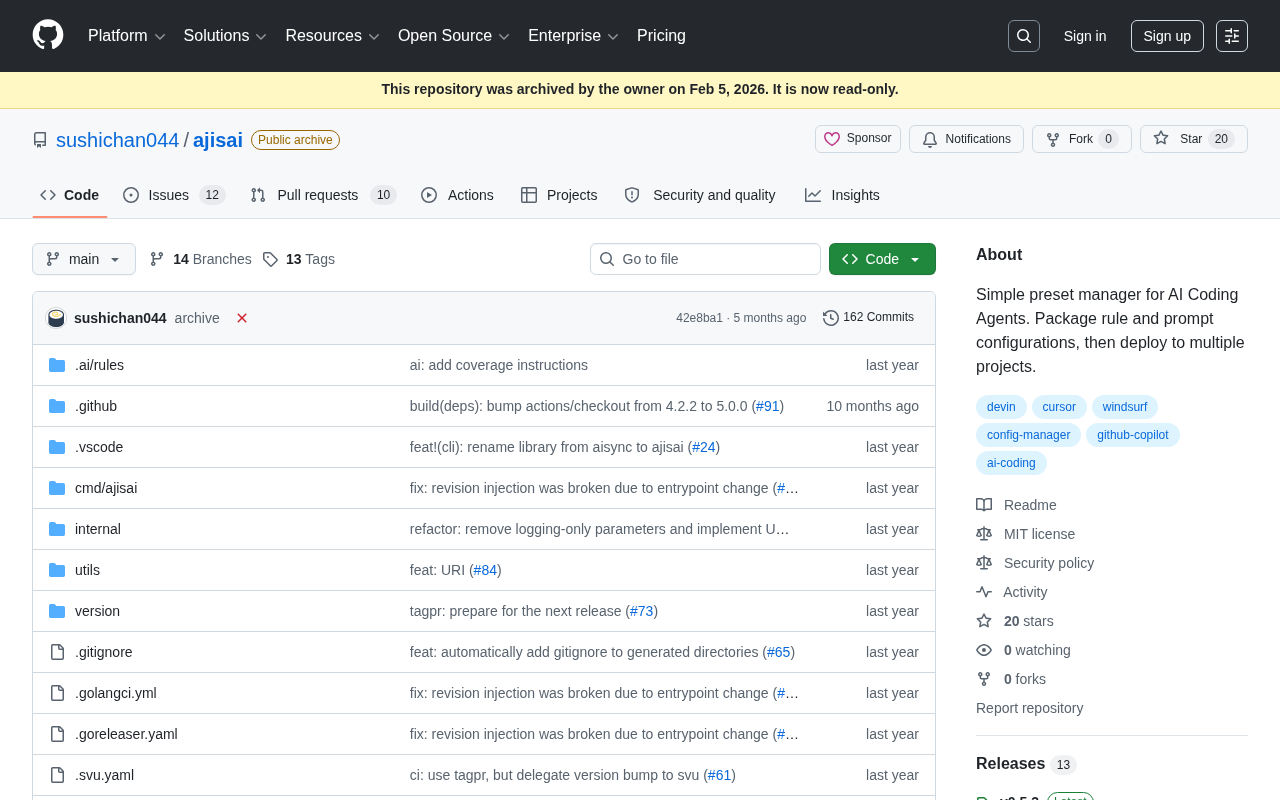
ajisai: A Preset Management Tool for Unifying Rules and Prompts Across AI Coding Assistants
ajisai is a Go-based preset manager for AI coding assistants like Cursor and Claude Code. Package rules and prompts once, deploy everywhere. Early-stage but promising.
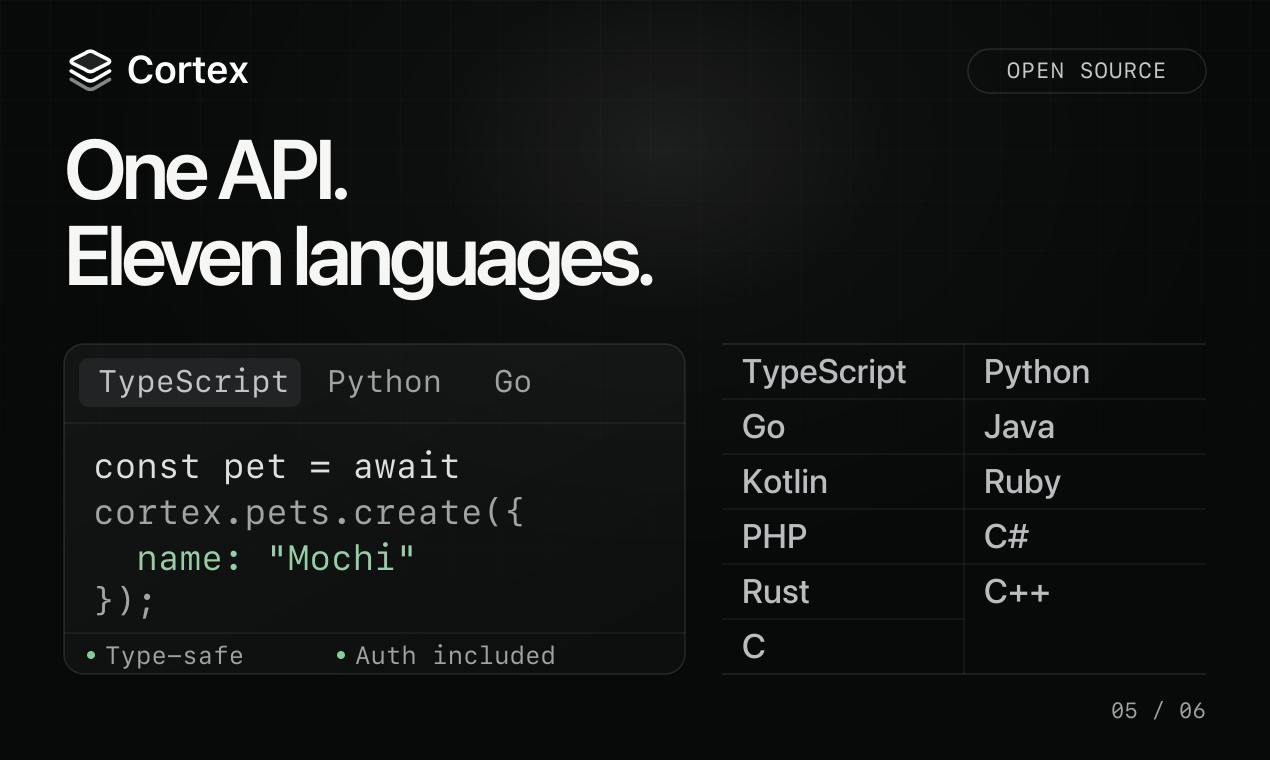
Cortex: Convert API Specs into Docs, SDKs, and MCP Servers in One Click
Cortex is an open-source tool that converts OpenAPI, GraphQL, gRPC and more into interactive docs, typed SDKs in 11 languages, and MCP servers for AI agents.

ABrush: An AI Studio Built for Digital Artists
ABrush is an AI studio for digital artists, ranked #4 on Product Hunt. It embeds leading AI models into existing workflows to remove repetitive tasks, speed up iteration, and keep artists in control.