Gemini Enterprise Free Trial Review: Key Features and Usage Considerations

Gemini Enterprise offers a 30-day free trial with multimodal AI, but bulk-registration "hacks" violate Google's terms.
Google's Gemini Enterprise comes in Business and Standard tiers, with the Business tier offering a 30-day free trial via simple email registration. The platform unifies conversational AI, image generation, and video generation into one enterprise workspace with file upload analysis and multi-device sync. While some promote "unlimited free access" by cycling through disposable email registrations, this violates Google's Terms of Service and risks account bans and data loss. For most users, a single legitimate trial period is enough to evaluate the product.
What Is Gemini Enterprise
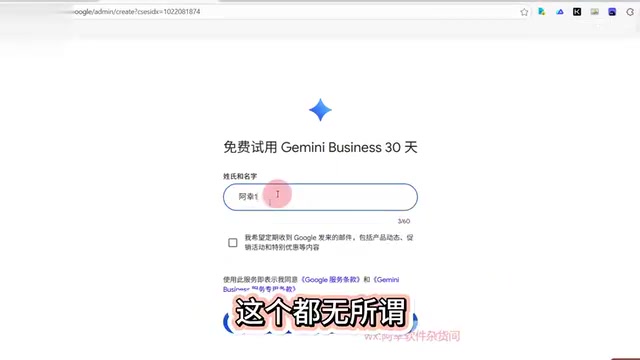
Google has recently launched Gemini Enterprise, a version of its AI platform designed for business use cases. According to a demonstration by Bilibili creator A Xing, the product currently comes in two tiers — Business and Standard — with the Business tier offering a 30-day free trial that requires nothing more than an email address to sign up.
This product is positioned differently from the consumer-facing Gemini app. It integrates multiple large model capabilities, supporting document processing, image generation, and even video generation, with access available across mobile, tablet, and desktop. For users who want to experience Google's full AI toolchain, Enterprise consolidates those capabilities into a single workspace.
Based on the demo, users log in with a Google account, enter the control console, choose whether to connect existing data, and can then access the various model options available on the backend.
Feature Demo: Multi-Model and Multimodal Capabilities
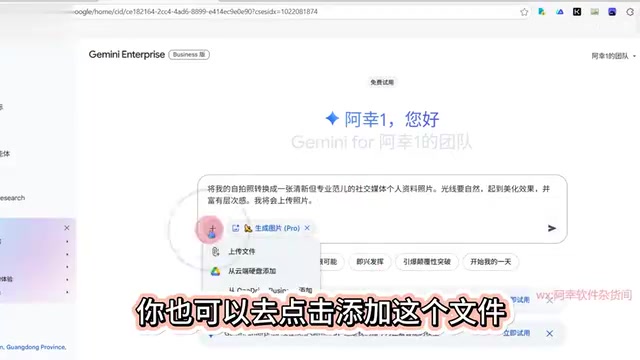
A Xing's video focused heavily on Gemini Enterprise's model selection interface. The platform includes multiple built-in options — among them the latest Gemini models and what the creator nicknamed the "Banana Model" (referring to Nano Banana / Gemini's image generation model) — allowing users to switch freely depending on the task at hand.
For document processing, the platform supports uploading various file formats from your local device, and paired with prompt instructions, it returns analysis results. In the demo, after uploading materials and submitting a prompt, the system enters a "thinking" phase before outputting the corresponding response. This "upload file + prompt" interaction pattern is a common workflow in enterprise productivity contexts.
Particularly noteworthy is the video generation capability. The demo shows that Gemini Enterprise integrates a video generation model — users can input a request and have a short video generated and previewed directly in the browser. This means text, image, and video generation are all accessible through a single unified interface.

"Multimodal" refers to an AI model's ability to process and generate multiple types of data simultaneously — including text, images, audio, and video — rather than being limited to text-only input and output. The Gemini family of models is one of Google's few large language models designed from the ground up with multimodality as a core architectural principle, comparable in positioning to OpenAI's GPT-4o. For enterprises, consolidating conversational AI, image generation (diffusion models), and video generation (typically based on Diffusion Transformer architectures) into a single workspace reduces the cost of context-switching across platforms — previously, users often had to juggle separate tools like Midjourney, Runway, and ChatGPT, with little data interoperability between them.
A Rational Take on the "Unlimited Free Access" Claim
The video was titled around the idea of "unlimited free use," with the core logic being: since each email address gets a 30-day free trial on the Business tier, you can cycle through new email registrations indefinitely. The creator even demonstrated using third-party disposable email apps to bulk-create addresses and receive verification codes for sign-up.

Readers should approach this type of workaround with caution. Using disposable email addresses to bulk-register accounts in order to bypass payment limits likely violates Google's Terms of Service, carries the risk of account suspension, and offers no guarantee of data continuity or security. For users with genuine enterprise needs, a legitimate subscription is the only way to ensure stable, compliant service. For individuals who simply want to try the product, a single standard 30-day trial is more than sufficient to evaluate whether it fits their needs.
Disposable Email Address (DEA) services provide temporary or short-lived email addresses, with common tools including Temp Mail and Guerrilla Mail. These tools were originally designed to protect personal privacy and reduce spam, but when used to bulk-register on commercial platforms, they typically constitute a violation of the provider's terms of service. Large platforms like Google have robust anti-abuse mechanisms — including device fingerprinting and IP correlation analysis — that can detect high-frequency registration activity from the same device or network, often resulting in account suspension or permanent bans. Additionally, data generated under a disposable email account cannot be persistently saved; once the address expires, access to that data is permanently lost.
Who Should Consider Trying Gemini Enterprise
Based on the overall demonstration, Gemini Enterprise's value proposition lies in consolidating Google's multiple AI models — conversational, image generation, and video generation — into a single enterprise-grade workspace, with multi-device sync and file upload analysis support.
If you're a content creator or someone who regularly handles documents and generates multimedia assets, this platform is worth seriously evaluating during the trial period to assess output quality and workflow fit. For general users, the consumer-facing Gemini app typically covers everyday needs, and the more complex feature set of the Enterprise version may not be necessary.
It's worth noting that this article is based on a single creator's demonstration. The specific feature scope and free trial policy details may change as Google updates the product — always refer to Google's official pages for the most current information.
Summary
Gemini Enterprise reflects Google's approach to enterprise AI tooling: a single entry point that unifies conversational, image, and video multimodal capabilities. The 30-day free trial lowers the barrier to evaluation, but the "unlimited free access" approach of bulk-registering accounts carries real compliance and security risks and isn't something to blindly follow. The rational approach is straightforward: use the official trial period within the bounds of the terms of service, and assess whether the tool genuinely fits your workflow.
Related articles

The Freud-Jung Split: Inside the Love and Hate of Psychoanalysis's Founding Father
Historian Andrew Scull on the Lex Fridman podcast unpacks how Freud and Jung went from close allies to bitter rivals — covering psychoanalysis's origins, Anna O, and Freud's personality.

Gender Disparities in the History of Psychiatric Treatment: Why Women Became the Primary Test Subjects
Medical historian Andrew Scull reveals on the Lex Fridman podcast that 60–70% of ECT and lobotomy patients were women. An analysis of diagnostic gender bias and psychiatric institutions as social control.
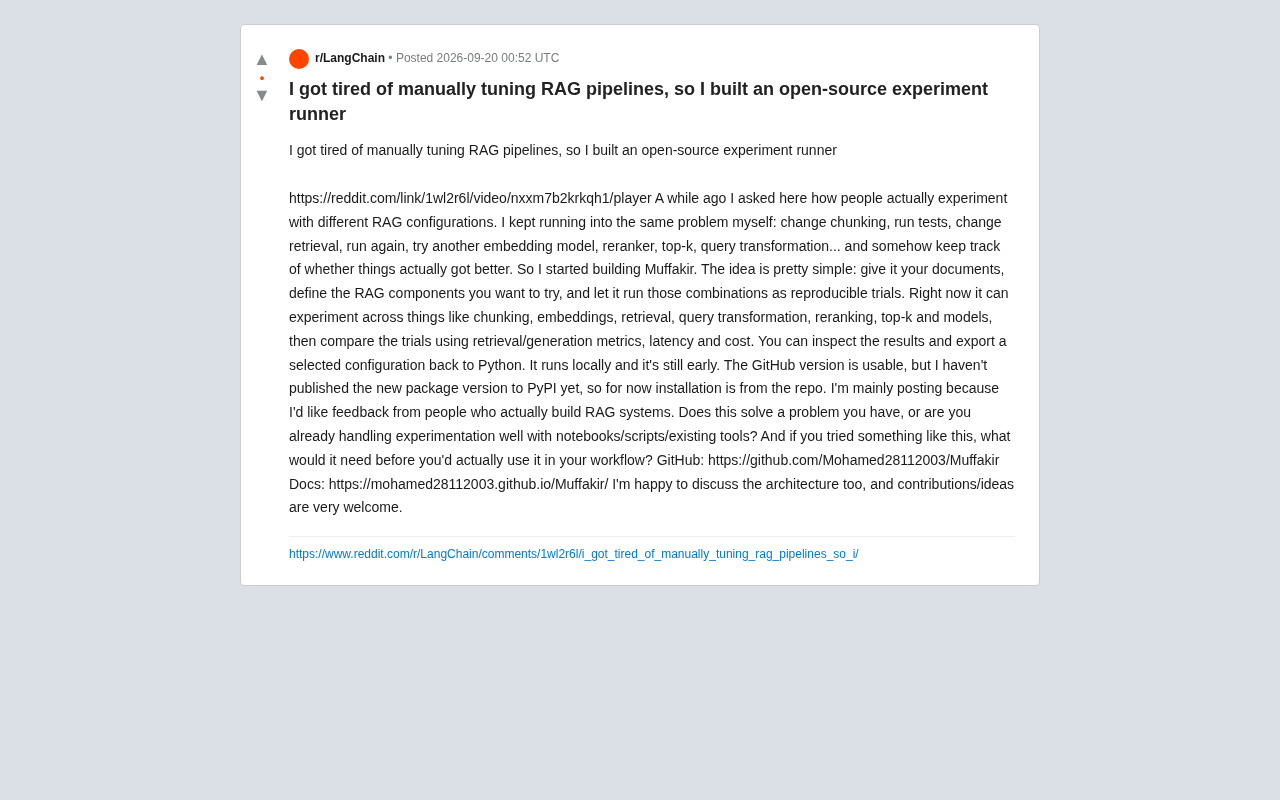
Tired of Manually Tuning RAG? Open-Source Tool Muffakir Automates Your Experiments
Muffakir is an open-source RAG experiment runner that automates chunking, embedding, retrieval, reranking, and top-k combinations, comparing results by metrics, latency, and cost.