Gender Disparities in the History of Psychiatric Treatment: Why Women Became the Primary Test Subjects

Medical historian exposes pervasive gender bias and abuse in 20th-century invasive psychiatric treatments.
In conversation with Lex Fridman, medical social historian Andrew Scull examines a hidden pattern in psychiatric history: women made up 60–70% of recipients of invasive treatments like ECT and lobotomy. ECT was widely used as a disciplinary tool in 1950s–60s institutions, while lobotomies were performed with little oversight. The gender imbalance stems from layered causes — a diagnostic system that gendered depression as female and personality disorders as male, shaping who received which treatments. Cultural depictions of these abuses continue to fuel public reluctance toward ECT today, despite its modern refinement. The history raises urgent questions about whether contemporary psychiatry still harbors these biases.
In an episode of the Lex Fridman podcast, medical social historian Andrew Scull shed light on a long-overlooked issue in the history of 20th-century psychiatric treatment: the most invasive and often destructive therapeutic interventions — from electroconvulsive therapy (ECT) to lobotomy — were overwhelmingly administered to female patients. This phenomenon reflects both diagnostic bias and the historical role of psychiatric institutions as instruments of social control.
Electroconvulsive Therapy: Treatment or Disciplinary Tool?
Scull notes that in psychiatric hospitals of the 1950s and 60s, ECT was nominally a treatment, but was extensively used as a tool for discipline and control. "It was overwhelmingly used to manage and control patients," he stated bluntly in describing that chapter of history.
This dual purpose left a deep mark on literature and film. Scull argues that such cultural works shaped a lasting public fear of ECT — "it had a very powerful and enduring impact." Even today, many patients remain hesitant about the treatment, despite modern ECT being vastly different in protocol and safety from its historical counterpart.
ECT was invented in 1938 by Italian neurologists Ugo Cerletti and Lucio Bini, initially grounded in the mistaken assumption that epileptic seizures and schizophrenia cannot coexist. Early procedures were performed without anesthesia or muscle relaxants — electric current passed directly through the brain of a conscious patient, inducing full tonic-clonic convulsions, with bone fractures as a common complication. These viscerally striking scenes fed directly into cultural works like One Flew Over the Cuckoo's Nest (1975), cementing the public's fear of ECT. Modern ECT has been fundamentally transformed: performed under general anesthesia with muscle relaxants, patients experience no convulsions; short-term memory impairment remains the primary side effect, but it is considered one of the most effective interventions for treatment-resistant severe depression. The vast gulf between its historical misuse and contemporary clinical practice is precisely what Scull identifies as the core of the enduring disconnect between public perception and medical reality.
Why Women Bore the Brunt of Experimental Treatments
Perhaps the most thought-provoking part of the conversation is Scull's examination of the gender distribution of treatment recipients. Using data to make his case, he demonstrates that women made up an overwhelming majority of those subjected to nearly all these invasive treatments.
Take the notorious Henry Cotton — a physician who believed mental illness could be cured by removing "infected foci" (including teeth and internal organs) — approximately 70% of his patients were women. Aggregate figures for lobotomies are harder to come by, but researchers reviewing patient records across multiple hospitals consistently found that 60% to 70% of recipients were women.

The sole exception was patients with syphilitic psychosis — for obvious epidemiological reasons, men suffered disproportionately in that category. Beyond that, women bore the primary impact of these medical experiments.
The lobotomy was invented in 1935 by Portuguese neurologist Egas Moniz, who received the 1949 Nobel Prize in Physiology or Medicine for the work — an award that remains controversial to this day. American physician Walter Freeman refined it into the "transorbital lobotomy," inserting an ice pick-like instrument through the eye socket into the frontal lobe in a procedure so simple it could be performed in a clinic, without a proper operating room. Freeman performed approximately 3,500 such operations in the United States, promoting it as an assembly-line treatment. The procedure severed neural connections between the frontal lobe and the thalamus; patients often became compliant and emotionally blunted — outcomes that, within the management logic of psychiatric institutions at the time, were classified as "improvement" rather than harm. Henry Cotton represents a different form of medical violence: his theory that mental illness stemmed from "focal infection" led him to mass-remove patients' teeth, colons, cervixes, and other organs at the New Jersey State Hospital in Trenton, with surgical mortality rates exceeding 30% and virtually no scientific basis.
How Diagnostic Bias Shaped Gender Distribution
One reason women became the primary recipients of these treatments is closely tied to the gendered nature of diagnosis itself. Scull explains that ECT was primarily used for severe depression and so-called "treatment-resistant depression" — and depression was diagnosed far more commonly in women than in men.
"It's not that men don't get depressed, it's the proportions," he adds. Men were more often assigned different diagnostic labels — personality disorders were more frequently attributed to men, as was ADHD.

This distinction matters: the gender imbalance in treatment recipients was partly a product of gender bias embedded within the diagnostic classification system itself. When a given diagnosis is deemed a "female" condition, the corresponding treatments naturally concentrate on female patients. This reminds us that gender issues in medical history are rarely the product of a single cause — they are the result of diagnosis, treatment, and social attitudes intertwining.

The gendered nature of psychiatric diagnostic criteria has been systematically documented in academic literature. Researchers have noted that successive revisions of the DSM (Diagnostic and Statistical Manual of Mental Disorders) have embedded gender assumptions into certain diagnostic categories: the word "hysteria" derives from the Greek for "uterus" and was long treated as a pathology exclusive to women; borderline personality disorder (BPD) is diagnosed in women at roughly three times the rate of men, though critics argue this reflects gendered interpretations of "emotional" behavior in the diagnostic criteria rather than true differences in prevalence. Meanwhile, men's internalizing disorders (such as depression and anxiety) may more often manifest as externalizing behaviors (such as aggression or substance abuse), routing them into different diagnostic pathways. This means the relationship between gender and diagnosis reflects not only biological or epidemiological differences, but is deeply shaped by social expectations and biases about gender roles in specific historical periods.
Modern Treatment Under the Shadow of History
Scull argues that public memory of this history — disseminated largely through negative portrayals in film and television — nearly extinguished medical interest in ECT for decades, with only a handful of enthusiasts continuing to use it. The shadow of that history persists to this day, serving as a significant psychological factor in patients' hesitation toward the treatment.
The value of this conversation lies not only in surfacing historical facts, but in prompting us to ask: do modern psychiatry's diagnostic classifications and treatment choices still carry traces of the gender biases of that era? Understanding history is the first step toward a clearer assessment of the present.
Related articles
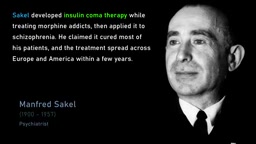
Behind 'A Beautiful Mind': Insulin Shock Therapy and the Dark History of Psychiatric Treatment
Medical historian Andrew Scull revisits the dark history of 20th-century psychiatry: how insulin shock therapy caused harm under the guise of miracle cures, with John Nash — the real man behind A Beautiful Mind — among its victims.

The Bloody Origins of Electroshock Therapy: A Century of Controversy, from the Slaughterhouse to the Psychiatric Ward
Medical historian Andrew Scull reveals ECT's bloody origins in a Roman slaughterhouse, tracing its evolution from punishment tool to evidence-based therapy — and the deeper crisis of scientific credibility it reflects.

The Freud-Jung Split: Inside the Love and Hate of Psychoanalysis's Founding Father
Historian Andrew Scull on the Lex Fridman podcast unpacks how Freud and Jung went from close allies to bitter rivals — covering psychoanalysis's origins, Anna O, and Freud's personality.