Gemini Flash's Aggressive Price Cut: The AI Agent Cost War Goes Full Scale

Google, OpenAI, and DeepSeek pursue divergent strategies—price cuts, speed, and commercialization—to dominate the AI agent economy.
Google launches Gemini 3.7 Flash at half price to win AI agent market share, OpenAI introduces UltraFast with wafer-scale chips for 14x speed gains, and DeepSeek raises prices while pursuing $74B valuation. All three are positioning for the agent economy where cost, speed, and reliability matter more than benchmark rankings.
Google Releases Another Flash Model: A Sub-Monthly Iteration Cadence
Google updated its Gemini product line again this week, launching the all-new Gemini 3.7 Flash. Here's a telling detail: just three weeks ago on July 21st, Google had released 3.6 Flash, and now on the evening of August 13th, it has already rolled out the next generation. This near "bi-weekly iteration" pace reflects the white-hot intensity of competition in today's large model market.
Based on benchmark results, Gemini 3.7 Flash's positioning is quite clear—delivering near-frontier performance at extremely low cost. In the AI comprehensive benchmark, Flash scored 56 points, nearly on par with Claude 3.5 Sonnet's 55 and GPT-4.5's 57. In Frontier Code 1.1 coding tests, it surpassed Sonnet's 42.7% and GPT-4.5's 41.3% with a score of 43.6%; in web development tests, its 1588 rating also leads competitors. These benchmarks span multiple dimensions from comprehensive intelligence indices to code generation, from logical reasoning to practical applications, forming the industry's standardized framework for evaluating model capabilities. Artificial Analysis's composite index aggregates multiple independent evaluation results, while Frontier Code specifically measures model performance on real programming tasks, including code completion, bug fixing, and architecture design scenarios.
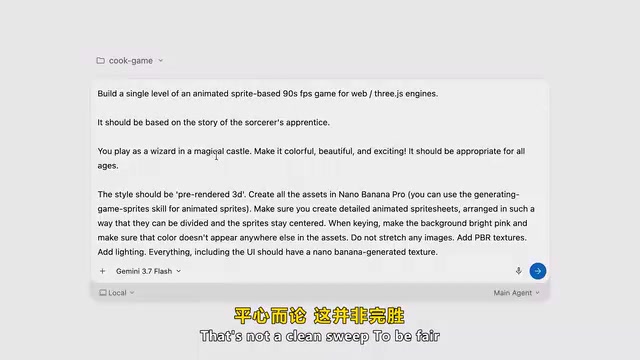
However, this isn't a across-the-board domination. In Deep reasoning tests, the GPT series still leads with 69.6% versus Flash's 65.3%; in Terminal Bench 3.0 terminal tasks, competitors lead with 20.8% while Gemini manages only 14.9%. Terminal Bench simulates real Linux terminal environments for system operations tasks, including server configuration, troubleshooting, and automation scripting—tasks that place extremely high demands on tool-use ability and long-chain planning capabilities. In knowledge work evaluations, Gemini 3.7 Flash also noticeably lags behind. But Google's intent was never to win across all categories—what it pursues is absolute dominance in the dimension of "cost-effectiveness."
Gemini 3.7 Flash's Aggressive Pricing: A Four-and-a-Half-Month Battle for Market Share
What truly caught the industry's attention is Gemini 3.7 Flash's pricing strategy. Through the end of this year, its input price is $0.75 per million tokens, and output price is $3.75 per million tokens. Google explicitly stated this is only half the original price of 3.6 Flash.
It's worth understanding the concept of tokens and their economic significance here. A token is the basic unit by which large language models process text, roughly equivalent to 3/4 of an English word or one Chinese character. Model usage costs are charged separately for input tokens (user-provided prompts and context) and output tokens (model-generated responses), with output typically costing 3-5x more than input because the generation process requires token-by-token autoregressive inference, demanding far more computation than encoding input. At deployment scale, even a $0.10 per million token reduction, accumulated across billions of API calls, translates to tens of millions of dollars in cost differences.
But a careful reading of the model documentation reveals the catch: this promotional period ends in early 2026, at which point input fees will rise back to $1.50 and output to $7.50. In other words, Google is subsidizing prices to capture this critical four-and-a-half-month market window.
Why is Google willing to bet so heavily on a few months' time window? The answer lies in agent economics. Traditional chatbot conversations might only call the model once or twice before ending, but AI agents that actually get work done need to plan tasks, perform searches, read dozens of documents, invoke multiple tools, automatically retry upon failure, and write all results back into context. Token consumption and tool invocation counts grow non-linearly at this point, causing costs to spike dramatically.
More specifically, the fundamental difference between a mature AI agent and a traditional chatbot lies in autonomy and tool-use capability. An agent needs task decomposition (breaking complex goals into executable steps), tool invocation (search engines, APIs, databases, etc.), memory management (maintaining long-term and short-term context), and error recovery (identifying failures and automatically adjusting strategies). Each capability means additional model inference calls. Industry estimates suggest an agent completing a "market research report" task might require 50-200 model calls, consuming hundreds of thousands of tokens. This is why "$0.50 per million token reduction" means tens-of-billions-dollar market restructuring in the agent economy. Whoever can run multi-step tasks of tens or even hundreds of steps at the lowest per-step cost holds the structural advantage.
Spark Agent: The Core Application Scenario for Gemini 3.7 Flash
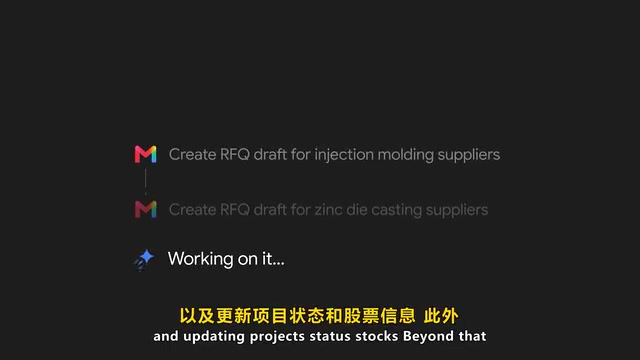
Google deployed 3.7 Flash into production almost the same day it was announced. It became the underlying engine for Gemini Spark—the personal agent announced at Google's I/O conference this year for subscription users, now available in over 160 countries and regions.
Google positions Spark as an agent that "runs 24/7, executing actions under your control." It handles Google Workspace tool invocations, such as consolidating multiple documents to draft emails, updating project statuses and stock information, etc. Developers can access it through the Gemini API, Google AI Studio, Android Studio, and other channels, while enterprise users can use it through Gemini's enterprise-grade agent platform. Spark's typical workflow demonstrates the token-intensive nature of agents: when a user requests "organize all meeting notes from last week and generate a weekly report," Spark needs to call the calendar API to get the meeting list, read each document's content sequentially, extract key information, perform comprehensive analysis, and then generate the report. The entire process might involve a dozen independent model inference calls, each carrying an ever-growing context. This is precisely where Flash's low-price strategy delivers its core value.
Gemini Pro's Absence and Internal Turbulence
There's an obvious logical gap here: the Flash version jumped from 3.6 directly to 3.7, while Gemini 3.5 Pro remains nowhere to be seen. When 3.6 Flash launched on July 21st, Google stated that 3.5 Pro was in partner testing and would soon enter public beta, and mentioned that Gemini 4 was undergoing "the most ambitious pretraining in company history." Yet now even 3.7 Flash has been released, and Pro's release date remains unconfirmed. Reuters specifically noted in its August 13th report that this release disclosed no timeline information for the flagship model.
This silence becomes easier to understand in light of internal personnel changes. Reports indicate leadership shuffles at DeepMind, combined with internal testing showing the flagship product's code performance falling short of expectations, computing resource scarcity, and insufficient investment in programming R&D during critical periods, with several core researchers leaving to start their own ventures. The flagship model's delay is likely the compounded result of all these factors. In the large model industry, Pro/flagship versions typically represent a company's strongest technical capabilities, requiring tens of thousands of top-tier GPUs running for months at costs of hundreds of millions of dollars—any deviation in technical approach can cause months of delay. Google's predicament is not unique—virtually all leading labs are experiencing the dual pressures of talent drain and compute competition.
OpenAI UltraFast: A 14x Speed Breakthrough in the "Latency" Dimension
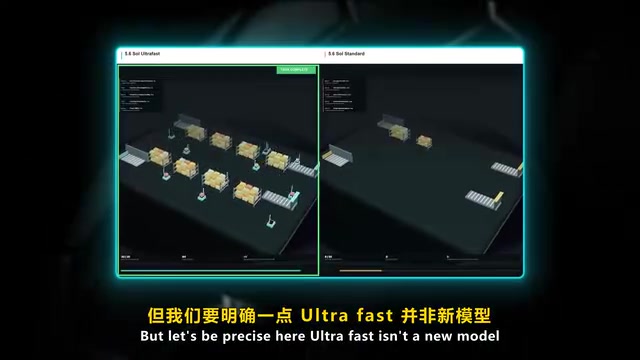
While Google was working on agent costs, OpenAI chose a completely different dimension—speed. On August 13th, OpenAI released a new API tier called UltraFast, enabling flagship models to run at up to 14x normal speed, approximately 520 tokens per second output.
It's important to clarify that UltraFast is not a new model, but rather a completely new inference mode for existing models. Its core logic ends the previous limitation where "real-time response" and "high intelligence" were mutually exclusive. In the past, achieving truly real-time responses meant being forced to choose smaller models at the expense of intelligence, while UltraFast aims to deliver both frontier reasoning capability and near-instantaneous output. To understand what 520 tokens per second means, consider this comparison: the average person reads about 250 English words per minute (approximately 330 tokens), while UltraFast's output speed is nearly 100x human reading speed. This means a 5,000-word research report can be generated in under 10 seconds, truly achieving a "think it, get it" experience.
This is clearly designed for AI agents as well. OpenAI is targeting incident response, code debugging, financial research, fraud detection, real-time customer service, as well as voice interaction and e-commerce. Early test users describe the difference as "a qualitative rather than quantitative change," fundamentally transforming the interaction experience when handling complex work. In agent scenarios, the significance of speed is further amplified: for an agent task requiring 100 steps, if each inference step shrinks from 2 seconds to 0.15 seconds, total execution time compresses from over 3 minutes to under 15 seconds. This isn't just a leap in user experience—it makes many time-critical application scenarios (like real-time trading decisions, security incident response) viable for the first time.
Wafer-Scale Chips: The Hardware Play Behind UltraFast
The engineering implementation behind this is noteworthy: UltraFast runs on hardware from a wafer-scale chip manufacturer, using an entire silicon wafer to host the complete model rather than distributing it across arrays of NVIDIA GPU racks. This eliminates the cumbersome data transfers between GPUs, and removing internal traffic dramatically reduces latency between prompts and responses.
Specifically, traditional chip manufacturing cuts a 12-inch (approximately 300mm) silicon wafer into hundreds of individual chips, each separately packaged and installed in servers. Running GPT-class large models typically requires thousands of such GPUs working in coordination, with data transmitted between chips via NVLink or InfiniBand networks, each cross-chip communication introducing microsecond-level latency. Wafer-scale computing pioneer Cerebras takes the opposite approach, using an entire wafer as a single chip. Its latest WSE-3 chip has an area of 46,225 square millimeters (equivalent to 56x NVIDIA's H100), integrating 900,000 AI cores and 44GB of on-chip SRAM. All compute units communicate directly through on-chip interconnects with bandwidth orders of magnitude higher than cross-chip networks—this is the physical foundation of the 14x speed improvement.
This also aligns with a broader market trend: as raw performance approaches saturation, competition is shifting toward "who can run models faster and more cheaply." This is both the driving force behind Grok's rise and signals that OpenAI is quietly reducing its full dependence on NVIDIA, exploring proprietary chip strategies. Over the past two years, NVIDIA has monopolized the AI training and inference market through its CUDA ecosystem and GPU computing power, but its products carry extreme premiums (a single H100 costs over $30,000) with persistently tight supply. Leading AI companies are actively seeking alternatives: Google has its in-house TPUs, Amazon has Trainium, Meta is developing MTIA, and OpenAI is simultaneously pursuing in-house chip development and partnerships with third-party vendors like Cerebras. Chip diversification is becoming a core strategy for AI companies to reduce risk and cost.
DeepSeek V4 Pro Raises Prices Against the Tide: The Logic Behind Commercialization

Just as OpenAI was worrying about compute and Google was aggressively cutting prices, DeepSeek chose a completely opposite strategy—raising prices. On Thursday, DeepSeek officially released V4 Pro, charging $1.32 per million input tokens and $3.96 per million output tokens. Compared to V4 Flash's $0.14 and $0.28, this represents roughly 9x the input price and 14x the output price.
The reason for the price increase is somewhat nuanced: the earlier-released V4 Flash unexpectedly outperformed V4 Pro's April preview version in multiple independent tests. According to Artificial Analysis scores, V4 Pro's reasoning edition scored 53 on the intelligence index, while V4 Flash scored 52—extremely close. This also suggests DeepSeek made significant progress after the preview version.
The deeper story is about commercial strategy. DeepSeek was founded in 2023 by High-Flyer, a quantitative hedge fund, and has long operated on its parent company's own capital—a rare purely technology-driven enterprise in China's AI landscape. Its technical approach centers on Mixture of Experts architecture (MoE, where the model contains multiple "expert" sub-networks, activating only a small portion during each inference, thus dramatically reducing computational costs while maintaining high performance) and reinforcement learning-driven reasoning. After its R1 reasoning model was released in early 2025, it demonstrated reasoning capabilities comparable to OpenAI's o1 series through open-source distribution, with training costs reportedly only one-tenth of the latter's, briefly triggering global tech stock turbulence and wiping nearly $600 billion from NVIDIA's market cap in a single day.
After R1's viral success, DeepSeek became China's most watched AI company, but its lead has since been squeezed by Moonshot AI, Zhipu AI, MiniMax, Alibaba, and ByteDance. According to Reuters' July report, DeepSeek is planning a funding round at approximately $74 billion valuation, just weeks after completing its first external funding round in June. For a company that refused external capital for years, this represents a massive strategic shift—a crucial transformation from "research lab" to "commercial enterprise." They plan to at least double headcount across departments, covering data centers and AI agent teams, while aggressively hiring chip design engineers to develop proprietary AI chips to reduce dependence on NVIDIA and Huawei. Against the backdrop of tightening U.S. chip export controls on China (Chinese companies currently cannot purchase H100-class and above GPUs), developing proprietary chips is not merely a cost consideration but a strategic necessity for supply chain security.
Three Paths, One Agent Economy Race
Looking at this week's moves from all three companies, it's clear that large model competition has shifted from "who's smarter" to a multi-dimensional differentiation game: Google is using aggressive pricing to seize agent cost leadership, OpenAI is achieving speed breakthroughs in the latency dimension through wafer-scale chips, and DeepSeek is pursuing commercial sustainability through price increases and fundraising.
What all three share is that they're preparing for the "agent economy." When AI truly begins handling multi-step, long-chain real-world tasks, cost, speed, and reliability will become the deciding factors, while pure performance leaderboard rankings fade into the background. In the second half of this race, what matters is no longer how impressive a model's first response is, but whether it can actually get the job done.
From a more macro perspective, 2025 is becoming the watershed moment for the AI industry's transition from a "demo economy" to a "production economy." Over the past two years, the core narrative for vendors was "where my model ranks on benchmarks," but now the competitive focus has shifted to "whether my model can complete complex real-world tasks at acceptable cost and speed." This transformation will profoundly reshape the entire AI industry's value chain—from chip design to cloud service pricing, from developer tools to end-user experience, every link is being restructured around agent requirements.
Key Takeaways
Related articles

AI-Generated TV Shows: Will Audiences Actually Pay to Watch Them?
AI-generated TV shows are moving from tech demos to consumable products. This article analyzes audience acceptance through label bias, genre fit, and content quality.

OpenAI's Ohio Data Center: A Complete Breakdown of Grid Upgrades, Water Use, and Community Commitments
OpenAI partners with SB Energy and NVIDIA to build a massive AI data center in Pike County, Ohio, pledging grid costs won't burden residents, using closed-loop air cooling, creating 35,000 jobs, and investing $80M in the community.

Hollywood Creatives Forced to Train AI to Replace Themselves: The Cruel Reality of Digging One's Own Grave
Hollywood writers, voice actors, and illustrators are being hired to train AI systems, accelerating the automation of their own careers. A deep analysis of the ethical dilemmas and labor challenges.