Gemini Skills BETA Analysis: How an AI Skill-Based Platform Is Changing Your Workflow

Gemini Skills BETA signals Google's shift toward a modular, customizable AI skill platform.
Google's Gemini Skills has entered BETA testing, transforming AI from a general conversational assistant into a pluggable skill platform. This aligns with OpenAI's GPTs and Anthropic's Claude Skills, signaling industry consensus on personalized AI. Community discussions highlight demand for productivity automation, developer tools, and research assistance. The feature represents a strategic move to build ecosystem moats through user retention and workflow lock-in.
Gemini Skills Quietly Enters BETA Testing
Recently, a Reddit user shared in the community that they had just unlocked Gemini Skills (BETA) and asked fellow users for creative ideas on "must-have skills." While this feature is still in its early testing phase with limited information available, the signal it sends deserves attention from the entire AI application ecosystem: Google is evolving Gemini from a "general-purpose conversational assistant" into a "pluggable, customizable skill platform."
The concept of "Skills" essentially means modularizing and contextualizing large model capabilities—users or developers can pre-configure a set of instructions, tool calls, and context for specific tasks, enabling AI to perform more professionally and consistently when handling certain types of problems. The underlying logic of this mechanism is closely tied to Prompt Engineering. Prompt Engineering refers to the technique of carefully designing input prompts to guide large language models toward desired outputs. A high-quality prompt often needs to include role definitions, output format constraints, few-shot examples, and Chain-of-Thought guidance, among other components—far more complex than what ordinary users typically understand. Skill-based design essentially packages these repeatedly refined prompt templates, system instructions, and tool-calling configurations, allowing users to achieve professionally tuned output quality without needing to understand the underlying principles of prompt engineering.
This aligns with OpenAI's earlier launch of GPTs and Custom Instructions, as well as Anthropic's Claude Skills, reflecting the industry's shared bet on "personalized AI assistants." Notably, OpenAI's GPTs feature, launched in November 2023, allows users to create customized ChatGPT variants through natural language descriptions and distribute them via the GPT Store; Custom Instructions was released even earlier, allowing users to set persistent preference instructions. The common characteristic of these product forms is: narrowing the general capabilities of large models through a configuration layer to create specialized assistants for specific scenarios. Google's entry into this space with Gemini Skills means the three major AI platforms have officially converged in product strategy, and industry consensus has been established.
Why AI Skill-Based Design Is an Inevitable Trend
The Natural Evolution from General to Specialized
General-purpose large models excel in breadth of coverage, but their shortcomings are equally obvious: when facing highly specialized or repetitive tasks, users often need to repeatedly input lengthy prompts to achieve stable outputs. The skill-based mechanism is designed precisely to solve this pain point—solidifying "prompt logic that's been tuned once" into reusable capability units.
From a technical architecture perspective, the modular approach embodied by Gemini Skills is highly relevant to the Agent architecture currently hotly discussed in the AI field. The core concept of Agent architecture is enabling AI not only to converse but also to autonomously plan task steps, call external tools (such as search engines, code executors, API interfaces), and dynamically adjust strategies based on intermediate results. Within this framework, each Skill can be viewed as a pre-configured micro-Agent—it has a clear objective, a fixed set of tools, and optimized decision logic. Google had previously offered developer tools like Agent Builder through the Vertex AI platform, and Gemini Skills is likely the consumer-facing product extension of this technology stack.
For example:
- A content creator might need a copywriting skill with a consistent style
- A programmer might want a dedicated code review skill
- A market analyst might need a skill that automatically scrapes data and generates charts
Skill-based design means these needs no longer depend on ad-hoc prompting each time, but become "click-and-use" modules.
A Key Move in Platform Competition
For Google, Gemini Skills is not just a feature—it's a strategic move to build ecosystem moats. When users accumulate a large number of custom skills on a platform, migration costs naturally increase. This is why all major vendors are accelerating their efforts in this area—skills not only improve the quality of individual interactions but also serve as a long-term mechanism for user retention.
This logic is similar to the App Store model of the mobile internet era. When users accumulate numerous custom skills on a platform and form personalized workflow configurations, the cost of switching to a competitor includes not only the time investment of reconfiguration but also the network effect loss of community-shared skill libraries. This strategy has been seen repeatedly throughout technology business history—from Microsoft Office's macro and template ecosystem, to Salesforce's AppExchange, to today's AI skill marketplaces—the core logic remains consistent: transforming a platform from a single tool into irreplaceable work infrastructure.
Most Anticipated Gemini Skills Directions from the Community
Based on the discussion atmosphere in the Reddit community, user expectations for skills can roughly be categorized as follows, which also provides clues for predicting the feature's implementation direction:
Productivity and Workflow Automation
- Document processing skills: Automatically summarizing long documents, extracting key information, generating meeting minutes
- Email and communication assistant: Automatically drafting, polishing, and translating emails based on context
- Task orchestration skills: Chaining multiple steps together to achieve semi-automated workflows
The task orchestration direction points to the industry trend of AI and RPA (Robotic Process Automation) convergence. Traditional RPA tools like UiPath and Automation Anywhere excel at handling rule-based repetitive operations but struggle when understanding semantics or processing unstructured data is required. The addition of large models fills this gap—AI skills can serve as an intelligent decision layer, determining when to trigger which automated processes and how to handle exceptions. This AI+RPA combination is called Intelligent Automation by the industry and is considered by analyst firms like Gartner as the next critical stage of enterprise digital transformation.
Developer-Specific Scenarios
- Code review and refactoring: Programming assistants optimized for specific languages or frameworks
- Technical documentation generation: Automatically generating API documentation from code comments
- Debugging assistant: Providing localization suggestions based on error logs
Learning and Research Assistance
- Paper deep-reading skills: Quickly breaking down academic paper methods and conclusions
- Knowledge Q&A: In-depth question-answering assistants for specific disciplines
These directions all point to a core demand: lowering the barrier to professional tasks so that non-experts can achieve expert-level output.
A Rational View of Gemini Skills in BETA
It's important to note that Gemini Skills is still in BETA testing, available only to select users. Google has not yet disclosed complete feature details, timeline for general availability, or developer APIs. Therefore, information circulating in communities mostly consists of scattered feedback from early adopters, and the specific capability boundaries, degree of customization, and whether third-party tool calls are supported all await further official disclosure.
For ordinary users, what's most worth doing at this stage is thinking about "which high-frequency tasks consume the most repetitive effort"—these are exactly the scenarios most suitable for being packaged into skills in the future.
For developers, close attention should be paid to whether Google will subsequently open up skill building and distribution mechanisms, as this will directly determine the openness and vitality of the Gemini ecosystem.
Conclusion: AI Is Evolving from a "Tool" into a "Toolbox"
The emergence of Gemini Skills marks yet another subtle shift in the large model interaction paradigm—AI is no longer a single black-box dialog interface but is gradually evolving into a composable, extensible capability platform. When skills can be created, shared, and reused, the value of AI assistants upgrades from "answering questions" to "solving workflows."
While it's too early to draw conclusions, one thing is certain: whoever can make the skill ecosystem more vibrant and user-friendly will hold the initiative in the next round of AI assistant competition. For users, why not start now by making your own "must-have skills list."
Related articles

Gaussian Process Bandit Optimization: Exploration Strategies and Inference Regret Guarantees
Cumulative regret guarantees in Bayesian optimization fail to reflect final recommendation quality. This article examines a new study that provides inference regret guarantees for Gaussian process bandit optimization through exploration query strategies and fill distance analysis, validated on hyperparameter optimization and control tasks.
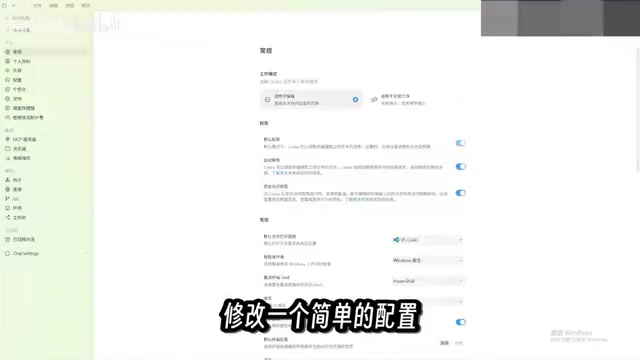
The Most Detailed Codex Guide on Bilibili: From Installation to Real-World Practice
The most detailed Codex guide on Bilibili: from app store installation to daily work mode configuration, with a real coffee shop project demonstrating file organization, data extraction, dashboard creation, and other practical tasks. Learn to use Plan Mode and desktop pets to leverage Codex efficiently.

Appearance Compensation in Volume Rendering: Why RGB Accuracy Cannot Guarantee Density Correctness
Volume rendering research reveals that volumetric data perfectly reproducing external RGB views may still contain density errors: appearance compensation can double central density and keep external rays unchanged even when L2 error exceeds 14.52%. Density recovery depends on appearance capacity, spatial resolution, and measurement design.