Genesis Map: A Visualized Risk Map for AI Agent Changes

Genesis Map uses a visualized risk map to expose potential code breakpoints caused by AI agent changes.
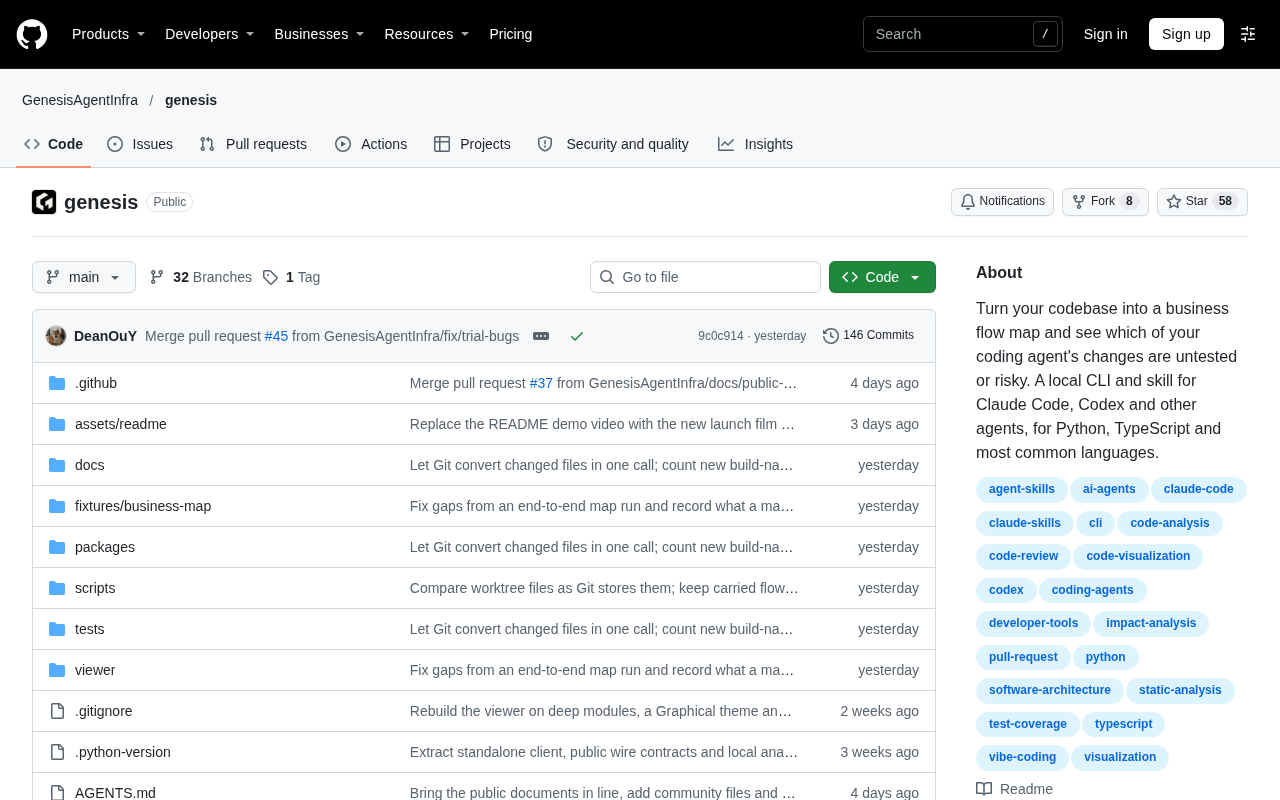
Genesis Map is an early-stage project on Hacker News that addresses the difficulty developers face in judging the blast radius when AI agents automatically modify code. Traditional diffs only show what changed but cannot answer where it will break; the tool attempts to turn agent changes into a visualized risk map that marks potentially affected fragile areas. Its positioning emphasizes "agent awareness," focusing on the overall risk of a batch of automated changes rather than single-file quality, which aligns closely with current agentic programming workflows. The project currently has low exposure and limited public information, and its dependency parsing accuracy and interactive experience remain to be verified, but the transparency question it raises is universally relevant for teams using agents to modify code.
When AI agents make automated changes across a codebase, the biggest hidden danger is often not the changes themselves, but the fact that developers don't know where those changes will trigger cascading effects. Genesis Map, which appeared on Hacker News, targets exactly this pain point: it turns each agent change into a visualized "risk map," exposing potential breakpoints in advance.
The Black-Box Dilemma of Agent Changes
When agents batch-modify files, adjust dependencies, or refactor functions, traditional diffs only show "what changed" but cannot answer "where will it break." Developers need to manually trace call chains, check test coverage, and evaluate boundary conditions—a process that is especially time-consuming in large repositories. Genesis Map's starting point is to make this implicit blast radius explicit, replacing line-by-line review with visual means.
Dependency parsing and impact analysis are the key technologies behind such tools. The call graph and dependency graph in a codebase record the reference relationships among functions, modules, and packages. When an agent changes a function signature or removes an export, impact analysis needs to traverse these graphs backward or forward to find all potentially affected nodes. In practice, dynamic languages and mechanisms such as reflection, dependency injection, and configuration-driven routing can cause static analysis to miss cases, so tools usually need to combine test coverage data and build system information to narrow the risk scope.
How the Map Presents Breakpoints
According to the project description, Genesis Map focuses on "see where they can break"—that is, marking the fragile areas that agent changes may affect. Such tools typically need to parse code structure, identify dependencies, and present changed nodes overlaid with affected paths. Although currently available public information is limited, its core logic is clear: transform the consequences of agent behavior from abstract diffs into locatable, sortable visual objects.
Differences from Existing Tools
Conventional code review tools emphasize static diff comparison, while Genesis Map's selling point is "agent awareness"—it assumes by default that changes are initiated by AI agents, so it emphasizes the overall risk of a change set rather than single-file quality. This positioning aligns closely with today's agentic programming workflows: developers need to quickly judge whether a batch of automated changes is safe, rather than cherry-picking them one by one.
Agent-aware approaches are fundamentally different from traditional code review paradigms. Conventional PR review assumes changes are initiated by humans, and reviewers focus on the semantic correctness of individual diff hunks; agents, however, often generate change sets spanning multiple files and modules in a single task, and point-by-point review struggles to capture coupling risks at the set level. Agent observability has therefore become an emerging direction, covering dimensions such as change tracking, impact assessment, and rollback feasibility judgment. Genesis Map's risk map is one presentation form in this direction.
Early Signals Worth Noting
The project received 5 points and no comments on Hacker News, indicating that it is still in an early exposure stage. For developers focused on AI programming safety and agent observability, this offers a direction to watch: as agents take on more and more responsibility for changes, accompanying risk visualization will become a necessity. Whether Genesis Map can deliver on its promises in dependency parsing accuracy and interactive experience still needs further verification.
Implications for Agent Workflows
The efficiency advantage of agentic programming is built on trust, and trust comes from transparency. The idea represented by Genesis Map—treating the blast radius of changes as a first-class citizen—has more long-term value than simply pursuing agent autonomy. Regardless of the tool's eventual maturity, the question it raises is worth considering for every team that uses agents to modify code: do you really know where your agent's changes will break?
One-line Summary
Genesis Map uses a visualized risk map to expose code breakpoints that AI agent changes may cause.
Paragraph Summary
Genesis Map is an early-stage project that appeared on Hacker News, targeting the pain point that developers struggle to judge the blast radius when AI agents automatically modify code. Traditional diffs only explain what changed but cannot answer where it will break; the tool attempts to transform agent changes into a visualized risk map that marks potentially affected fragile areas. Its positioning emphasizes "agent awareness," focusing on the overall risk of a batch of automated changes rather than single-file quality, which aligns closely with current agentic programming workflows. The project currently has low exposure and limited public information, and its dependency parsing accuracy and interactive experience remain to be verified, but the transparency question it raises is universally relevant for teams using agents to modify code.
Related articles
Aphasia Discourse Analysis: Language Metric Differences Across Tasks
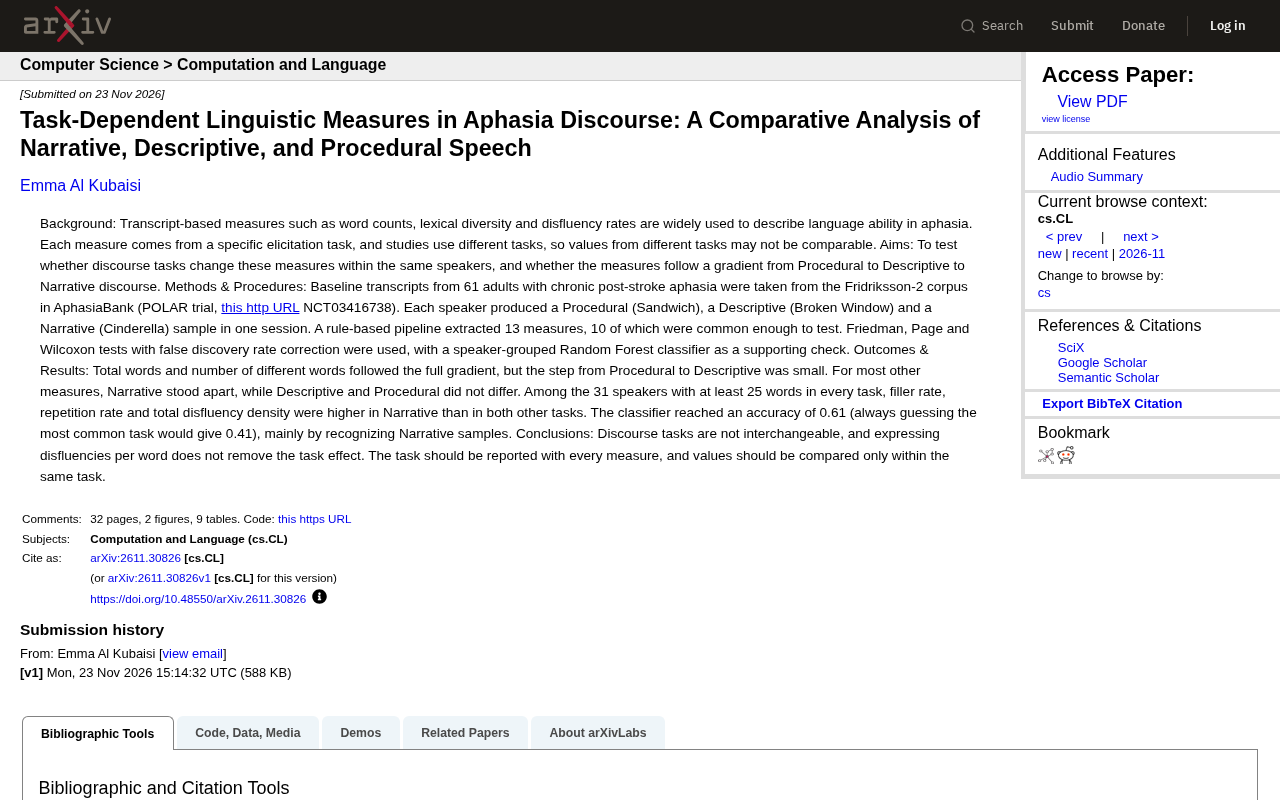
A study of 61 adults with aphasia found that narrative, descriptive, and procedural discourse tasks yield non-interchangeable language metrics. Total words and lexical diversity show a gradient; disfluency is higher in narrative tasks. Each metric must be labeled by task type and compared only within the same task.
Must-Read for Quality Engineers: A Practical Guide to Structured Data Extraction with Generative AI
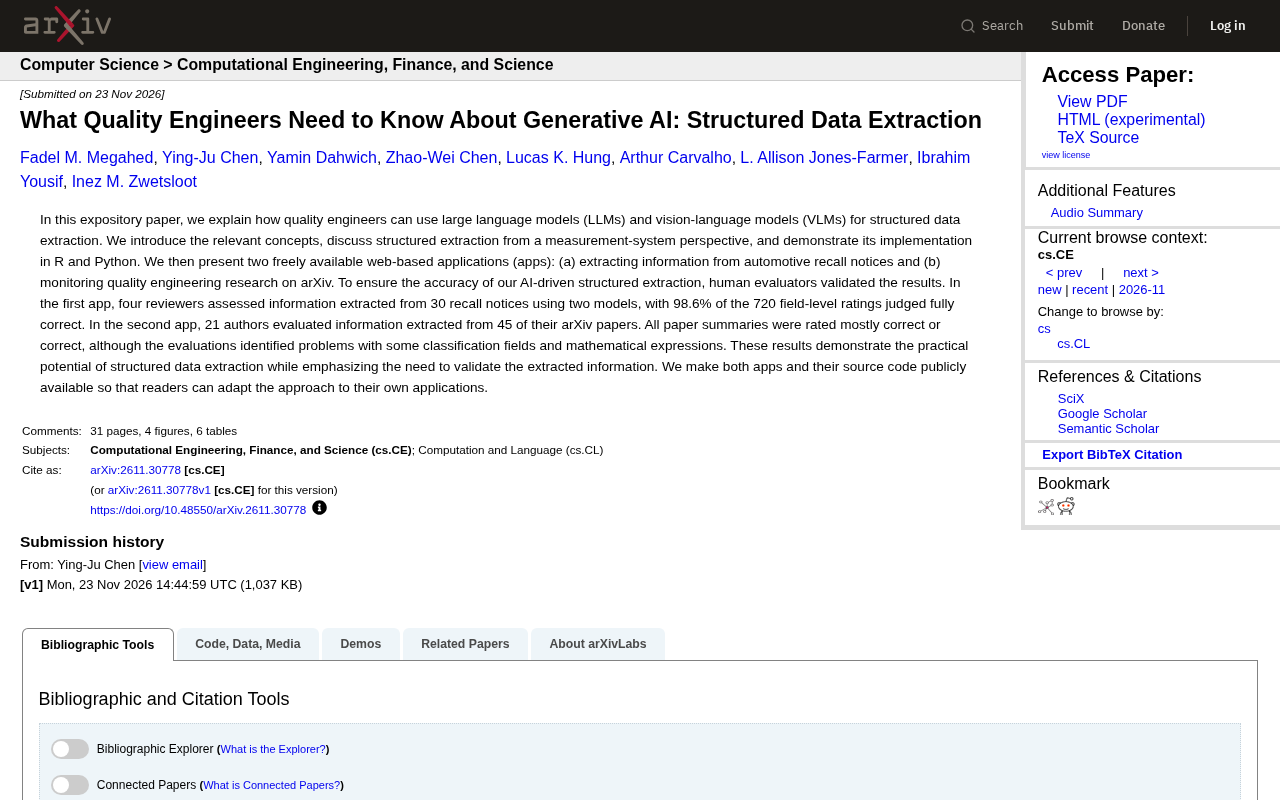
A paper shows how quality engineers use LLMs and VLMs for structured data extraction, validated through two web apps, with R and Python implementations.
CocoonBench: Can Multilingual Search Agents Break Out of the Language Information Cocoon?
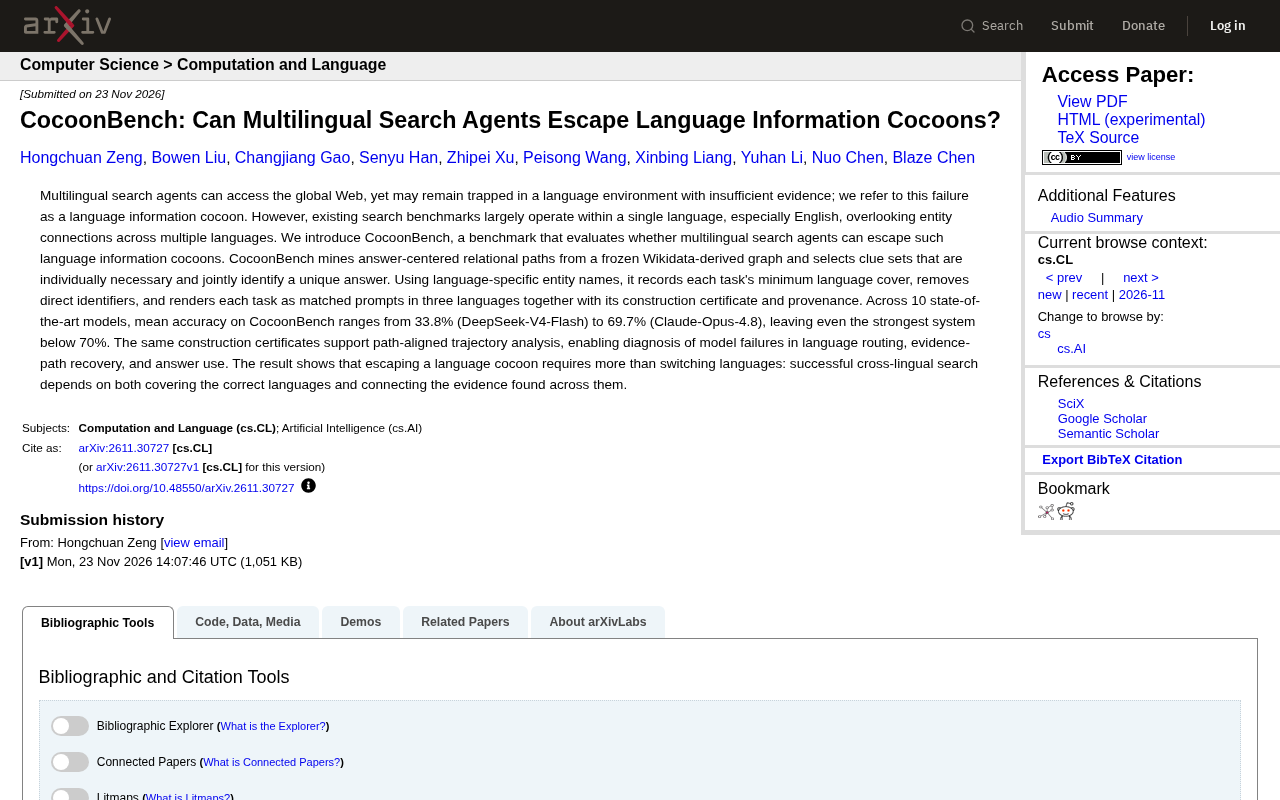
CocoonBench evaluates whether multilingual search agents can escape the language information cocoon. Tests show 10 advanced models range from 33.8% to 69.7% accuracy, with the strongest system still below 70%, revealing key challenges in connecting cross-lingual evidence.