Genie 4 Lands on Project Genie: The 'Recursive' Singularity of Generative AI?
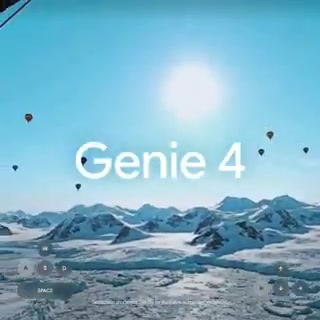
Google releases Genie 4 world model to Ultra subscribers only, hinting at recursive generation.
Google DeepMind has released Genie 4, first available to Project Genie Ultra subscribers. The official 'turtles all the way down' phrase hints at recursive or self-referential generation. Genie is positioned as a world model rather than an ordinary video tool, emphasizing interactive environments from a single image. Genie 4 continues this direction and encourages creators to 'build with it,' but no parameters or benchmarks were disclosed. The article explains the metaphor, analyzes the subscription strategy, and suggests prototyping, recursive experiments, and hybrid workflows for creators with access, while noting accelerating competition in the world model track.
Google DeepMind's Genie series has received a major update—Genie 4 is officially released and is first available to Project Genie Ultra subscribers. In its tweet, the team described this iteration with a slightly philosophical phrase, "turtles all the way down," hinting that its capabilities may exhibit some form of self-reference or recursive generation.


What Is Genie 4? From 'World Model' to 'Generative Universe'
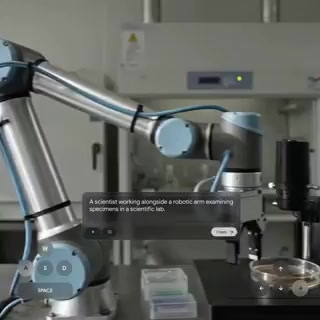
Genie is not an ordinary image or video generation tool. It first appeared as a "world model," capable of generating interactive 2D game scenes from a single image or simple prompt. The release of Genie 4 means this capability may further expand to more complex and coherent interactive environment generation. The official tweet emphasizes "excited to see what you'll build with it," suggesting that Genie 4 is positioned as a creation tool rather than a mere demo.
The metaphor "turtles all the way down" is worth pondering. It is often used to describe infinite recursion or a structure with no foundational base. In the context of Genie 4, it may point to the model's ability to generate scenes that contain its own generated content, or to maintain consistency across different levels of abstraction. This brings to mind a frontier direction in generative AI: enabling models not only to generate content but also to generate "environments that generate content."
World Model is a concept at the intersection of reinforcement learning and cognitive science. In the AI context, it refers to a system that internally models an environment's state transitions, physical laws, and causal relationships—given the current state and action, it predicts the next state. Traditionally, world models have been used to let agents plan "in their heads" (such as the Dreamer series of work). The innovation of the Genie series lies in turning the world model from an "internal component of an agent" into a "generative product that humans can interact with": the user inputs an image, the model infers a playable scene, and responds to operations in real time. This is fundamentally different from pure video generation models (such as Sora)—the latter pursues pixel-level realism, while the former pursues consistency in the action-state causal chain.
Project Genie and Ultra Subscription: Who Can Use It, and How?
According to the tweet, Genie 4 is currently open only to "Eligible Ultra subs" (eligible Ultra subscribers), with access through Project Genie. This means ordinary users cannot experience it directly for now, and Google has adopted a phased rollout strategy. Project Genie itself is an experimental platform that lets creators try out various capabilities of the Genie models.
For Ultra subscribers, the direct value of this update is earlier exploration of Genie 4 in scenarios such as game prototyping, interactive storytelling, and educational simulation. The official blog link (https://t.co/ZWAi93TesH) provides more technical details, but the tweet itself does not disclose specific parameters or performance improvements.
Project Genie is an experimental creation platform launched by Google DeepMind, positioned somewhat like a "testing ground for world models," letting creators access the Genie series before formal productization. Its operating model is closer to Google Labs or AI Studio—controlling user scale through invitation/subscription thresholds while collecting real-world usage data to guide model iteration. Ultra subscription is the high-end tier in Google's AI product line (sharing a naming system with products such as Gemini Ultra), typically including priority access to the latest models, higher quotas, and experimental features. This "subscription first, gradual opening" strategy has become common in the generative AI industry: it manages load when compute is constrained and accelerates product maturity through high-quality feedback from paying users.
Technical Speculation Behind 'Turtles Stacked on Turtles'
Although the official announcement did not explain the specific meaning of "turtles all the way down," the phrase has sparked discussion in the AI community. One possible interpretation is that when generating scenes, Genie 4 can recursively call itself to fill in details—for example, after generating a room, a screen in the room can display another room generated by Genie, and so on. Another interpretation points to the model's training method: using data generated by Genie to train the next generation of Genie, forming a self-improvement loop.
Either interpretation points to the same trend: generative AI is moving from "generating content" to "generating systems." Genie 4 is no longer just a tool that passively responds to prompts, but may become an engine capable of building interactive worlds. This has potential implications for game development, virtual reality, robot simulation, and other fields.
"Turtles all the way down" originates from a philosophical anecdote about infinite cosmological regression: a scholar claimed that the earth is carried by a giant turtle, and when asked what the turtle stands on, the answer was "another turtle, all the way down." In computer science, this image is often used to describe recursion: a function calling itself, or a data structure containing substructures of the same type. In the context of generative AI, it may refer to the model's ability for autoregressive hierarchical generation—after generating a scene, elements within the scene can trigger new generation calls, nesting layer upon layer without collapsing. If this feature holds, it means Genie 4 needs to maintain temporal consistency and physical coherence across different spatial scales, which places considerable demands on the memory capacity and reasoning depth of current world models.
What Can Creators Expect?
At present, there is no public benchmark data on the specific capability boundaries of Genie 4. From the official messaging, the focus is on "build with it"—encouraging creators to get hands-on. For Ultra users who already have access, it is recommended to start in the following directions:
- Rapid prototyping: Use Genie 4 to generate interactive scene drafts and validate game mechanics or narrative flows
- Recursive experiments: Try generating scenes containing "screens" or "mirrors" and observe how the model handles self-referential visual content
- Hybrid workflows: Combine Genie 4 with other generative tools to explore a fast path from concept to playable demo
Other users will need to wait for Google to gradually expand access. Given the experimental nature of Project Genie, a full public release may still take some time.
Competitive Landscape: The World Model Track Accelerates
The release of Genie 4 makes competition in the "world model" niche even more intense. Unlike models that purely pursue video generation quality, world models emphasize interactivity and physical consistency. By putting such capabilities directly into creators' hands through Project Genie, Google is both collecting real-world usage feedback and capturing developer mindshare.
"Turtles all the way down" may well be Google's positioning statement for Genie 4: it is not just another generative model, but a creation foundation that can be nested layer upon layer and continuously expanded. Whether this metaphor ultimately translates into real experience will depend on what Ultra users can "build."
One-line Summary
Google releases the Genie 4 world model, available only to Ultra subscribers, hinting at recursive generation capabilities.
Paragraph Summary
Google DeepMind has released Genie 4, first made available to Project Genie Ultra subscribers. The official announcement uses "turtles all the way down" to hint that the model may have recursive generation or self-referential capabilities. The Genie series is positioned as a world model rather than an ordinary video generation tool, emphasizing the generation of interactive environments from a single image. Genie 4 continues this direction and encourages creators to "build with it," but no specific parameters or benchmark data have been disclosed. The article explains the technical meaning of the metaphor, analyzes the subscription strategy, and offers suggestions for creators with access, including prototyping, recursive experiments, and hybrid workflows, while noting that competition in the world model track is accelerating.
Related articles

From 0 to 1: Vibe Coding an AI Knowledge Base — A Practical Retrospective and Tech Stack Breakdown
A retrospective on building the AI knowledge base OilBook from scratch with Vibe Coding: Next.js+Neon stack, Oil Dev Skill workflow, Stripe paywall security, interview-style writing, AI-flavor control, and Vercel deployment.

GLM-5.4 Hands-On: Native Vision Meets a New Vibe Coding Workflow
Hands-on with Zhipu GLM-5.4: native vision tested across a 3D product demo, pure-code video generation, and remote-control Vibe Coding, compared with GPT-6.2 and Gemini Neon.

AI and Humans Claim to Prove the Riemann Hypothesis: Machine-Verified, Yet Nobody Can Understand It
Anthropic mathematician and AI Claude claim to prove the Riemann Hypothesis with 17 million lines of Lean code, machine-verified but unreadable by humans. This article analyzes the event, the zero proportion record from 41.6% to 67.2%, and the gap between machine verification and human understanding.