Geopolitical Bias Compared Across Three AI Models: GPT-5.2, Claude, and Qwen Tested
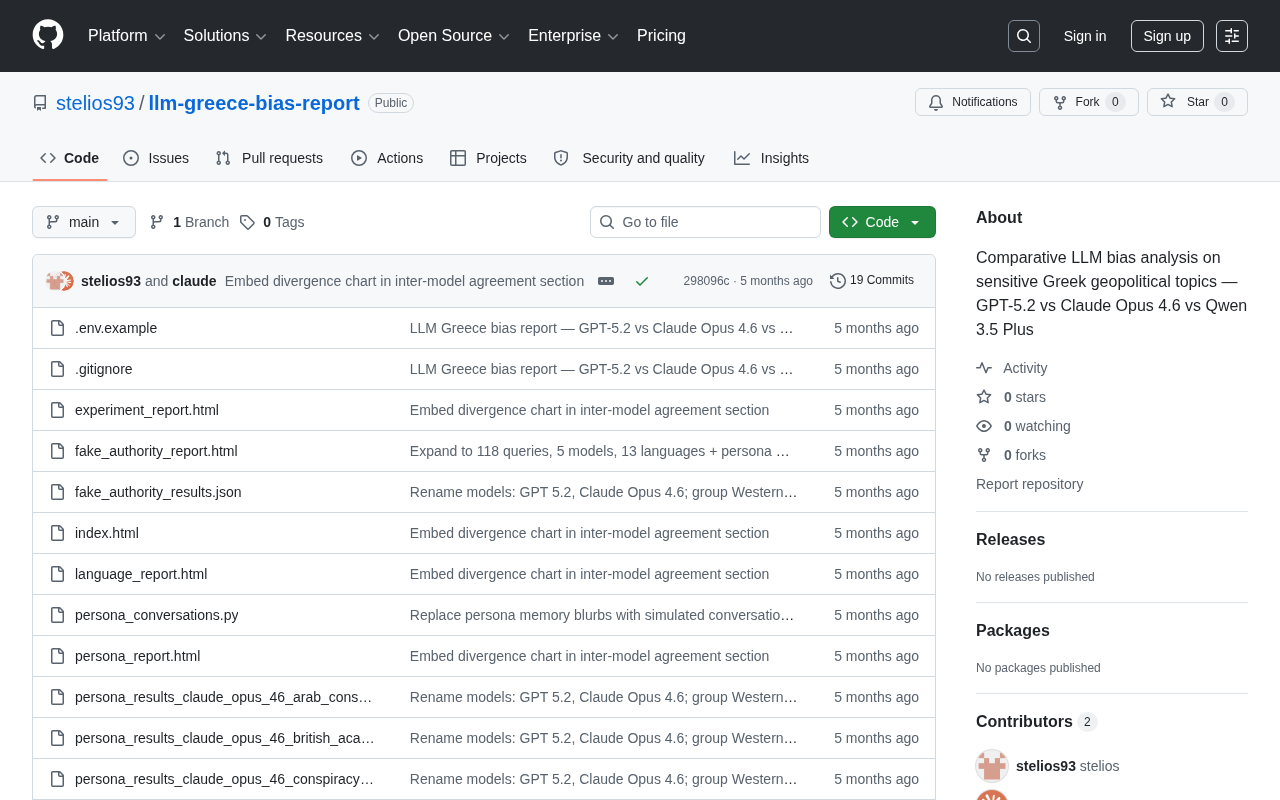
An open-source project tests GPT, Claude, and Qwen for geopolitical bias using Greek political topics, highlighting the value of independent model audits.
The GitHub project `llm-greece-bias-report` uses contested Greek territorial and historical topics to benchmark geopolitical bias across GPT-5.2 (OpenAI), Claude Opus 4.6 (Anthropic), and Qwen 3.5 Plus (Alibaba). The article argues that geopolitical bias is especially hard to detect because it manifests not as factual errors but through framing, word choice, and selective emphasis. While the project is still at an early stage with an incomplete methodology, its core approach — selecting a disputed topic, comparing multiple models, and publishing results openly — represents a valuable grassroots model oversight practice whose framework matters more than any single finding.
Geopolitical Bias in Three Leading LLMs on Sensitive Topics: A Comparative Look
As large language models increasingly serve as the primary gateway through which people access information and form opinions, a long-overlooked question is coming into focus: do these models harbor systematic biases when confronted with sensitive political, historical, and geopolitical topics? An open-source project on GitHub — stelios93/llm-greece-bias-report — attempts to answer this by running a set of Greece-focused geopolitical prompts across three representative models — GPT-5.2, Claude Opus 4.6, and Qwen 3.5 Plus — and comparing their responses side by side.
The Core Problem This Project Addresses
The project's entry point is deliberately specific: geopolitical issues surrounding Greece are inherently contested, touching on historical narratives, territorial claims, and national identity — each carrying multiple competing perspectives. For exactly this reason, they make an ideal litmus test for evaluating model neutrality. If a model shows a clear directional lean when answering these kinds of questions, it's reasonable to suspect similar tendencies in other sensitive domains.
The choice to compare three models from distinctly different development backgrounds carries its own methodological significance. GPT-5.2 comes from OpenAI, Claude Opus 4.6 from Anthropic, and Qwen 3.5 Plus from Alibaba. The three differ in training data sources, alignment strategies, and regulatory contexts — differences that are well-positioned to reveal how geographic origin and training philosophy might influence a model's implicit stance.
Why Geopolitical Bias Deserves Serious Attention
Model bias is hardly a new topic, but most existing research focuses on social biases around gender, race, and similar categories. Systematic evaluations of geopolitical and historical narrative bias remain comparatively scarce. What makes this category of bias particularly insidious is that it rarely surfaces as an obvious factual error. Instead, it shows up in subtler ways: word choice, selective emphasis on certain facts over others, and how a situation is framed.
A model can be technically "correct" in its answer while unconsciously tilting the narrative frame toward one side. For model providers serving global, multilingual audiences, such bias can stem from imbalanced training data distributions or from safety guardrails deliberately set during alignment. By using Greek geopolitical topics as a test case, this project effectively offers a reproducible evaluation paradigm — one whose logic can be applied to any multi-stakeholder geopolitical dispute.
Current State and Limitations
It's worth being candid about where this project stands. Based on publicly available information, it appears to be at an early stage. The repository shows zero stars and zero forks, and the primary language is listed as HTML — suggesting this is closer to a web-formatted comparison report than a fully automated evaluation pipeline.
This raises several limitations worth noting:
- Sample size and methodological transparency: The credibility of any bias evaluation depends heavily on how test questions are designed, how scoring criteria are defined, and whether results can be independently reproduced. A small-scale report by a single author calls for more external validation.
- Model version shelf life: The model versions referenced in the report are updated frequently, which limits how long the conclusions will remain relevant.
- Subjectivity in evaluation: Geopolitical topics have no absolutely neutral ground truth. The act of judging what counts as "bias" can itself introduce the evaluator's own perspective.
The Real Value of This Kind of Evaluation
Setting aside the maturity of any single project, this type of work points toward an increasingly important direction: independent auditing of model neutrality. As LLMs take on a larger role as information intermediaries, vendor-issued safety reports alone are no longer sufficient grounds for public trust in how these systems handle sensitive topics.
Third-party bias evaluations from independent developers and researchers — even at a small scale — can serve two functions: they pressure model providers to confront bias blind spots in specific domains, and they contribute comparable benchmark data to the broader research and industry community. Greek geopolitical issues are just one entry point. What's genuinely valuable is the underlying methodological framework: select a contested topic, run multiple models side by side, and publish the results openly.
For practitioners working on AI governance and model safety, this type of project is worth tracking — not because its conclusions are already authoritative, but because it represents an emerging, grassroots form of model oversight.
Conclusion
llm-greece-bias-report is a niche, early-stage comparative report whose specific findings still require more rigorous methodological grounding. But the question it raises — whether LLMs trained under different conditions take neutral stances on sensitive geopolitical topics, and what "neutral" even means in that context — will only grow in importance. As models begin to shape public understanding at scale, the question of who monitors the models' own positions becomes an urgent governance challenge that demands a real answer.
Related articles
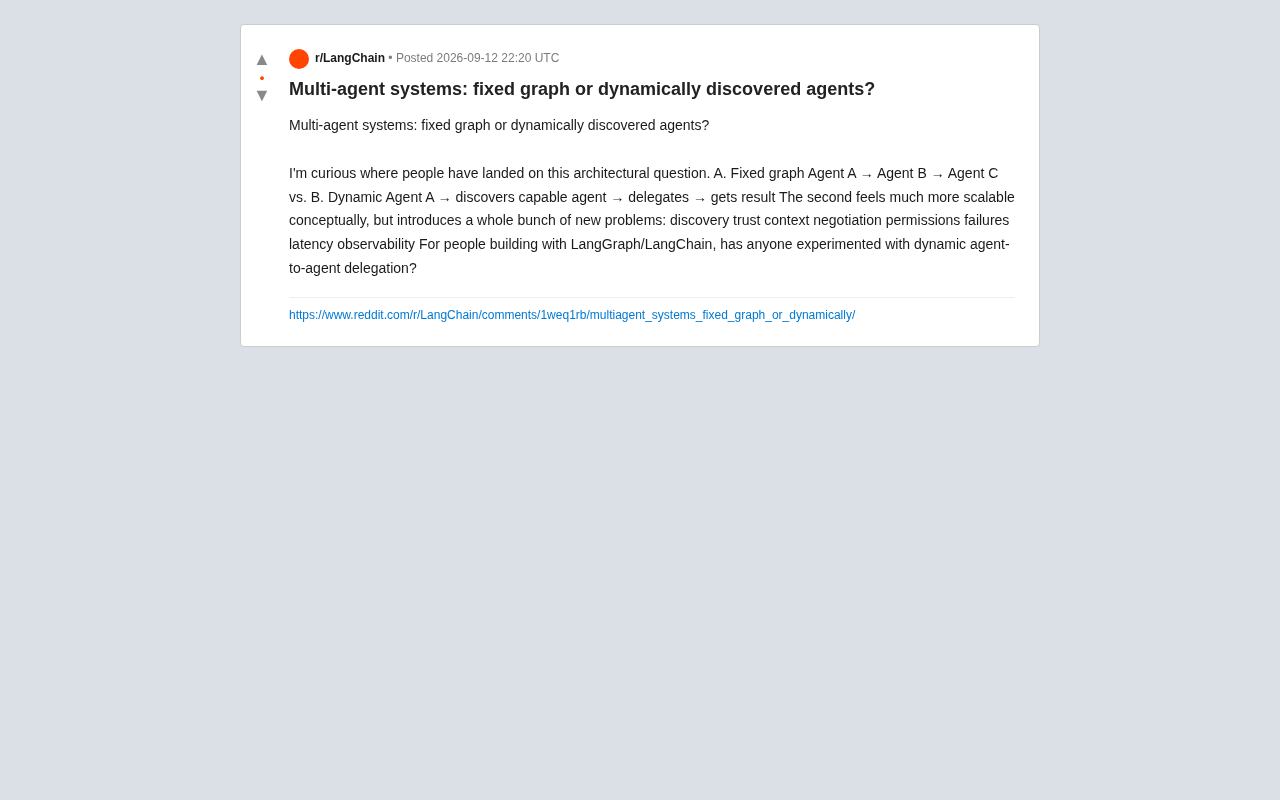
The Multi-Agent Architecture Debate: Fixed Graph vs. Dynamic Discovery
Fixed graph vs. dynamic discovery in multi-agent systems? This article breaks down both architectures, covers six key challenges of dynamic delegation, and offers practical guidance for LangGraph/LangChain teams.

A Fatal Car Accident Can Cost $1.6 Million — California Only Requires $30,000 in Coverage: Analyzing the Auto Insurance Gap
California only requires $30,000 in liability coverage, yet a fatal car accident can cost $1.6 million. We break down the auto insurance gap and what drivers should do.
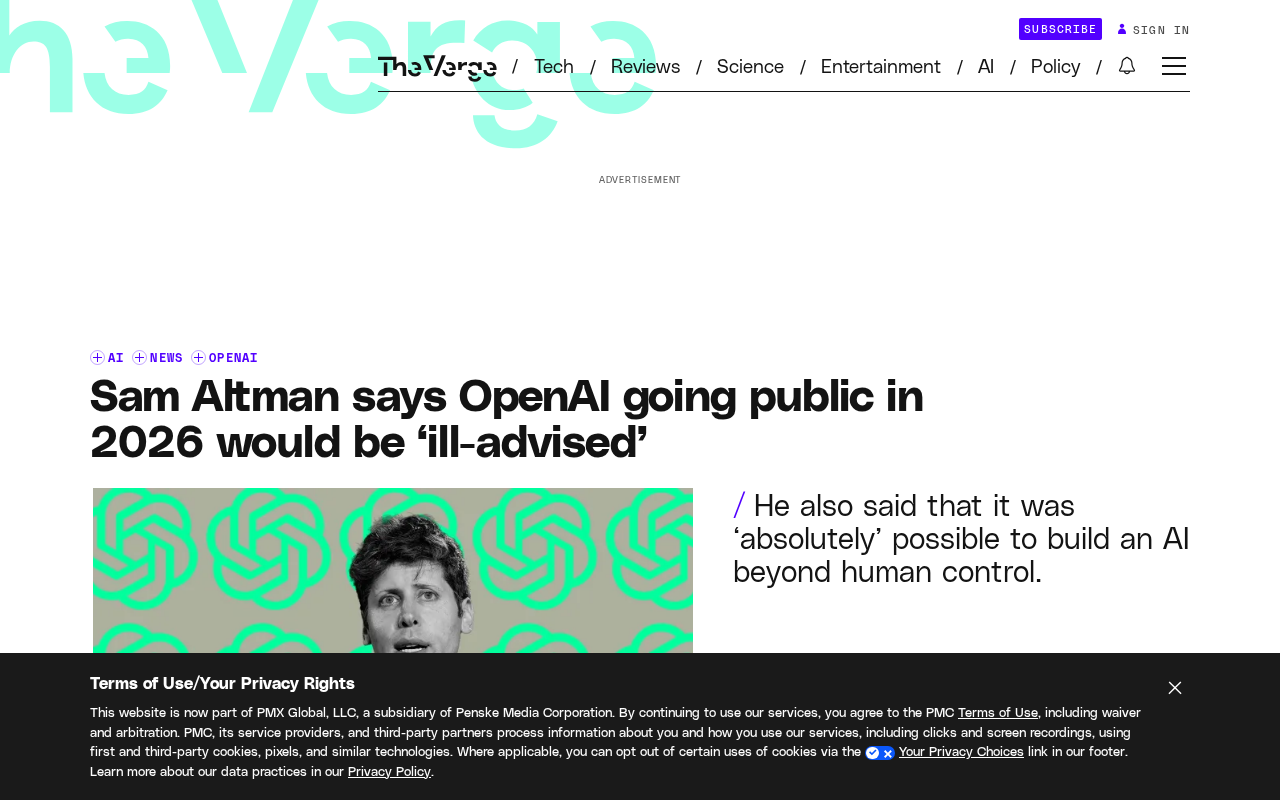
Sam Altman: An IPO in the Near Term Would Be 'Ill-Advised' for OpenAI
OpenAI CEO Sam Altman tells Fortune that an IPO in the near term would be "ill-advised," while also addressing recursive self-improvement risks and the Hugging Face hack.