Getting Started with AI Agent Development: A Complete Guide from Zero to Real-World Projects

A complete beginner's guide to AI Agent development, from LLM basics to real-world project deployment.
This guide lays out a systematic learning path for AI Agent development beginners, covering large model fundamentals, prompt engineering, RAG knowledge bases, the LangChain/LangGraph framework, and multi-agent collaboration—helping you build practical, deployable intelligent agent projects.
Why AI Agents Are Becoming the Most Worthwhile Skill to Learn
As the capabilities of large language models rapidly evolve, purely conversational AI can no longer meet real-world business needs. What developers and enterprises truly crave are intelligent agents (AI Agents) capable of autonomous planning, tool invocation, and completing complex tasks. This is precisely why AI Agent development is becoming one of the hottest skill directions in the AI field.
So, what exactly is an AI Agent? Simply put, an AI Agent is an AI system that can perceive its environment, make autonomous decisions, and take actions to accomplish specific goals. Unlike traditional Q&A chatbots, an Agent possesses three core capabilities: planning (breaking down complex goals into executable subtasks), tool invocation (extending its own capabilities through APIs, functions, or external services—such as web search, code execution, and database operations), and memory (maintaining context and state across multi-turn interactions). The rise of this concept is closely tied to the ReAct (Reasoning and Acting) paradigm—the ReAct framework proposed in 2022 enables models to alternate in a loop between "reasoning" and "acting," thereby handling tasks that require multiple steps. In a sense, AI Agents represent the crucial leap for large models from "being able to talk" to "being able to do."
This article is compiled based on a systematic beginner's tutorial on AI Agents, aiming to lay out a clear learning path for newcomers. The course starts with setting up the environment and guides learners step by step through completing their first intelligent Agent project, then moves on to implementing smart retrieval by combining with RAG knowledge bases, and finally advances toward multi-agent collaboration and real-world deployment of large model applications. For beginners hoping to enter the field of AI engineering, this represents a relatively complete and progressive growth curve.
The Core Knowledge Map for Learning AI Agents
Based on the content covered by the tutorial, a complete Agent development knowledge system should include the following layers.
Large Model Fundamentals and Prompt Engineering
The source of all Agent capabilities is the large language model. Understanding the basic principles of models, parameter scale, context window, and other concepts is a prerequisite for building Agents. The context window here refers to the length of text that a large model can "remember" in a single processing pass, typically measured in Tokens. One Token roughly corresponds to a fragment of an English word or one to two Chinese characters. Early models had context windows of only 2K to 4K Tokens, whereas mainstream models today have expanded to 128K or even millions. The size of the context window directly determines how long a document an Agent can process and how long it can maintain conversation memory—when the input exceeds the window, the model loses earlier information, which is precisely why technologies like RAG (discussed later) are so important.
Meanwhile, Prompt Engineering is the first lever for unlocking a model's capabilities—with the same model, different prompt designs can produce vastly different output quality.
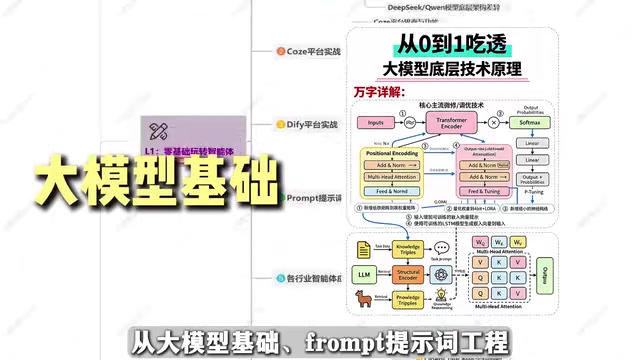
For beginners, mastering techniques such as structured prompts, role setting, and few-shot examples can often significantly improve an Agent's reliability without involving any code at all. This is also the entry-level stage with the highest return on investment.
RAG: Giving AI Agents External Memory
The knowledge of large models has limitations in timeliness and domain scope, and RAG (Retrieval-Augmented Generation) is the key technology for solving this pain point. By vectorizing and storing an enterprise's private documents and specialized knowledge bases, an Agent can first retrieve relevant materials before answering a question, then generate answers based on real content.
The reason RAG can achieve precise retrieval lies at its core in "Embedding" technology. It uses an embedding model to convert text into high-dimensional numerical vectors, where semantically similar texts are also closer in distance within the vector space. During retrieval, the system likewise vectorizes the user's question, then uses algorithms such as cosine similarity to find the most matching knowledge fragments in a vector database (such as Pinecone, Milvus, or Chroma). This "semantic retrieval" is smarter than traditional keyword matching—even if the wording of the user's question is completely different from the original text of the document, it can still be retrieved as long as the meaning is similar. Mastering vector database selection, document chunking strategies, and retrieval optimization are key engineering aspects of building high-quality RAG systems.
The tutorial particularly emphasizes hands-on training for building a "smart retrieval Agent that combines a RAG knowledge base." Such application scenarios are extremely broad—enterprise internal Q&A bots, legal document assistants, medical knowledge queries, and so on are all essentially real-world implementations of RAG Agents. Mastering RAG means you can build private intelligent agents that genuinely fit business needs.
From Development Frameworks to Multi-Agent Collaboration
Agent Development Frameworks Such as LangChain
Manually stitching together code for large model invocation, tool management, and memory storage is inefficient. Development frameworks represented by LangChain abstract common modules in Agent development into standardized components, enabling developers to quickly build prototypes. The LangChain, LangGraph, and other tool chains mentioned in the tutorial are precisely the mainstream choices for current Agent engineering.
It's worth noting separately that within the LangChain ecosystem, LangGraph is a framework specifically designed for building stateful, multi-step Agent workflows. Traditional chain structures can only execute linearly and struggle to handle complex logic requiring loops, branches, and conditional judgments. LangGraph draws on ideas from graph computing, modeling an Agent's execution process as a directed graph composed of nodes and edges, where each node represents a processing step and edges define how state flows. This design is naturally suited for implementing multi-agent collaboration—different Agents can serve as nodes in the graph, passing information through shared state. Compared to solutions such as OpenAI's Assistants API or Microsoft's AutoGen, LangGraph has clear advantages in process controllability and observability.
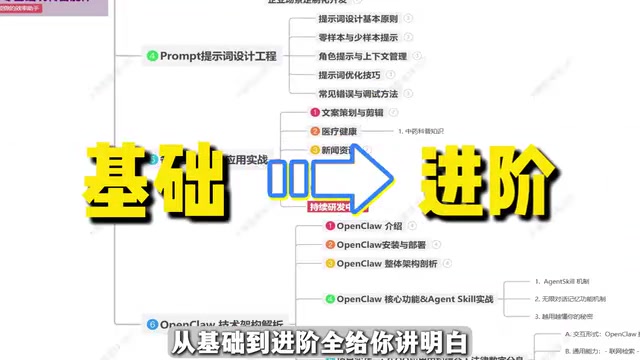
For newcomers, the value of a framework lies in lowering the barrier between "understanding the principles" and "being able to deploy." You don't need to reinvent the wheel; instead, you can focus your energy on business logic and Agent design.
Automated Tasks and Multi-Agent Scheduling
When a single Agent's capabilities hit a bottleneck, multi-agent collaboration becomes the advanced direction. By having multiple specialized Agents divide labor and cooperate—for example, one responsible for planning, one for execution, and one for review—the system can accomplish more complex automated tasks.
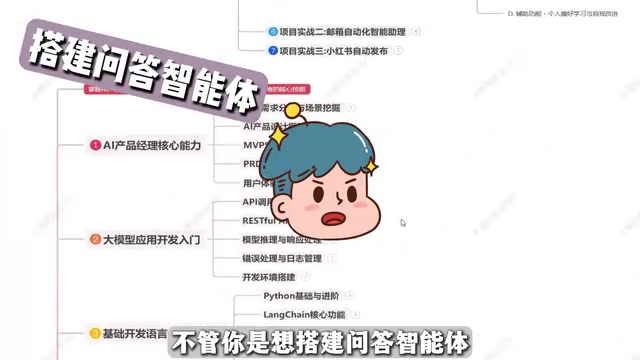
This involves the design of Agent scheduling logic, including task decomposition, message passing, state management, and more. This is also the part of Agent development that best demonstrates engineering capability, and it's the scenario where advanced techniques such as model fine-tuning truly deliver value.
Learning Advice for AI Agent Beginners
From the design philosophy of this tutorial, we can summarize a clear progression path:
- Build a solid foundation: First understand large model principles and prompt engineering—don't rush to write code;
- Practice hands-on: Build your first runnable Agent as early as possible, even if its functionality is simple;
- Go deep on RAG: This is the watershed between a toy demo and a practical system;
- Embrace frameworks: Make good use of tools like LangChain to boost development efficiency;
- Take on collaboration: Ultimately move toward multi-agent systems and complex task orchestration.
A word of caution: any claim of "going from beginner to expert in 3 days" should be viewed rationally. Agent development is a field that requires continuous practice and iteration, and true competence comes from the process of repeatedly building projects hands-on, hitting roadblocks, and tuning. What a tutorial can provide is the path and framework, but a solid foundation still requires time to accumulate.
Conclusion
AI Agents stand at the forefront of the technological wave. Whether you want to build Q&A agents, automated task systems, or dive deep into deploying large model applications, mastering the complete skill stack from prompt engineering to multi-agent collaboration will be a highly competitive capability reserve. Rather than waiting passively, it's better to start by building your first Agent and truly understand the operating logic of intelligent agents through practice.
Key Takeaways
Related articles
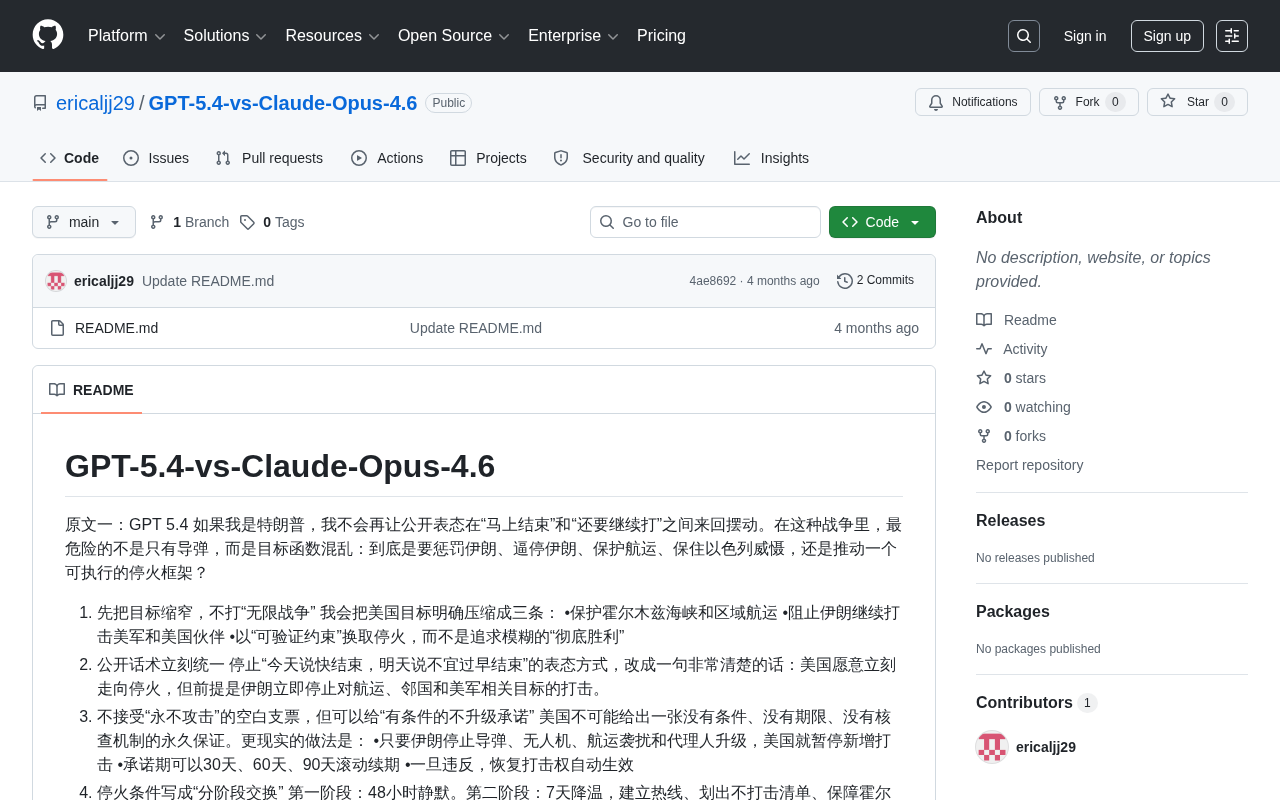
Insufficient Material: GPT-5.4 vs Claude Opus Comparison Repository Lacks Substantive Content
A GitHub repo named GPT-5.4-vs-Claude-Opus-4.6 has 0 stars, no code, and no evaluation data — not enough to support a meaningful model comparison article.
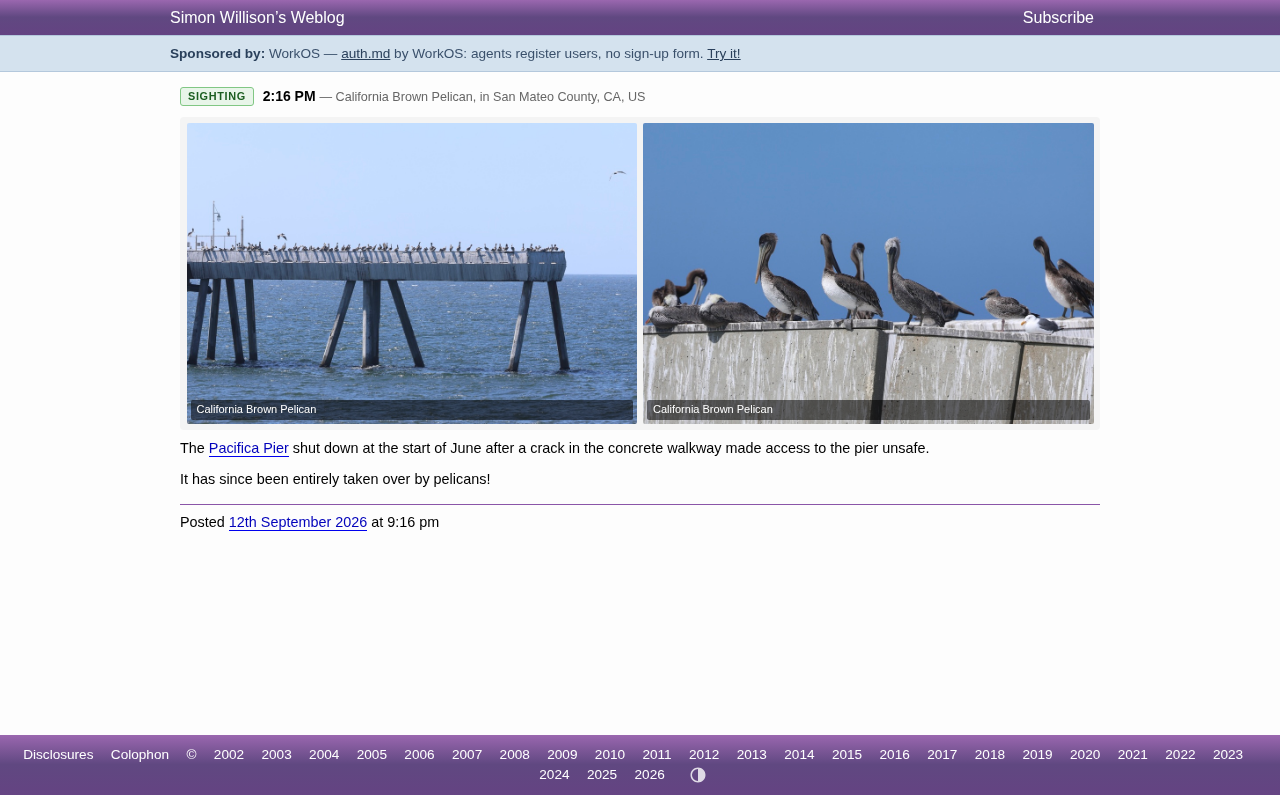
Insufficient Material: California Brown Pelican Observation Cannot Support a Tech Article
This source material is a nature observation of California Brown Pelicans at Pacifica Pier. It has no connection to AI or tech topics and cannot support a tech article.
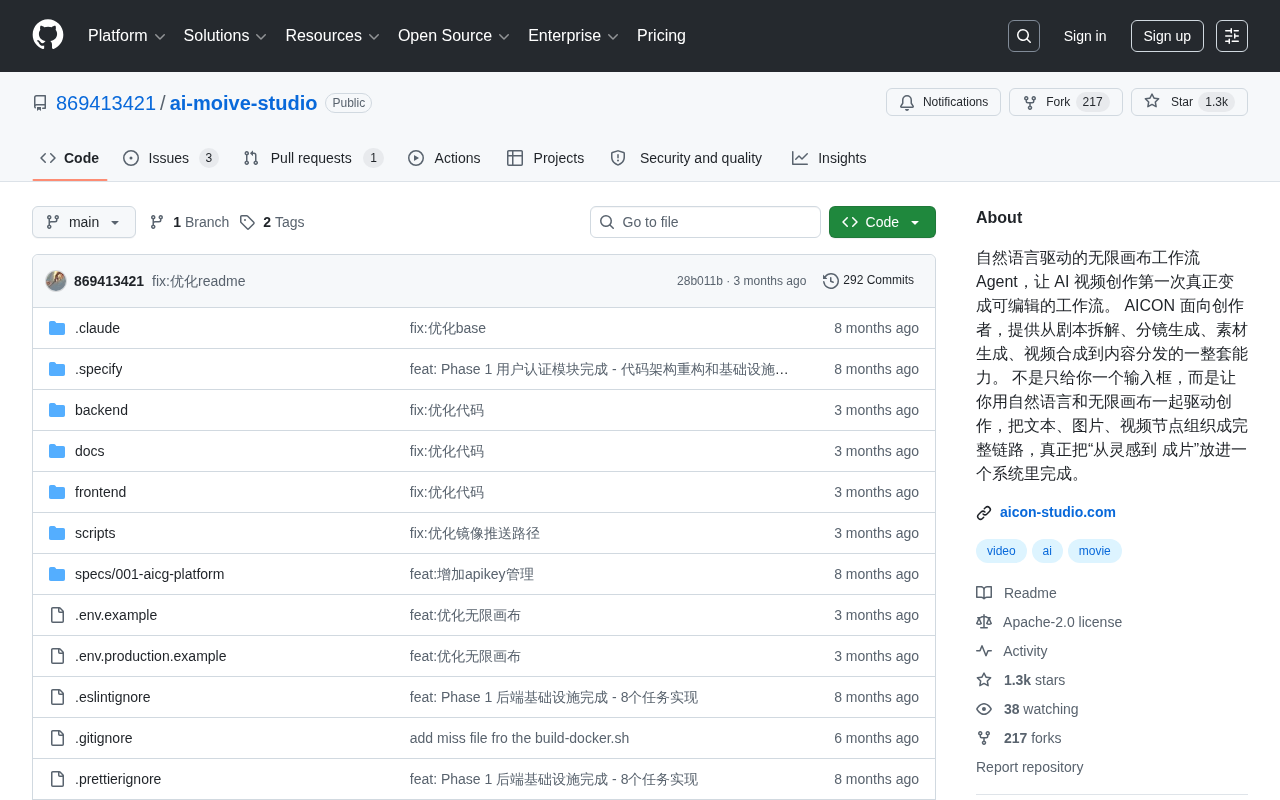
AICON: Natural Language-Powered Infinite Canvas That Turns AI Video Creation into an Editable Workflow
AICON (ai-moive-studio) is an open-source AI video creation tool using natural language and an infinite canvas to turn the full production pipeline into an editable, node-based workflow.