Getting Started with AI Short Film Production: A Complete Guide from Script to Storyboard

A beginner's guide to writing AI short film scripts using the three-element prompting framework.
This guide covers the essential first step in AI short film production: writing story scripts and storyboard scripts using AI large language models. It introduces a three-element prompting framework (identity + task + format), explains the difference between story scripts and storyboard scripts, and emphasizes the critical rule of avoiding flowery language to ensure compatibility with AI image generation tools.
With the rapid development of AI tools, it's no longer out of reach for a single person to independently complete an animated short film. Based on a systematic AI short film production tutorial series from Bilibili, this article covers the most critical first step—how to efficiently write story scripts and storyboard scripts using AI large language models, helping zero-experience creators get started on their AI short film production journey.
Complete Workflow Overview for AI Short Film Production
Producing a complete AI animated short film follows a workflow largely consistent with traditional animation production, except that AI enables many steps to be completed independently by one person. Traditional animation typically requires collaboration among screenwriters, storyboard artists, key animators, in-between animators, voice actors, sound designers, editors, and other specialized roles—a 3-minute animated short might need a team of dozens working for weeks. Now, ChatGPT/DeepSeekAd can replace screenwriters and storyboard artists, Midjourney/Stable Diffusion can replace key animators, Runway/Pika can replace animators, and ElevenLabs/Fish Audio can replace voice actors. While this "one-person studio" model can't yet fully match professional team quality, it dramatically lowers the barriers to entry and costs of creation.
The entire workflow is roughly divided into six stages:
- Write the story script: Determine the core plot and character settings
- Write the storyboard script: Break the story down into specific shot language
- Generate storyboard images: Use AI to generate corresponding visuals based on script descriptions
- Generate video clips: Transform static images into dynamic video
- Generate sound effects and voiceover: Add audio elements to the video
- Post-production editing: Integrate all assets into a complete work
Newcomers might feel overwhelmed seeing so many steps, but each stage has corresponding AI tools to assist. And the starting point for all of this is learning how to communicate effectively with AI large language models.
The Core Formula for AI Communication: The Three-Element Framework
When using AI large language models like Doubao or DeepSeek to generate content, the quality of your prompt directly determines the quality of the output. Here's a universal prompting formula containing three essential elements.
First, some background knowledge: AI Large Language Models (LLMs) are deep learning models trained on the Transformer architecture. Through pre-training on massive text datasets, they learn statistical patterns and semantic relationships in language, enabling them to generate coherent, logical text content based on user-input prompts. Doubao is an AI assistant launched by ByteDance, while DeepSeek is an open-source large model developed by DeepSeek AI. The core capability of these models lies in "context understanding"—they can remember previous information within the same conversation and adjust subsequent outputs accordingly.
The "three-element framework" introduced here essentially belongs to the domain of Prompt Engineering—an emerging discipline studying how to design input instructions to achieve optimal AI output. Its core principle is: the quality of AI model output is highly dependent on the structural quality of the input. Other common prompting techniques in the industry include Few-shot Learning (providing examples for AI to imitate) and Chain of Thought (guiding AI to reason step by step).
Element One: Assign AI an Identity
Identity assignment is a key factor influencing AI's output style and professionalism. From a technical perspective, this corresponds to the concept of a System Prompt—it establishes a role framework for the AI, influencing its tone, professional depth, and thinking approach. For the same question "Please introduce what AI comic drama is," when you set the AI as an "AI comic drama director," it will break down the topic from professional dimensions like core definitions, differences from traditional content formats, five core characteristics, and industrialized production workflows. When set as a "comedy performer," the response becomes witty, humorous, down-to-earth, and highly visual in its storytelling.

Different identity assignments lead AI to provide completely different answers from different angles and professional depths. For AI short film production, setting AI as an "experienced film screenwriter" is a very appropriate choice.
Element Two: Give AI a Clear Task
This step is actually the most straightforward—tell AI what you need with clear instructions. For example, "Please introduce what AI comic drama is" or "Help me generate a story script under three minutes in the ancient Chinese fantasy genre." No fancy techniques needed—simple and direct works best.
Element Three: Specify the Response Format
Format specification is an extremely important element that many people tend to overlook. You can explicitly require AI to organize its response around specific dimensions like "core concepts, core technologies, content genres, monetization methods." This way, the output will strictly follow your framework rather than letting AI freestyle.
Script vs. Storyboard: Two Easily Confused Creative Stages
Many beginners can't distinguish between a "story script" and a "storyboard script," but they serve completely different functions in AI short film production.
Story Script: A "Short Story" for Quick Plot Understanding
The purpose of a story script is to let creators quickly understand the entire plot from beginning to end, like reading a short story. It contains no complex technical specifications—it simply tells a complete story following the audience's perspective, including characters, plot, and emotional arc.
Storyboard Script: The "Blueprint" for Film Production
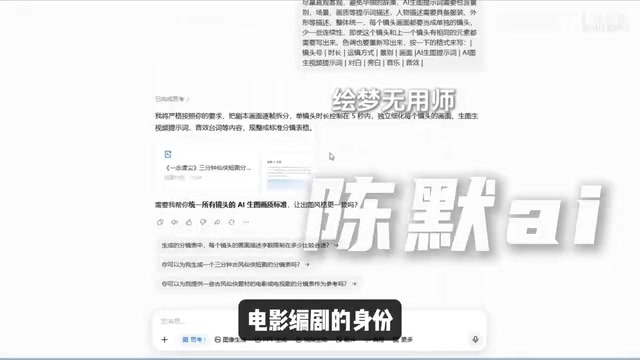
A storyboard script is more like a detailed production guide. In the film industry, storyboard scripts have relatively standardized formats, typically containing: shot number (identifying each shot's sequence number), shot size (such as extreme long shot, long shot, medium shot, close-up, extreme close-up), camera movement (push, pull, pan, dolly, track), duration (seconds each shot lasts), visual description, dialogue, sound effect notes, and other fields. In AI short film production, these fields not only help creators understand the visuals but also directly translate into prompt inputs for AI image generation tools, making precision and objectivity in descriptions even more critical than in traditional storyboards.
Why Write the Script Before the Storyboard?
There's a very practical creative logic here: first generate a brief story script, revise any parts with logical issues or that aren't compelling enough, then have AI reference the revised script to generate the storyboard. The core benefit of this approach is dramatically reducing revision costs—modifying a brief story script is far more efficient than directly modifying a storyboard script containing complex information like shot numbers and shot sizes.
Also note that AI large language models have contextual memory capabilities. The "film screenwriter" identity set at the beginning of a conversation carries through the entire dialogue—you don't need to repeat the identity setting when generating the storyboard later. This is precisely because large language models can remember previous information within the same conversation and adjust subsequent outputs accordingly.
Practical Tips for AI Short Film Script Writing
Explicitly Control Duration
AI short films are typically only one to two minutes long, so explicitly setting the duration in your prompt is crucial. For example, "Please generate a story script under three minutes"—this constraint helps AI control the story's scope and pacing, avoiding content that's too long or too short.
Script Content Should Serve Image Generation
When generating storyboard scripts, many fields in the format actually serve subsequent AI image generation. Therefore, when making your request, you need to consider in advance what information the image generation prompts will need—shot size, scene, image quality, character appearance descriptions—all should be clearly specified in the script.
Avoiding Flowery Language is an Iron Rule
This is a key principle that's repeatedly emphasized: require AI's language to be as objective and straightforward as possible, avoiding ornate literary language. The reason is that current AI image generation tools (such as Midjourney, DALL-E, Stable Diffusion) have limitations in their text understanding mechanisms. These tools use vision-language models like CLIP to encode text into vectors, then generate images through Diffusion Models. Their text understanding is "literal"—the model attempts to map every noun and adjective to visual elements. Metaphors, personification, and other rhetorical devices get treated as literal descriptions by the model, causing generated results to deviate from the creator's intent.
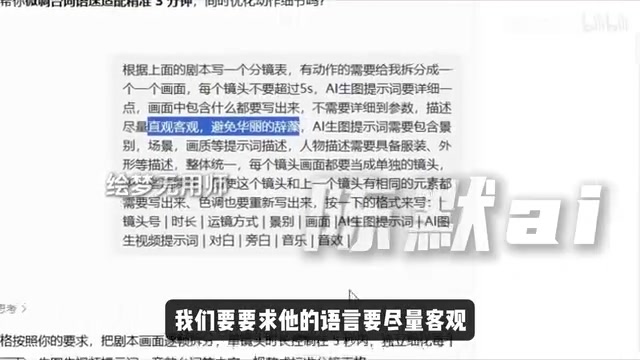
Here's a typical example: if the script says "her gaze instantly became icy and sharp, like an unsheathed blade," AI image generation tools will likely generate an image of an actual blade rather than the character's facial close-up you intended. Therefore, objective, precise, rhetoric-free descriptions are the correct approach for AI short film scripts. The correct way to write it would be: "Female character facial close-up, brows slightly furrowed, corners of mouth turned down, eyes looking straight ahead"—this kind of precise description, similar to technical documentation, is what allows AI image generation tools to accurately understand your intent.
Summary
The first step in AI short film production—writing scripts and storyboards—centers on mastering the three-element framework for communicating with AI large language models: Assign an identity + State the task + Specify the format. This seemingly simple formula actually determines the quality foundation for all subsequent stages.
From a broader perspective, AI short film production is undergoing a transformation from "high technical barriers requiring team collaboration" to "democratized tools enabling individual completion." By mastering methods for efficient AI communication, zero-experience creators can gradually build complete AI short film production capabilities. The more challenging stages ahead—generating storyboard images from scripts, maintaining character consistency, and revising unsatisfactory visuals—are where creators' patience and aesthetic judgment are truly tested.
Related articles
Military Analyst Breaks Down the Russia-Ukraine Strategic Bombing Dilemma
A military analyst on the Lex Fridman podcast dissects the Russia-Ukraine battlefield: Ukraine's ground performance is its best since summer 2023, while Russia faces diminishing returns and turns to strategic bombing — a strategy with a poor historical record of achieving political goals.
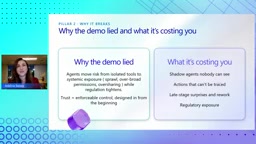
Microsoft's Six-Pillar Framework for Productionizing AI Agents
A detailed look at Microsoft's framework for productionizing AI agents: six pillars—Center of Excellence, governance, landing zone, security, AgentOps, and optimization—with real enterprise cases and actionable steps.
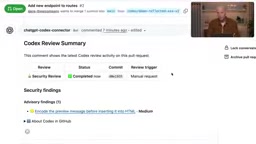
Codex Security: A Configuration Guide to Automatically Blocking Vulnerabilities at the PR Stage
OpenAI engineers demonstrate Codex Security PR Reviews: automatically scan for vulnerabilities at the GitHub PR stage, have AI generate fix commits and re-verify, with repository-level automatic review and alert threshold configuration.