Getting Started with ChatGPT Codex: Key Differences Between an AI Coding Agent and ChatGPT

Codex is OpenAI's autonomous AI coding agent that goes far beyond ChatGPT's text-based code generation.
Codex is an AI coding agent from OpenAI that can autonomously read codebases, fix bugs, run tests, and complete development tasks end-to-end — unlike ChatGPT, which only generates code as text output. Built on the codex-1 model optimized for software engineering, it represents the cutting edge of agentic coding tools and a must-learn skill for modern developers.
What Is Codex? OpenAI's AI Coding Agent
When exploring a new tool, the first step is always understanding what it actually is. Codex is an AI coding agent developed by OpenAI — not a simple chatbot, but an autonomous assistant designed to help developers complete real programming work.
The key word here is "autonomous." AI Agents represent one of the most important paradigm shifts in the large language model space in recent years. Unlike traditional question-and-answer AI, an Agent can plan, invoke tools, and execute multi-step tasks. The core architecture typically involves four components: perception (reading environmental information), reasoning (formulating a plan of action), action (invoking tools like code interpreters, terminals, and file systems), and feedback (self-correcting based on execution results). Codex is built on this architecture and runs inside an isolated sandbox environment. This means it doesn't just generate code — it can read and understand codebases, fix bugs, run tests, and execute scripts and commands, covering multiple stages of the software development lifecycle rather than simply handing you a snippet.
If you just want AI to dash off a few lines of code for you to copy and paste, tools like ChatGPT or DeepSeek will do the job. But Codex's value lies in being a tool that actually does the work for you. For developers, this kind of AI coding agent is quickly becoming an essential skill.
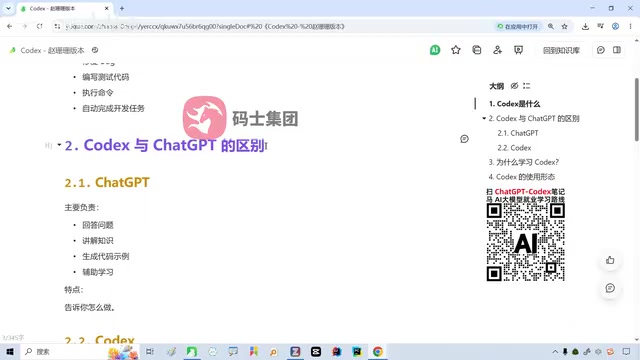
What's the Real Difference Between Codex and ChatGPT?
A lot of people see Codex for the first time and wonder: isn't it just built on the ChatGPT model under the hood? Why not just use ChatGPT directly?
This is a very common misconception. While the two are closely related, their roles are fundamentally different.
Codex actually uses codex-1, a model OpenAI specifically optimized for software engineering tasks. It is fine-tuned from the o3 series of reasoning models and has been purpose-built for code comprehension, test-driven development, and long-context codebase analysis. Although it belongs to the same OpenAI family as GPT-4o (which powers ChatGPT), the training objectives and tool-calling capabilities are fundamentally different. A simple analogy: GPT-4o is a generalist, while codex-1 is a specialist athlete who has trained specifically for the programming track.

ChatGPT: The Teacher Who Talks
ChatGPT is more like a teacher who explains concepts. Ask it "How do I implement login functionality in Spring Boot?" and it will walk you through the approach and show you the code — but after it generates the output, you still need to copy it into your development environment and manually debug and run it yourself.
ChatGPT excels at answering questions, explaining concepts, and generating code snippets. It does all of this well, but its job ends at "producing text."
Codex: The Developer Who Actually Builds
Codex is a completely different story. It's more like a developer sitting right next to you. Just say "implement the login feature for me," and it will:
- Automatically read the entire project's code structure
- Autonomously generate and modify the relevant code
- Independently run tests and debug issues
- Report back "it's done" once everything passes
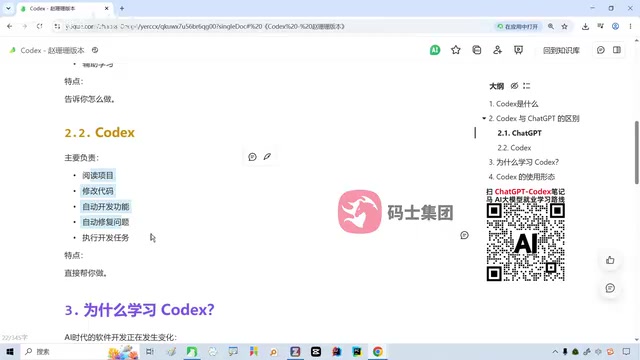
In one sentence: ChatGPT talks, Codex acts. One explains the principles; the other gets the code written. Understanding this distinction reveals the essential difference between the two.
Three Generations of AI Coding Tools
To fully appreciate the value of Codex, it helps to understand the broader evolution of AI coding tools. This space has gone through three distinct phases: Phase 1 was code completion (pioneered by GitHub Copilot in 2021), which provided real-time single-line or multi-line completions inside editors; Phase 2 was conversational code generation (ChatGPT, Claude, etc.), capable of generating complete functions or even entire modules; Phase 3 is the current era of Agentic Coding — autonomous coding agents like Codex, Anthropic's Claude Code, and Cursor's Agent mode — which can independently complete end-to-end development tasks at the project level. Each generation dramatically expanded AI's "action radius" relative to the one before it, and Codex sits at the leading edge of this evolution.
Why Developers Must Learn Codex
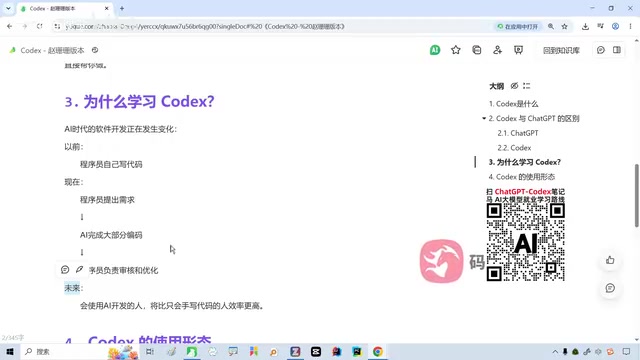
We've entered the AI era, and the way software gets built is undergoing a fundamental transformation.
In the past, developers wrote code entirely by hand — every line, every statement. Today's model looks very different: developers specify requirements, AI coding tools handle the bulk of the code, and developers focus on review and refinement.
AI Won't Replace Developers — But It Will Reshape What They Do
Learning tools like Codex and Claude Code doesn't mean developers will be replaced. If anything, the opposite is true.
When AI generates the code, someone still needs to review it and optimize it. If you have no programming knowledge, you simply can't tell whether what the AI produced is correct or efficient. That's why people who understand coding will remain indispensable in the AI era — the nature of the work just changes.
The Most Valuable Skill Will Be Knowing How to Direct AI
The industry trend is clear: developers who can work with AI will be far more productive than those who write everything by hand.
The old benchmark was "who can type faster and push thousands of lines a day." In the AI era, the standard has shifted — the most effective developers are those who can communicate precise requirements to AI.
The professional skill set behind this is what the industry calls Prompt Engineering. For coding agents like Codex, an effective task description needs to include: a clear scope (what to do and what not to do), the tech stack and constraints, expected input/output formats, and acceptance criteria (how to know the task is complete). Research shows that structured, specific prompts can improve the output quality of AI coding tools by more than 40%. This is exactly why "knowing how to direct AI" has become a core competitive advantage.
The entire development paradigm has shifted from "writing code yourself" to "directing AI to write code." That is the core value proposition behind learning Codex, Claude Code, and other AI coding tools.
Conclusion
Codex represents a significant leap in AI coding tools — from "assisted generation" to "autonomous execution." It's no longer a chatty assistant that only talks; it's an AI coding agent capable of reading, modifying, testing, debugging, and independently completing development tasks. This capability is the result of combining an Agent architecture, a purpose-optimized model, and a sandboxed execution environment.
For developers, mastering tools like Codex is no longer optional — it's a required course for thriving in the AI era. True competitive advantage is shifting away from "how fast you can write code" and toward "how effectively you can wield AI."
Key Takeaways
Related articles

Alibaba Launches Happy Shrimp: AI-Powered One-Click Complete Song Generation
Alibaba launches Happy Shrimp, an AI music generation tool that creates complete songs with lyrics, melody, arrangement, and vocals from natural language descriptions. In-depth analysis of its core features, differentiation from competitors like Suno, and industry impact.
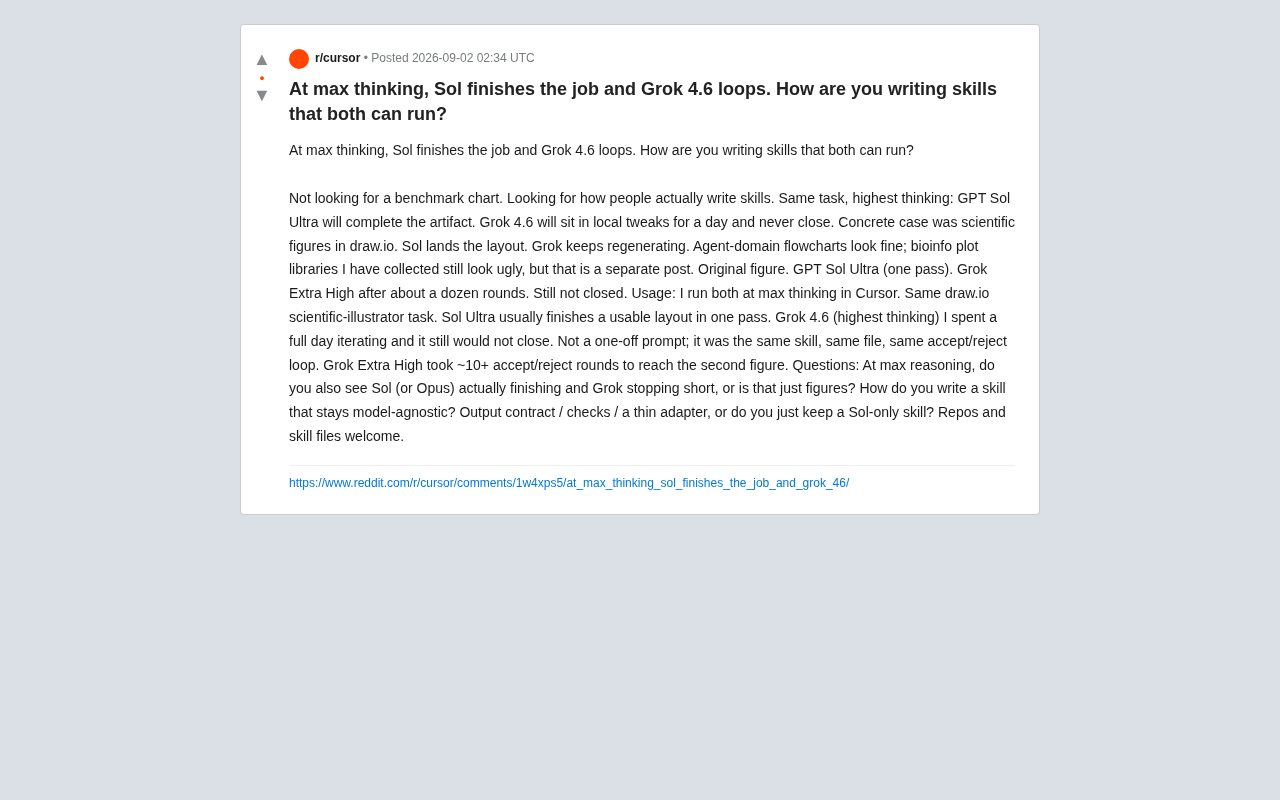
GPT Sol Ultra vs Grok 4.6: Real-World Task Completion Benchmark in Reasoning Mode
Developer benchmark reveals GPT Sol Ultra completes draw.io scientific diagrams in one iteration while Grok 4.6 fails to converge despite maximum reasoning mode, exposing that reasoning depth ≠ task delivery capability.
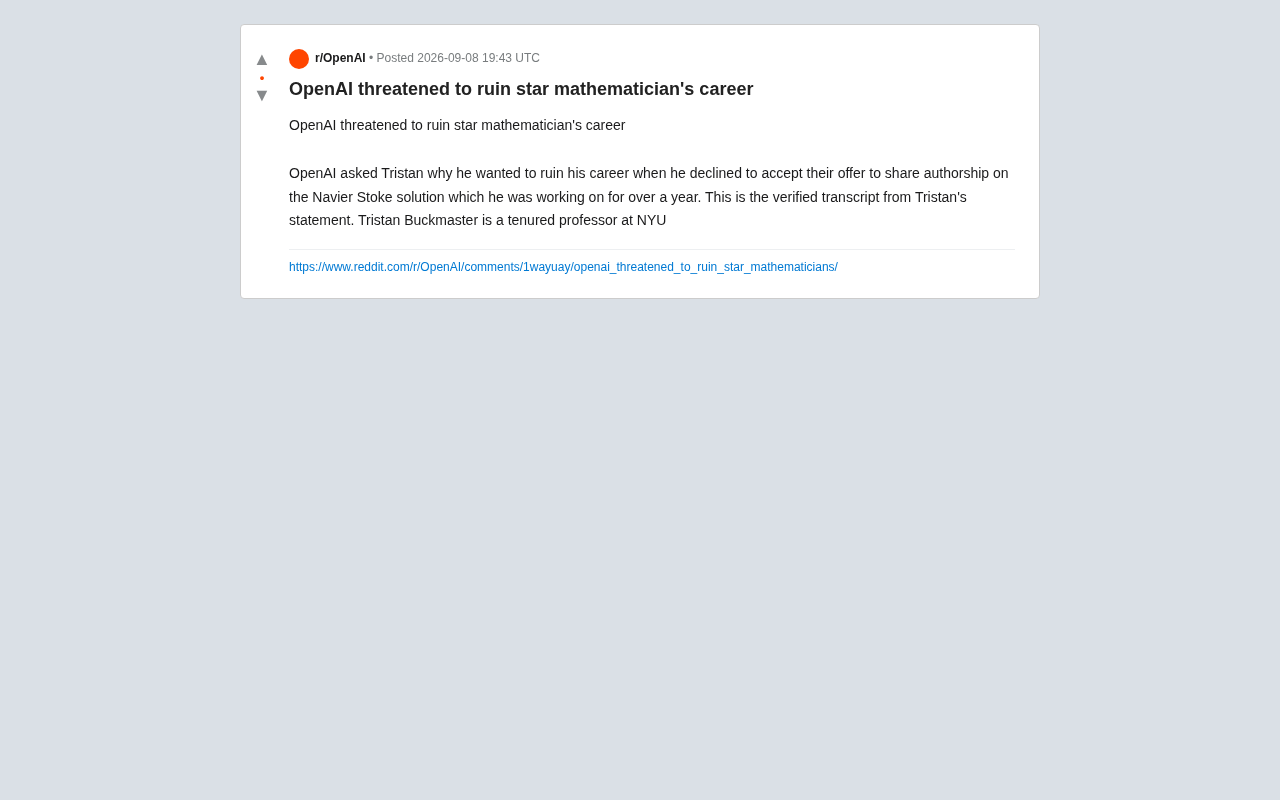
OpenAI Authorship Dispute: The Battle Over Academic Boundaries in the AI Era
OpenAI disputes authorship with mathematician Tristan Buckmaster over Navier-Stokes research, raising ethical questions about AI involvement in science.