Getting Started with LangChain: The Core Framework for LLM Application Development and Its Three Key Components

A deep dive into LangChain's three core components for building practical LLM applications.
LangChain is a leading open-source framework for LLM application development that lets AI break past training-data limits to access private data and perform real actions. This article explains its three core concepts—Components, Chains, and Agents—to help developers build practical AI apps.
Why Do We Need LangChain?
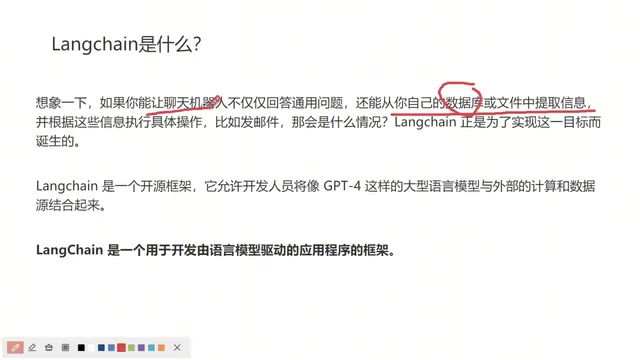
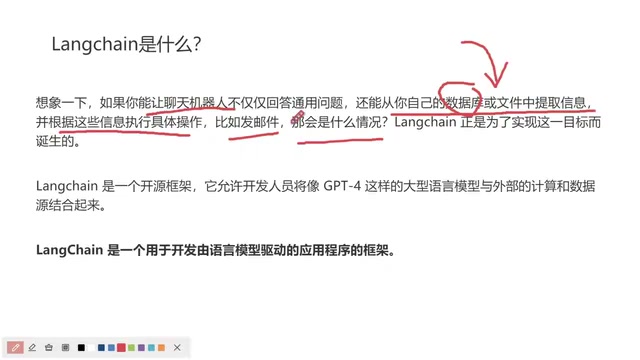
After mastering how to call Large Language Model (LLM) APIs, developers often hit the same bottleneck: how can you make an AI do more than just answer general questions—how can it read internal enterprise databases, send emails automatically, or retrieve specialized documents?
The answer is: relying on the LLM's API alone won't get you there.
The fundamental reason lies in one key limitation—an LLM's training data comes primarily from publicly available internet content. Whether it's OpenAI's GPT series or China's GLM series, their knowledge boundaries end at public web data. An LLM's knowledge boundary is essentially determined by its training corpus: the training data's cutoff date (Knowledge Cutoff) means it knows nothing about events occurring afterward. More importantly, private information such as corporate intranet data, hospital medical records, and financial transaction logs has never appeared on the public internet, leaving the model inherently "blind" to such information. This limitation isn't a technical flaw but a constraint of the training paradigm itself—internal enterprise data is not exposed externally for security reasons, so the LLM naturally has no way to access it. This means that a chatbot developed by directly calling an LLM API simply cannot answer specialized questions that depend on private enterprise data.
Where Are the Truly Valuable AI Products?
One noteworthy phenomenon: despite the United States' continued lead in fundamental AI research, truly scaled and deployed AI products remain relatively rare. Most leading institutions still focus their energy on tuning, upgrading, and optimizing the performance of large models. But what truly creates value for users are those AI applications that combine an enterprise's own data to help users automatically complete concrete tasks.
Picture this scenario: you provide the AI with 100 industry-specific research papers, repeatedly ask questions about their content, and then simply say, "Send my Q&A history from just now to my email"—and the AI actually completes that action. AI products that can perceive context and coordinate with external systems are the truly practical, truly human-centered ones.
What Is LangChain?
LangChain was created precisely to solve the problems described above. It is an open-source framework whose core capability is organically combining large language models like GPT-4 with external computational resources and data sources. LangChain was released by Harrison Chase in October 2022, initially open-sourced on GitHub as a lightweight Python library. It quickly gained popularity because it matched market demand, and within months became one of the fastest-growing open-source projects on GitHub by star count. As its ecosystem expanded, the project was gradually split into multiple sub-libraries: langchain-core (core abstractions), langchain-community (community integrations), as well as LangSmith (an observability platform) and LangServe (an API deployment tool) aimed at enterprise-grade scenarios.
It's worth emphasizing that LangChain supports far more than just GPT-4. Google, Microsoft, and Chinese mainstream LLMs such as Baidu's ERNIE and Zhipu's GLM all fall within its compatibility scope. Starting from version 0.2, the project introduced the more stable LCEL (LangChain Expression Language), making chain composition code more concise while significantly expanding native support for Chinese LLM vendors' APIs. Nearly all mainstream LLMs, both domestic and international, can be integrated and used directly.
Understanding LangChain in One Sentence
To summarize in a single sentence: LangChain is a framework for developing applications powered by language models.
It takes the LLM as its core driving force and builds upon it a full suite of development capabilities—abstraction and encapsulation, external data retrieval, data storage, vector database access, and more—dramatically lowering the barrier to developing LLM applications.
Readers with a Java development background can think of it this way: LangChain is to LLM application development what Spring Boot or JDBC is to traditional Java development. Spring Boot solved the problem of extensive, repetitive infrastructure configuration in Java enterprise development (data sources, transactions, dependency injection), letting developers focus on business logic. Similarly, LangChain abstracts the common workflows of LLM invocation—prompt management, conversation memory, tool calling, output parsing—into reusable components. The deeper analogy is this: JDBC unified the access interfaces of different databases, decoupling code from any specific database. LangChain's Model I/O module likewise unifies the invocation interfaces of different LLMs, decoupling business code from any specific model vendor. It "wraps" large language models into product-grade software that can interact directly with users, letting developers focus on business logic rather than low-level integration.
LangChain's Three Core Components
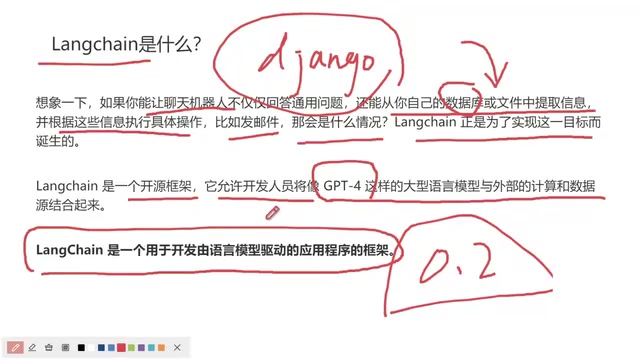
LangChain builds its capability system around three core concepts: Components, Chains, and Agents. Understanding these three essentially means grasping LangChain's overall design philosophy.
Components: A Unified Model Interface Wrapper
The component layer provides a unified interface wrapper for various large language models. There are countless LLMs on the market, and if you had to rewrite an entire set of invocation code every time you switched models, development costs would be prohibitively high.
LangChain's component layer resembles JDBC's driver mechanism: it provides a set of abstract, universal invocation interfaces. Developers only need to write business code against this interface set, and they can freely switch between OpenAI, Google, GLM, or any other LLM with almost no changes to their core logic.

The practical value of this design is this: no matter which LLM offers better cost-performance in the future—switch to a domestic one if it's better, switch to an international one if it's better—the core code requires almost no modification. In an era where LLM prices and performance iterate frequently, this ability to decouple from any specific vendor carries significant engineering value. It's a flexibility that's difficult to achieve with traditional development approaches, and the LangChain framework makes it a routine operation.
Chains: Combining Components to Solve Specific Tasks
The role of chains is to link different components together so they cooperatively solve specific tasks.
A complete AI product often involves multiple stages: calling the LLM, reading and writing databases, accessing vector databases, vectorizing and embedding text (Embedding), and so on. A vector database (Vector Database) is one of the core pieces of infrastructure in the LangChain ecosystem: the system converts text into high-dimensional floating-point vectors via an embedding model (Embedding Model) and stores them in specialized databases such as Pinecone, Chroma, or Milvus. During queries, the user's question is likewise vectorized, and by computing cosine similarity, the system quickly finds the semantically closest document fragments, which are then injected into the LLM's prompt. This technical approach is RAG (Retrieval-Augmented Generation), currently the mainstream implementation for enterprise-grade AI knowledge bases. Chains are the mechanism that integrates these scattered capabilities into a complete workflow. Starting from version 0.2, LCEL (LangChain Expression Language) makes constructing and expressing chains more concise and intuitive.
This is also where the framework's name "LangChain" comes from—Lang (language model) + Chain (chain-based composition).
Agents: Connecting LLMs with the External Environment
Agents give large language models the ability to interact with the external world.
From a technical standpoint, Agents in LangChain implement the ReAct (Reasoning + Acting) paradigm: at each step, the LLM doesn't directly output the final answer. Instead, it first outputs its "thought process" (Thought), then decides which tool to call (Action), waits for the tool to return a result (Observation), and continues to the next round of reasoning until it produces a final answer. This "perceive—decide—act" loop endows the LLM with an ability akin to "autonomous decision-making."
Here's a typical example: if you want the AI to analyze Django's official documentation, you first need to fetch the document content. This "fetching" action is carried out by an agent tool—it first retrieves the content from Django's official site, then hands that content over to the LLM for processing. From then on, all your questions will be based on this official documentation. The range of tools (Tools) an Agent can call is extremely broad: web crawlers, SQL database queries, Python code executors, email-sending interfaces, REST API calls, and more can all be wrapped as standard Tools.
The scope of "external environment" here is quite broad: it can be a public site like Django, or an enterprise's internal private database. For example, JD.com's vast product data could be integrated as an external data source, allowing the LLM to build intelligent customer service, smart marketing, or sales agent systems on top of it. The agent mechanism is the key bridge connecting LLMs with the external world, and it's also the core technical foundation of the currently red-hot AI Agent field.
Summary
The core problem LangChain solves is this: helping large language models break through the inherent limitation of "only being able to answer based on training data," enabling them to access private data and perform real-world actions, thereby supporting the development of AI products that can actually be deployed.
Through the three core concepts of components, chains, and agents, developers can use one stable codebase to flexibly invoke various LLMs, combine capabilities on demand, and freely connect to external data systems. For engineers aspiring to enter the field of LLM application development, LangChain is an unavoidable foundational starting point. After mastering LangChain, further learning of LangGraph, RAG, MCP, and Agent development will enable you to gradually build more complex and more practically valuable intelligent application systems.
Key Takeaways
Related articles
Researchers Claim AI Agents Being Tested by OpenAI Were Involved in a Cyberattack
Security researchers allege OpenAI-tested AI agents were involved in a cyberattack. We analyze the security risks, accountability gaps, and safeguards the industry needs.
James Webb Telescope Reveals: Extreme Star-Forming Galaxies Masquerading as Faint Quasars
JWST finds some objects mistaken for faint quasars are actually extreme star-forming galaxies, potentially revising estimates of early-universe supermassive black holes.
Why So Many AI Researchers Fear Machines Could Destroy Humanity
Why do so many AI researchers fear machines could destroy humanity? This article breaks down the alignment problem, capability leaps, and interpretability issues driving existential AI risk debates.