Getting Started with n8n: A Deep Dive into the Open-Source AI Workflow Automation Platform

A deep dive into n8n, the open-source AI workflow automation platform, with a one-week learning path.
This guide explains what n8n really is—a general-purpose workflow automation platform—covering its 500+ node ecosystem, flexible logic orchestration, and deep AI integration through Agents, Chains, and tool nodes for building RAG systems. It also examines why adoption in China lags and offers a practical one-week learning path.
What Exactly Is n8n?
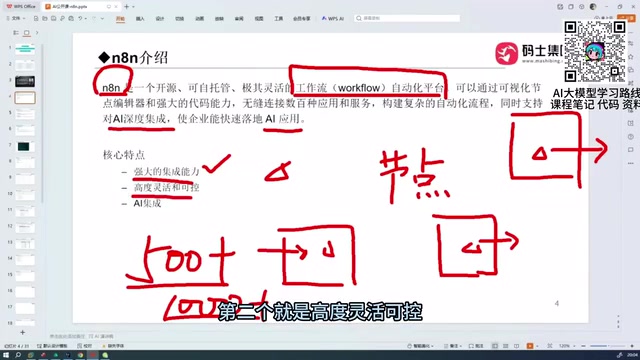
Many people, when first encountering n8n, tend to jump to conclusions and equate it with "AI workflows"—but this is actually a common misconception. At its core, n8n is a general-purpose workflow automation platform, whose primary capability is orchestrating various automation processes—something that has no inherent connection to AI.
The concept of a Workflow Automation Platform originated in the field of enterprise IT integration. Looking at the evolution of the technology, early tools like MuleSoft and TIBCO mainly served large enterprises in ESB (Enterprise Service Bus) scenarios—complex to deploy, costly, and difficult for ordinary teams to master. The arrival of Zapier in 2011 democratized automation capabilities, and Make (Integromat) later introduced more sophisticated data structure handling, further broadening the boundaries of automation. n8n was created in 2019 by Jan Oberhauser and pushed things further on this foundation, adopting a "Fair-code" licensing model that combines self-hosting capabilities with open-source transparency, filling the gap left by the need among SMBs and developers for a controllable automation platform.
n8n uses the Sustainable Use License, which allows individuals and businesses to self-host for free but prohibits reselling n8n itself as a commercial service—this is especially attractive for industries handling sensitive data, such as finance and healthcare, since data never passes through third-party servers. The core idea of workflow automation is "event-driven + node orchestration": a Trigger starts the process, data flows and transforms between nodes, and an output is ultimately produced.
Here are a few typical scenarios: you can use n8n to build a data cleaning pipeline, create a pipeline for automatically publishing content, or build automation tasks that scrape web pages, extract video links, or batch-analyze comments. None of these scenarios inherently involve AI—n8n, as a low-code platform, helps you chain them together into a complete automated workflow.
Once you understand this, discussing its integration with AI becomes natural: first the workflow, then layer AI capabilities on top. Recently, n8n has made substantial improvements and updates to its AI-related features, which is precisely the core reason it has attracted so much attention.
The Three Core Features of n8n
Powerful Node Integration Capabilities
In an n8n workflow, each node handles a single, independent function—some nodes publish content to video platforms, some scrape web data, and some pull in news feeds.
n8n supports over 500 nodes, with some counts exceeding 1,000—a quite substantial number. By comparison, similar low-code tools like Dify and Coze have far fewer built-in nodes.
Understanding what this number means requires some industry context: the core competitiveness of a low-code platform lies in the breadth and depth of its Pre-built Integrations. Zapier boasts over 6,000 app integrations, but its node logic is relatively simple, mainly geared toward linear "trigger-action" flows; Make supports complex data structures but has a steep learning curve; n8n's node design is closer to a developer mindset, supporting full programming logic while retaining a visual interface. The Low-Code platform concept was formally introduced by Forrester Research in 2014, and Gartner predicts that by 2025, 70% of new applications worldwide will be built using low-code or no-code technology. In the AI workflow space, tools like Dify, Coze, Flowise, and LangFlow have emerged one after another, but most focus on AI conversation scenarios. n8n's distinction lies in its general-purpose automation DNA—it established a well-developed node ecosystem before the AI wave, then layered AI capabilities on top, giving it an inherent advantage in orchestrating complex business processes. Each node encapsulates the underlying logic for the corresponding service's authentication, requests, error handling, and more. A rich node ecosystem means you can integrate with nearly all mainstream services without writing code to call APIs yourself.

Highly Flexible Logic Orchestration
n8n's second advantage is the flexibility of its logic orchestration. With branch nodes, loop nodes, error-handling nodes, data transformation nodes, and more, you can combine them into quite complex business logic.
Within a single workflow, you can simultaneously handle conditional judgments, exception catching, data format conversion, result writing, and various other operations. The higher the business complexity, the more this flexible, controllable value stands out—it's enough to support the complex needs of real production environments, not just toy-level demos.
Deep AI Integration
The third feature—and the focus of this article—is n8n's deep integration with AI. With n8n, you can build AI Agents and RAG (Retrieval-Augmented Generation) systems, upgrading it from a traditional automation tool into a complete AI application development platform.
RAG (Retrieval-Augmented Generation) is a technical architecture proposed by Facebook AI Research in 2020, designed to address the "hallucination" problem and knowledge cutoff limitations of large language models (LLMs). Its principle is: before generating an answer, relevant document fragments are first retrieved from an external knowledge base, injected into the prompt as context, and then the LLM synthesizes the answer. It's worth noting that the performance bottleneck of a RAG system usually lies not in the LLM generation stage, but in retrieval quality itself. The choice of Embedding model directly affects semantic understanding precision—mainstream options include commercial models like OpenAI's text-embedding-3-large, as well as open-source Chinese embedding models such as BGE and M3E. On the vector database side, Pinecone, Weaviate, Qdrant, and Milvus each have trade-offs: Pinecone is fully managed and easy to use but relatively costly, while Milvus is open-source and self-hosted, suitable for large-scale scenarios. A RAG system typically involves five stages: document preprocessing, embedding, vector database storage, semantic retrieval, and generation. n8n visually connects these stages through built-in nodes, allowing users to rapidly build prototypes without needing a deep understanding of vector indexing algorithms (such as HNSW and IVF), dramatically lowering the technical barrier to building enterprise-grade knowledge base systems.
The Three Core Modules of n8n's AI Integration
When we distill the key aspects of n8n's integration with AI, they mainly fall into the following three parts:
Part One: AI Agents. Used to build AI agents with autonomous decision-making capabilities. An Agent is an autonomous task-execution system based on large language models, with its theoretical foundation coming from the ReAct (Reasoning + Acting) framework—jointly proposed by Google DeepMind and Princeton University in 2022, and widely applied and discussed in 2023. ReAct's core innovation is alternating between "Chain-of-Thought reasoning" and "tool-calling actions," forming an iterative loop of Thought → Action → Observation. The fundamental difference from early single-shot LLM calls is that an Agent has self-correction capabilities—when a tool returns an anomalous result, the model can re-plan its strategy. Unlike simple Q&A, an Agent possesses a "perceive-plan-act" loop: after receiving a task, the LLM autonomously breaks it into subtasks, decides which tools to call, interprets the tool results, and continues iterating until the goal is achieved. Tool Use (Function Calling) is the core mechanism of an Agent. After OpenAI renamed its original Function Calling interface to Tool Use, mainstream models from Anthropic, Google, and others also provided standardized support. n8n encapsulates this mechanism as visual nodes, enabling implementation without hand-writing Agent framework code. One of an Agent's core capabilities is calling external tools, allowing it to complete complex tasks requiring real-time information or actions.

Part Two: Chain Nodes. The concept of a Chain originates from the LangChain framework, referring to connecting multiple LLM calls or processing steps into an ordered pipeline. Common Chain types include: LLM Chain (a single model call), Sequential Chain (where the output of the previous step serves as input to the next), and Router Chain (dynamically routing to different sub-chains based on input content). In n8n, Chain nodes abstract these patterns into visual components, suitable for scenarios requiring multi-step LLM processing such as "summarize then classify" or "translate then perform sentiment analysis." Chain nodes complement Agents—Chains suit tasks with fixed processes and predictable execution paths, while Agents suit open-ended tasks requiring dynamic decision-making and autonomous planning. They are indispensable components when building complex AI workflows.
Part Three: Tool Nodes. The various tools an AI Agent can call are all provided in the form of tool nodes. Mastering the available types of tool nodes is key to fully leveraging an Agent's capabilities.
In short: AI Agents handle decision-making and scheduling, Chain nodes handle task processing, and tool nodes handle concrete execution. When the three work in concert, you can build a RAG knowledge base system or a fully functional AI agent application.
Why Are Relatively Few Companies in China Using n8n?
Given how powerful n8n is, why is its adoption rate among Chinese enterprises relatively low? There's a practical reason behind this: n8n is a foreign platform, and its node ecosystem is primarily oriented toward overseas services.

A few concrete examples illustrate the point:
- n8n has a YouTube node that can publish videos directly, but no nodes to connect to Chinese video platforms
- There are no native nodes for posting content to Weibo or sending messages via WeChat
- For online collaborative databases, it supports overseas tools like Airtable but lacks support for Chinese products like Feishu Sheets
- It has a built-in Google Sheets writing node but doesn't support commonly used domestic spreadsheet tools
- Domestic databases (such as Dameng Database) likewise have no corresponding nodes
This limits n8n's practical use cases in China—although the number of nodes is abundant, the ecosystem's center of gravity is overseas, and many commonly used domestic services can't be used out of the box. However, this shortcoming is not without a solution. The HTTP Request node is n8n's universal bridge for connecting to domestic services: the Feishu Open Platform, WeChat Work API, DingTalk bot Webhooks, and others all provide complete REST API documentation, and technical teams can complete basic integration within a few hours. In addition, developers in the n8n community (community.n8n.io) have already contributed Custom Nodes for some domestic services, which can be installed via npm packages. In the long run, as n8n's user base in China continues to grow, an official or community-maintained ecosystem of domestic nodes is expected to gradually improve. For now, however, teams that heavily depend on the domestic service ecosystem still need to evaluate the additional development and maintenance costs caused by missing nodes.
Summary and Learning Advice
For those looking to get started with automation development and AI application building, n8n remains an extremely valuable tool. Its core advantages are:
- Low barrier to entry: Low-code visual orchestration lets you build workflows without a programming background
- AI-native capabilities: Built-in Agent, Chain, and tool nodes with native support for RAG and agent development
- Rich ecosystem: A vast array of nodes covering mainstream overseas services
- Flexible self-hosting: Supports on-premises deployment with controllable data security, ideal for enterprises with data privacy requirements
If your application scenarios are primarily based on overseas services, or if you need a flexible, self-built automation platform, n8n is almost the top choice among open-source solutions. If you heavily depend on the domestic service ecosystem, you'll need to evaluate the additional development costs caused by missing nodes, or complete secondary integration through HTTP request nodes, custom nodes, and similar approaches.
Recommended learning path: Master basic workflow building → Get familiar with common node usage → Dive deep into AI Agents and tool nodes → Practice building RAG systems. Following this order step by step, you can get up and running within a week.
Key Takeaways
Related articles
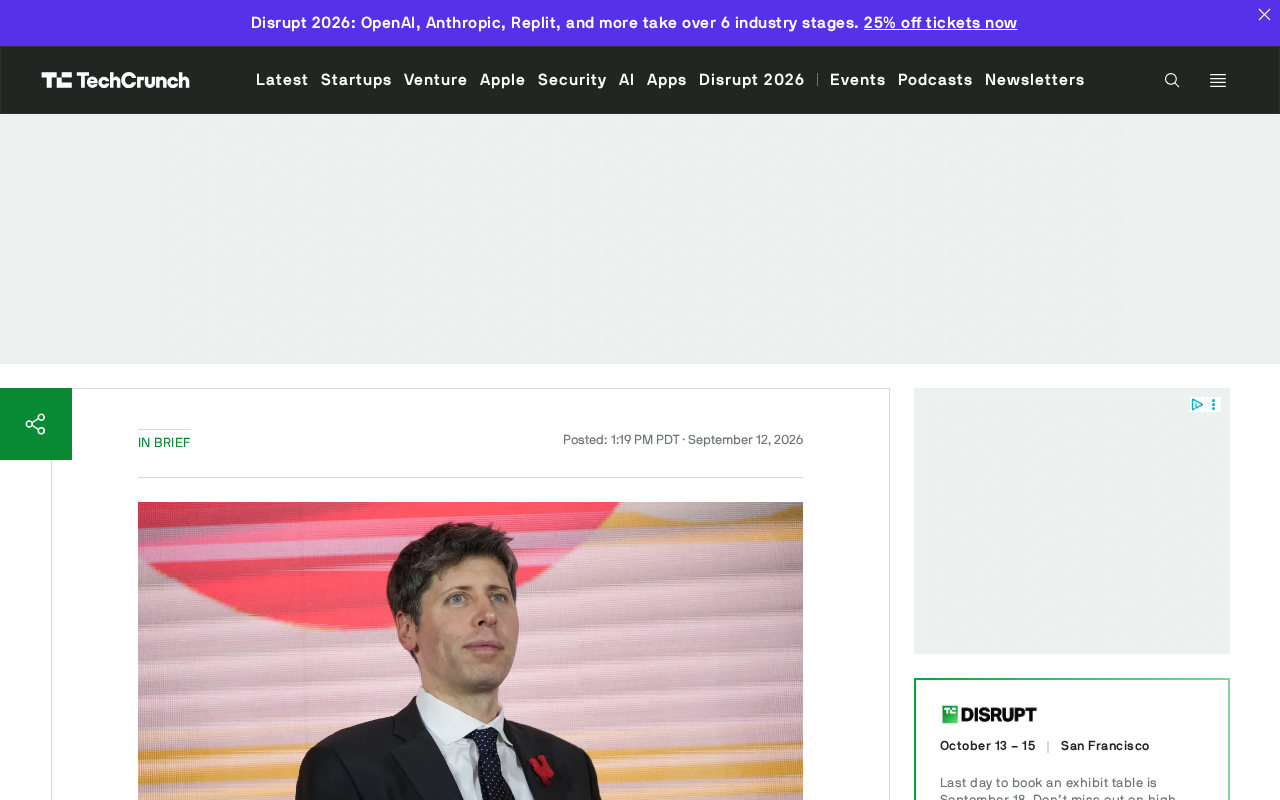
Altman: Taking OpenAI Public This Year Would Be 'Ill-Advised'
OpenAI CEO Sam Altman says going public this year would be 'ill-advised,' even as the company has confidentially filed IPO paperwork. Here's what it means for AI.

An Open Letter to Dario: If AI Safety Is Real, Open the Model Weights
Developer Jacob's open letter to Anthropic CEO Dario Amodei went viral on Hacker News, challenging the contradiction between AI safety rhetoric and closed-source models: if safety truly matters, why not open the weights?
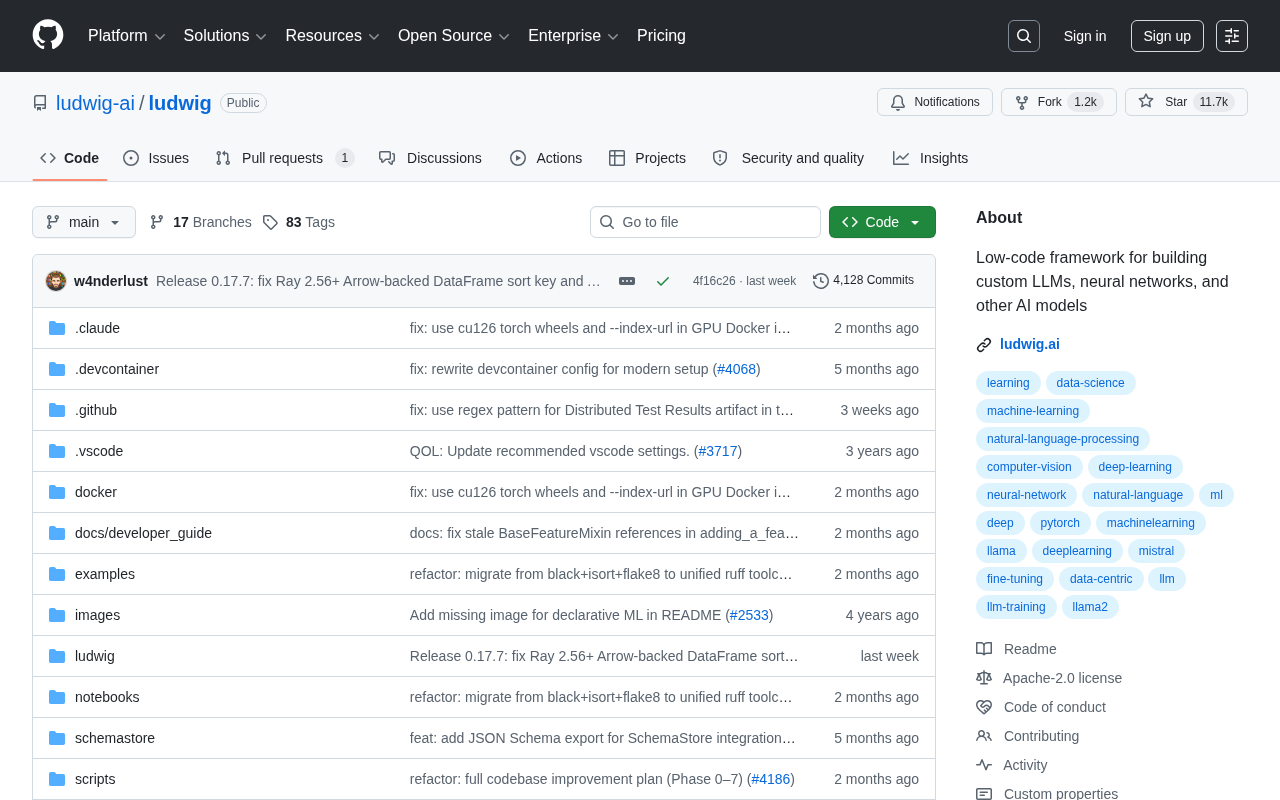
Ludwig: Building Custom LLMs and Neural Networks with Declarative Low-Code Configuration
Ludwig is an open-source low-code ML framework that builds custom LLMs and neural networks via declarative YAML config — no boilerplate training code required.