Getting Started with n8n Automation Workflows: Turning Ideas into Reality

A hands-on class uses n8n to show students how to turn ideas into automated workflows without writing code.
This article covers a hands-on course for technical college students built around n8n, an open-source visual automation platform. Following a practice-first approach, the class begins with local deployment, clarifies the distinctions between AI, machine learning, and data science, and introduces reverse-design thinking to guide workflow planning. n8n's drag-and-drop interface, self-hosting capability, and no-code accessibility significantly lower the barrier to automation, enabling students from non-technical backgrounds to quickly prototype their ideas. The piece also notes that this teaching model reflects a broader trend: tools are getting easier to use, pedagogy is becoming more practice-oriented, and automation is steadily becoming a foundational skill in engineering education.
When Ideas Meet Automation Tools
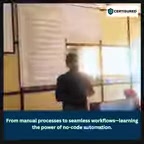
During a hands-on course for technical college students, the instructor posed a deceptively simple yet fundamental question: how do you turn an idea in your head into a workflow that runs automatically? The answer pointed to n8n, an open-source automation platform that has been gaining significant attention in recent years.
The class started from the very basics — first making sure every student had the tool installed in their local environment, then gradually guiding them through the relationships between AI, machine learning, and data science. This "hands-on first, theory second" approach is precisely what drives the adoption of automation tools: lower the barrier to entry so that people without a technical background can get up and running quickly.
A quick note: since the source material was transcribed from a classroom recording, some terms (such as the repeated appearance of "Enated") may be speech recognition errors, likely referring to n8n or a related platform. This article preserves the original classroom context while expanding on the central theme of n8n automation workflows.
Why n8n as a Starter Tool
n8n is an open-source workflow automation platform whose core value lies in connecting tasks visually through nodes — tasks that would otherwise require writing code. For students new to automation, it offers an intuitive "building blocks" experience: drag and drop nodes, configure parameters, connect data flows, and a working automation pipeline takes shape.
The course's emphasis on "desktop installation" as a prerequisite means it uses a locally deployed setup. Compared to cloud-based services, local deployment gives learners complete control over how data flows through the system, and it's far better suited for repeated experimentation and debugging in a classroom setting. Starting with environment setup builds a solid foundation for understanding more complex concepts down the road.
n8n operates under a "Fair-code" license — the source code is fully public and self-hosting is permitted, which sets it apart from purely commercial SaaS platforms like Zapier and Make (formerly Integromat). On the integration side, n8n ships with over 400 built-in nodes covering HTTP requests, databases, popular SaaS services (such as Google Sheets, Slack, and GitHub), and AI/LLM model calls. For teaching environments, self-hosting means no dependency on external networks or paid subscriptions — students can complete all exercises on a fully offline local network without any data leaving to third-party servers, which is especially important when real data is involved. n8n stores workflows in JSON format, making them version-trackable and easy for instructors to distribute standardized exercise templates to the entire class.
Clarifying the Relationship Between AI, Machine Learning, and Data Science
In class, the instructor guided students through three concepts that are often used interchangeably: Artificial Intelligence (AI), Machine Learning, and Data Science. These form the theoretical foundation of automated and intelligent workflows.
Here's a quick breakdown of how they relate: AI is the broadest concept — it refers to all technologies aimed at giving machines human-like intelligence. Machine learning is a dominant method for achieving AI, focused on automatically learning patterns from data. Data science, meanwhile, is an interdisciplinary field encompassing the full pipeline of data collection, cleaning, analysis, modeling, and visualization. The three overlap significantly while each retaining its own focus.
The instructor then asked, "how many branches does data science have?" — an open-ended question designed to encourage students to actively map out the knowledge landscape. Data science typically spans statistical analysis, data engineering, machine learning modeling, data visualization, and more. There's no single right answer; the point is to help learners build a mental model of the field as a whole.

From an engineering perspective, these three concepts have more concrete mappings in the context of automation workflows. Data science focuses on extracting insights from historical data using statistical and analytical methods, typically delivered through Python/R scripts or Jupyter Notebooks. Machine learning goes further, enabling models to make predictions or classification decisions on new data — its outputs are often deployable inference interfaces (APIs). AI in today's context more often refers to intelligent application layers represented by large language models (LLMs). n8n workflows can serve as the "glue" across all three layers simultaneously — using database nodes for data collection and cleaning (data science), integrating with Scikit-learn or self-hosted model services for inference (machine learning), and connecting to OpenAI, Ollama, or other LLM nodes for conversation and content generation (AI). Understanding these layers helps students choose the most appropriate processing node when designing a workflow, rather than routing every intelligent task through the same AI endpoint.
The "Start from the End" Reverse Teaching Approach
One intriguing detail from the course: the instructor said, "we start from the last." This reverse approach to teaching is actually quite insightful for automation workflow design.

When designing an automation pipeline, starting by clearly defining the ultimate goal (the output) and then working backward to determine what inputs are needed and which processing nodes to pass through is far more efficient than blindly stacking steps from the beginning. This aligns with the "begin with the end in mind" principle in software engineering. For beginners, building a workflow with a clear goal in mind prevents getting lost in tool-level details.
This approach is known in product design as "Working Backwards" — Amazon has systematized it into an internal methodology where teams write a hypothetical press release and FAQ describing the value users will get before any development begins. Mapped to n8n workflow design, this means placing the "endpoint node" on the canvas first (such as sending an email, writing to a database, or triggering a notification), clearly defining what shape the data should be in at the final step, and then working leftward to determine what fields each upstream node needs to output and what transformations to apply. There's also a practical debugging advantage: you can use a "manual trigger" node to feed simulated data into the endpoint first, verify that the output format is correct, and then progressively fill in the data acquisition and processing logic upstream — dramatically reducing the rework caused by mismatched data structures early on.
A Few Observations on Automation Education
This introductory lesson covered limited ground, but it reflects several trends in current AI and automation education. Tools are becoming increasingly accessible — visual platforms like n8n mean that "knowing how to code" is no longer a prerequisite for automation. Teaching is also increasingly practice-first: get students to complete a full workflow, then circle back to fill in the theory.
For technical college students, mastering a tool like n8n means being able to quickly turn classroom ideas into working prototypes. Whether it's data scraping, API calls, message notifications, or simple AI task orchestration, automation workflows can dramatically boost productivity. This is precisely why more and more engineering programs are starting to include automation tools in their core curriculum.
Conclusion
From installing the tool to understanding AI concepts, and then building workflows hands-on, this class demonstrated a typical path for automation onboarding. n8n — as an open-source, visual, locally deployable workflow platform — genuinely lowers the barrier for everyday learners to engage with automation. While a single class can only convey so much, the core idea of "turning an idea into an automated workflow" is exactly the kind of capability that technical education should be passing on to students.
Related articles

Googlebook In-Depth Review: Can Google's New Laptop Replace the Chromebook?
In-depth Googlebook review: Google Book OS on Android 17, Pixel ecosystem integration, Gemini semantic search, and how it stacks up against Chromebook and MacBook Air on price and apps.

Python in Practice: Build an MCP Server from Scratch to Give LLMs Real-Time Web Data
Step-by-step guide to building an MCP server with Python and FastMCP, connecting it to Claude Code and Claude Desktop, and enabling LLMs to answer questions with live web data.

The Battle for ICANN's New Top-Level Domains: Meta and OpenAI Race to Claim .agent and .agi
Meta and OpenAI compete for .agent and .agi in ICANN's new TLD round; GTA VI nears launch amid leaks; Joe Rogan signs ~$250M Spotify renewal.