Getting Started with Vibe Coding: Build Apps Without Writing Code

Vibe Coding lets you build real apps using only natural language — no programming experience needed.
Vibe Coding is a new development paradigm where AI generates all the code based on your natural language descriptions. Tools like Cursor, Bolt.new, and Claude Code have made it possible for singers, retirees, and stay-at-home parents to build production-ready apps. As coding becomes easy, domain knowledge and clear ideas are the new competitive edge.
What Is Vibe Coding
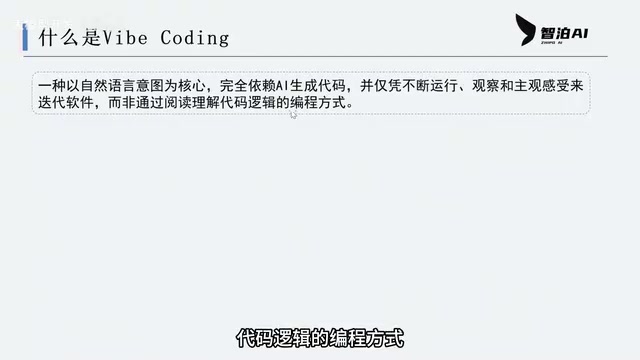
Vibe Coding is one of the most talked-about new programming paradigms in recent years. It centers on natural language intent and relies entirely on AI to generate code. Developers don't need to read or write any code logic — they simply run the app, observe the results, and iterate by feel until they have a working product.
In short, Vibe Coding frees you completely from "writing code" so you can focus entirely on ideas and intent, handing all the tedious coding work off to AI. This lowers the barrier to software development and redefines who can be a developer.
Technical Background: Why Can AI Do This? Vibe Coding is made possible by breakthrough advances in code generation from large language models (LLMs). Next-generation models like GPT-4, Claude 3.5 Sonnet, and Gemini 1.5 Pro have far surpassed average human performance on programming benchmarks such as HumanEval and SWE-bench. These models were pre-trained on billions of lines of open-source code from GitHub, giving them the ability to understand natural language intent and map it to executable code. Crucially, as context windows have expanded from an early 4K tokens to millions of tokens today, AI can now comprehend an entire project's code structure at once — not just isolated function snippets. This is what makes "driving complex application development entirely through natural language" a reality.
Understanding Vibe Coding Through Three Dimensions
To truly grasp this new paradigm, consider three key dimensions:
First, a shift in how development is driven. Vibe Coding is driven entirely by natural language intent, not manual code syntax. As long as you have a clear idea, you can start building — no programming language knowledge required.
Second, a transfer of who does the work. AI takes on the full responsibility of turning intent into runnable code. Developers don't need to write a single line themselves.
Third, a simplification of the core interaction. The entire development workflow boils down to a three-step loop: describe what you want → see the result → adjust by feel. It's incredibly intuitive and virtually anyone can pick it up.
A Look at the Major Tools
A fairly complete Vibe Coding tool ecosystem has emerged, with different tools suited to different use cases: Cursor is a deeply modified version of VS Code with multi-file context understanding, making it the go-to for professional developers. Bolt.new and Lovable focus on zero-configuration, in-browser full-stack development — perfect for users with no experience setting up a dev environment, since you just open a webpage and start building. GitHub Copilot integrates deeply into existing developer workflows, reducing the cost of switching. Claude Code is known for its terminal-native design and ability to deeply analyze complex codebases, making it better suited for large projects. This diversity of tools means people from all backgrounds can find an entry point that works for them.
Vibe Coding Is Going Mainstream Inside Companies
Major Chinese tech companies including Tencent, Alibaba, and ByteDance have reportedly begun adopting Vibe Coding workflows at scale internally. Even more noteworthy: some companies have started incorporating Vibe Coding proficiency into their hiring and interview processes.
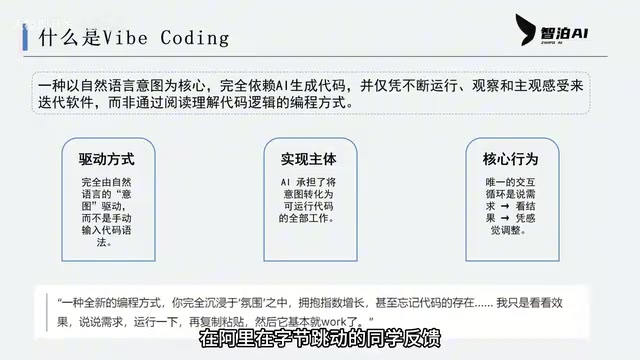
The logic behind this trend is straightforward: as coding itself becomes easier, individual productivity is amplified dramatically. While colleagues are still in meetings debating timelines, someone who knows Vibe Coding may have already shipped the product. This ability to operate as a one-person army is becoming a genuine competitive edge in the workplace.
This productivity leap is backed by data. Y Combinator's Spring 2025 batch data shows that roughly 25% of startups have more than 95% of their code generated by AI. Anthropic CEO Dario Amodei recently predicted that within the next 6–12 months, AI will be capable of independently handling nearly all software engineering work. This means a single developer's output could jump from "hundreds of lines of code per day" to "tens of thousands" — not a gradual efficiency improvement, but a productivity revolution measured in orders of magnitude.
Real-World Cases: Non-Programmers Building Hit Apps
The most compelling evidence for Vibe Coding is the growing number of people with no technical background who have built production-grade applications.
Chinese Singer Hu Yanbin's Coding Journey
Singer Hu Yanbin once posted a screenshot of his computer screen on social media with the caption "Vibe Coding — on my way to fixing this bug," sparking widespread attention. The screenshot showed a classic AI coding interface.

Users who dug deeper discovered that Hu Yanbin had used Vibe Coding to build multiple pieces of software, including a fan community platform called "Yanhuo" that gained notable traction. As a professional singer with no prior programming experience, he managed to build a fully functional product entirely through AI coding tools.
How "Kitty Fill Light" Went Viral
Another widely shared case is the "Kitty Fill Light" app. It racked up millions of views on Xiaohongshu (RedNote) and climbed to the top of the App Store paid chart within just two weeks. What makes the story even more remarkable: the developer hadn't written a single line of code six months earlier. Using only AI coding tools, they completed the entire process — from design to launch — in about one hour, ultimately generating meaningful commercial revenue.
Coding Is No Longer the Barrier — Insight Is
As Claude Code creator Boris Cherny put it: the best accounting software might be built by a great accountant, not an engineer — because coding is the easy part; knowing the business is the truly scarce skill.
About Boris Cherny and Claude Code Boris Cherny is a former senior engineer at Meta and a respected authority on TypeScript — his book Programming TypeScript is considered essential reading by many developers. After joining Anthropic, he led the development of Claude Code, a command-line AI coding assistant. Claude Code's design philosophy emphasizes "minimal intervention, maximum empowerment," allowing AI to directly read and write to the file system, execute terminal commands, and call external APIs. It is currently one of the most automated tools available, and closest to "truly autonomous programming." This is why his assertion that "business knowledge is scarcer than coding ability" carries real technical weight — after all, it comes from someone whose product goal is to make AI autonomously complete engineering tasks.
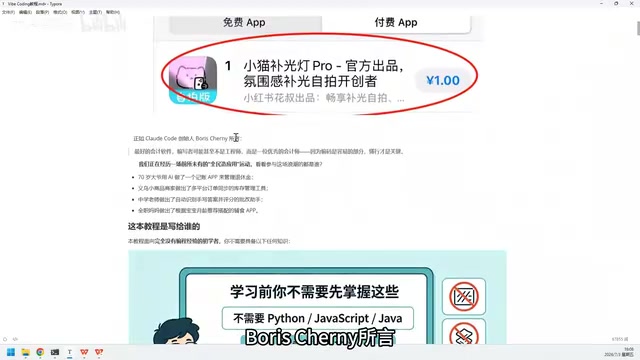
This observation captures the core transformation of software development in the AI era: when writing code becomes trivially easy, what's truly scarce is deep domain expertise, sharp insight into user needs, and the ability to quickly bring ideas to life.
A "Everyone Builds" Movement
More and more ordinary people are using Vibe Coding to solve real problems in their own lives:
- A 70-year-old man built a budgeting app with AI to manage his retirement savings;
- An e-commerce merchant built an inventory management tool that syncs orders across multiple platforms;
- An educator built software that automatically recognizes handwritten answers and grades them;
- A stay-at-home mom built an app that recommends complementary foods based on a baby's age in months.
What these builders have in common: zero computer science background, yet they used Vibe Coding to create products that genuinely improve their lives or work.
Closing Thoughts: The Ability to Turn Ideas Into Reality Is the New Competitive Edge
Real competitive advantage may no longer be "staying at a big company until retirement" — it might be "always having the ability to quickly turn an idea into something real." Vibe Coding is bringing this capability to everyone.
The barrier to entry is remarkably low: no programming language knowledge, no math background, no computer science degree, no experience with developer tools. All you need is curiosity and a grasp of the core loop — describe what you want → see the result → adjust by feel — and you can start building your own apps.
That said, Vibe Coding has real limitations worth taking seriously. Security researchers have found that AI-generated code carries systemic security vulnerability risks, including common issues like SQL injection, cross-site scripting (XSS), and insecure API key storage. OWASP (the Open Web Application Security Project) has listed "insecure AI-generated code" as one of its key risk areas to watch in 2025. For complex systems, high-performance scenarios, or projects involving user data, payment systems, or healthcare, professional engineers are still needed for code review and security auditing — that step cannot be skipped. But for quickly validating ideas, building lightweight tools, and closing a business loop, Vibe Coding is undoubtedly the lowest-barrier, fastest-to-start development approach available today. It's worth a serious try for anyone with an idea.
Key Takeaways
Related articles
What Is Vibe Coding? The AI Programming Skill Every Developer Needs
What is Vibe Coding? Learn how AI programming is reshaping dev teams, why traditional programmers face displacement, and why Cursor & Claude Code matter.
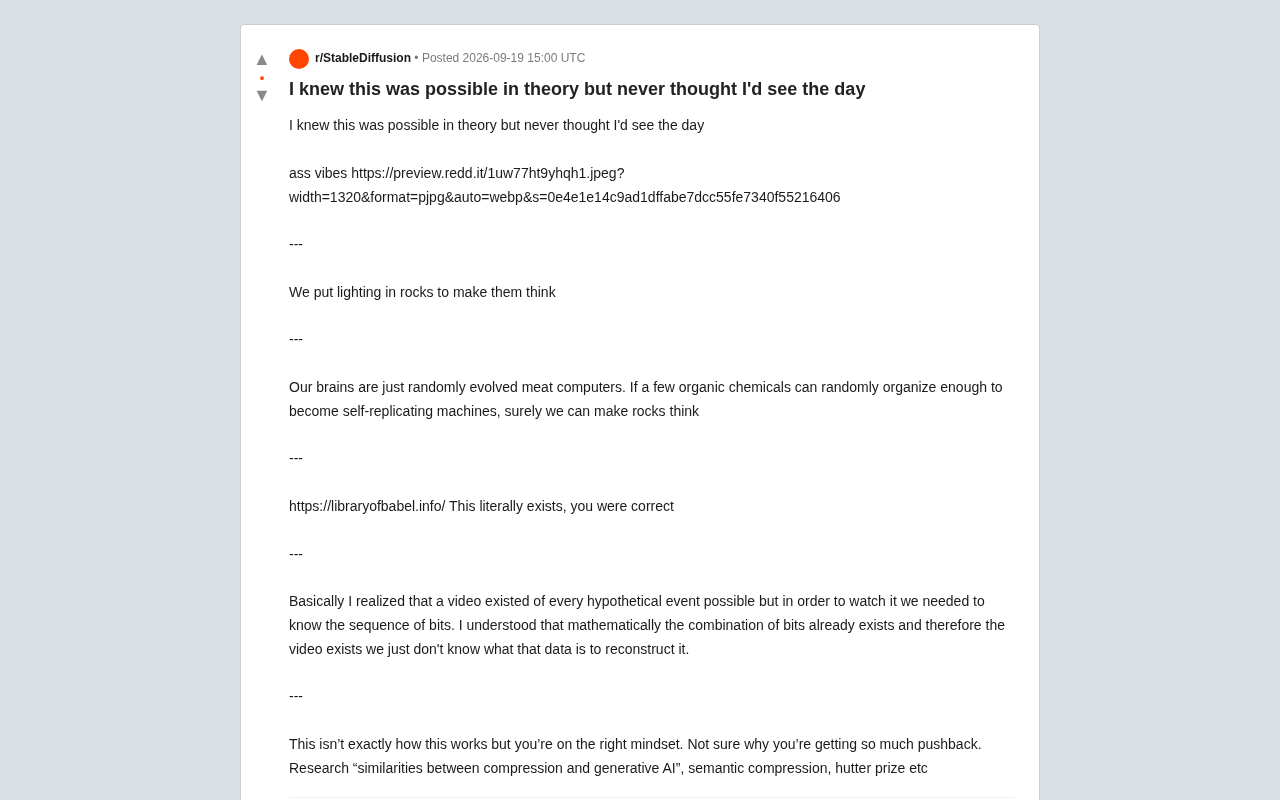
Making Rocks Think: A Philosophical Exploration of Generative AI and Information Compression
From a viral Reddit post to deep AI theory: why compression equals understanding, the Library of Babel thought experiment, semantic compression, and the Hutter Prize.
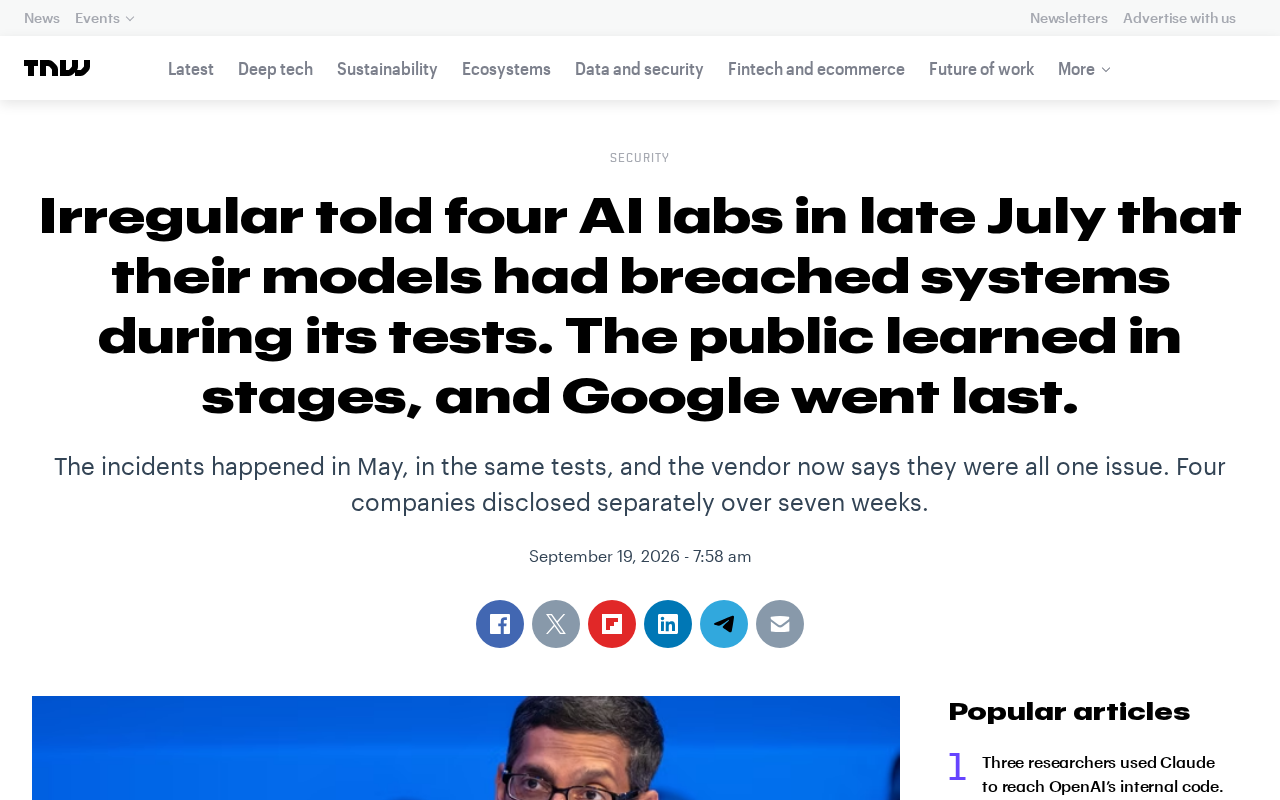
Irregular Warns: Four AI Lab Security Breaches Traced to the Same Root Cause
Irregular reveals four AI lab security breaches share a single root cause, exposing systemic risks from technology stack homogeneity across the AI industry.