Getting Started with Vibe Coding: Build Your First AI Project in 6 Steps

A 6-step learning path to get started with Vibe Coding and build your first AI-powered product—no coding background required.
Vibe Coding is about mastering the ability to build products with AI, not just learning a single tool. This article breaks down a complete 6-step path—from using AI coding tools like Claude Code and Cursor, to writing quality prompts, practicing on projects, and building full AI applications with LangChain and Agents.
What Is Vibe Coding?
If you've been hearing terms like "AI coding" and "Vibe Coding" a lot lately but still can't figure out where to start, this article is worth a few minutes of your time. The core of Vibe Coding isn't about mastering a specific AI coding tool—it's about truly acquiring the ability to "build products and get real work done with AI."
This is a crucial mindset shift. Many beginners focus on "learning which buttons to press in a certain tool," only to feel lost the moment they switch to another one. Vibe Coding emphasizes a universal workflow: how to leverage AI to quickly turn the ideas in your head into a working product.
The real significance of Vibe Coding lies in the fact that "you don't need to become a programmer first"—but you do need to build the right understanding and methodology first. This also explains why it holds such enormous appeal for non-technical creators, product managers, and even independent developers.
Why So Many People Give Up Before Even Getting Started
Almost everyone writing code with AI for the first time falls into similar traps. These can be grouped into three main problems:
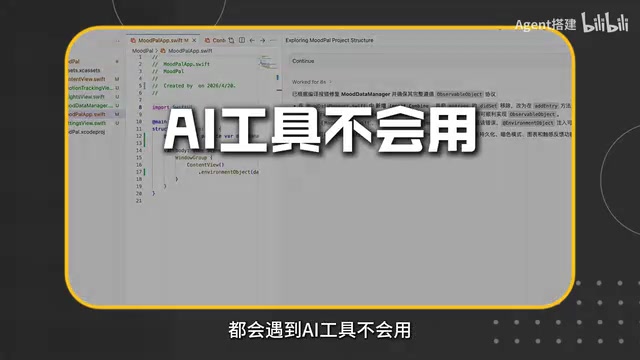
First, not knowing how to use AI tools. Tools on the market like Claude Code, Cursor, and Codex each have their own interaction logic and use cases. Without guidance, it's easy to lose your way.
Second, the AI-generated results are poor. This often isn't a problem with the model's capabilities, but rather that the prompt wasn't written well enough for the AI to accurately understand your intent.
Third, the AI messes up your development environment. Without proper conventions, AI might generate a chaotic file structure, trigger dependency conflicts, or even break your local development environment.
When these three problems pile up, a large number of beginners choose to give up before they ever truly get started. The key to solving them lies precisely in a step-by-step learning path.
The Six-Step Learning Method: Vibe Coding from 0 to 1
To address the pain points above, the complete Vibe Coding learning process can be broken down into six clear steps. This structured path is the most efficient way to get started with AI coding.
Step 1: Learn How to Use the Tools
Start by getting the mainstream AI coding tools up and running. Whether it's the command-line-style collaboration of Claude Code or an editor-integrated AI assistant like Cursor, you need to understand which scenarios each one suits. Tools are the starting point, but they're not everything.
Step 2: Master How to Write Prompts
Prompt quality is the watershed that determines whether AI output is good or bad. For the same requirement, a vague description and a structured description will produce code of vastly different quality. Learning to clearly express requirements, break down tasks, and provide constraints is the most core skill in Vibe Coding.
Step 3: Find a Project to Practice On
You can't learn by watching alone. Pick a small but complete project, work through it from start to finish, and truly internalize your tool usage and prompting techniques into muscle memory.
Step 4: Explore Advanced Techniques
Once you've mastered the basics, further explore advanced applications of AI coding, such as building applications with LangChain or developing Agents. This step dramatically expands the boundaries of what kinds of products you can build.

Step 5: Build a Large Project
Graduate from small practice projects to a relatively complete, complex large project to test and consolidate everything you've built up so far. This is the crucial leap from "knowing how to use the tools" to "being able to build a complete product."
Step 6: Distill Real-World Experience
Finally comes the experience layer—the practical tips distilled after falling into various traps. These help you avoid detours and keep boosting efficiency in real work scenarios.
The Tool Ecosystem: From AI Coding Assistants to Agent Development
What's worth noting is that this learning path covers a fairly complete tool ecosystem, spanning from AI coding assistants like Claude Code, Cursor, and Codex all the way to the LangChain framework and Agent development.
This progression is quite representative: coding assistants solve the problem of "writing code faster," while LangChain and Agent development enable you to build AI applications with genuinely autonomous capabilities. In other words, the endpoint of the learning path isn't just "having AI help you write code"—it's "using AI to build intelligent products that can complete tasks independently."
For anyone looking to enter AI product development, this complete chain from tool usage to application building is exactly the kind of systematic understanding that's most scarce.
Final Thoughts
The value of Vibe Coding isn't in replacing programmers—it's in dramatically lowering the barrier to "turning ideas into products." It allows far more people without deep programming backgrounds to quickly build runnable software with the help of AI.
But remember: before letting AI start writing code, establishing the right methodology and workflow is the key to avoiding quitting halfway. Tools will keep iterating and updating, but the set of abilities spanning from expressing requirements to shipping a project is the core competitive advantage you can reuse again and again.
Related articles

GLM-5.2 Unavailable — What Happened? A Deep Dive into AI Model Fallback Mechanisms
Users report GLM-5.2 being silently replaced by a Best model. Learn how AI platform fallback mechanisms work, why they trigger, and how to handle silent model switching.

Gemini Falls in Love with a 40-Year-Old Gas Heater: AI Insights Behind an Absurd Acquisition Letter
A Hungarian user showed Google Gemini a spider, but the AI became 'obsessed' with a 40-year-old FÉG gas heater, generating a formal acquisition proposal revealing multimodal AI's creative power and hallucination risks.

AI Cracks a 25-Year-Old Math Problem: How Artificial Intelligence Is Transforming Mathematical Research
DeepMind and others use AI to solve a 25-year-old math problem, combining LLMs with symbolic reasoning — marking AI's evolution from tool to collaborative research partner.