Git Community Considers Vote: How LLM Policy Could Shape the Future of Open Source
The Git community is considering a vote to set its LLM policy, fueling debate on formalizing open source governance.
The Git community is considering determining its LLM policy through a vote, drawing attention. With only directional public information and no specific clauses, the article analyzes the move's governance significance: LLM-generated content raises issues of license compatibility, provenance traceability, and attribution authenticity, pushing the project from technical neutrality to a proactive stance. The vote may address contributor usage boundaries, disclosure obligations, and integration with the existing mailing list review process. Voting offers broad representativeness but risks polarization and low participation. As foundational infrastructure, Git's policy could have spillover effects on downstream projects, reflecting how open source governance is shifting from convention to explicit rules as AI tools penetrate software production.
When Code Hosting Tools Start Discussing Large Models
As the world's most widely used version control system, the governance dynamics of the Git community have long been seen as a bellwether for the open source ecosystem. Recently, a discussion titled "Git considers voting to determine its LLM policy" on Hacker News drew attention—the Git community is considering determining its policy on large language models (LLMs) through a vote.
The information itself is extremely brief: 8 points, no comments yet, with no disclosure of the specific proposal text, voting mechanism, or timeline. But it touches on a spreading industry challenge: how should open source projects coexist with content generated by large models? When contributors may use LLMs to assist in writing code, generating patch descriptions, or even drafting mailing list replies, projects need a clear set of rules to define the boundaries.
Why Git's LLM Policy Deserves Attention
From Tool Neutrality to Proactive Governance
Git has long been known for technical neutrality, with its core focus on the correctness and stability of version control. But the intervention of LLMs has changed the frame of reference for the discussion. LLM-generated content may involve issues such as license compatibility, code provenance traceability, and the authenticity of contributor attribution—none of which can be solved by purely technical optimization.
Once Git chooses to establish its LLM policy through a community vote, it means the project's governance shifts from "default silence" to "proactive stance." For other open source projects, this is a reference sample: voting can collect broad opinions, but it may also expose divisions within the community over attitudes toward AI tools.
License compatibility is one of the key considerations when open source projects introduce LLM policies. Different LLMs vary greatly in their training data sources and output terms, and some models' usage agreements may impose additional restrictions on the redistribution of generated code, whose compatibility with open source licenses such as GPL and MIT needs to be assessed case by case. In addition, LLM-generated code snippets may be highly similar to existing code in the training corpus, creating potential copyright and attribution disputes. For this reason, many projects have begun requiring contributors to disclose the extent of AI tool involvement so that reviewers can judge provenance traceability. If Git establishes its policy through a vote, it is in effect drawing operable boundaries for such ambiguous areas.
Common Anxieties in the Open Source Community
From the Linux kernel to various language ecosystems, discussions around LLM-assisted contributions have moved from the margins to the center. What makes Git special is that it is itself the infrastructure for almost all open source collaboration. If Git forms a clear stance on LLM policy, it could produce spillover effects through workflow practices, influencing how downstream projects design commit quality, provenance labeling, and review processes.
It should be noted that currently public information only indicates the direction of "considering a vote," with no policy details disclosed. According to the metadata of the Hacker News entry, discussion activity is limited and there are no comments yet, so excessive inference about the vote's content is inappropriate.
Core Issues the Vote May Address
How Contributors May Use LLMs
A reasonable LLM policy must first answer: in Git's own development process, where can LLMs be used? Code generation, documentation writing, issue triage, and code review assistance each carry different levels of risk. A community vote may need to find a balance between "improving efficiency" and "maintaining quality."
Disclosure and Accountability for Generated Content
Another key point is the disclosure obligation. If contributors use LLM-generated content, must they declare it? To what granularity? If generated content introduces errors or license issues, how is responsibility attributed? If these rules are established through a vote, they will directly affect contributors' daily working habits.
Alignment with Existing Governance Frameworks
The Git project already has a mature patch submission and review process. An LLM policy cannot exist independently of the existing framework; it needs to answer how it fits into established processes: whether to add a declaration field to the commit template, or introduce additional review steps in mailing list discussions. The voting outcome needs to be actionable rather than merely a declaration of principles.
The Git project uses a mailing-list-based patch review process, where contributors submit patch series via git send-email and maintainers review them one by one on the mailing list, giving tags such as Acked-by and Reviewed-by. This decentralized workflow means that any new LLM declaration mechanism must be lightweight, otherwise it would significantly increase the review burden. For example, a Trailer field similar to Co-authored-by could be added at the end of the commit message to indicate AI assistance, while remaining compatible with the existing Signed-off-by process. If the policy produced by the vote cannot be embedded in this existing toolchain, it will be difficult to actually implement.
The Advantages and Risks of Voting-Based Governance
Broad Representativeness and Legitimacy
The greatest value of voting lies in legitimacy. Having community members jointly decide the LLM policy is more likely to gain acceptance than a closed-door decision by a few maintainers. For a project like Git with a huge user base and diverse contributor backgrounds, voting can serve as a mechanism for building consensus.
Concerns About Polarization and Low Participation
Voting also carries obvious risks. The LLM topic easily provokes opposing stances, and voting may amplify divisions rather than bridge them. In addition, voter participation is often limited, and the final result may only reflect the preferences of the active group. If the policy is too strict, it may discourage contributions; if too lenient, it may raise quality and compliance concerns.
There are historical precedents for the participation problem in open source community voting. Take large projects such as Debian: turnout for its General Resolutions typically accounts for only a small fraction of eligible voters, and outcomes are often decided by a small number of active contributors. The Git community is large but its core contributors are relatively concentrated, so if the participation threshold for an LLM policy vote is set improperly, underrepresentation may occur. On the other hand, opinions on the LLM topic are clearly divided among developers, and the positions of supporters and opponents tend to harden; a vote may turn a technical discussion into a camp confrontation, thereby weakening the foundation of consensus.
Potential Impact on the Open Source Ecosystem
Once Git's LLM policy is implemented, the most direct impact will be on the project's own collaboration norms. In the longer term, it may become a precedent for other projects to follow. The open source community has long relied on informal consensus and conventions, and the introduction of LLMs is forcing these conventions to become explicit and rule-based.
From an industry analysis perspective, this dynamic reflects a larger trend: AI tools have penetrated the foundational links of the software production chain, and the governance question is no longer just "whether to use AI" but "how to establish enforceable AI usage rules while maintaining the spirit of open collaboration." Git's voting attempt, whatever the outcome, provides a case worth observing in this discussion.
Given the limited information, a rational attitude is to keep following subsequent developments: whether the vote is actually launched, what clauses the policy draft contains, and how community feedback evolves. These details will determine whether this attempt becomes a model for open source governance or merely remains a single discussion.
One-line Summary
The Git community is considering establishing its LLM policy through a vote, sparking discussion about formalizing open source governance rules.
Paragraph Summary
The Git community is considering determining its policy on large language models through a vote, a development that has drawn attention. Since public information only offers a directional statement with no specific clauses yet, the article analyzes the significance of this move from a governance perspective: LLM-generated content involves issues such as license compatibility, provenance traceability, and the authenticity of contributor attribution, forcing the project to shift from technical neutrality to a proactive stance. The vote may address the boundaries of contributor usage, disclosure obligations for generated content, and alignment with the existing mailing list review process. Voting-based governance has the advantage of broad representativeness, but also faces risks of polarized stances and insufficient participation. As foundational collaboration infrastructure, Git's policy may have spillover effects on downstream open source projects, reflecting that as AI tools penetrate the software production chain, open source governance is moving from convention toward explicit rule-making.
Related articles
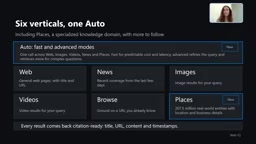
Microsoft WebIQ: Verifiable Real-Time Web Grounding for AI Agents
Microsoft WebIQ gives AI Agents real-time, citable web grounding across web, news, images, videos, and Places—164ms P95 latency, 50% fewer tokens, Scopes source control, and MCP integration.
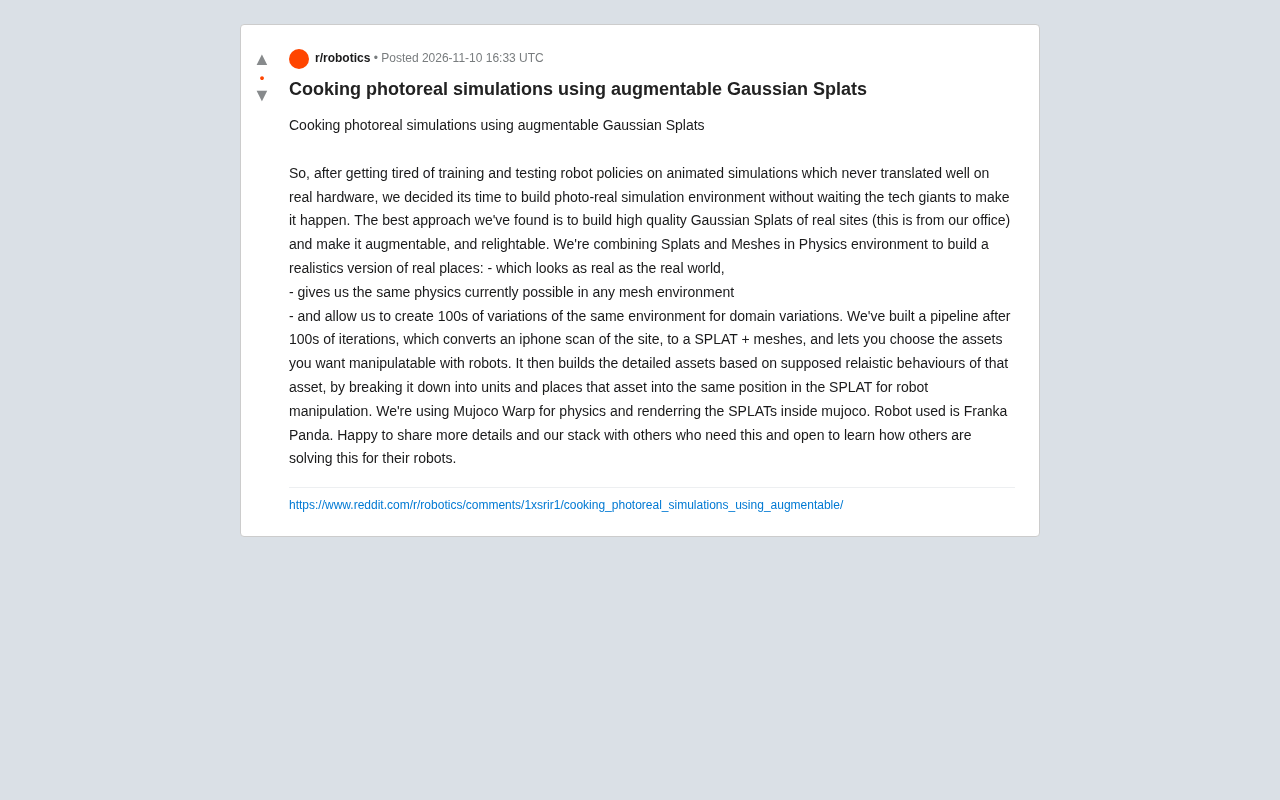
Augmentable Gaussian Splatting: Building Photorealistic Simulation Environments for Robot Training
Team combines Gaussian Splatting with meshes to build photorealistic robot simulation environments, integrating MuJoCo Warp physics and Franka Panda for augmentable, relightable real-site simulation.
Gemini 4 Carbon Released: The Leap from Gemini 3 to Gemini 4 in Under a Year
Google releases Gemini 4 Carbon, less than a year after Gemini 3. In the official demo, Carbon reverse-engineered the Theme Park binary, added a new DeepMind-themed ride, and ported it to the web in one shot.