GitHub Daily · Aug 28: Agent Skills Dominate the Charts — Everyone's Building Tools Now

Agent Skills dominate GitHub Trending as developers shift from writing code to writing skill packs for AI assistants.
GitHub's Aug 28 Trending list is dominated by Agent Skills — capability packs for AI coding assistants covering science, video production, architecture diagrams, and more. gods-eye-view topped the chart with nearly 2,000 stars for bringing real satellite intelligence into the browser. archify gained 4,000 stars for AI-generated architecture diagrams. The trend signals a paradigm shift: developers now create value by packaging domain expertise into AI skills rather than writing code directly.
GitHub Daily · Aug 28: Agent Skills Dominate the Charts — Everyone's Building Tools Now
Today's Trending list has one very clear theme: Agent Skills — the idea of equipping AI coding assistants with capability packs — has taken over nearly half the chart. From scientific research to video production, from architecture diagrams to second brains, developers are no longer writing code themselves. Instead, they're writing skill manuals for assistants like Claude Code. Meanwhile, a project that brings real satellite intelligence into the browser shot to #1, and open-source editing tools like OpenCut continue to gain momentum. You could say today's chart is half hardcore tools, half AI ecosystem celebration. Let's go through them one by one.
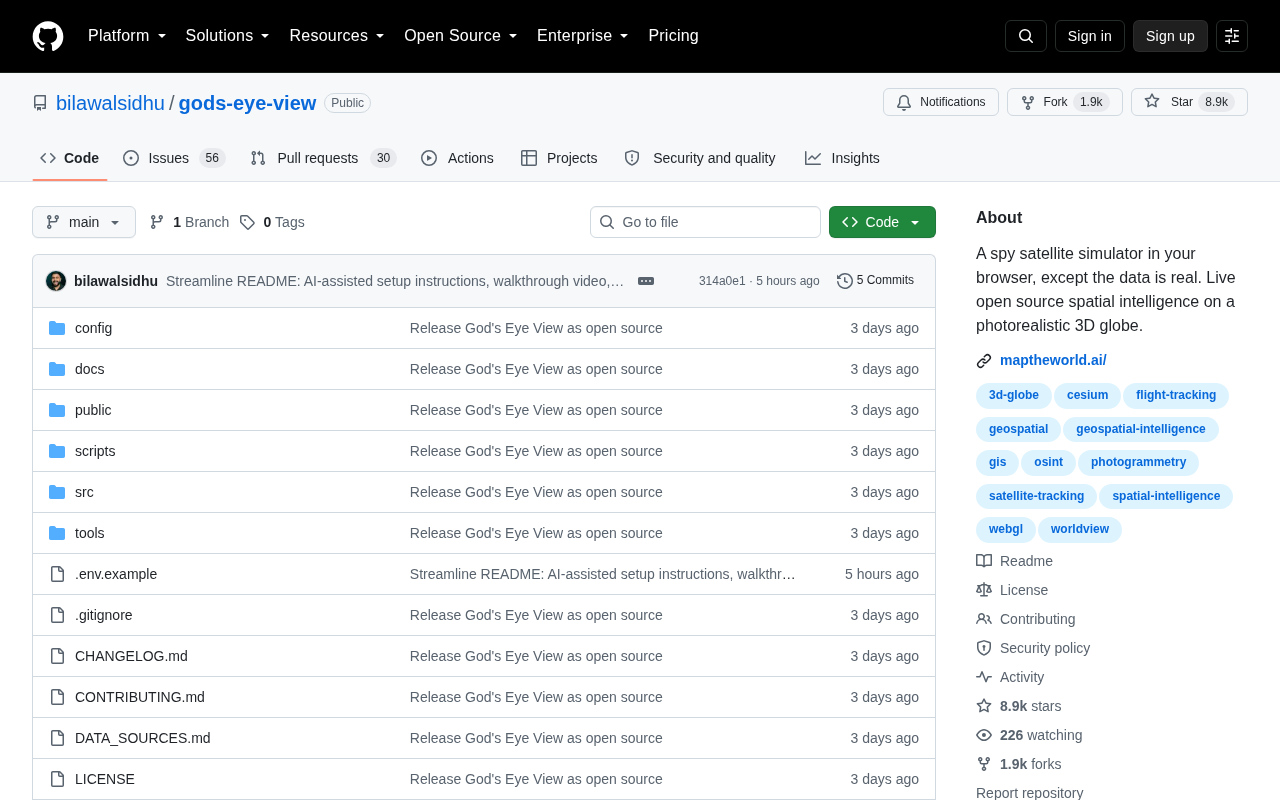
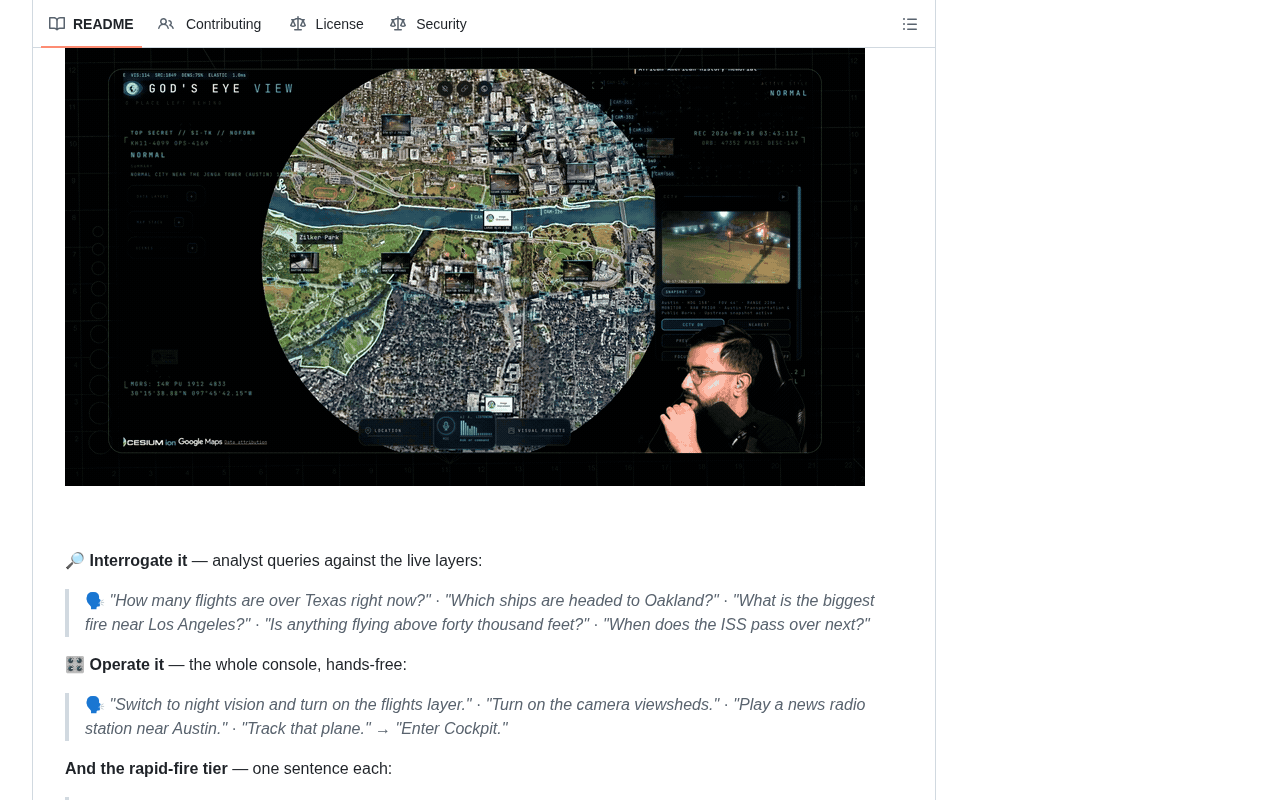
bilawalsidhu/gods-eye-view: A Spy Satellite in Your Browser
This project parachuted into #1 today, gaining nearly two thousand stars in a single day — absolutely explosive.
It positions itself as an in-browser spy satellite simulator, but with real data. You can view real-time open-source spatial intelligence on a realistic 3D globe.
The problem it solves is fascinating. Previously, viewing satellite imagery and geospatial intelligence required expensive professional software with a high barrier to entry. This project brings those capabilities into the browser — anyone can open a webpage and start exploring.
The tech stack is JavaScript, meaning it runs entirely on the frontend. For developers working on map visualization or 3D rendering, this is an excellent learning case. Journalists, researchers, or simply curious enthusiasts would all love something like this.
A single-day gain of two thousand stars is highly unusual, indicating it struck a nerve with the public's curiosity about intelligence visualization.
DietrichGebert/ponytail: Making AI Think Like the Laziest Senior Engineer
This project's positioning is hilarious — it makes your AI assistant think like the laziest senior developer in the room. Its core philosophy: the best code is the code you never wrote.
Sounds like a joke, but there's real wisdom behind it. A senior engineer's most valuable skill often isn't writing code — it's knowing which code should never be written in the first place. This skill pack injects that restraint into AI.
It has accumulated 110,000 stars and is still gaining 900+ today. That high baseline tells us people have long been frustrated with AI over-generating code.
Tech stack is JavaScript. Perfect for anyone using AI to write code but finding their assistant constantly gilding the lily.
K-Dense-AI/scientific-agent-skills: Turning AI Into a Scientist
This project claims to turn any AI assistant into an AI scientist, and has been used by over 175,000 scientists worldwide.
It provides 163 verified skills and over 100 scientific databases covering biology, chemistry, medicine, and drug discovery.
The gap it fills is critical. General-purpose AI assistants don't understand specialized research workflows, but this library packages domain knowledge into standardized skills compatible with mainstream tools like Cursor and Claude Code.
Tech stack is Python, with 35,000+ stars and nearly 500 gained today. This signals the research community is rapidly embracing Agent workflows.
calesthio/OpenMontage: AI Video Production Pipeline
This project calls itself the world's first open-source, autonomous video production system. It features 12 production pipelines, over 100 tools, and more than 700 skill files.
Its goal is to turn your AI coding assistant directly into a complete video production studio.
For content creators, this idea is enticing. Previously, making videos meant switching between multiple applications. Now, in theory, a single AI can orchestrate the entire workflow.
Tech stack is Python, with 46,000+ stars. While real-world results still need validation, this direction genuinely represents the future.
tt-a1i/archify: Making AI Draw Beautiful, Accurate Architecture Diagrams
This project is an Agent skill specifically for drawing — it generates beautiful, verifiable architecture diagrams, flowcharts, sequence diagrams, and data flow diagrams.
The biggest highlight: it outputs standalone HTML files with built-in animations that export cleanly.
The pain point it solves is very real. Engineers hate drawing diagrams, especially architecture documentation — it's time-consuming and goes stale quickly. Having AI draw them while ensuring accuracy is genuinely valuable.
It gained over 4,000 stars today, making it one of the fastest risers. Tech stack is JavaScript, with 24,000+ total stars.
thedotmack/claude-mem: Giving AI Persistent Memory
This project addresses one of the biggest pain points of AI assistants: amnesia. It maintains context between sessions.
It captures everything your assistant does during a session, compresses it with AI, then injects relevant content back into future sessions.
It's compatible with a wide range of tools — Claude Code, Codex, Gemini, Copilot all work. Star count is a staggering 92,000+.
That high baseline tells us memory loss is a universal pain point for all AI users. Whoever solves this well captures a fundamental need.
TauricResearch/TradingAgents: Multi-Agent Financial Trading Framework
This is a multi-agent financial trading framework powered by large language models. It has multiple AI roles working together to simulate a trading team.
With 96,000+ stars and nearly 19,000 forks, that fork count is stunning — it means a massive number of people are using it for their own experiments.
Tech stack is Python. Suitable for quant researchers and developers interested in AI investing. Of course, when real money is involved, caution is always warranted.
AgriciDaniel/claude-obsidian: A Self-Organizing Second Brain
This project combines Obsidian with Claude Code to create a self-organizing AI second brain.
You dump in any material, and Claude automatically reads it, builds connections, and archives it into a connected knowledge graph. Everything stays as plain Markdown files that you own.
It's positioned as an open-source Notion alternative, inspired by Karpathy's LLM wiki concept. Tech stack is Python, with 11,000+ stars.
OpenCut-app/OpenCut: The Open-Source CapCut
This is an old friend — an open-source alternative to CapCut (known as Jianying in China). It gained another 1,600+ stars today.
The gap it fills is clear: people want a free, fully-featured video editing tool where they control their own data.
Tech stack is TypeScript, with 72,000+ stars. It proves that beyond the AI hype, solid, practical open-source foundational tools always have a market.
Today's Trend Analysis
Looking at today's chart as a whole, one major trend is crystal clear: the way software is built is changing.
In the past, building tools meant writing code and publishing frameworks. Now, an increasing number of top projects are essentially skill packs written for AI assistants. Look at scientific-agent-skills, archify, garden-skills, OpenMontage — they all follow this pattern.
Anthropic has also entered the arena officially — claude-plugins-official is their curated, high-quality plugin directory. This means Agent Skills have evolved from a grassroots practice into a formal ecosystem with official standards.
The logic behind this: model capabilities are already strong enough. The bottleneck has shifted to how to provide them with domain expertise and workflows. Whoever can package their field's experience into skills creates value. This is actually great news for regular developers — you don't need to train models to build something genuinely useful.
Today's Must-See TOP 3
#1: gods-eye-view. Brings real satellite intelligence into the browser — technically impressive, accessible to everyone, and today's biggest gainer.
#2: archify. Has AI draw accurate, beautiful architecture diagrams — directly targeting engineers' most dreaded documentation task, gaining 4,000 stars in a single day.
#3: scientific-agent-skills. Turns AI into a scientist — used by 175,000 researchers, representing the most grounded real-world application of Agent Skills.
Today's chart tells us AI is no longer just a chat tool. Through skill packs, it's gradually taking over concrete professional work across specialized domains. This trend is only just beginning.
Related articles
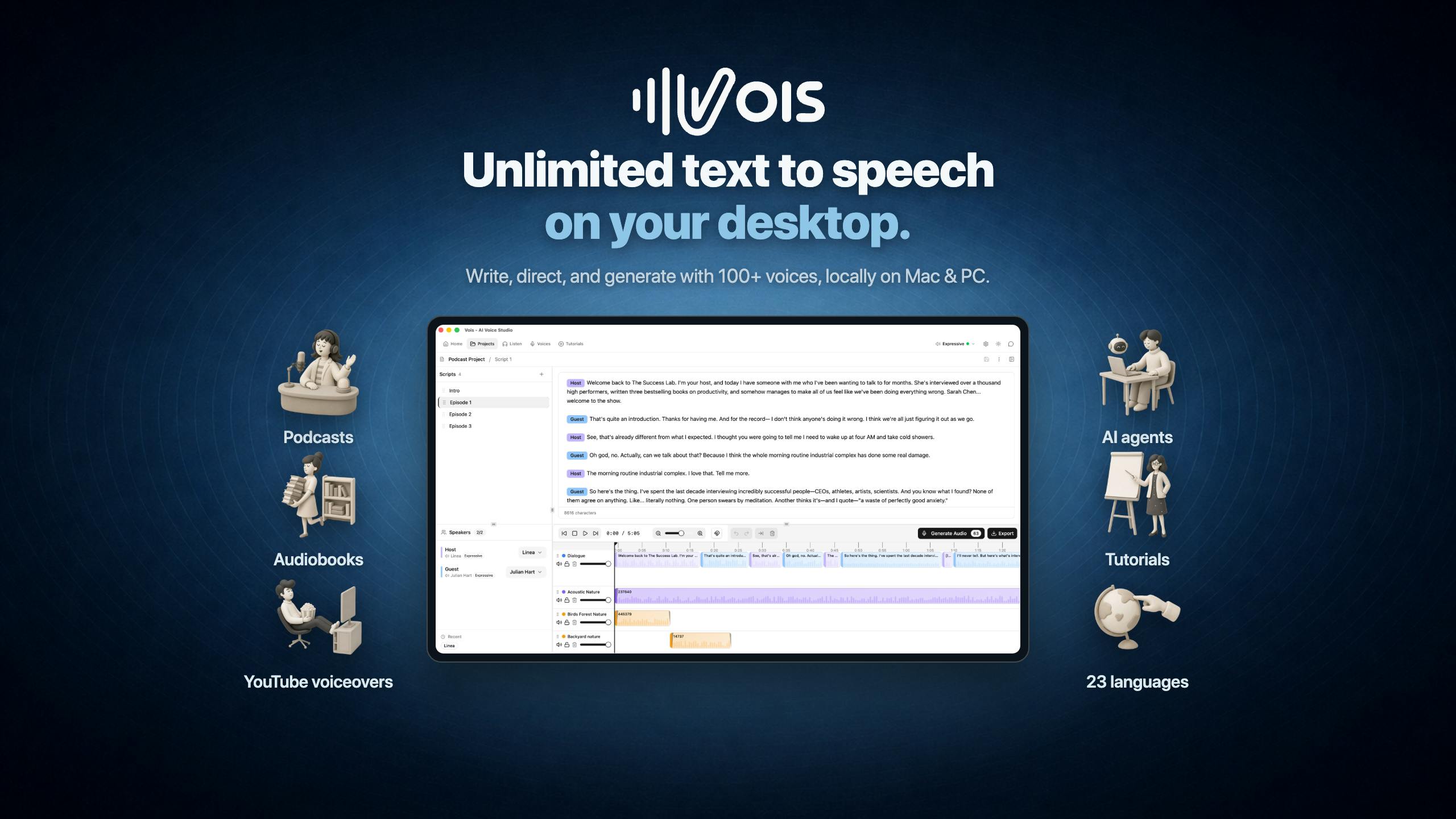
Vois 2.0 Review: Unlimited Voice Synthesis for $10/Month — Can It Replace ElevenLabs?
Vois 2.0 is a desktop AI voice synthesis tool offering unlimited generation with no per-character fees, 100+ voices, voice cloning, multi-speaker timeline, and 600+ languages for $10/month.
The Fascinating Real-World Counterparts of OpenAI Gym Reinforcement Learning Environments
Exploring how OpenAI Gym RL environments map to real-world scenarios, from CartPole to MountainCar, covering design principles and the sim-to-real transfer challenge.

A Practical Guide for Students to Deploy Multi-Container MLOps Projects on a Budget
A detailed guide on how student developers can deploy multi-container MLOps projects (Prometheus, Grafana, MLflow) to the cloud on a budget, covering Azure on-demand, Oracle free tier, and Fly.io.