GitHub Daily · August 22: The Rise of Agent Meta-Frameworks and Local-First AI Workbenches

Agent engineering matures as orchestration frameworks and governance workbenches dominate GitHub Trending.
August 22's GitHub Trending highlights the maturation of AI Agent development: ruflo (68K+ stars) leads as a multi-agent meta-framework for orchestration, Apache Maka pioneers local-first Agent governance with append-only logs for auditability, OBLITERATUS pushes model safety boundaries through jailbreak research, and Microsoft's onnxruntime anchors the performance layer. The overarching trend: AI is shifting from 'can I build an Agent' to 'can I make Agents orchestrable, observable, and trustworthy.'
GitHub Daily · August 22: The Rise of Agent Meta-Frameworks and Local-First AI Workbenches
Saturday's GitHub Trending paints a fascinating picture: the veteran content publishing platform Ghost continues to hold its ground near the top, but the real standouts are a new generation of AI Agent infrastructure — from the multi-agent meta-framework ruflo, to the Apache-incubating local-first Agent workbench Maka, to the cyberpunk-flavored jailbreak research project OBLITERATUS. Together, they outline a clear trend: AI development is rapidly evolving from the "calling APIs" stage to the engineering phase of "orchestrating, logging, and governing Agent behavior." Meanwhile, Microsoft's onnxruntime remaining on the chart reminds us that inference performance and cross-platform deployment remain the indispensable foundation for AI in production.
Let's dive into each one.
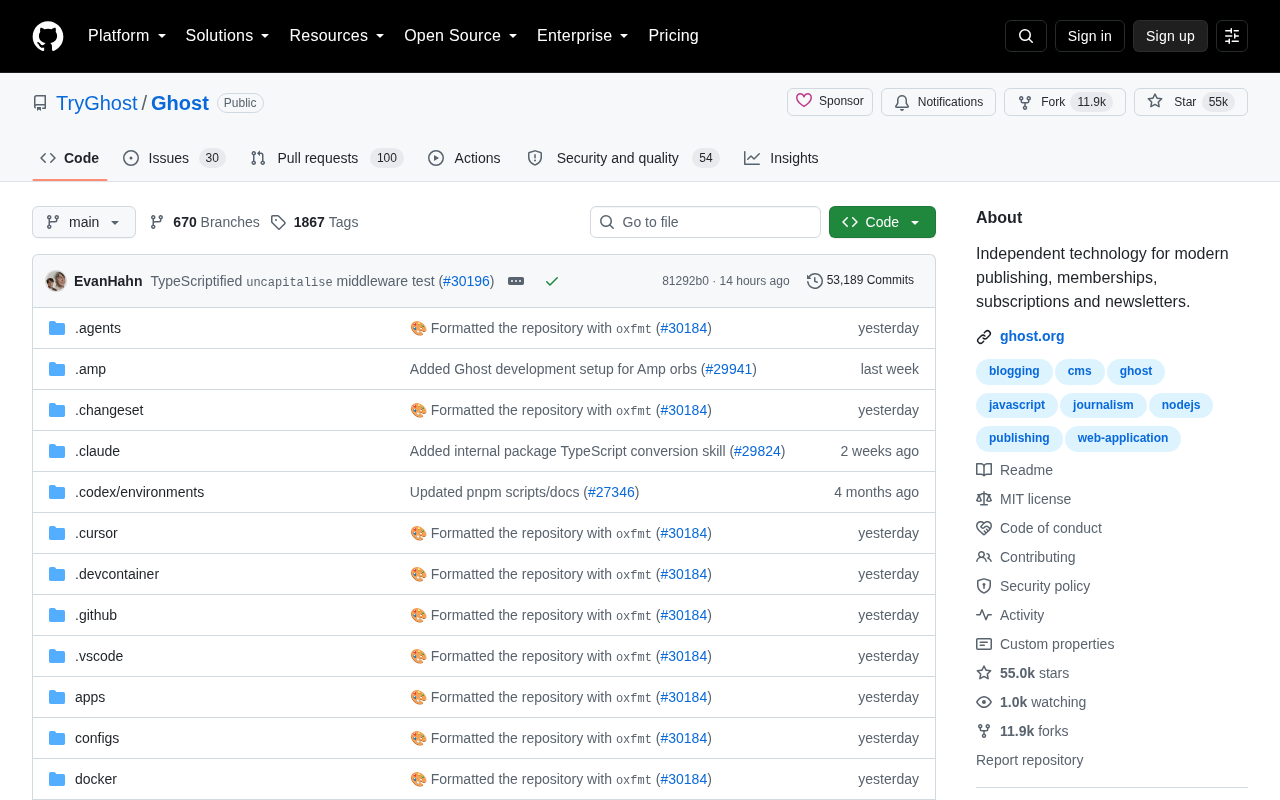
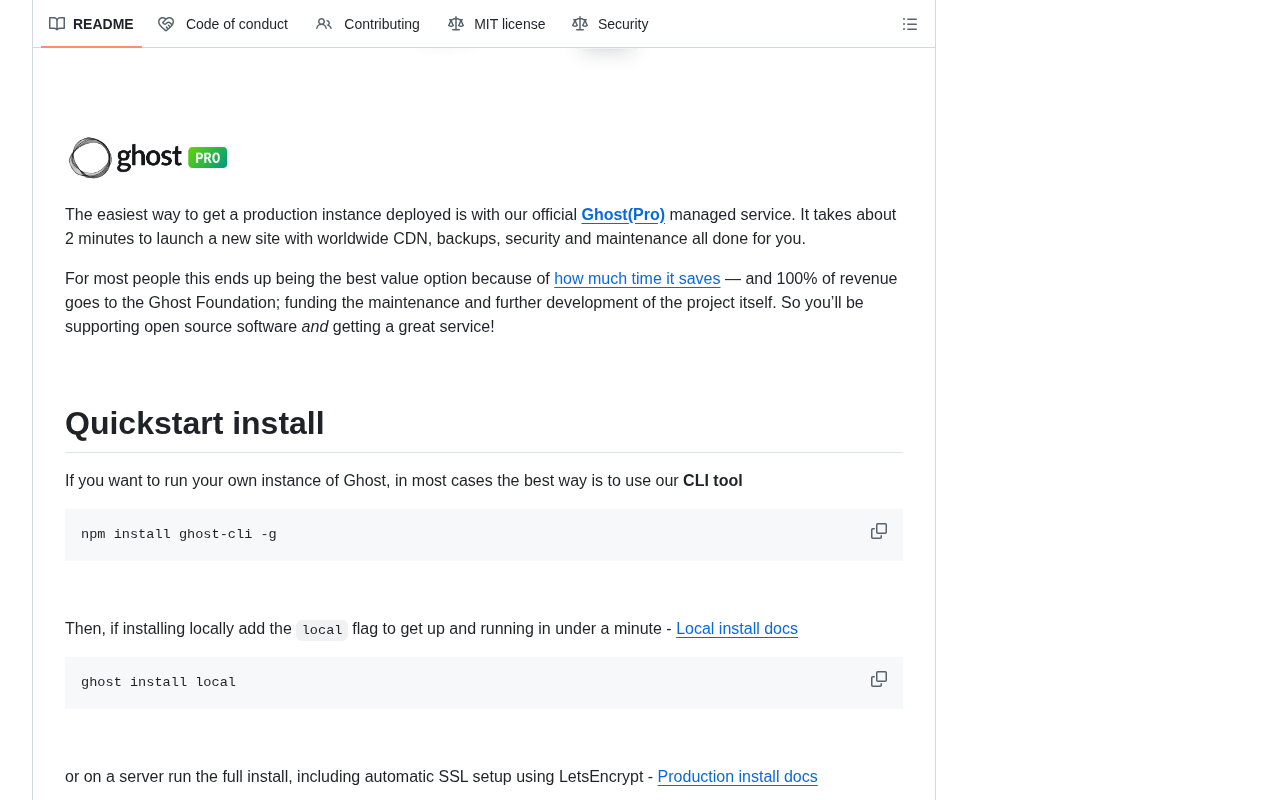
TryGhost/Ghost: The Independent Technical Foundation for Modern Publishing
Project positioning: An open-source publishing platform built for modern publishing, membership subscriptions, and newsletters.
Problem it solves: In an era where WordPress has become increasingly bloated and platforms like Substack are highly centralized and take a cut of revenue, creators need a professional solution that gives them full control over their data and income. Ghost fills the gap of "independent creator monetization" — you don't need to hand over 10% of subscription revenue to a platform, nor worry about your content being manipulated by platform algorithms.
Core features: Native built-in membership system, paid subscriptions, newsletter email distribution, a minimalist and efficient editor, and an overall architecture centered on "publishing" rather than "blogging." It's available both as a SaaS service and self-hosted.
Use cases: Independent media professionals, tech bloggers, paid newsletter authors, and teams wanting to break free from major platforms to build their own brand and user base.
Tech stack: JavaScript (Node.js + Ember frontend) — an excellent reference for full-stack developers studying how content-focused SaaS handles subscription billing and email systems.
Data analysis: 55,016 stars, 11,909 forks, +32 today. As a mature project that has been accumulating for years, its steady growth rate indicates a solid user base — a "perennial" project rather than an explosive one. Its continued presence on the chart is itself the best proof of sustainable open-source commercialization.
ruvnet/ruflo: The Primordial Agent Meta-Framework
Project positioning: Self-described as "the primordial Agent meta-harness," designed for deploying multi-agent collaborative swarms, orchestrating autonomous workflows, and building conversational AI systems.
Problem it solves: Everyone is writing Agents today, but scattered scripts struggle to achieve "multiple Agents collaborating, sharing memory, and self-learning." ruflo aims to provide a higher-level abstraction — not yet another Agent, but a "framework for orchestrating Agent frameworks," allowing developers to natively integrate multiple models/tools like Claude Code, Codex, and Hermes into a coordination layer.
Core features: Adaptive memory, self-learning intelligence, RAG integration, multi-player swarm collaboration, and native integration with mainstream AI coding tools. This "meta-harness" positioning means it aspires to become the orchestration hub of the Agent ecosystem.
Use cases: Teams building complex automated workflows — for example, having multiple Agents each responsible for research, coding, review, and deployment, collaborating to complete an entire task chain.
Tech stack: TypeScript — an excellent learning resource for developers wanting to understand "multi-agent orchestration and memory management" architecture.
Data analysis: 68,786 stars, 8,256 forks, +140 today — the highest total star count on today's chart, with daily growth still going strong. The combination of high existing base + high growth rate indicates it has crossed the early adopter phase and is becoming one of the de facto standards in Agent orchestration.
apache/maka: A Local-First AI Agent Workbench
Project positioning: A local-first AI Agent workbench incubating at Apache, recording model messages, tool calls, tool results, permission decisions, and termination events all as append-only logs.
Problem it solves: One of the biggest pain points with Agents is the "black box" problem — what tools did it call, what decisions did it make, why did it terminate? These are often difficult to trace and audit. Maka uses an append-only log approach to make every step of an Agent's behavior traceable, replayable, and tamper-proof. This is a critical addition for enterprise Agent observability and compliance governance.
Core features: Local-first (data stays on-device, privacy-friendly), complete event sourcing, permission decision recording, and full-chain traceability of tool calls. This design clearly draws from Event Sourcing architectural principles.
Use cases: Enterprises sensitive to data privacy that need to audit Agent behavior, or developers wanting to debug offline and replay Agent decision processes.
Tech stack: TypeScript. Entering the Apache Incubator means it has serious governance and long-term maintenance expectations, making it stand out as distinctly "enterprise-grade" among a sea of personal projects.
Data analysis: 2,137 stars, 248 forks, +148 today. Low existing base but the highest daily growth — a classic "rising star" curve. Combined with Apache backing, this is worth watching closely — it could be a pivotal seed project in the local-first Agent governance space.
elder-plinius/OBLITERATUS: Jailbreak Experiments Pushing Constraint Boundaries
Project positioning: A project with the motto "OBLITERATE THE CHAINS THAT BIND YOU," focusing on adversarial prompting and jailbreak research for large language models.
Problem it solves: As models like GPT-5, Claude 4/Fable 5 become increasingly capable, their safety alignment mechanisms grow ever more complex. Projects like this explore model boundaries from a "red team" perspective — while controversial, they objectively advance deeper understanding of model safety and robustness.
Core features: Collection and curation of adversarial prompting techniques, serving as a resource library for security researchers to understand model defense weaknesses.
Use cases: AI safety researchers, red team testers, and researchers interested in model alignment mechanisms. It must be emphasized: such tools should only be used for legitimate security research and must not be misused.
Tech stack: Python.
Data analysis: 7,916 stars, 1,438 forks, +63 today. The relatively high fork ratio indicates many people are experimenting or conducting research based on this project, reflecting sustained community interest in the topic of "model safety boundaries."
microsoft/onnxruntime: Cross-Platform High-Performance Inference Engine
Project positioning: Microsoft's open-source ONNX Runtime — a cross-platform, high-performance machine learning inference and training accelerator.
Problem it solves: How do you efficiently run a model after training? How do you deploy models trained in different frameworks (PyTorch, TensorFlow) uniformly across diverse hardware from cloud to edge? ONNX Runtime solves the core challenge of "export once, run with high performance everywhere" through the standardized ONNX format + a highly optimized runtime.
Core features: Support for CPU/GPU/NPU and other hardware backends, graph optimization, operator fusion, quantization acceleration, with both inference and training support. It's the invisible engine behind countless production AI applications.
Use cases: Engineering teams needing to deploy models to diverse hardware while pursuing optimal inference performance; edge device and mobile AI inference scenarios.
Tech stack: C++ core with Python/C#/Java multi-language bindings. Extremely valuable for systems engineers wanting to deeply understand "how inference engines perform graph optimization and hardware acceleration."
Data analysis: 21,576 stars, 4,152 forks, +5 today. Slow growth, a typical stable infrastructure project — it doesn't chase trends, yet it's the most indispensable link in the entire AI application stack.
Trend Observation: Agent Engineering Is Moving from "Can It Run" to "Can It Be Controlled"
Connecting today's chart items reveals a very clear thread: the AI Agent development paradigm is maturing.
- ruflo represents the "orchestration layer" — how to make multiple Agents work together;
- Maka represents the "governance layer" — how to record, audit, and replay every step of an Agent;
- OBLITERATUS represents the "security layer" — how to understand and test model boundaries;
- onnxruntime represents the "performance foundation" — how to make all of this run efficiently.
In other words, the community's focus has shifted from "can I build an Agent" to "how do I make Agents orchestrable, observable, trustworthy, and efficiently deployable." This is the inevitable path any technology must travel from toy to production tool. Maka entering the Apache Incubator and multiple projects natively integrating Claude Code / Codex also demonstrate that Agent infrastructure is being standardized and formalized.
Another notable signal is that TypeScript is becoming the primary language of the Agent ecosystem — both ruflo and Maka use TS, reflecting a shift from Python's dominance toward a division of labor: "Python for models, TypeScript for orchestration and products."
Today's Must-Watch TOP 3
- ruvnet/ruflo — If you're building multi-agent systems, this 68K-star meta-framework is almost impossible to ignore. Its memory management and swarm collaboration design are particularly worth studying.
- apache/maka — The Agent governance approach combining local-first + append-only logging is remarkably forward-thinking. With Apache backing, it's today's most valuable "potential stock" for long-term tracking.
- microsoft/onnxruntime — No matter how the upper layers of AI evolve, inference performance will always be a hard requirement. Understanding it is fundamental for any team doing AI engineering in production.
Looking ahead: We can expect that competition in the Agent space will increasingly concentrate on "orchestration + governance + observability" rather than simply competing on model API calls. Whoever can make Agents trustworthy, auditable, and controllable will be the one to truly push AI from demos to production. Today's chart is a clear footnote to this evolution.
Related articles
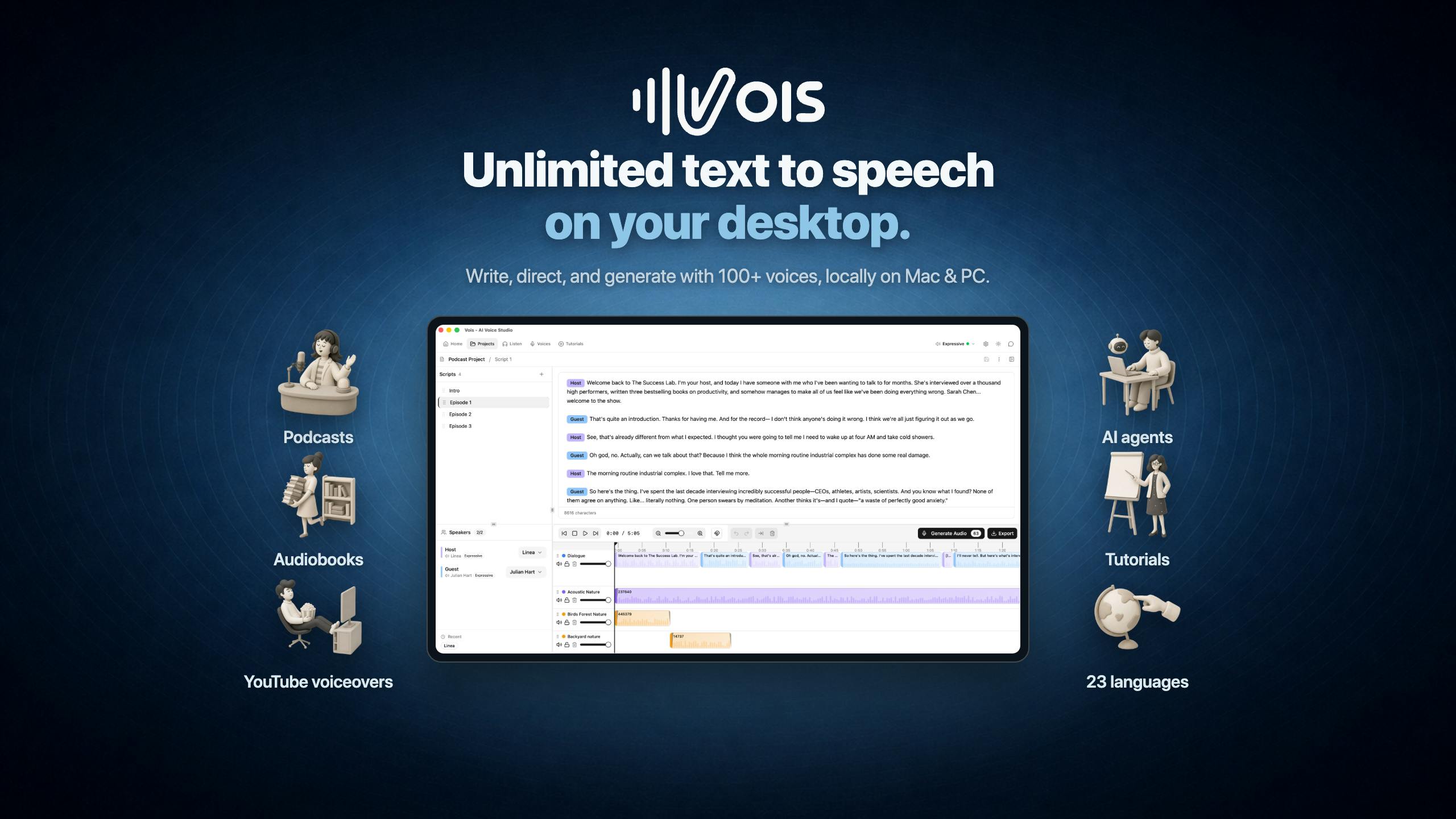
Vois 2.0 Review: Unlimited Voice Synthesis for $10/Month — Can It Replace ElevenLabs?
Vois 2.0 is a desktop AI voice synthesis tool offering unlimited generation with no per-character fees, 100+ voices, voice cloning, multi-speaker timeline, and 600+ languages for $10/month.
The Fascinating Real-World Counterparts of OpenAI Gym Reinforcement Learning Environments
Exploring how OpenAI Gym RL environments map to real-world scenarios, from CartPole to MountainCar, covering design principles and the sim-to-real transfer challenge.

A Practical Guide for Students to Deploy Multi-Container MLOps Projects on a Budget
A detailed guide on how student developers can deploy multi-container MLOps projects (Prometheus, Grafana, MLflow) to the cloud on a budget, covering Azure on-demand, Oracle free tier, and Fly.io.