GitHub Daily Digest · Aug 30: The Dual Wave of Multi-Agent Classrooms and AI Uncensoring

Multi-agent classrooms, LLM-friendly crawlers, and AI uncensoring dominate GitHub Trending on Aug 30.
OpenMAIC, a multi-agent interactive classroom by Tsinghua, surged 900+ stars in one day, signaling a new direction for AI education. crawl4ai leads the chart with nearly 80K stars as the de facto LLM-friendly web crawler. Meanwhile, projects like heretic (AI uncensoring), patent-disclosure-skill, and microduck_rl show AI rapidly penetrating vertical domains. CLI tools are also experiencing a renaissance, and MCP infrastructure continues to standardize across the ecosystem.
Today's Overview
Today's GitHub Trending presents a fascinating split picture. On one side, there's the bustling AI application layer, with the multi-agent classroom project OpenMAIC parachuting to the top of the chart, gaining over 900 stars in a single day. On the other side, there are the quiet but solid developer tools — veteran projects like Zod and Checkstyle holding steady on the leaderboard.
What's even more intriguing is that several projects today are pushing the boundaries of AI. Some are building uncensoring tools, others are creating phone simulator CLIs, and some are using AI to help write patent disclosure documents. You can clearly feel that the open-source community is cramming AI into all sorts of unexpected scenarios. Let's go through them one by one.
OpenMAIC: One-Click Entry into a Multi-Agent Interactive Classroom
The project's positioning is crystal clear — it's an open multi-agent interactive classroom built by a Tsinghua University team. In simple terms, one click drops you into an immersive learning environment composed of multiple AI characters.
Why do we need this? Traditional AI learning tools are mostly one-on-one Q&A — you ask a question, it gives an answer. But real classrooms aren't like that. Real classrooms have teachers, classmates, discussions, and debates. OpenMAIC aims to recreate this multi-role interactive learning experience.
Its core highlight is multi-agent collaboration. Different AIs play different roles — some explain concepts, some ask questions, some challenge ideas. This design ensures learners aren't just passively receiving information but are drawn into a genuine conversation.
Who would use it? I think the most obvious audience is self-learners and online education platforms. The biggest problem with studying alone is loneliness and lack of feedback, and the multi-agent classroom fills exactly that gap.
The tech stack uses TypeScript, making it a valuable reference for frontend and full-stack developers. Gaining over 900 stars in a single day with a total of 22,000+ stars — this growth rate is exceptionally rare for an education-focused AI project. It shows that people's imagination for AI in education is far from saturated.
vphone-cli: Control iOS Virtual Phones from the Command Line
This is a Swift project with a straightforward name — a CLI tool for virtual phones. Over 9,000 stars with 600+ gained in a single day.
The problem it solves is very vertical. iOS developers and automation testers frequently need to perform various operations in simulators. The traditional approach involves lots of clicking around, which isn't efficient. vphone-cli moves these operations to the command line, letting you batch-control everything via scripts.
For teams doing mobile automation testing, this kind of tool saves massive amounts of repetitive work. Building it in Swift makes perfect sense since it's deeply tied to the Apple ecosystem.
What does 600+ daily growth tell us? It tells us that demand for CLI tools within the Apple developer community has always been underestimated. Developers genuinely want to break free from the constraints of graphical interfaces.
heretic: Automatically Uncensor Language Models
This project is a sensitive one. Its purpose is fully automated removal of censorship restrictions from language models. Written in Python, with a total star count approaching 29,000.
Let me be clear — tools like this have always been controversial. But they reflect a real demand. Many open-source models have heavy restrictions added for safety reasons, but researchers and users in certain scenarios feel these restrictions are too conservative and interfere with legitimate use.
Its core feature is automation. Previously, uncensoring required manual fine-tuning with a high barrier to entry. heretic automates this process — which is both its technical highlight and the reason it sparks debate.
Who would use it? Primarily model researchers who want to understand how censorship mechanisms actually work. Of course, this also means it could be misused. This is the eternal dilemma of the open-source world — technology itself is neutral; it's the use that determines good or evil.
Nearly 30,000 stars show that attention on this topic is extremely high. It's essentially reminding the entire industry that the balance between model safety and usage freedom is far from resolved.
crawl4ai: A Web Crawler Tailor-Made for LLMs
This is today's highest-starred project on the chart, approaching 80,000 stars. It positions itself as an LLM-friendly open-source web crawler and scraping tool.
Why emphasize LLM-friendliness? Because data scraped by traditional crawlers is messy HTML, and LLMs perform poorly when fed this data directly. What crawl4ai does is organize web content into formats that LLMs can directly digest.
This angle is incredibly smart. Right now, teams building RAG systems, knowledge bases, and AI applications all need large volumes of clean web data. crawl4ai sits right on top of this critical need.
It's built in Python, making it practically a standard tool for anyone working in data engineering and AI applications. With 80,000 stars and still gaining 200+ daily, it has become one of the de facto standards in this space.
ipatool: Download App Packages from the App Store
This is a Go-based CLI tool for searching and downloading app installation packages across Apple platforms. It just crossed 10,000 stars.
It solves a very practical pain point. Sometimes you need a specific version of an app package, or you need to do app analysis — graphical interfaces struggle to meet these needs. ipatool turns the entire workflow into command-line operations.
Application security analysts and operations staff managing large device fleets would find it useful. Using Go is a classic choice — Go is particularly well-suited for cross-platform CLI tools.
awesome-mcp-servers: The Ultimate MCP Server Directory
This is a curated resource project collecting all kinds of MCP servers. With over 93,000 stars, it's the behemoth on today's chart.
MCP stands for Model Context Protocol — simply put, it's a standard that lets AI connect to various external tools and data sources. This project compiles all community MCP servers into one place.
Its value lies in reducing discovery costs. Want to connect a tool to your AI? Browse through here, and you'll likely find something ready-made. These "awesome" lists may seem simple, but their impact on driving the entire ecosystem is enormous.
Over 90,000 stars indicate that MCP has become critical infrastructure for AI application development. Everyone is building around this protocol.
checkstyle: The Veteran Java Code Standards Checker
This is the most established project on today's chart — a tool that helps Java programmers write code that conforms to standards. Over 9,000 stars with 4,000+ forks — the fork count nearly matching the star count is something you rarely see in open-source projects.
What does such a high fork count mean? It means a huge number of teams have integrated it into their build pipelines and need customized configurations. checkstyle supports Google and Sun code standards by default while being highly configurable.
Its appearance on today's chart is quite interesting. In an environment saturated with AI, the fact that a traditional code standards tool can still consistently attract attention proves that engineering quality never goes out of style.
microduck_rl: A Reinforcement Learning Training Ground for Small Robots
This is a reinforcement learning training environment for Microduck robots. Only around 600 stars, but it gained nearly 150 in a single day — an extremely aggressive growth rate.
It falls under the broader direction of embodied intelligence. It provides a simulation environment for training robots, allowing researchers to train models in virtual worlds before deploying them on real robots.
Who would pay attention? People working in robotics and reinforcement learning research. A base of 600 stars combined with 150 daily growth shows that the embodied intelligence track is heating up rapidly — even a niche project can attract this much attention.
patent-disclosure-skill: AI-Assisted Patent Disclosure Writing
This is a very localized project, specifically designed for mining technical points in Chinese patents and writing disclosure documents. Over 5,000 stars.
Anyone who's written patents knows that disclosure documents are both time-consuming and mentally draining. This project uses AI to help mine patent points, provide plain-language explanations of patents, and even help you sniff out policy trends.
Who would use it? Corporate IP departments, patent agents, and engineers who need to file patents. It's a textbook example of AI landing in professional service domains.
Over 5,000 stars show that demand for AI in these vertical professional scenarios is actually very strong. People don't lack general-purpose AI — what they lack are specialized assistants that understand their field.
corsair: Connecting Users to Their Applications
This is a TypeScript project positioned as connecting users to their applications. Over 10,000 stars, but only around 500 forks.
High stars but low forks suggest it's more watched and used than extensively forked for secondary development. This typically means it's a product-type project that works out of the box.
zod: TypeScript-First Schema Validation
Last up is Zod, a TypeScript-first schema validation library with over 43,000 stars. It achieves static type inference and is a star tool in the TypeScript ecosystem.
Frontend and Node developers can hardly avoid it. It solves data validation and type safety problems, ensuring data correctness at both runtime and compile time.
Today's Trend Observations
Looking at all these projects together, three main threads emerge clearly.
First, AI is penetrating deeper into vertical professional scenarios. From patent disclosures to multi-agent classrooms, people are no longer satisfied with general-purpose chat — they want to solve specific problems in specific industries.
Second, CLI tools are experiencing a renaissance in the AI era. The popularity of vphone-cli and ipatool shows that demand for automation and scriptability is growing. AI can generate scripts, and CLI tools are the perfect vehicle to execute them.
Third, AI infrastructure is rapidly standardizing. Both crawl4ai and awesome-mcp-servers embody this trend. The community is collectively building the pipelines that connect AI to the world.
Today's Must-See TOP 3
Number one: crawl4ai. If you're building any kind of AI application, this crawler tool is practically essential.
Number two: OpenMAIC. The multi-agent classroom represents an entirely new direction for AI education, and it's worth a look for anyone who cares about education.
Number three: awesome-mcp-servers. If you want to understand how the AI application ecosystem is being built, starting with this list is a sure bet.
See you tomorrow as we continue observing the latest moves in the open-source world.
Related articles
Zero-Dependency AI Memory Layer: Agent Memory Without a Vector Database
Explore zero-dependency AI Agent memory layers that work without vector databases. Compare with traditional RAG architectures and learn when lightweight alternatives make more sense.
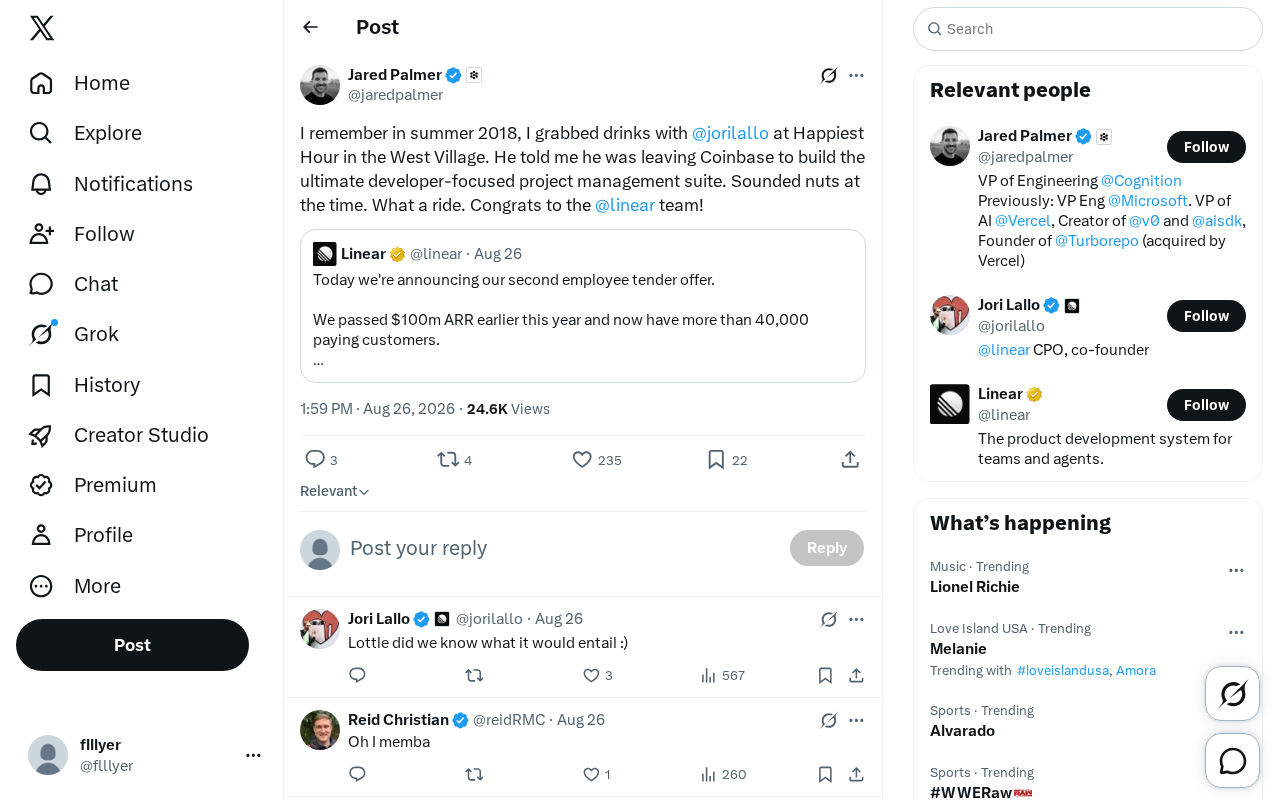
The Linear Startup Story: From Leaving Coinbase to Redefining Developer Tools
How Linear co-founder Jori Lallo left Coinbase in 2018 to build a developer-first project management tool, defying skeptics to carve out success in a market dominated by Jira, Asana, and Trello.
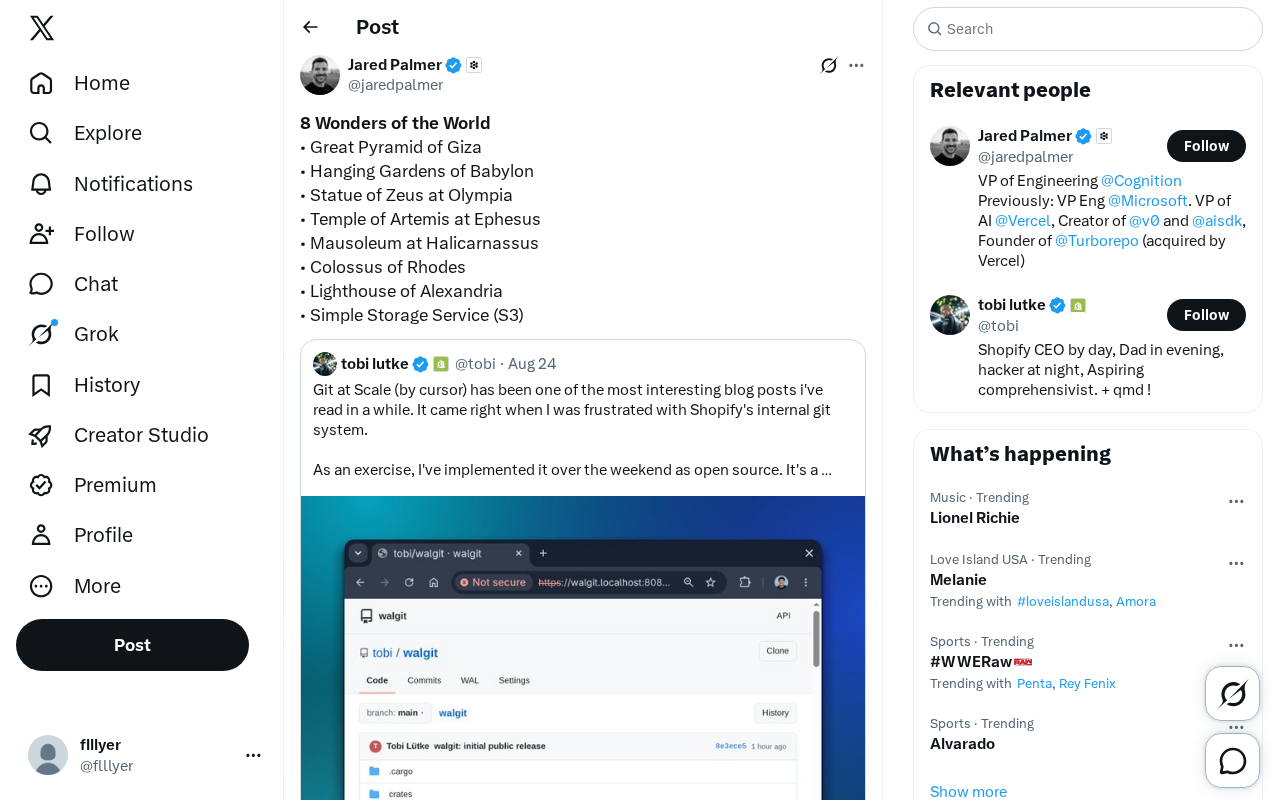
Why Is AWS S3 Called the Eighth Wonder of the World? The Invisible Power of Cloud Storage
A viral tweet listed AWS S3 as the Eighth Wonder of the World. Explore how S3's eleven 9s durability and architectural ubiquity make it the invisible cornerstone of modern digital civilization.