GitHub Daily · July 6: The Agent Skill Ecosystem Explodes — AI Evolves from 'Capable' to 'Expert'

AI Agent skill packs, multi-Agent orchestration, and privacy-first projects dominate GitHub Trending on July 6.
Today's GitHub Trending reveals three major themes: the explosive growth of Agent skill ecosystems (taste-skill, marketingskills, dotnet/skills, planning-with-files) with SKILL.md emerging as a cross-Agent standard; multi-Agent orchestration going engineering-grade with herdr, gastown, and page-agent; and the enduring strength of self-hosted, privacy-first projects like immich (105K+ stars) and RuView's camera-free WiFi sensing.
GitHub Daily · July 6: The Agent Skill Ecosystem Explodes — AI Evolves from 'Capable' to 'Expert'
If 2025 was the year AI Agents were born, then today in 2026, we're witnessing a more nuanced shift: Agents are no longer satisfied with just "being able to execute tasks" — they're now striving to "execute beautifully and professionally."
Browsing today's GitHub Trending list, a clear trend jumps out — "Skill" is becoming the new hard currency of the open-source community. From taste-skill, which injects aesthetic sensibility into AI, to the marketing skill pack marketingskills, to Microsoft's official .NET skills — a "capability plugin ecosystem" built around programming Agents like Claude Code and Cursor is rapidly taking shape. Behind this lies a growing consensus: the capabilities of foundational large models are already strong enough. The real competitive differentiation is shifting toward how to feed domain knowledge, professional aesthetics, and workflow standards into Agents.
At the same time, self-hosted projects and multi-Agent orchestration tools remain dominant. Let's dive into today's most noteworthy projects one by one.
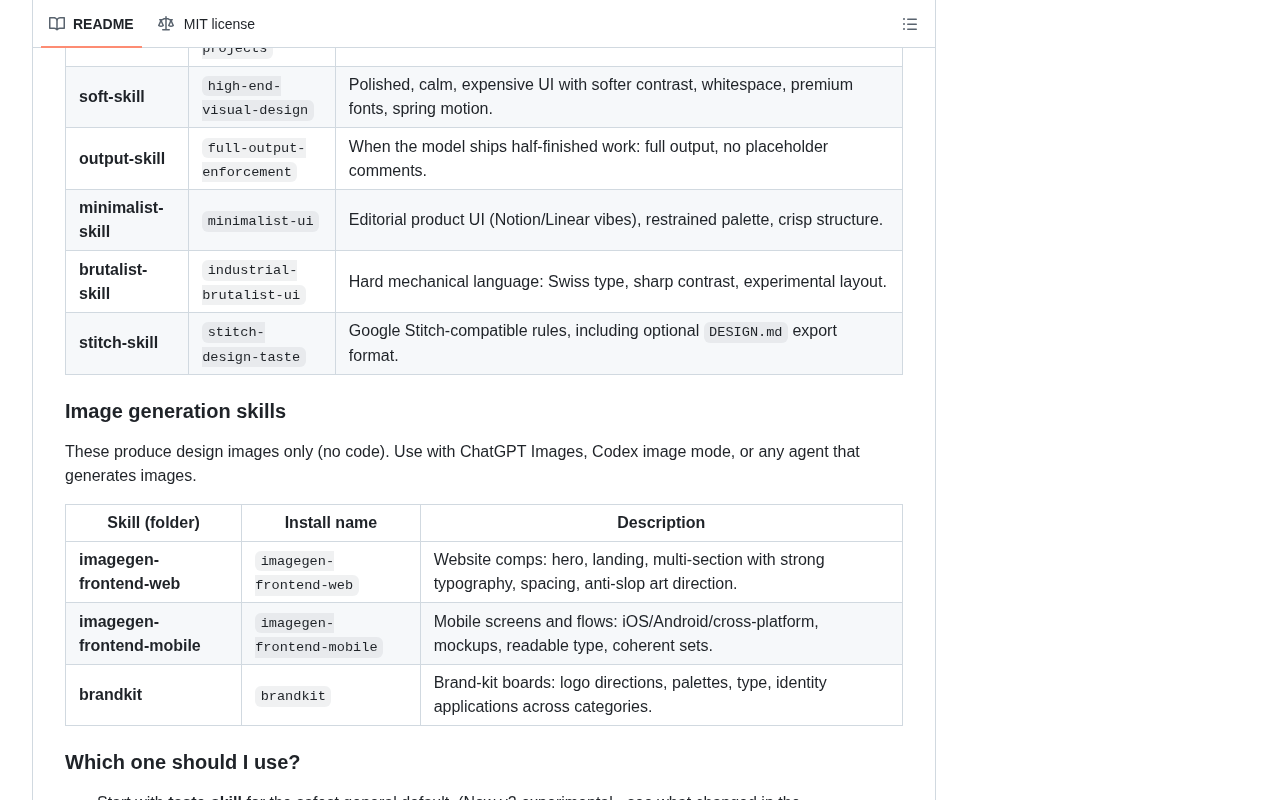
Leonxlnx/taste-skill: Installing 'Aesthetic Taste' in AI
Project positioning: A skill pack that helps AI-generated content break free from mediocrity.
This project dominated today with 850 new stars and a cumulative 56,875 stars. Its tagline is provocatively direct — "stops the AI from generating boring, generic slop."
The problem it solves is painfully real: Anyone who has extensively used large models shares a common experience — AI-generated copy, designs, and code are often "correct but boring," filled with formulaic phrasing and soulless structure. taste-skill attempts to encode "taste" — something notoriously hard to quantify — into a reusable skill that can be injected into an Agent's workflow.
The core highlight is that it engineers "aesthetics." Through a set of rules and prompt templates implemented in JavaScript, it guides AI to avoid clichés and pursue uniqueness and textural detail during generation. This is essentially a paradigm upgrade of Prompt Engineering — from "enabling AI to do things" to "enabling AI to do things with taste."
Use cases: Content creators, indie developers, and teams that need to generate marketing materials at scale. Its lightweight JavaScript tech stack lowers the integration barrier. Nearly 57,000 stars prove that "AI content homogenization" is a universal pain point — this is a space worth watching long-term.
facebook/astryx: A Design System Rebuilt for the Agent Era
Project positioning: A fully customizable, "Agent-ready" open-source design system.
It surged by 903 stars today, making it one of the fastest-growing projects on the list. Coming officially from Facebook (Meta), it naturally commands attention.
The gap it fills is the intersection of "design systems" and "AI Agents." Traditional design systems (like Material Design and Ant Design) were built for human developers, but astryx's keyword is "agent ready" — its components, tokens, and conventions are organized in machine-readable, Agent-operable ways, enabling AI coding assistants to precisely understand and invoke UI components.
Core value: In today's world where tools like Cursor and Claude Code are widespread, the biggest obstacle when AI generates frontend code is that "it doesn't know your design standards." astryx uses a structured design language to ensure Agent-generated interfaces naturally conform to team specifications. This is a fundamental AI-oriented restructuring of the Design Engineering field.
Tech stack is TypeScript, aligned with modern frontend engineering practices. Although it currently has only 5,605 stars, given Meta's backing and the forward-looking nature of this direction, it's likely a slow-burn seed project.
alibaba/page-agent: Control Any Web Page with Natural Language
Project positioning: An in-page GUI Agent that lets you control web interfaces using natural language.
Built by Alibaba, it gained 742 stars today with a cumulative 23,485 stars. This is one of the most technically sophisticated projects on today's list.
The core problem it solves is the last mile of "web automation." Previously, we relied on Selenium and Playwright scripts to control browsers — fragile and expensive to maintain. page-agent is an "in-page" intelligent agent — it embeds directly into the page, understands DOM structure and visual layout, receives natural language instructions like "check out the items in my shopping cart," and then autonomously completes a series of clicks, form fills, and navigation actions.
The technical highlight is its "in-page" architecture. Compared to solutions that drive the browser externally, running inside the page means lower latency and stronger contextual awareness. This opens enormous possibilities for RPA (Robotic Process Automation), accessibility, and automated testing.
Tech stack is TypeScript, and it can be integrated directly into existing web applications as a JS library. For developers researching GUI Agents and exploring the "AI operating software" paradigm, this is an extremely valuable open-source reference implementation.
coreyhaines31/marketingskills: Giving Claude Code a Marketing Brain
Project positioning: A marketing skill set for Claude Code and AI Agents, covering CRO, copywriting, SEO, analytics, and growth engineering.
Its 36,174 stars prove its popularity. This is another quintessential representative of the "skill pack" trend and, together with taste-skill, forms the "AI capability enhancement" throughline of today's list.
The logic is clear: General-purpose large models understand the surface of marketing but don't grasp conversion rate optimization (CRO), A/B testing, growth hacking, and other battle-tested methodologies. marketingskills structures the knowledge of seasoned marketing experts into SKILL.md format, instantly giving an Agent the thinking framework of a marketing expert.
Use cases: Startups, indie developers, and tech-heavy teams lacking dedicated marketing staff. Simply mount this skill pack to Claude Code, and you can have AI write landing page copy that follows conversion logic or draft an SEO strategy. This is essentially "open-source crowdsourcing of expert knowledge" — democratizing scarce domain expertise.
OthmanAdi/planning-with-files: Giving Agents 'Persistent Memory'
Project positioning: A file-based persistent planning system that prevents AI Agents from "losing their memory" during long tasks.
24,541 stars, specifically targeting a fatal pain point of long-running Agents: context loss.
Anyone who has used Claude Code or Cursor for long tasks has encountered this — once the context window fills up, or you run /clear, the AI forgets all its previous plans. This project takes a clever approach: it persists plans as Markdown files to disk, combined with "deterministic completion gates" and "multi-Agent disk-shared state," enabling crash-recoverable, cross-session-continuous task planning.
The greatest value lies in its adherence to the SKILL.md standard, claiming compatibility with over 60 Agents including Claude Code, Codex CLI, Cursor, Kiro, and OpenCode. This "write once, use everywhere" universality is a hallmark of the Agent ecosystem reaching maturity. This "Manus-style" file-driven planning paradigm is worth studying for every developer building Agent applications.
ogulcancelik/herdr & gastownhall/gastown: The Multi-Agent Orchestration Duo
These two projects represent another important throughline — multi-Agent management and orchestration.
herdr (11,726 stars, written in Rust) calls itself "the Agent multiplexer that lives in your terminal," gaining 707 new stars today. It lets you simultaneously manage multiple AI Agents in a single terminal interface, managing Agent sessions the way tmux manages terminal sessions. The choice of Rust ensures performance and reliability.
gastown (16,241 stars, written in Go) is a "multi-Agent workspace manager," providing a higher-level workspace abstraction for multi-Agent collaboration.
Their appearance on the list signals: A single Agent is no longer enough. Real-world complex tasks require multiple specialized Agents working in concert, and "how to orchestrate, schedule, and monitor these Agents" has become a new engineering challenge. This is an inevitable step in the engineering maturation of Agents.
dotnet/skills: Microsoft Officially Enters the Skill Ecosystem
Project positioning: An official skill library to help AI coding Agents better handle .NET and C#.
3,916 stars — the number may be modest, but the significance is enormous — Microsoft officially stepping in to build Agent skill packs. This signals that "Skill" is no longer a community-driven experiment but an ecosystem direction formally endorsed by major tech companies. When an official platform starts providing Agent skills for its own tech stack, it means "making AI better understand specific frameworks" has become part of platform competition.
Three Non-Agent Powerhouses: romm, immich, RuView
Beyond the Agent throughline, several self-hosted and hardcore tech projects also shine:
- rommapp/romm (10,354 stars, Python): A beautifully designed self-hosted ROM game manager and player, serving the digital collection management needs of retro gaming enthusiasts.
- immich-app/immich (105,832 stars, TypeScript): The king of self-hosted photo and video management. As an open-source alternative to Google Photos, it's become the go-to choice for privacy-conscious users. Its 100K+ stars prove the powerful appeal of "data sovereignty."
- ruvnet/RuView (76,520 stars, Rust): Today's most sci-fi project — using ordinary WiFi signals to achieve spatial awareness, vital sign monitoring, and human presence detection, all without cameras. It turns commercial WiFi into a "see-through radar," with disruptive potential in contactless health monitoring, smart homes, and privacy-friendly security. Over 76,000 stars indicate that this "camera-free sensing" direction strikes at the public's dual desire for privacy and convenience.
Today's Trend Summary
Looking across today's list, three clear throughlines emerge:
- The Skill Ecosystem Explodes: taste-skill, marketingskills, dotnet/skills, and planning-with-files all point to a shared future — large models are the "brain," and Skills are the "professional training." SKILL.md is becoming a de facto cross-Agent standard.
- Multi-Agent Orchestration Becomes Engineering-Grade: herdr, gastown, and page-agent signal the end of the single-Agent era. Multi-Agent collaboration and GUI control are the new battleground.
- Self-Hosting and Privacy-First Remain Evergreen: immich, romm, and RuView prove that user demand for "data sovereignty" and "non-invasive sensing" has never waned.
Today's Must-See TOP 3
- OthmanAdi/planning-with-files: If you're building any long-task Agent application, the "context loss" problem it solves is an unavoidable core challenge. Its adherence to universal standards makes it an extremely valuable reference.
- alibaba/page-agent: An excellent open-source implementation of a GUI Agent, representing the cutting-edge direction of "AI operating software" — combining technical depth with vast imaginative potential.
- ruvnet/RuView: The most disruptive black-tech project on the list — spatial awareness using WiFi signals. Whether for technical curiosity or product inspiration, this is a must-see.
Looking Ahead: As the Skill ecosystem and multi-Agent orchestration mature, in the second half of 2026, we'll likely see an "Agent App Store"-style boom — professional capabilities packaged as pluggable skill modules, making the composition and reuse of Agent capabilities as simple as installing an app. The open-source community is paving the road to that future.
Related articles

MosMos: An AI Voice Writing Tool Built for the Entire Meeting Lifecycle
MosMos is an AI voice writing tool built for the full meeting lifecycle — ranked #2 on Product Hunt. It goes beyond dictation with style-aware drafting, a personal glossary, web search, speaker diarization, and structured meeting notes.
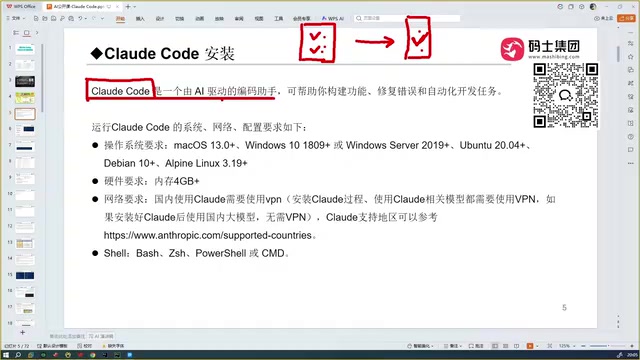
Getting Started with Claude Code: Capabilities and Installation Essentials for This AI Coding Assistant
Claude Code is Anthropic's AI coding agent that reads your full codebase, generates accurate code, and auto-debugs. Compare with Cursor, TRAE, Codex, plus key install requirements.

AINA: An AI Career Coach That Uses a Video Avatar to Uncover Your Job Search Blind Spots
AINA topped Product Hunt with its AI career coach that uses a video avatar to help job seekers find blind spots, polish their profile, and practice interviews.