GitHub Daily · November 09: The Agent Ecosystem Fully Takes Over Trending
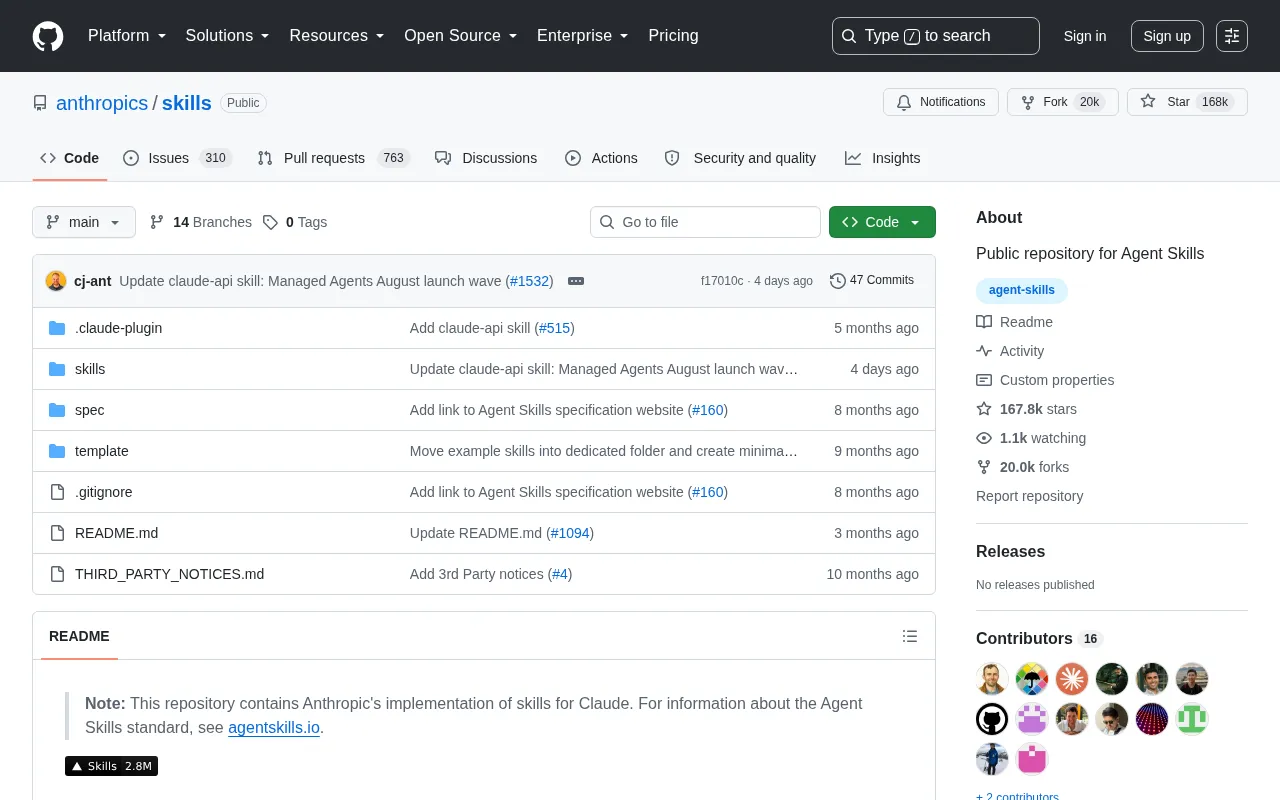
Six of eleven GitHub Trending projects are AI agent infrastructure, forming a complete toolchain from skills to sandboxes.
Today's GitHub Trending is dominated by AI agent infrastructure: anthropics/skills leads with 167k stars as an ecosystem entry point, while agent-browser, gbrain, and OpenMausBot cover browser automation, configuration, and sandboxing. Meta's astryx introduces agent-ready design systems, and old tools like Sherlock and MuJoCo resurge.
Today, as soon as I opened the Trending list, my first reaction was that this no longer looks like a leaderboard for a code hosting platform—it looks more like a family portrait of the agent ecosystem. From the No. 1 Agent Skills to browser automation to brain-layer configuration, at least six of the eleven slots revolve directly around AI agents.
So who got the other half of the slots? One category is established tools like Sherlock suddenly exploding, and another is black-tech projects like RuView that use WiFi signals for sensing. There's also a stock analysis project that gained more than two hundred stars in a day.
This distribution is quite interesting. It shows that the open-source community is now walking on two legs: one is building infrastructure for agents, and the other is adding AI capabilities to traditional tools. Let me break it down for you one by one.
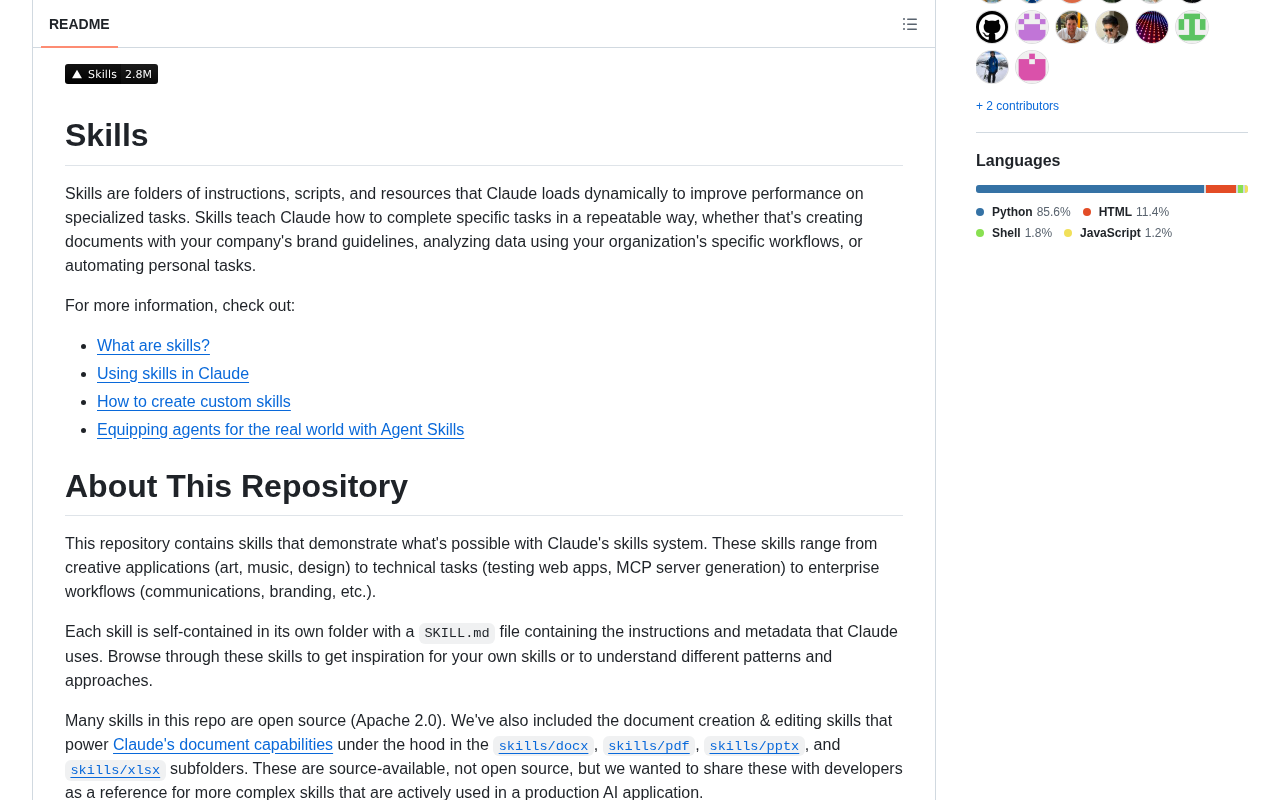
anthropics/skills: Turning Agent Capabilities into Installable Parts
Project Positioning
Anthropic's official public repository for Agent Skills. In essence, it provides the Claude ecosystem with a set of standardized capability units.
The Problem It Solves
In the past, adding capabilities to an agent meant either writing prompts or integrating tool APIs, starting from scratch every time. The Skills approach encapsulates capabilities into reusable, shareable modules. Install whatever you lack, like installing apps on a phone.
Core Features
It is in the form of a repository, not a single tool. This means the community can contribute, version it, and reference it like npm. Official backing gives it a natural position as an ecosystem entry point.
Use Cases
Teams building Claude applications benefit most directly. If you want an agent to read PDFs, query databases, or call a certain SaaS, you don't have to build it yourself—just check whether the community already has a ready-made skill.
Tech Stack
Mainly Python. The reference value for developers is not in the code itself, but in how it demonstrates the organizational approach to capability encapsulation. This design pattern is worth copying.
Stars and Forks Analysis
More than 167,000 stars and over 20,000 forks. This magnitude is already at the infrastructure level. It shows that market demand for standardizing agent capabilities is real, and it is a hard requirement.
meta/astryx: Design Systems Are Getting Ready for Agents Too
Project Positioning
A fully customizable design system open-sourced by Meta. The key phrase is agent ready.
The Problem It Solves
Traditional design systems are made for people to look at and for designers to use. But the current trend is that part of the UI needs to be understood and operated by agents. astryx aims to fill this gap.
Core Features
Fully customizable means it is not a rigid component library. agent ready means its tokens, component descriptions, and interaction semantics are all machine-readable.
Use Cases
Product teams building enterprise frontends while also integrating agent capabilities. For example, letting agents help generate pages or automatically complete operations on the interface.
Tech Stack
TypeScript. A standard in the frontend ecosystem, but its value lies in the design philosophy, not the technology choice.
Stars and Forks Analysis
More than 14,000 stars, gaining nearly two hundred in a day. This growth rate is quite fast for a design system, showing that the concept of agent ready is being accepted by the frontend community.
sherlock-project/sherlock: An Established Tool Suddenly Makes a Comeback
Project Positioning
An open-source tool for tracking accounts across social networks by username.
The Problem It Solves
The same username registered on dozens of platforms is too slow to check manually one by one. It automates this process.
Core Features
Covers hundreds of social networks, supports batch queries, and outputs structured results. It turns the act of looking someone up into a pipeline.
Use Cases
Security research, penetration testing, digital forensics. Ordinary users also use it to check whether their accounts have been impersonated.
Tech Stack
Python. A pure scripting tool with light dependencies that runs fast.
Stars and Forks Analysis
More than 99,000 stars, gaining more than 1,700 in a day. This explosion is unusual. An old project suddenly gaining so much is most likely driven by a new use case, or mentioned by some influential figure. It is worth paying attention to the underlying cause.
google-deepmind/mujoco: The Evergreen of Physics Simulation
Project Positioning
A physics simulator for multi-joint contact dynamics. In one sentence: infrastructure for robot simulation and reinforcement learning.
The Problem It Solves
Training robots in the real world is too expensive and too slow. mujoco lets you run it in a virtual environment first.
Core Features
Solid contact dynamics, high precision, and fast speed. One of the standard tools in academia.
Use Cases
Robotics research, reinforcement learning experiments, biomechanical simulation. Now there is another one: serving as a training ground for embodied intelligence agents.
Tech Stack
C++. Performance first. But it provides Python bindings, so research use is not cumbersome.
Stars and Forks Analysis
More than 16,000 stars, gaining only twenty-six in a day. Steady. Projects like this don't rely on explosions; they rely on a reputation built over ten years.
anthropics/claude-quickstarts: Ecosystem Ambition in Official Tutorials
Project Positioning
A collection of example projects to help developers quickly build deployable applications with the Claude API.
The Problem It Solves
You understand the API docs, but you don't know where to start. quickstarts is that scaffold from zero to one.
Core Features
The examples are all genuinely deployable, not toys. The covered scenarios are also fairly typical.
Use Cases
Developers new to the Claude API, or teams that want to quickly validate an idea.
Tech Stack
Python. Primarily educational; the reference value lies in the engineering structure.
Stars and Forks Analysis
More than 19,000 stars, gaining twenty-eight in a day. Stable. This is a must-pass stop on the developer onboarding path, a steady-stream type.
garrytan/gbrain: An Investor's Personal Agent Brain
Project Positioning
Garry Tan's personalized OpenClawAd and Hermes agent brain, with opinions and configuration included.
The Problem It Solves
Getting an agent running is easy; getting it to run well is hard. gbrain turns an experienced person's configuration into a referenceable template.
Core Features
Being so-called opinionated means it makes a bunch of trade-offs for you. You don't have to think from scratch; you stand on someone else's shoulders.
Use Cases
Developers who want to build a personal agent workflow but don't want to step into pitfalls.
Tech Stack
TypeScript. The value lies in configuration philosophy, not code.
Stars and Forks Analysis
More than 31,000 stars, gaining more than two hundred in a day. This shows that what people want is not more frameworks, but more proven configurations.
vercel-labs/agent-browser: Let the Agent Open the Browser Itself
Project Positioning
A browser automation command-line tool for AI agents.
The Problem It Solves
Agents need to go online, but most current browser automation tools are designed for humans. This one is an interface for agents from the very beginning.
Core Features
Command-line form, easy for agents to call. Written in Rust, with stable performance.
Use Cases
Web data collection, automated testing, or letting agents complete web tasks themselves.
Tech Stack
Rust. Choosing Rust indicates requirements for stability and concurrency; this is not a toy project.
Stars and Forks Analysis
More than 45,000 stars, gaining 132 in a day. From vercel, with built-in traffic, but the growth rate shows the product itself is also recognized.
ruvnet/RuView: Sensing Space Without Installing Cameras
Project Positioning
Turning ordinary WiFi signals into real-time spatial sensing, vital sign monitoring, and presence detection capabilities.
The Problem It Solves
Cameras have privacy issues and occlusion issues. WiFi signals can pass through walls and don't capture images. This approach is clever.
Core Features
No pixel of video is needed. Pure signal processing for sensing.
Use Cases
Elderly care, security, smart home. Especially suitable for privacy-sensitive occasions.
Tech Stack
Rust. Signal processing is performance-sensitive, so the choice is reasonable.
Stars and Forks Analysis
More than 76,000 stars, gaining 133 in a day. A non-mainstream direction reaching this magnitude shows that WiFi sensing is moving from niche research to engineering implementation.
ZhuLinsen/daily_stock_analysis: LLM Stock Trading Might Actually Be Reliable
Project Positioning
An LLM-driven multi-market stock intelligent analysis system with market data, news, dashboards, and push notifications.
The Problem It Solves
Retail investors have too much and too scattered information, with no time to organize it. It twists multi-source data into an analysis pipeline.
Core Features
Zero-cost scheduled operation—this point is key. You can run it every day without burning money.
Use Cases
Individual investors, or teams doing quantitative assistance.
Tech Stack
Python. The common choice for data analysis and LLM calls.
Stars and Forks Analysis
More than 60,000 stars and over 50,000 forks. Forks are close to stars in number, showing that many people really want to take it and modify it—very strong usage intent.
homeassistant-ai/ha-mcp: Smart Home Connects to Agents
Project Positioning
Using AI assistants like Claude and ChatGPT to configure and automate Home Assistant.
The Problem It Solves
HA configuration is complex with a high barrier to entry. Now you can use natural language to have it configure things for you.
Core Features
MCP protocol integration means mainstream AI assistants can all use it.
Use Cases
Smart home enthusiasts who want to save time writing YAML.
Tech Stack
Python. A small project with more than 5,000 stars, gaining thirty-one in a day. Steady and solid.
milind-soni/OpenMausBot: Give the Robot a Virtual Machine
Project Positioning
An open-source alternative to the Grok bot, with a virtual machine that the bot can use.
The Problem It Solves
Bots need a secure sandbox environment to execute tasks. It comes packaged for you directly.
Core Features
Virtual machine isolation, so the bot can mess around inside freely.
Use Cases
Scenarios for building automated agents that need to execute code or operate the OS.
Tech Stack
TypeScript. More than 7,000 stars, gaining 1,119 in a day. This explosive speed is fierce, showing that sandboxed agent execution is a current hot demand.
Today's Trend Observations
After looking at these eleven projects, three commonalities are obvious.
First, agent infrastructure has become the absolute main line. Skills handles capabilities, gbrain handles configuration, agent-browser handles going online, OpenMausBot handles sandboxing, and ha-mcp handles implementation scenarios. A complete agent toolchain is taking shape.
Second, design is beginning to serve machines. astryx's agent ready is a signal. In the future, when building products, you must consider not only how humans use them but also how agents use them.
Third, old tools are making comebacks through new scenarios. sherlock and mujoco are both familiar faces, but they are being rediscovered in a new context.
Today's Must-See TOP3
No. 1, anthropics/skills. It is not a single tool; it is an ecosystem entry point. If you want to understand where agent capability standardization is heading, this is enough.
No. 2, vercel-labs/agent-browser. Browser automation is the most essential link in agent implementation, and this project gets the interface design right.
No. 3, ruvnet/RuView. The direction is wild enough, and the technology is solid enough. WiFi sensing is something worth learning about early.
Overall, today's list tells a story. An agent is no longer just a model plus a dialog box; it is becoming a whole set of infrastructure. Whoever does a good job standardizing the parts gets the ticket to the next round.
Related articles
Claude Fable 5.2 Hands-On: Top Intelligence but Absurdly Expensive
Anthropic releases Claude Fable 5.2 and Mythos 5.2, topping the Artificial Analysis intelligence leaderboard with big gains in scientific reasoning, strong game and hardware design, but max mode costs ~$26.54 per task. Hands-on game, circuit board design, and pricing advice.

1,000 AI Agents Formalize Fermat's Last Theorem in 30 Hours, Anthropic Releases New Claude Models
Anthropic releases Claude Fable 5.2 and Mythos 5.2: 1,000 agents formalize Fermat's Last Theorem in 30 hours, coding costs halved, plus hardware design and physics.

Claude Fable 5.2 Released: A Thousand AI Agents Build a Bootable OS in 8 Days
Anthropic releases Claude Fable 5.2 and Mythos 5.2—same model, two safety tiers. Demo shows 1,000 AI agents build a bootable OS in 8 days, formalize Fermat proof in 30 hours, score 64.6 beating Gemini 4 Carbon, price cut 20%.