GitHub Daily · November 19: Veteran Frontend Framework Returns to the Charts, Historical Map Project Gains Nearly a Thousand Stars in a Day
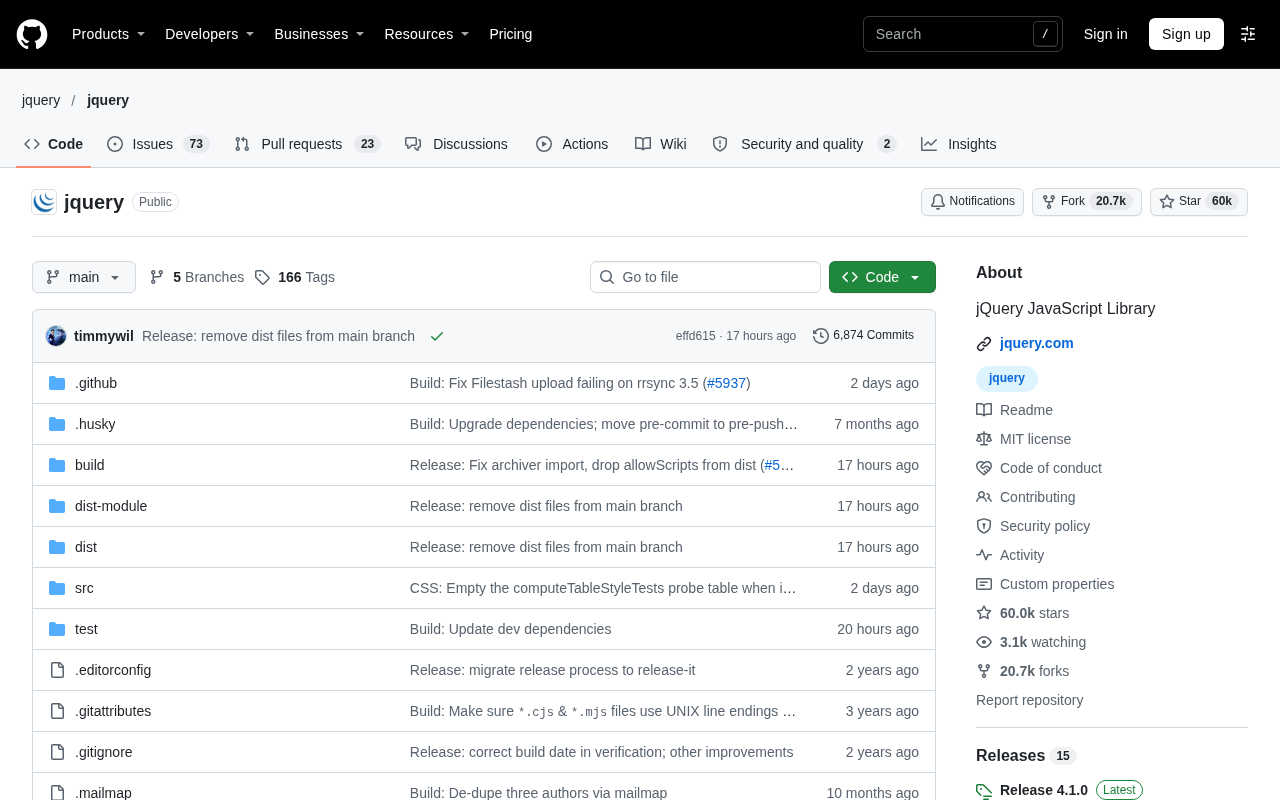
jQuery and SolidJS both trend, Appwrite goes agent-oriented, and historical map Jiangshan Shixu gains nearly 1,000 stars in a day.
On November 19's GitHub Trending, jQuery and SolidJS both appear, reflecting layered frontend needs; Appwrite positions itself as an agent-oriented cloud platform, showing infrastructure API redesign; and Jiangshan Shixu, a Chinese historical interactive map, gains nearly 1,000 stars in a day, a rare humanities-themed breakout.
Today's GitHub Trending list is quite interesting. Among the five projects, three are familiar faces and two are unexpected visitors. jQuery and SolidJS appear together—one is a veteran that dominated frontend over a decade ago, the other represents fine-grained reactivity in recent years. Their simultaneous appearance shows that the frontend community's attention is swinging between two ends. Appwrite represents the idea of backend integration, packing authentication, database, storage, and functions all into one platform, and this time it explicitly positions itself as agent-oriented. OpenVINO is a steady inference deployment tool with moderate growth but solid foundations. The most eye-catching is Jiangshan Shixu (Territorial Timeline), a Chinese historical interactive map project that gained over 990 stars in a single day, standing out remarkably on a technical list.
jQuery: Ruled an Era, Still in Use Today
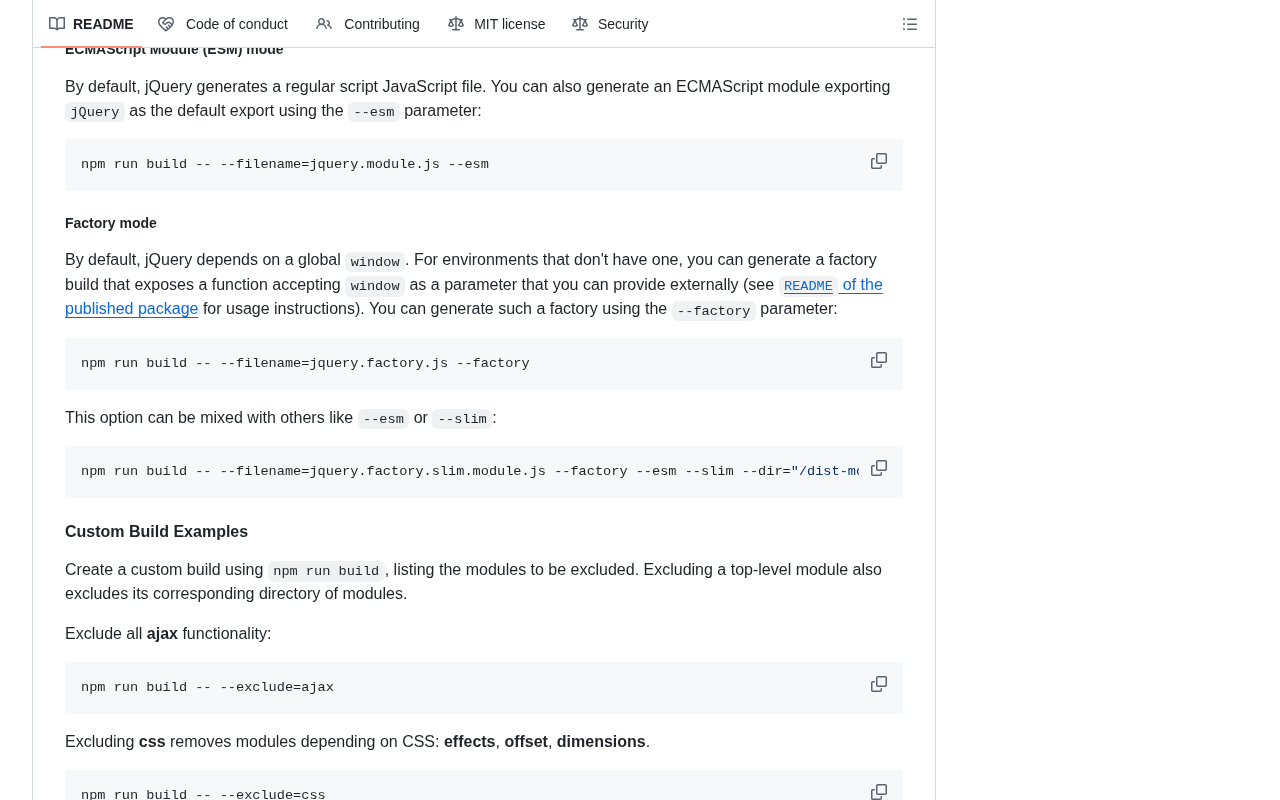
Project positioning: A cross-browser JavaScript library that wraps DOM manipulation and Ajax into concise chainable calls.
Problem it solves: Twenty years ago, browser differences were a headache. The same DOM operation was written completely differently on IE and Firefox. jQuery smoothed out these differences—developers write code once and it runs everywhere. It filled the huge gap of browser compatibility.
Core features: The Sizzle selector engine is its signature, using CSS selectors to directly locate elements, combined with chainable calls and implicit iteration, complex DOM transformations can be done in a few lines. Event delegation, animation queues, Ajax wrapping—these are standard today, but jQuery did them first back then.
Use cases: A large number of legacy websites and admin systems still use jQuery. Many enterprise legacy projects have too high refactoring costs, so they still rely on it for maintenance. Also, for lightweight landing pages and marketing pages, including jQuery is easier than setting up a build toolchain.
Tech stack: Pure JavaScript, no compilation step, usable with a single script tag. Its reference value to developers isn't about being trendy, but about the restraint in API design—how chainable calls make code read like sentences, which is worth revisiting for those writing libraries today.
Stars & Forks analysis: Nearly 60,000 stars, over 20,000 forks, with 268 new stars in a single day. This growth rate for a project over a decade old isn't explosive but is very stable. It shows it's not dead and still has a stable user base following its version updates.
Appwrite: Packaging the Backend Suite, and Catching Agents Along the Way
Project positioning: An open-source cloud platform that packs authentication, database, storage, cloud functions, messaging, hosting, real-time communication, and WAF all into one system.
Problem it solves: When developers start a new project, the most annoying part is setting up backend infrastructure. User systems need writing, file uploads need integration, databases need configuration—each requires separate selection and operations. Appwrite's approach is to pre-integrate all of these, ready out of the box, filling the gap of time and effort for self-built backends.
Core features: This time there's a keyword in the description: agent-oriented. It's no longer just for developers but positions itself as a cloud foundation that agents can call. This means its API design must consider both humans and programs—permission models, data access, function triggers all need to be safely orchestrated by agents. This is a noteworthy directional shift.
Use cases: Independent developers and small teams building MVPs who don't want to spend time on operations can use it directly. Also suitable for those building AI applications who need a backend that can store data, manage users, and run functions without stitching together a bunch of services.
Tech stack: Primarily TypeScript, covering both frontend and backend. Its reference value for developers lies in how it unifies multiple services under one SDK and permission system—this integration approach offers lessons for those building platform products.
Stars & Forks analysis: 58,000 stars, over 5,800 forks, 239 stars in a single day. The fork count is relatively low compared to stars, indicating more people are using it directly rather than forking for secondary development, which fits the characteristics of a platform product.
OpenVINO: The Slow Craft of Inference Deployment
Project positioning: An Intel-led open-source toolkit specifically for optimizing and deploying AI inference.
Problem it solves: Training a model is one thing; deploying it to run efficiently on real hardware is another. Different hardware has different instruction sets and operator support, and running directly often results in performance loss. OpenVINO does the middle-layer optimization—model conversion, quantization, operator fusion—to make it run faster on CPUs and integrated graphics.
Core features: The model optimizer and inference engine are the two main components, supporting conversion of models from training frameworks into intermediate representations, followed by quantization compression. Particularly friendly for edge devices and on-device deployment, runnable without a dedicated graphics card.
Use cases: Teams doing on-device AI, such as industrial quality inspection and retail analytics, where scenarios often have only regular CPUs, no GPU clusters. Also developers building embedded and edge boxes who need to run vision models on limited compute.
Tech stack: C++ core with multi-language bindings. Its reference value for developers lies in how it performs operator-level optimization for specific hardware—this kind of low-level performance engineering capability seems scarce today when everyone is rushing to build upper-layer applications for large models.
Stars & Forks analysis: 11,000 stars, 18 in a single day. Very flat growth, which fits the rhythm of an infrastructure project. It doesn't rely on hype but on real demand in deployment scenarios.
Jiangshan Shixu: Retelling History Through Code
Project positioning: An interactive map timeline of Chinese history, from 403 BC to the present, covering 18 dynasties and 198 territorial snapshots.
Problem it solves: Maps in history books are static, and readers find it hard to feel how territories changed over time and how place names migrated. This project turns time into a draggable axis, with territories flowing over time, and includes ancient-modern place name comparisons and poetry routes, filling the gap in historical spatiotemporal visualization.
Core features: 198 territorial snapshots are its data core, combined with timeline interaction—drag to see territorial changes. The genealogy comparison of ancient and modern place names is very practical; when reading classical texts and encountering old place names, you can look them up directly. Poetry routes is a thoughtful feature, connecting the locations where literary works were created.
Use cases: History enthusiasts and students can reference maps while reading history books. History content creators can use it as visualization material. In educational settings, teachers can drag the timeline during lectures to demonstrate territorial changes, which is much more intuitive than static images.
Tech stack: Primarily JavaScript. Its reference value for developers lies in how it organizes large amounts of historical data into an interactive time series, and how to balance data structures and rendering performance—this kind of visualization engineering thinking can be borrowed.
Stars & Forks analysis: 7,700 stars, 991 in a single day, the fastest-growing today. This number is telling—when a humanities-themed project becomes a hit on a technical list, it often means it has touched a broad need; people aren't just starring it, they really want to use it.
SolidJS: Another Path for Reactivity
Project positioning: A declarative, efficient, and flexible frontend UI library focused on fine-grained reactivity.
Problem it solves: Virtual DOM diffing has overhead, and React's model hits performance bottlenecks in complex interfaces. SolidJS takes another path—no virtual DOM; it analyzes reactive dependencies at compile time and directly updates real DOM nodes. It fills the space of high-performance fine-grained updates.
Core features: No virtual DOM, components run only once, reactivity is signal-driven. The API looks like React, but the runtime model is completely different—low mental burden, good performance.
Use cases: Performance-sensitive frontend applications like data-intensive dashboards and complex interactive editors. Also for teams wanting to try alternatives to React without learning an entirely new paradigm—its syntax migration cost is relatively low.
Tech stack: Written in TypeScript. Its reference value for developers lies in showing how far compile-time optimization can go—moving runtime work to the build stage—a representative idea in today's evolution of frontend frameworks.
Stars & Forks analysis: 36,000 stars, 37 in a single day. It appears on the same day as jQuery—an interesting contrast: one represents the past, the other a possible future. The frontend tech stack is indeed diverging.
Today's Trend: Infrastructure Embracing Agents, Frontend Swinging Between Two Ends
Looking at these projects together today, there are two clear signals. First, Appwrite explicitly leans toward agents, indicating that the infrastructure layer is redesigning its APIs—no longer serving only humans but also programmatic calls. Second, jQuery and SolidJS appearing together shows that community needs are layered; legacy maintenance and new solution exploration coexist, and it's not as simple as one replacing the other.
The explosion of Jiangshan Shixu reminds us that technical lists aren't just about frameworks and tools—organizing data well and making interactions smooth can also attract massive attention. The value of technology ultimately lies in solving specific problems.
Today's Must-See TOP 3
- Jiangshan Shixu: Nearly a thousand stars in a day, a model for historical data visualization—worth seeing how it organizes 198 territorial snapshots.
- Appwrite: Agent-oriented cloud platform positioning, representing an evolution direction for the infrastructure layer—worth studying for those building AI application backends.
- SolidJS: To understand fine-grained reactivity and compile-time optimization, it's an unavoidable reference; appearing alongside jQuery is itself a topic.
How the list will change tomorrow is hard to say, but the line of infrastructure embracing agents will likely continue to appear.
Related articles
Gemini 4 Hydrogen vs Sonnet Comparison Test: Uses Only 1% of Weekly Quota, Performance on Par
Hands-on test: Gemini 4 Hydrogen vs Sonnet on the same CRUD task—Hydrogen used only 1% weekly quota with comparable performance and better UI details, while Anthropic's model used 7%. Developer says daily tasks don't require expensive models.
Gemini 4 Neon Released: Beats Opus 5.5 on Multiple Benchmarks, Google Returns to the Top Tier
Google DeepMind releases Gemini 4 Neon: 61 on the Artificial Analysis intelligence index (3rd) and 1st on the coding index, beating Opus 5.5 on multiple benchmarks. $3/$15 per million tokens; available in the Gemini API and AI Studio.
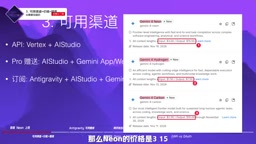
Gemini 4 Neon Review: Benchmark Scores Rival Carbon, API Cost-Performance Analysis
Full review of Google Gemini 4 Neon: benchmark scores rival Carbon, API priced at 2x Hydrogen, yet Antigravity quota consumption is only 1x (vs Carbon's 3x). Real tests show it replaces 90% of Carbon use cases. Includes channel restrictions, ban risks, and combination strategy analysis.