GitHub Weekly Highlights: Five High-Star Projects for Different Development Needs
GitHub weekly chart roundup of five star projects: using supporting tools to manage the process of AI doing work.
Five projects on this week's GitHub trending list together gained over 40,000 stars, all pointing to the pain point that while AI tool capabilities are already strong, supporting aspects like memory, isolation, remote access, and quality verification still rely on manual patchwork. claude-mem uses hooks to compress tool call records so AI assistants retain context across sessions, but depends on Node.js 20.19+ and extra runtimes; Claude-Code-Game-Studios splits conversations into 49 hierarchical assistants, and the author's blind test shows the most documented version is actually the heaviest; t3code reuses existing subscriptions to connect the coding assistant to phone and web, growing fastest but early-stage and closed to community contributions; worktrunk isolates parallel tasks with independent working directories but has Windows command conflicts; anti-AI-slop design standards replace template piling with eight-point checks and novice re-review, though browser checks need an extra dependency.
This week's GitHub trending list was dominated by five projects that together racked up over 40,000 stars. They target memory management, game development, remote control, directory isolation, and front-end design standards—each attempting to solve a specific pain point in developers' daily work. Based on a Bilibili creator's roundup video and the projects' actual positioning, this article breaks down each project's core capabilities and the cost of putting them into practice.
claude-mem: Giving AI Assistants Persistent Memory
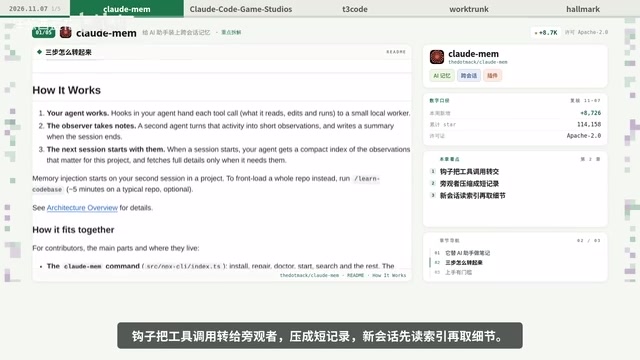
Having to brief the AI assistant from scratch every time a new session starts is a common frustration for many developers. The claude-mem plugin takes a direct approach: it records the entire process of each task execution, then reads an index first when work resumes and pulls in details on demand.
In implementation, it uses hooks to hand off tool calls to a bystander process, compressing lengthy operation logs into short records. This preserves context without letting the memory file balloon indefinitely. The trade-off is equally clear: it requires Node.js 20.19 or higher and two additional runtime environments. According to the creator, the project gained over 8,000 stars in a week, confirming that "memory gaps" are indeed a high-frequency pain point.
Hook mechanism: In the workflow of AI coding assistants like Claude Code, a hook refers to a callback script automatically triggered by the tool at specific lifecycle points (such as before or after a tool call, or at the start or end of a session). claude-mem leverages this mechanism to sideline each tool call's input and output to an independent process—which handles compression and indexing—without changing users' operating habits. Understanding hooks is key to understanding why this project achieves "seamless recording": it doesn't intrude on the AI's reasoning process; it simply attaches an observer to the event stream.
Claude-Code-Game-Studios: Splitting a Conversation into a Game Company
The biggest fear for a solo game developer is losing control of the process. This template splits a single conversation into 49 specialized assistants managed across three tiers: 3 directors set direction, 9 team leads manage domains, and 30+ specialists handle execution. The hierarchy is clear, like a real functioning game studio.
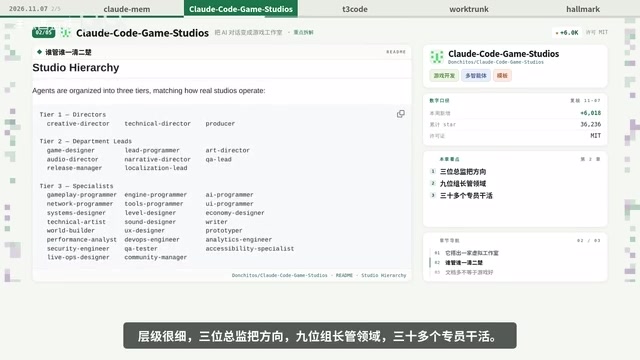
A gain of over 6,000 stars in a week confirms indie developers' desire for structured collaboration. But the author's own blind test results are worth noting: the version with the most documentation actually scored the heaviest (i.e., performed most heavily and inflexibly), and the primary environment is still Windows. This means the template's complexity may become a burden—users need to trim the hierarchy based on project scale rather than copying it wholesale.
t3code: Putting the AI Coding Assistant in Your Phone
Phone panel tools aren't new, but t3code's selling point is reusing your existing subscription to connect the AI coding assistant to phone, web, and desktop. Installation requires just one command to start the service, with ready-made installers for common systems. It gained over 16,000 stars in a week, making it this week's fastest-growing project.
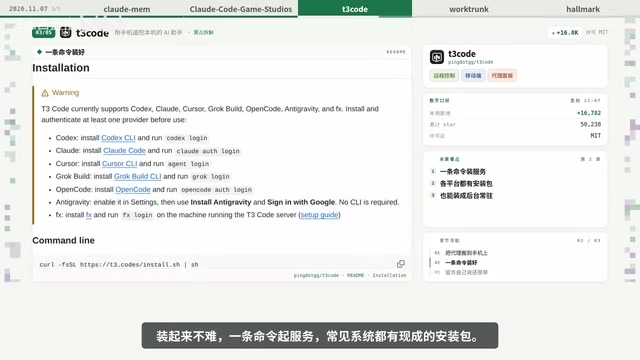
However, the official documentation explicitly states the project is still in its early stages, basically doesn't accept community contributions, and has no documentation site yet. For users who want to rely on it long-term for remote development, this means there's no community safety net when problems arise—you'll need to dig through the source code yourself or wait for official updates.
worktrunk: One Assistant, One Directory, No Collisions in Parallel
When running multiple AI tasks in parallel, the biggest risk is changes stepping on each other. worktrunk's approach is to isolate each assistant into a separate working directory by branch name—three commands handle switching, launching tools, and merge cleanup.
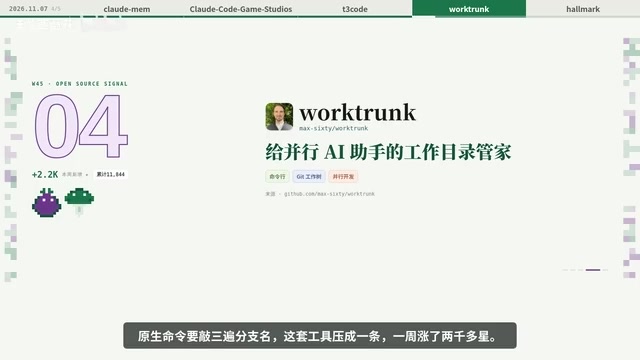
The idea is simple but effective. Though a gain of over 2,000 stars in a week isn't explosive, it precisely hits the infrastructure gap in multi-agent collaboration. The cost is that after installation you still need to set up a shell configuration, and on Windows the command name conflicts with the system—cross-platform experience needs polishing.
Working directory isolation and Git worktree: The "isolate by branch name into separate directories" approach used by worktrunk typically relies on Git's worktree capability—it allows the same repository to check out multiple branches to different paths simultaneously, sharing the object store while keeping working directories independent. Compared to cloning the entire repository, worktree uses less space and has lower switching costs, making it naturally suited for letting multiple AI assistants modify different branches in parallel. This is also the technical prerequisite that enables the project to complete switching, launching, and merging in three commands; without worktree, parallel isolation would degrade into clunky full clones.
Anti-AI-Slop Design Standards: Replacing Template Piling with Judgment Criteria
The design field doesn't lack templates—it lacks judgment criteria. This standards set includes 50 themes and 700+ licensed real images, laying out layouts directly by theme. Its approach is rigorous: an eight-point check examines each item individually, then a separate novice reviewer does a final review, with page conclusions written into a file. Over 6,900 stars in a week shows developers have a real need for "verifiable design quality."
The downside is that browser checks require an additional dependency; without it, only static checks can run, and dynamic rendering issues will be missed. For teams seeking complete pre-launch verification, this installation cost can't be skipped.
Eight-point check: The so-called "eight-point check" is a review method that breaks design quality into multiple scorable dimensions, each assessed on an eight-point scale, checking items individually rather than judging overall quality by feel. Its value lies in transforming "does this page look good" into a reviewable conclusion of "do spacing, hierarchy, contrast, alignment, and other aspects meet standards," ultimately written into a file as a traceable record. This quantitative review combined with novice re-review constitutes the core difference between this standards set and ordinary template libraries—templates only provide a starting point; the eight-point check provides a verifiable endpoint.
The Common Signal Across All Five Projects
Looking at these five projects together, you'll notice they all address the same category of problem: AI tools are already powerful enough, but supporting aspects like memory, isolation, remote access, and quality verification still rely on manual patchwork. Those 40,000+ stars aren't votes for features—they're votes for "managing the process of AI doing work." Which project to choose depends on which link hurts most for you right now.
This article is based on a weekly trending roundup by a Bilibili creator. Project links can be found in the original video description.
One-line Summary
A roundup of five star projects on GitHub's weekly chart: using supporting tools to manage the process of AI doing work.
Paragraph Summary
Five projects on this week's GitHub trending list together gained over 40,000 stars, all pointing to the pain point that while AI tool capabilities are already strong, supporting aspects like memory, isolation, remote access, and quality verification still rely on manual patchwork. claude-mem uses hooks to compress tool call records, letting AI assistants retain context across sessions, but it depends on Node.js 20.19+ and additional runtime environments; Claude-Code-Game-Studios splits conversations into 49 hierarchical assistants, and the author's blind test shows the most documented version is actually the heaviest; t3code reuses existing subscriptions to connect the coding assistant to phone and web, growing fastest but still early-stage and not accepting community contributions; worktrunk isolates parallel tasks with independent working directories, though Windows has command conflicts; and the anti-AI-slop design standards replace template piling with eight-point checks and novice re-review, though browser checks require an additional dependency.
Related articles
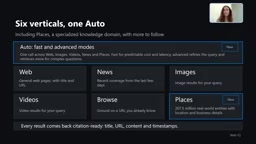
Microsoft WebIQ: Verifiable Real-Time Web Grounding for AI Agents
Microsoft WebIQ gives AI Agents real-time, citable web grounding across web, news, images, videos, and Places—164ms P95 latency, 50% fewer tokens, Scopes source control, and MCP integration.
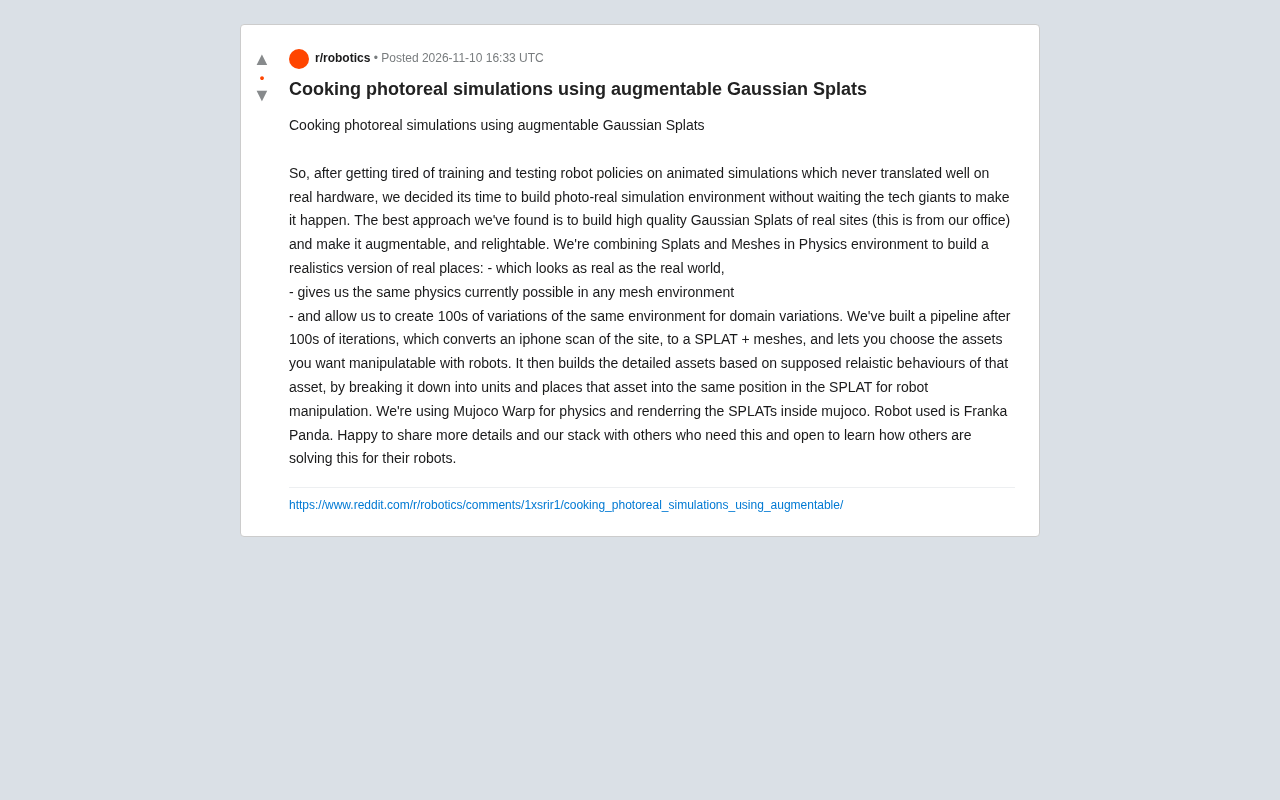
Augmentable Gaussian Splatting: Building Photorealistic Simulation Environments for Robot Training
Team combines Gaussian Splatting with meshes to build photorealistic robot simulation environments, integrating MuJoCo Warp physics and Franka Panda for augmentable, relightable real-site simulation.

Gemini 4 Carbon Released: The Leap from Gemini 3 to Gemini 4 in Under a Year
Google releases Gemini 4 Carbon, less than a year after Gemini 3. In the official demo, Carbon reverse-engineered the Theme Park binary, added a new DeepMind-themed ride, and ported it to the web in one shot.