Giving AI X-Ray Vision: REA + MCP Lets Code Reverse Engineering Stop Guessing

REA leverages MCP to let AI observe software architecture in real time, enabling rapid reverse engineering and cloning.
The article explains how the open-source tool Reverse Engineer Anything (REA) helps AI break free from pure text generation and gain "structural vision." Based on Anthropic's Model Context Protocol (MCP), REA provides 170 investigation tools that observe software behavior in real time via public resources like Chrome developer tools, rather than stealing source code. In tests, the AI dissected the igloo.inc website in 40 seconds, logging 95 network requests and identifying the Three.js and GSAP tech stack; it then bypassed the macOS Apple Notes interface layer, determined it was built with Objective-C and AppKit, and delivered a functional clone within 15 minutes. The author sees this as AI evolving from a passive text assistant into a proactive software engineer with senses, with prompt engineering shifting from describing requirements to pointing at reference objects.
When AI Learns to "See" Software: How the Reverse Engineering Tool REA Is Changing the Development Paradigm
Ask AI to build an app, and it will immediately start producing code. But this process has a fundamental flaw: AI is completely trapped in a text box and has never truly "seen" or "operated" the software it is supposed to build. It can only rely on static historical training data to guess what the architecture should look like. The result is often shallow interfaces and broken functionality—buttons that don't work, misaligned layouts—and developers are forced into endless prompt-engineering loops trying to get AI to fix errors it simply cannot see.
According to a demonstration by YouTube developer Zubair Trabzada, this predicament does not stem from insufficient AI intelligence, but from a lack of "structural vision." He connected an open-source capability called Reverse Engineer Anything (REA) to his AI assistant named Jarvis, enabling the AI to directly "see through" the user interface of any website or application, inspect the code running behind the scenes, and extract a precise architectural blueprint of the software.
MCP: A Bridge for AI to Safely Access the Outside World
REA's "X-ray vision" relies on an open standard proposed by Anthropic—the Model Context Protocol (MCP). Before MCP, developers had to build customized, fragmented integrations for each AI model to access data. MCP acts as a secure, universal bridge that standardizes communication, allowing isolated AI models to safely operate external tools.
The REA repository sits at the end of this bridge, providing 170 investigation tools. The entire process does not rely on stealing proprietary source code or illegal hacking methods; instead, it uses standard public resources such as Chrome developer tools to observe software behavior in real time. MCP builds the structural bridge to the outside world, and REA is the precision instrument that transforms AI's raw observations into concrete architectural diagnoses.
MCP (Model Context Protocol) uses a client-server architecture: the AI application acts as the host and communicates through an MCP client with one or more MCP servers, each encapsulating a category of external capability (such as file systems, browsers, databases, or the REA investigation tools in this article). Servers declare the "tools" they expose and their input/output schemas in a structured way, and the model uses this to decide which tool to call and what parameters to pass, without writing custom integration code for each data source. The protocol layer handles capability discovery, call dispatch, and permission boundaries, allowing the host to grant the model access within a controlled scope. Compared with earlier function calling, the key differences are standardization and reusability—the same MCP server can be reused by any compatible model or client, so the tool ecosystem can accumulate horizontally instead of being repeatedly rewritten as models change.
Hands-On Test: Dissecting a 3D Animation Website in 40 Seconds, Cloning a Native App in 15 Minutes
Website Reverse Engineering: 95 Network Requests and a Full Tech Stack Report
Zubair pointed Jarvis at igloo.inc—an award-winning website known for complex 3D scroll animations. Without human intervention, the AI autonomously opened a clean browser window, loaded the website, and scrolled from top to bottom, deliberately triggering all visual animations to observe their behavior.
During scrolling, the AI silently scanned background processes, recorded 95 network requests, tracked downloaded files, and mapped out the invisible architectural skeleton. Within 40 seconds, it generated a complete dissection report listing the specific frameworks driving the website, such as the Three.js rendering library and the GSAP animation tool—essentially providing a precise recipe.
The Chrome DevTools Protocol (CDP) is the debugging interface exposed by Chrome that allows external programs to control the browser programmatically: navigating pages, executing scripts, capturing network requests and responses, reading the DOM and runtime state, and collecting performance metrics. The AI's "observation" in this article is built precisely on this layer—it does not read server source code, but infers the tech stack from the resources actually loaded by the browser, request headers, global objects, and rendering behavior. For example, the presence of Three.js WebGL contexts and shader calls, or GSAP animation timeline objects on the page, can serve as framework fingerprints. This kind of inference based on runtime behavior is fundamentally different from the traditional "view page source": the latter can only see static HTML, while the former can see the traces left by frameworks during real execution.
Native App Reverse Engineering: Piercing Through the Interface Layer of macOS Apple Notes
Reading a website is one thing; dissecting a robust native desktop application is a harder test. The AI was asked to reverse engineer Apple Notes on macOS. After launching the app, it completely bypassed the polished user interface and went deep into system frameworks, identifying that Notes is built with Objective-C and Apple's native UI framework AppKit.
According to the demonstration, this enhanced capability works equally well whether facing a web app in a browser or native software running on a local hard drive. The AI's analysis process strips away the mystery of how digital tools are built, leaving only cold, hard evidence.
AppKit is the oldest native graphical interface framework on macOS, with Objective-C as its primary language, providing foundational components such as windows, menus, and the text system; SwiftUI is a newer declarative framework. Identifying which framework a native app is built with usually relies on inspecting the libraries its binary links against, runtime class names and method signatures, and the interface hierarchy. Unlike web apps, native apps do not have a unified developer tools protocol available for external observation, so this type of analysis relies more on process- and framework-level forensic techniques. Understanding this distinction helps assess the feasibility and boundaries of "reverse engineering" on different platforms: the web side focuses more on network and DOM observation, while the native side focuses more on runtime and binary metadata.
Replication Phase: Delivering a Functional Clone in 15 Minutes
With the evidence in hand, the AI entered the final replication phase. Zubair instructed Jarvis to use the Apple Notes blueprint it had just extracted to build a brand-new custom app. Using its verified architectural map, the AI rebuilt the text formatting tools, organized the correct folder hierarchy, and implemented the core note-taking functionality. Within 15 minutes, Jarvis delivered a fully functional, highly accurate clone of the original app.
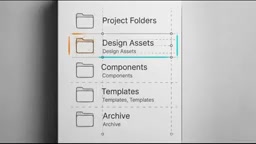
The entire process went smoothly because the AI never had to guess what the app should look like or how the underlying code should work. Having a concrete structural blueprint effectively eliminated the software industry's biggest bottleneck—the endless iterative loop between humans and AI to fix broken layouts.
From Text Assistant to Sensory Engineer: A Turning Point in the AI Development Paradigm
We are moving out of an era in which coding assistants rely entirely on static training data and blind guessing. AI now has a proven method for structural replication: it can read the architecture of the digital world, observe successful applications, extract their mechanisms, and learn independently.
Open standards like MCP are pushing these models to evolve from passive text assistants into proactive software engineers equipped with senses. Giving AI the ability to independently dissect digital environments removes the final layer of guesswork—a crucial step toward fully automated software creation.
For developers, this means the focus of prompt engineering will shift from "describe what you want" to "point to a reference object." When AI can directly observe and understand the structure of existing software, the barrier to building new applications and the cost of iteration will both drop significantly.
One-line Summary
REA uses MCP to let AI observe software architecture in real time, enabling rapid reverse engineering and cloning.
Paragraph Summary
The article introduces how the open-source tool Reverse Engineer Anything (REA) helps AI break free from pure text generation and gain "structural vision." REA is based on Anthropic's Model Context Protocol (MCP) and provides 170 investigation tools, observing software behavior in real time through public resources such as Chrome developer tools rather than stealing source code. In tests, the AI dissected the igloo.inc website in 40 seconds, recording 95 network requests and identifying the Three.js and GSAP tech stack; it then bypassed the interface layer of macOS Apple Notes, determined that it was built with Objective-C and AppKit, and delivered a functional clone within 15 minutes. The author argues that this marks AI's evolution from a passive text assistant to a proactive software engineer with senses, and that the focus of prompt engineering will shift from describing requirements to pointing to reference objects.
Related articles

Chain of Thought Isn't Just for AI: How Humans Can Use CoT to Improve Thinking Quality
Chain of Thought isn't just a prompt trick for large models. Starting from a Hacker News discussion, this article analyzes why CoT works for human thinking too, breaks down actionable ways to transfer it, and highlights the key differences between human CoT and machine CoT.
Cloudflare Teams Up with OpenAI: Closi…
Cloudflare Teams Up with OpenAI: Closing the Loop from Vulnerability Discovery to Defense with AI
Cloudflare uses OpenAI Daybreak to investigate security vulnerabilities and generate reviewable remediation plans, while developers use Codex to boost coding efficiency and quality.

Orca Multi-Agent Orchestration in Practice: A Guide to Parallel Collaboration with Claude and Codex
Orca is Stable AI's free open-source agent workbench supporting 34 agents like Claude Code and Codex in parallel. Learn its Git worktree isolation, multi-model orchestration, and mobile management.