GLM 5.2 In-Depth Review: How an Open-Source Model Truly Stacks Up Against Closed-Source Giants

GLM 5.2 delivers Opus-level frontend code generation at 1/8 the cost under a fully open MIT license.
Zhipu AI's GLM 5.2 is an MIT-licensed open-source model that ranks 5th among frontier models on key benchmarks, rivaling Opus 4.8 in frontend development while costing over 8x less. It excels at landing page generation, website cloning, 3D scene rendering with Three.js, and even Minecraft clone creation. While Agent capabilities and deep debugging remain areas for improvement, its combination of top-tier code generation and open-source accessibility makes it a compelling choice for developers.
Zhipu AI recently officially released GLM 5.2, an open-source flagship model under the MIT license that demonstrates stunning capabilities in frontend development and code generation. Even more surprisingly, it not only crushes open-source models in its class across multiple benchmarks but directly beats closed-source commercial models like Gemini and GPT-5.5 on tasks such as web design. How good can an open-source model really be? This article provides an in-depth analysis from three dimensions: benchmarks, real-world experience, and cost-effectiveness.
Background: Zhipu AI and the GLM Series Zhipu AI is an AI company incubated from the Knowledge Engineering Laboratory at Tsinghua University's Department of Computer Science. The GLM (General Language Model) series is its core technology product line. Unlike GPT's autoregressive architecture, GLM was originally based on an Autoregressive Blank Infilling pre-training framework, striking a balance between bidirectional attention and unidirectional generation. From GLM-130B to the ChatGLM series and now GLM 5.x, Zhipu AI has maintained high activity in the open-source community and is one of the few domestic AI teams to gain significant attention on international platforms like Hugging Face.
GLM 5.2 Benchmarks: An Open-Source Model Enters the Top Tier for the First Time
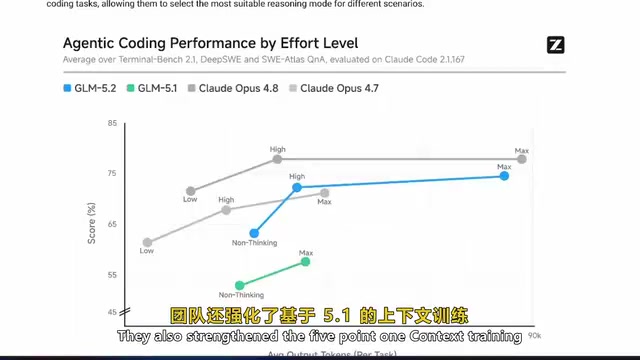
GLM 5.2 delivers an exceptionally impressive scorecard across multiple authoritative benchmarks. On the DeepSU test, it scored 46.2%, significantly outperforming its predecessor GLM 5.1 across coding, reasoning, and general knowledge domains. On the Frontier SW benchmark, its score closely approaches Anthropic's Opus 4.8, reaching 74.4% — the idea of an open-source model running neck-and-neck with Opus was previously almost unimaginable.
In the Design Arena ELO ratings, GLM 5.2 achieved approximately 1300 points, ranking at the very top and even surpassing Claude 3.5.
ELO Rating and Design Arena Explained The ELO rating system was originally designed by Hungarian-American physicist Arpad Elo for chess and has since been widely adopted for competitive rankings of all kinds. In AI model evaluation, Chatbot Arena (maintained by UC Berkeley's LMSYS team) introduced the ELO mechanism for model comparison through large-scale blind human voting to dynamically calculate relative model strength. Design Arena is a vertical evaluation platform focused on UI/UX design and frontend code generation capabilities. Its ELO scores reflect real users' comprehensive preferences regarding visual design quality, code usability, and creative expression — much closer to actual development scenarios than pure code correctness metrics. GLM 5.2 reaching approximately 1300 points and surpassing Claude 3.5 on this leaderboard means its frontend generation capabilities have earned recognition from a large number of real users.
On terminal benchmarks and SW Band Pro, it beats nearly all commercial closed-source models, ranking just behind Opus 4.8 and approaching top-tier players like GPT-5.5. Overall, GLM 5.2 currently ranks fifth among frontier models — a historic breakthrough for an open-source model.
However, it's important to note objectively that the model has clear weaknesses: debugging and deep reasoning capabilities are not top-tier, and Agent capabilities are mediocre. The official team also recommends enabling deep thinking mode for optimal results.
The Technical Meaning of Agent Capabilities An AI Agent refers to an AI system capable of perceiving its environment, formulating plans, and autonomously executing multi-step tasks — fundamentally different from single-turn Q&A dialogue models. Complete Agent capabilities typically include: Tool Use/Function Calling, Task Planning, Memory Management, Self-Correction, and multi-turn Reflection. GLM 5.2's mediocre Agent performance means it's unstable in scenarios requiring continuous external API calls, automatic code error repair, or complex multi-step workflows. This remains one of the primary capability gaps between current open-source models and top closed-source models like GPT-4o and Claude Opus, typically requiring specialized training through reinforcement learning (RLHF/RLAIF) and extensive tool-use data.
GLM 5.2 Frontend Development Testing: Stunning Fidelity and Creative Output
Web Page and Landing Page Generation
GLM 5.2's performance in frontend development can only be described as a "dimensional reduction attack." In landing page generation tests, it outputs complete scroll triggers, background effects, and typography — results nearly indistinguishable from versions generated by Opus 4.8. But the critical difference lies in cost: GLM 5.2 generates a landing page for approximately 6 cents, while Opus 4.8 costs about 50 cents — over 8x cheaper, while also being faster and consuming fewer tokens.
Token Economics and Cost Comparison A token is the basic unit of text processing for large language models. Typically, one English word corresponds to approximately 1-1.5 tokens, while Chinese characters correspond to approximately 1-2 tokens. Model API pricing is usually split between input tokens (Prompt) and output tokens (Completion), with output tokens being more expensive due to sequential generation. GLM 5.2's pricing of $4.10 per million output tokens, compared to Anthropic Claude Opus 4's official pricing of approximately $75 per million output tokens, represents a cost difference of over 18x. For scenarios requiring extensive frontend code generation (a single complete landing page may consume thousands to tens of thousands of tokens), this cost difference produces order-of-magnitude savings at scale.
In website cloning tests, GLM 5.2 can fully extract all elements from a webpage and generate a high-fidelity reproduction. Using a movie website as an example, it not only reproduced all landing page elements but even supported clicking photo panels to view image details. Even more noteworthy is the model's ability to maintain highly consistent styling when creating multi-page applications — something many competing models struggle with.
Audio Visualization and Interactive Component Generation
In audio visualization tool generation tests, GLM 5.2 handles all visual elements remarkably well. When volume is increased, the visualization effects perfectly render actual dynamics, and users can switch between different color themes and visual modes.

macOS Emulation and App Clone Tests
One particularly challenging test involved having GLM 5.2 write a macOS desktop emulation. The results are impressive: Finder reproduction is extremely faithful, the top menu bar works properly, and it even integrates Spotlight search functionality. The system includes a built-in terminal, calculator, system settings (with dark mode toggle), and even chess and Sudoku games.

There are shortcomings, however — some SVG icons are incompletely generated, and certain features don't work properly. Overall score: approximately 8/10. In the Spotify clone test, every component from the home screen to the search interface is generated completely, even supporting music playback functionality.
GLM 5.2 in 3D and Game Development
Minecraft Clone Generation
GLM 5.2's generated Minecraft clone is arguably among the best produced by any AI model to date. It implements not only an inventory system and various creature entities but also generates a complete cave system — something no other model has achieved before. Players can place blocks and explore caves, with blocks featuring animation effects. While destruction and interaction features aren't fully polished, the overall completion level far exceeds expectations.
Three.js 3D Scene Rendering
In the Three.js domain, GLM 5.2 also excels.
Three.js and WebGL Technical Background Three.js is a JavaScript 3D graphics library built on WebGL, created by Ricardo Cabello (Mr.doob) in 2010, and is currently one of the most-starred 3D rendering libraries on GitHub. WebGL itself is a Web standard implementation of OpenGL ES, allowing browsers to directly invoke GPU hardware-accelerated rendering without any plugins. Three.js provides high-level abstractions on top of WebGL including Scene Graphs, material systems, lighting models, and particle systems, significantly lowering the barrier to 3D development. The difficulty in AI models generating Three.js code lies in simultaneously understanding 3D mathematics (matrix transformations, quaternion rotations), rendering pipeline logic, and JavaScript asynchronous programming. GLM 5.2's ability to generate a complete solar system model with Great Red Spot textures, asteroid belts, and orbital animations demonstrates considerable depth in its mastery of the Three.js API.
Its generated solar system model is visually stunning, with each planet carefully constructed with representative features — Venus, Earth, Jupiter's Great Red Spot, and even the asteroid belt are all reproduced. Using time acceleration, the planetary orbital motion effects are highly realistic.
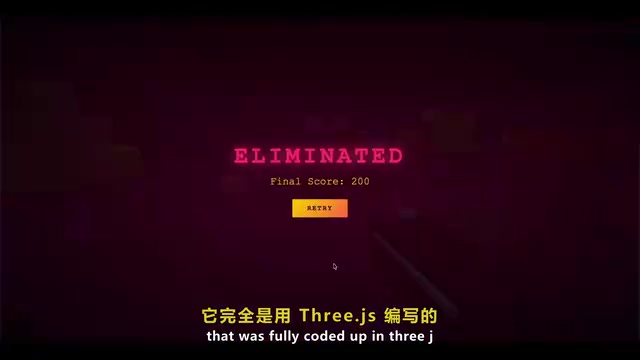
In the lava lamp simulation test, the liquid's dynamic drifting is virtually perfect with extremely high fidelity, even featuring subtle glow rendering effects. The procedural tree growth simulation was praised as "completely outperforming all previous models" — not only is the generation effect highly atmospheric, but leaf details and shadow processing are also very precise.
GLM 5.2 Cost-Effectiveness Analysis: The True Value of Open Source
GLM 5.2's pricing strategy is extremely competitive: only $1.20 per million input tokens and $4.10 per million output tokens, essentially on par with GLM 5.1. This means users receive significant performance improvements while bearing virtually no additional cost.
More importantly, GLM 5.2 is fully open-sourced with all weights under the MIT license, meaning developers can freely deploy, fine-tune, and commercialize it.
The Open-Source Significance of the MIT License The MIT license is one of the most permissive licenses in software open source, allowing anyone to freely use, copy, modify, merge, publish, distribute, sublicense, and sell copies of the software — the only requirement being to retain the copyright notice. For large models, "open-source weights" means developers can download complete model parameter files and deploy locally or on private clouds without API calls, fundamentally solving three major pain points: data privacy, network latency, and API costs. This stands in stark contrast to Meta's LLaMA series, which uses a custom license (limiting commercial scale). The choice of MIT license reflects Zhipu AI's strong commitment to the developer ecosystem.
For enterprise users, this means not only cost savings but also guarantees of data privacy and deployment flexibility.
The model also offers two inference tiers — GLM 5.2 Max and GLM 5.2 High — with a 1-million-token context window, designed specifically for long-cycle tasks and large-scale automation scenarios.
Conclusion: Which Developers Is GLM 5.2 Best Suited For?
The release of GLM 5.2 marks the official entry of open-source large models into a new phase of direct competition with closed-source giants. Its performance in frontend development and code generation is particularly outstanding, ranking in the top five across multiple benchmarks while maintaining highly competitive pricing. Although there's still room for improvement in debugging reasoning and Agent capabilities, achieving this level as an open-source model undoubtedly injects a shot of adrenaline into the entire AI open-source ecosystem.
For developers, GLM 5.2 is particularly well-suited for creative coding tasks such as frontend development, UI prototyping, and 3D scene generation. If you're looking for a high-value coding assistant, GLM 5.2 is absolutely worth trying.
Related articles
SoulFlow-Orchestrator: A Self-Hosted, Vendor-Lock-In-Free AI Agent Runtime
SoulFlow-Orchestrator is an open-source, self-hosted AI agent runtime with no vendor lock-in. Supports 9 neutral backends (Claude, OpenAI, Ollama), 141-node workflow engine, multi-agent loops, and HITL gates.
Chinese Full-Stack Agent Skills: A Skill Library Tailored for Domestic AI-Assisted Development
chinese-fullstack-skills is an Agent Skills library for Chinese full-stack development, covering Vue/React, Node/Go, and domestic cloud deployment best practices. Compatible with Claude Code, Cursor, Kiro, and Codex.
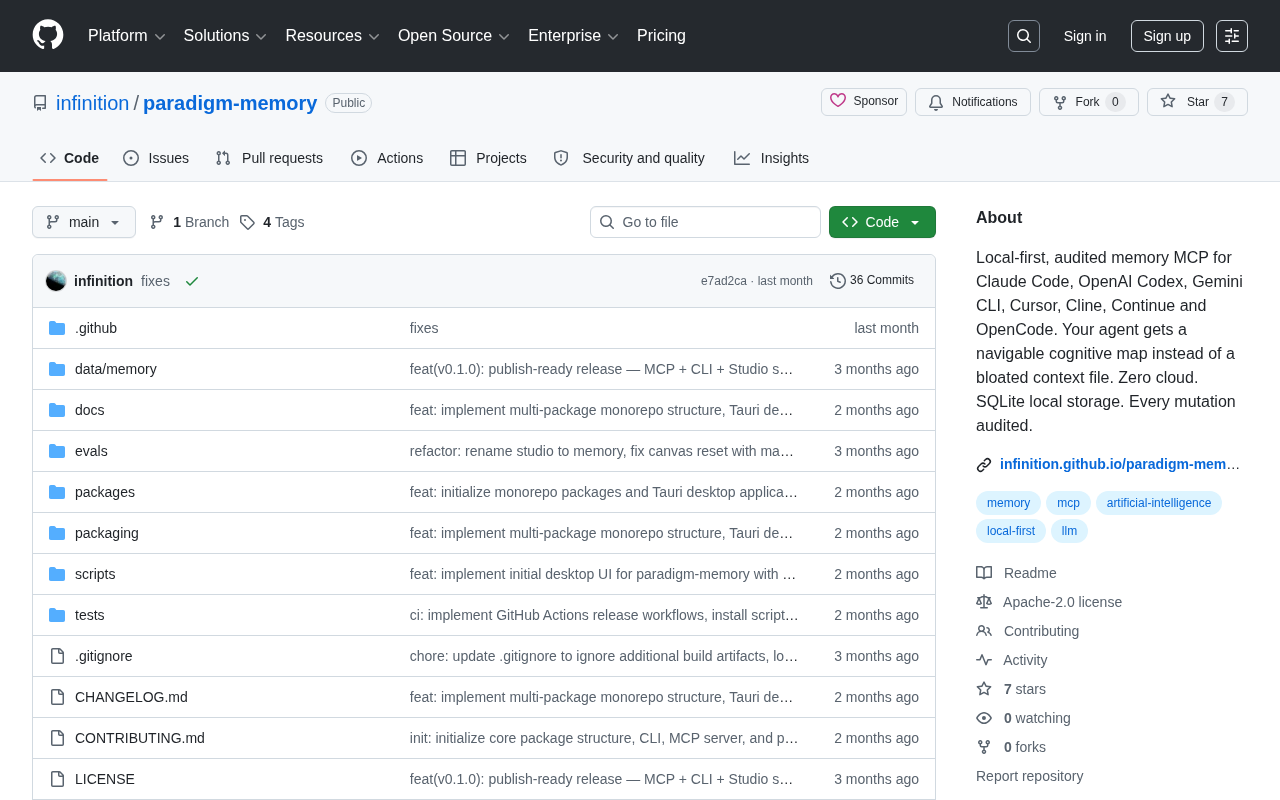
Paradigm Memory: A Local-First Memory System for AI Coding Assistants
paradigm-memory is a local MCP memory tool for Claude Code, Cursor, and Cline. It uses SQLite local storage, zero cloud, full audit trails, and a navigable cognitive map instead of bloated context files.