GoHighLevel vs n8n: CRM Marketing Platform or Automation Engine — Which Should You Choose?

GoHighLevel is an all-in-one marketing CRM; n8n is an open-source automation engine — different tools that can work together.
GoHighLevel and n8n both fall under "automation," but serve very different purposes. GoHighLevel is an all-in-one SaaS platform for marketing agencies and SMBs, bundling CRM, landing pages, and a unified inbox with built-in marketing automation and white-label delivery. n8n is an open-source, low-code workflow engine for developers, featuring a node-based editor, support for any REST API, complex logic, and self-hosting. GoHighLevel runs $97–$297/month as a cloud SaaS; n8n's Community Edition is free to self-host, with cloud plans billed per execution. The two aren't mutually exclusive — many advanced users run GoHighLevel for front-end client management and n8n for back-end custom workflows.
GoHighLevel and n8n both fall under the broad umbrella of "automation," but they were built with entirely different goals in mind. One is an all-in-one CRM platform for marketing agencies and SMBs; the other is an open-source workflow engine for developers and technical users. This comparison breaks down both tools across positioning, automation capabilities, pricing and hosting, and use cases — so you can decide which one fits your needs, and whether combining them makes sense.
Fundamental Differences in Core Positioning and Target Users
GoHighLevel is, at its core, an all-in-one marketing and sales platform. Automation is just one piece of a much larger toolset. It bundles a CRM, landing page builder, unified inbox, and more — with automation serving as the glue that connects these internal components (and a handful of external apps) into a complete marketing machine.
Its target audience is very specific: marketing agencies that want to deliver the platform to clients under a white-label, and small business owners who need a centralized hub for sales, marketing, and customer communication. These users care about business outcomes, not technical flexibility.
n8n, on the other hand, is an open-source, low-code automation engine. Its core purpose is to let developers and technical users connect any application or API. It's a workflow builder, not a full business platform. Put simply: GoHighLevel sells a "closed-loop business solution," while n8n sells "the ability to connect anything."
White-labeling is one of GoHighLevel's core commercial advantages and worth unpacking. White-label means that after purchasing the platform, agencies can replace all branding (logo, domain, interface colors) with their own, then sell or deliver it to end clients as an independent product — with clients never knowing GoHighLevel is powering it under the hood. This model allows small-to-mid-sized marketing agencies to launch their own "proprietary" SaaS products at minimal technical cost, generating recurring subscription revenue. This is a big reason why GoHighLevel's $297/month unlimited plan is so popular among agencies — a single client's monthly fee can often cover the entire platform subscription, creating a scalable profit margin.
Automation Capabilities: Preset Actions vs. Node-Based Flexibility
GoHighLevel provides a visual workflow builder based on trigger-and-action combinations, with a low barrier to entry. Its integrations are concentrated in marketing and sales tools, with native support for Facebook, Google, Stripe, WordPress, and other mainstream platforms — plus the ability to connect thousands of additional apps via Zapier.
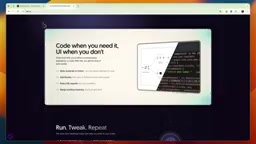
Common use cases include lead nurturing, appointment scheduling, reputation management, and automated follow-ups. Its strength is making marketing automation feel intuitive and accessible — but its limitations are equally clear: automation capabilities are constrained by the platform's ecosystem and a finite set of preset actions.
n8n uses a node-based visual editor that gives users granular control over every step. It supports complex logic, loops, conditional branching, and human-in-the-loop interventions, enabling multi-step, sophisticated automation workflows. With 500+ native integrations and the ability to connect to virtually any REST API via HTTP request nodes, n8n's flexibility is nearly unbounded.

Notably, n8n can even connect GoHighLevel to tools that GoHighLevel doesn't natively support. It's built by design for highly customized and advanced scenarios — including AI agent systems, multi-agent workflows, data processing pipelines, and internal tools. Being open-source also means that if a node doesn't exist, you can build your own custom integration.
Node-based editors are key to understanding how n8n works. In this paradigm, each individual operation (e.g., "fetch data from an API," "send an email," "write to a database") is encapsulated as a visual "node," with data flowing between nodes via connections. Users can freely combine nodes, insert conditional logic (If/Else) or loops at any branch, and write JavaScript/Python code directly within nodes to handle data transformation. This is fundamentally different from GoHighLevel's linear "select trigger → select action" workflow configuration, which is more like filling out a form. The human-in-the-loop mechanism allows workflows to pause at critical nodes and wait for manual approval or input before continuing — useful for scenarios like reviewing AI-generated content or approving quotes.
Pricing and Hosting: Fixed SaaS Fees vs. Self-Hosted Control
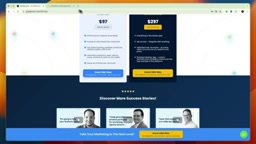
GoHighLevel's pricing is straightforward, with two main tiers: $97/month and $297/month. The $97 tier suits small businesses that only need to manage their own operations. The $297 unlimited tier is aimed at agencies, offering unlimited sub-accounts (each sub-account represents a business managed within GoHighLevel) and white-label branding support. A critical point for automation users: this tier includes API access, meaning integration with any external system is possible.
As a cloud SaaS platform, all data is stored on GoHighLevel's servers — easy to get started, but you give up control over where your data lives.
n8n's pricing is more flexible. The Community Edition is free to self-host — you only pay server costs, which can be kept very low. Cloud-hosted plans are billed per workflow execution, with predictable and scalable costs. For hosting, users can choose n8n's cloud offering or self-host the open-source version on their own servers. Self-hosting provides complete data ownership and the freedom to run workflows without per-execution limits.
Self-hosting matters significantly for teams concerned with data privacy and compliance. Deploying n8n on your own server means all workflow data, credentials (API keys, etc.), and execution logs never pass through a third-party provider — helping satisfy data protection regulations like GDPR and HIPAA. Common self-hosting setups involve deploying with Docker on a VPS (e.g., DigitalOcean, Hetzner), typically costing $5–$20/month — far less than cloud subscription fees. Self-hosted instances also have no execution limits, making them ideal for high-frequency scenarios like API polling workflows that run every minute, which would rack up significant costs on a per-execution cloud plan.
Use Cases and Selection Guidance
If you're a marketing agency that needs to deliver an all-in-one CRM and marketing platform to multiple clients from a single dashboard, GoHighLevel is the better fit. Likewise, if you're a small business owner who wants to centralize marketing, sales, and communications without stitching together multiple tools, it's the more practical choice. When your automation needs center on common marketing tasks — lead generation, follow-up sequences, appointment scheduling, or pulling Facebook Lead Ads into a CRM — GoHighLevel handles these natively.

n8n is the better fit for developers and technical users who need to build highly customized, complex, and flexible automation that connects to any API; who want to build internal tools, AI agents, or AI systems; or who want to self-host their automation engine for stronger data privacy, security, and cost control.
One often-overlooked approach is using both together. Many advanced users and agencies use GoHighLevel as the front-end platform for client management and communication, while running n8n as the back-end automation engine to power custom workflows that GoHighLevel can't handle on its own. This combination preserves the convenience of a closed-loop business platform while unlocking near-unlimited extensibility.
Conclusion
This isn't a question of which tool is "better" — it's a question of matching the right tool to who you are and what you're trying to do. If you're focused on business outcomes and want to avoid technical complexity, choose GoHighLevel. If you prioritize flexibility, need to connect everything, and care about data sovereignty, choose n8n. And for agencies looking to serve clients at scale, a hybrid architecture — GoHighLevel on the front end, n8n on the back end — is often the optimal solution.
Related articles

Anthropic IPO Countdown: The Compute Cost Ledger Behind a $2 Trillion Valuation
Anthropic's IPO targets up to $2 trillion — double its Series H valuation. We break down the timeline, compute cost logic, and the key question investor day must answer.

Anthropic IPO Prospectus Revealed: Behind 12x Revenue Growth, the Twin Tests of Compute Costs and Customer Concentration
Anthropic filed its IPO prospectus: 2025 revenue up 12x to $4.6B, net loss $42B including $34B non-cash. Breaking down compute costs, $2T valuation logic, customer concentration risks, and founder control.

Xteink X4 Pro Review: A Mini E-Reader That Fits in Your Pocket, Now More Affordable
Xteink X4 Pro is a 4.26-inch mini e-reader, smaller and thinner than a 6-inch Kindle, magnetically attachable to phones, and cheaper than ever. We analyze its screen, design, use cases, and value.