Google Astra vs. Unlimited GPT: Which Direction Do AI Users Want Most?
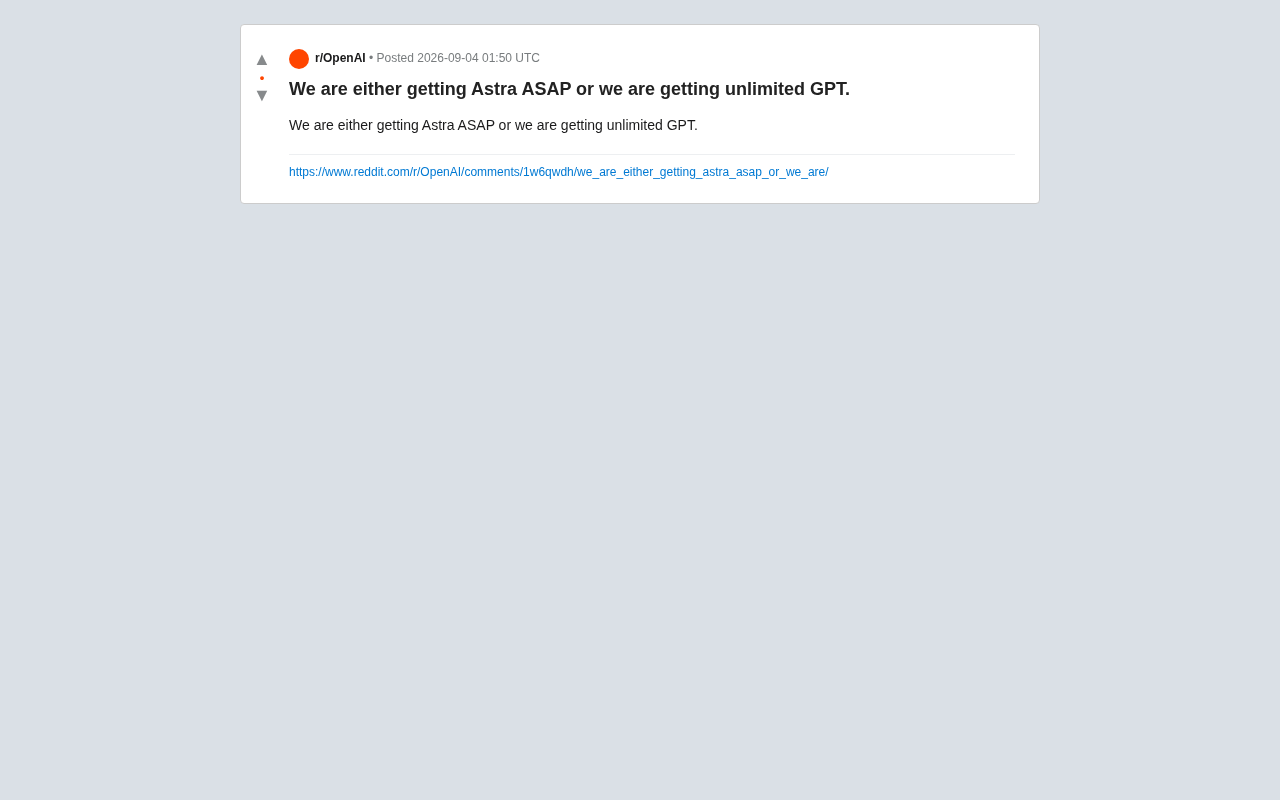
AI users debate whether they want Google Astra's multimodal capabilities or unlimited GPT access more.
A Reddit discussion about getting Google Astra or unlimited GPT reveals two core AI user desires: advanced multimodal interaction and unrestricted usage. This article examines Astra's real-time perception capabilities, the persistent pain point of GPT usage quotas, the computing cost barriers to unlimited access, and the broader competitive dynamics between Google DeepMind and OpenAI.
A Community Discussion That Sparked the Imagination
Recently, a thought-provoking discussion thread appeared on Reddit with a straightforward yet suspenseful title: "We are either getting Astra ASAP or we are getting unlimited GPT." This seemingly casual comment reflects the intense anticipation and collective anxiety among today's AI users about the next generation of products.
Reddit as a Barometer for AI Technology Discussions
Reddit is one of the world's largest community platforms, with subreddits like r/OpenAI, r/ChatGPT, and r/GoogleAI attracting massive numbers of AI enthusiasts, developers, and power users. These communities are often the first to capture genuine user feedback, pain points, and expectations around new technologies. Unlike official announcements, Reddit discussions are more authentic and organic, frequently reflecting user sentiments that mainstream media has yet to pick up on. Historically, many AI product improvements and pricing adjustments have been closely tied to concentrated feedback from Reddit communities, making it an essential window for observing AI product evolution.
While this kind of discussion lacks official backing, it genuinely reflects ordinary users' attention to two major technology paths: on one side, Google DeepMind's multimodal real-time assistant Project Astra; on the other, OpenAI's ever-expanding capabilities and usage quotas for the GPT series. Understanding the differences between these two helps us see the core focus of today's AI competition.
Google Project Astra: Redefining AI Interaction
Google DeepMind's Vision for a Universal AI Assistant
Project Astra is a cutting-edge project first showcased by Google DeepMind at its I/O conference, positioned as a universal AI assistant capable of understanding visual and auditory information in real time while engaging in natural conversation. Unlike traditional chatbots, Astra emphasizes "real-time" and "multimodal" capabilities — it can "see" the user's environment through a phone camera, understand objects being pointed at, and respond instantly.
The Evolution of Multimodal AI Technology
Multimodal AI refers to artificial intelligence systems that can simultaneously process and understand multiple types of input — such as text, images, audio, and video. Early AI models were mostly unimodal: the GPT series focused on text, while DALL-E focused on image generation. Since 2023, models like GPT-4V and Gemini have begun supporting image understanding, marking a breakthrough in multimodal capabilities. True multimodality goes beyond just "seeing and hearing" — it requires the model to understand relationships across different modalities. For example, recognizing text in an image and understanding its relationship to surrounding objects. This capability is crucial for achieving artificial general intelligence (AGI), since human cognition itself is an integrated multimodal process.
In the official demo, Astra was able to remember where a user had placed their glasses minutes earlier, identify the function of code snippets, and even infer the user's city from the view outside a window. This near sci-fi interaction experience has made it one of the most anticipated AI products in the community. The "ASAP" in the user's post is a direct expression of this urgent anticipation.
Technical Challenges of Real-Time Interactive AI
Building a real-time AI assistant like Astra faces multiple technical hurdles. First is latency: traditional AI models take several seconds from receiving input to generating a response, while natural conversation requires latency under 300 milliseconds. This demands model architecture optimization, inference acceleration, and edge computing coordination. Second is contextual memory: the AI needs to continuously understand conversation history and environmental changes, placing extremely high demands on memory management and attention mechanisms. Third is multimodal fusion: simultaneously processing video streams, audio streams, and text input while understanding them in a unified semantic space requires complex cross-modal alignment techniques. Finally, there's power consumption: real-time operation means continuous computation, and achieving low power consumption with high performance on mobile devices is a key bottleneck.
Why Users Are So Excited About Astra
Astra represents a paradigm shift from "Q&A tool" to "environment-aware companion." When AI can proactively perceive the physical world and maintain continuous contextual memory, its application scenarios expand dramatically — from assisting visually impaired individuals and real-time translation to serving as a personal technical consultant. This expansive potential is the fundamental reason why community discussions around Astra remain so heated.
Unlimited GPT: Users' Most Pressing Real-World Demand
ChatGPT Usage Quotas Have Always Been a Pain Point
The other possibility mentioned in the post is "unlimited GPT." This expression points directly at one of the most tangible pain points of current AI products: usage limits. Whether it's ChatGPT Plus's message caps or API call quotas, paying users still encounter the frustrating "quota exhausted" barrier during intensive use.
Usage Quota Strategies Across AI Products
Current mainstream AI products each have distinct quota strategies. ChatGPT Plus uses a rolling time-window message limit (e.g., 40 GPT-4 messages within 3 hours), balancing cost control with flexibility. Claude Pro uses fixed-period quotas. API services typically charge per token, with prices increasing alongside model capability. This quota design serves both as a cost management tool and a product differentiation strategy — limitations push some users to upgrade to higher-tier plans or enterprise versions. Quotas also prevent abuse and ensure service stability. As model inference efficiency improves and competition intensifies, quota policies are trending toward gradual relaxation. However, truly "unlimited" usage remains commercially unrealistic — it's more likely to evolve into "quotas large enough that most users never feel restricted."
For power users who rely on AI for programming, writing, or research, unlimited usage is practically the ultimate wish. It means no more carefully rationing each conversation and no more being forced to pause mid-task. So while "unlimited GPT" may sound simple, it strikes at the core need of a massive user base.
Computing Costs Are the Biggest Barrier to Unlimited Usage
However, behind "unlimited" lies enormous computing costs. Every inference by a large language model consumes significant computational resources, which is the fundamental reason providers impose usage caps.
The Cost Structure of LLM Inference
Running a large language model like GPT-4 is expensive. The primary cost comes from GPU compute: each inference requires processing hundreds of billions of parameters on high-end GPUs (such as NVIDIA A100/H100). Estimates suggest that a single GPT-4 conversation costs between $0.03 and $0.12, depending on input and output length. A service with a million daily active users could face daily compute expenses in the hundreds of thousands of dollars. This doesn't even include indirect costs like model training, data storage, bandwidth, and human review. Therefore, "unlimited usage" means providers must either dramatically reduce per-inference costs (through techniques like model compression, quantization, and distillation), accept operating at a loss in exchange for market share, or adopt differentiated pricing strategies to balance cost and revenue.
To truly achieve unlimited usage, the industry needs either a major leap in inference efficiency or access to significantly cheaper computing resources. From this perspective, the community's expectations are really a straightforward judgment about the maturity of AI infrastructure.
The Industry Competition Logic Behind Two Technology Paths
Expanding Capability Breadth vs. Democratizing Usage Depth
Astra and unlimited GPT represent two directions in AI development. Astra pursues the "breadth" of capabilities — giving AI richer dimensions of perception and interaction. Unlimited GPT pursues the "depth" of value democratization — making existing powerful capabilities available to every user with lower barriers and fewer restrictions.
The Competitive Landscape Between Google DeepMind and OpenAI
Google DeepMind and OpenAI represent the two dominant schools of thought in today's AI landscape. OpenAI established the industry standard for large language models with its GPT series, emphasizing general-purpose language understanding and generation while achieving mass AI adoption through ChatGPT. Google DeepMind, on the other hand, has deeper academic foundations (AlphaGo, AlphaFold, etc.) and unique advantages in reinforcement learning and multimodal understanding — Gemini and Astra embody its "unified multimodal model" approach. The competitive focus has shifted from pure language capability to real-time interaction, multimodal understanding, and vertical scenario deployment. Google has ecosystem advantages through Search, Android, YouTube, and more, while OpenAI is more aggressive in productization and user experience. This race isn't just about technology — it represents fundamentally different answers to the question of "In what form should AI serve humanity?"
These two paths are not mutually exclusive; they're strategic directions that leading companies are pursuing simultaneously. Google needs flagship concepts like Astra to establish technology leadership while continuously optimizing the Gemini user experience. OpenAI, meanwhile, continues to enhance GPT capabilities while exploring more flexible pricing and quota models. The tongue-in-cheek "either/or" framing in the user's post is really an intuitive summary of the industry's development pace.
The Gap Between Community Expectations and Product Reality
It's important to view this objectively: the Reddit post is essentially an expression of community sentiment, not an official announcement or credible leak. Its value lies not in prediction but in revelation — revealing what users truly care about. When forums are repeatedly filled with two types of voices — "When can we use it?" and "Can we get unlimited access?" — companies should read between the lines to find direction for product optimization.
Conclusion
Starting from a brief Reddit discussion, we've seen the two most genuine desires of the AI user community: the aspiration for more powerful multimodal interactive experiences, and the expectation for freer usage models. Whether Google Astra launches first or GPT usage quotas see meaningful expansion, this community discussion reminds us that the finish line in the technology race is always about better serving real user needs. In this era of rapid AI evolution, maintaining rational expectations and focusing on actual experience may be the wisest stance for everyday users.
Related articles
CGI: The First Open-Source GPU Compute Pricing Index, Making Compute Pricing Transparent
Computable GPU Index (CGI) is the first open-source GPU compute pricing index, denominated in USD per GPU-hour, calculated from a fixed provider panel with mathematical rigor and full verifiability. This article analyzes CGI's core features, the importance of compute pricing indices, and the potential for compute financialization.
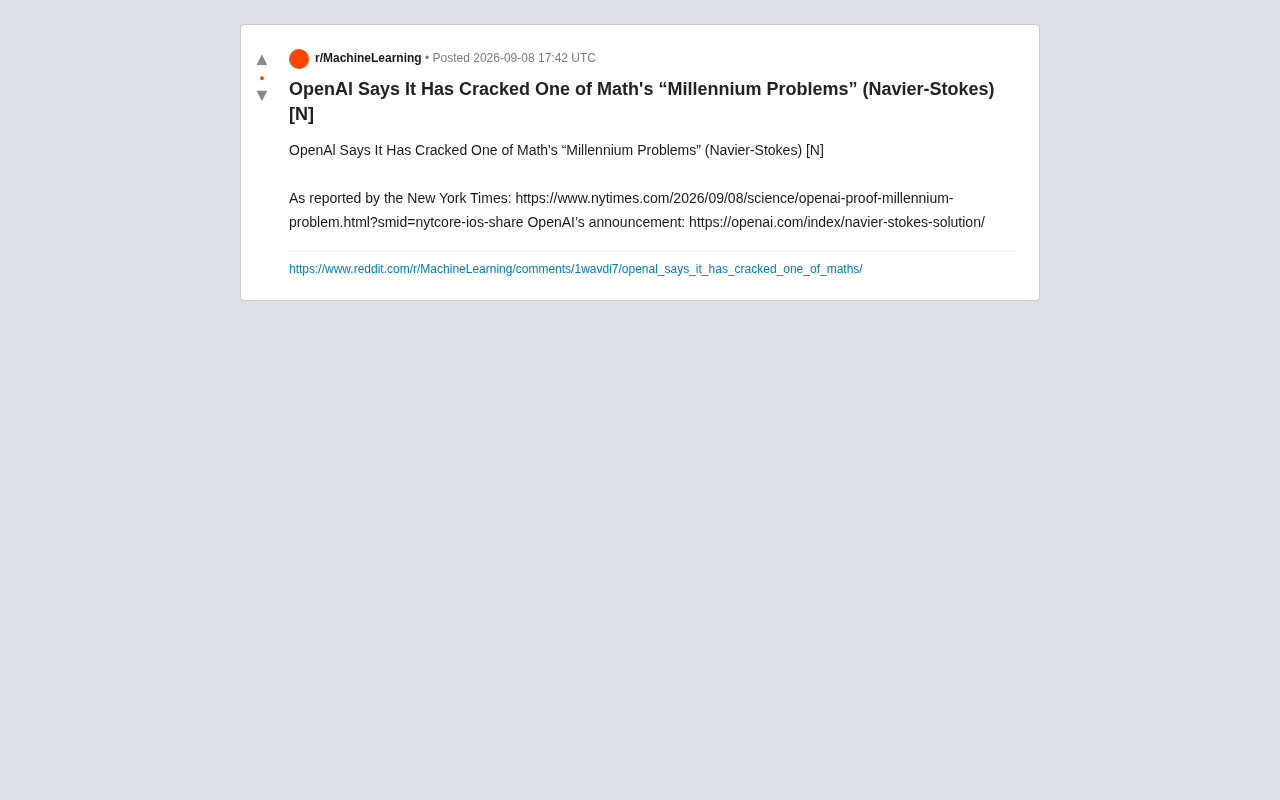
OpenAI Claims Breakthrough on Millennium Problem: The Truth and Controversy Behind Navier-Stokes Progress
OpenAI claims its AI system achieved a breakthrough on the Navier-Stokes equations Millennium Problem. This article analyzes what the claim really means, the difference between partial progress and complete proof, and AI's rise in mathematical proof.
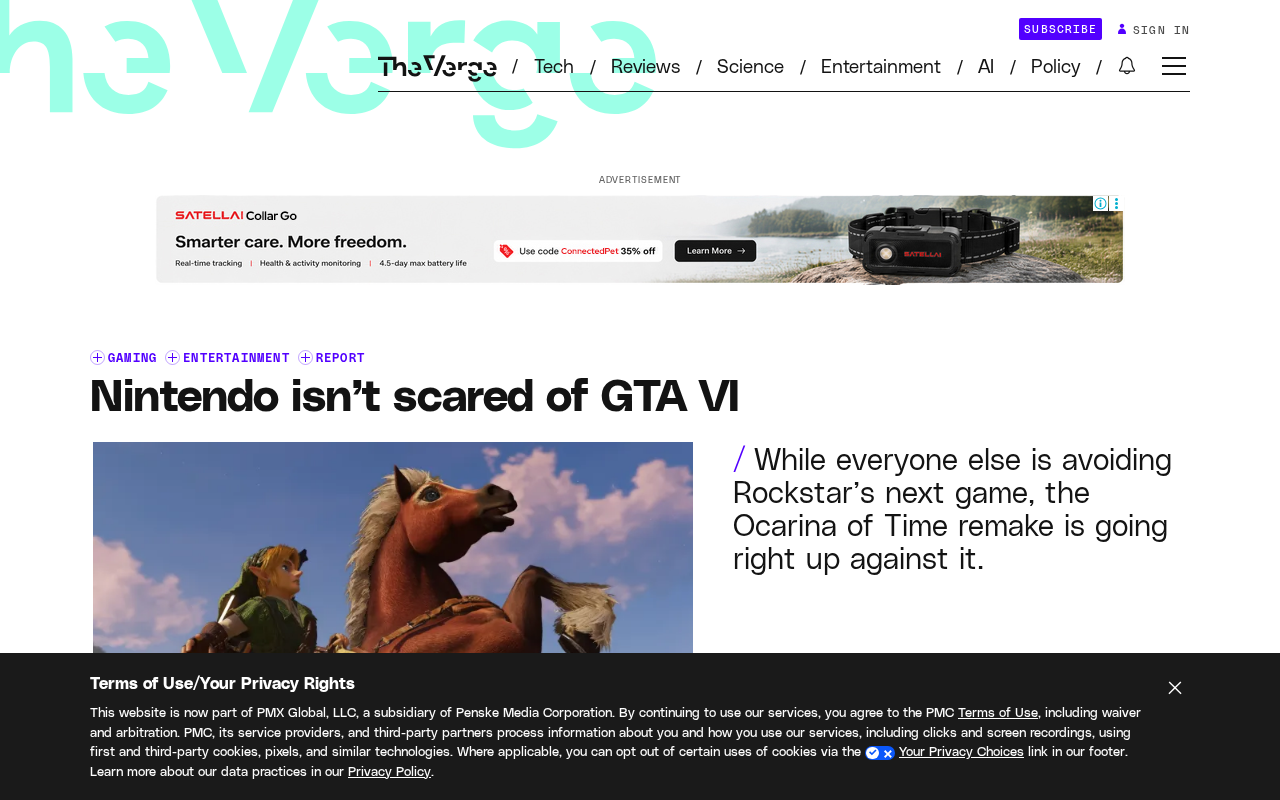
Why Nintendo Isn't Afraid of GTA VI: The Confidence Behind Differentiation and Its Industry Lessons
Facing GTA VI's gravitational pull, Nintendo stays unfazed with exclusive IPs, an independent hardware ecosystem, and a differentiation strategy. A deep dive into the logic and industry lessons.