Google Books Might Be the Most Underrated Tool You're Not Using

Google Books is quietly becoming one of the most trustworthy research tools in the AI era.
The Verge's Installer #145 puts the spotlight on Google Books, prompting a fresh look at this often-overlooked platform. As generative AI floods the internet with cheap content and credibility concerns grow, Google Books stands out with tens of millions of edited, fact-checked volumes and powerful full-text search that points directly to original sources. Its high-quality book corpora also make it a critical reference for training and validating LLMs. The article urges creators, researchers, and students to bring Google Books back into their everyday toolkit.
A Note from a Tech Newsletter
The Verge's Installer series has long been a go-to reference for tech enthusiasts tracking new products and tools. In issue #145, after wrapping up a packed stretch of travel, the author turned their attention to an easy-to-overlook corner of the internet — Google Books. In an era overflowing with novel AI apps and hardware launches, why would a book scanning and search service that's been around for years suddenly deserve a second look?
The logic isn't that complicated. As generative AI makes information retrieval increasingly effortless, people are starting to take a fresh look at established platforms that sit on vast, structured, and trustworthy content. Google Books has digitized tens of millions of volumes — and that happens to be one of the scarcest high-quality content resources around right now.
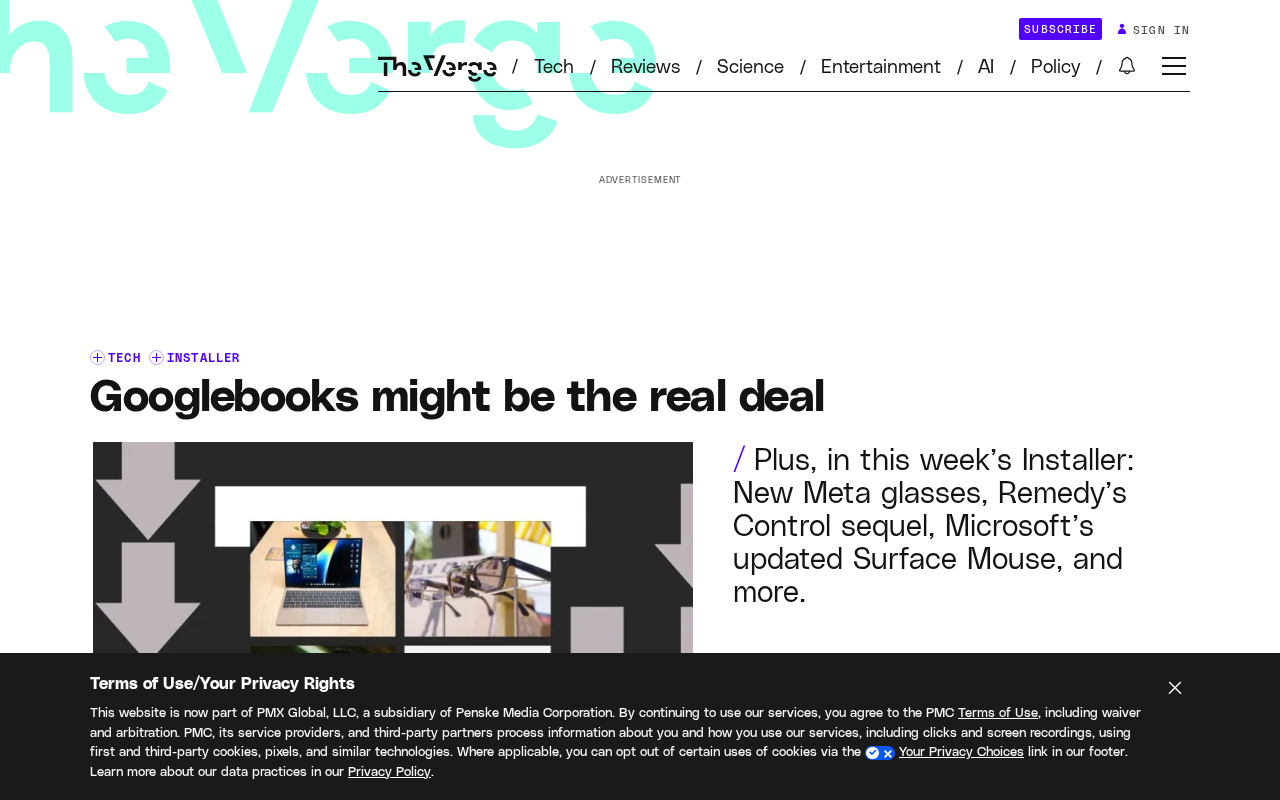
Why Google Books Deserves a Second Look
A Content Library Tested by Time
The core value of Google Books lies in its massive, curated book database. Compared to the fragmented, hard-to-verify information on social media, books have typically gone through editing, copy-editing, and fact-checking — making them far more reliable. For researchers, writers, and anyone who needs to dig deep, it's a direct gateway to original sources.
Google Books launched in 2004 under the name "Google Print," with the goal of digitizing library collections worldwide and making them searchable online. As of 2023, the project has scanned over 40 million books in partnership with top academic institutions including Harvard, Oxford, and Stanford. The project faced a class-action lawsuit from publishers and author associations over copyright concerns, leading to years of legal battles. It ultimately operates under a limited-access model: public domain books are available in full, while copyrighted titles offer only snippet previews and metadata search. This legal backdrop defines the boundaries of what Google Books can show — and explains why some titles appear as "limited preview" only. That said, its full-text indexing still covers copyrighted works, letting users pinpoint where a concept or quote appears, then obtain the full text through a library or purchase. That alone makes it a highly efficient academic research path.
A Unique Edge in Search
Unlike standard web search, Google Books lets users search within the full text of books — quickly locating where a specific concept, quotation, or historical record appears, right down to the page. This ability to search inside content is something most modern search tools simply can't replicate. When you need to verify a claim or trace how an idea evolved over time, that's where Google Books really shines.
A New Relevance in the Age of AI
The rise of generative AI has made content production incredibly cheap — but it's also raised serious concerns about information credibility. In that context, a tool like Google Books, grounded in real published works, becomes a way to cut through the noise. It doesn't give you answers restructured by a model; it gives you first-hand, traceable, verifiable content.
Zooming out, digitized book collections are also a critical resource for training and evaluating large language models. A broad, high-quality book library can help everyday users verify facts, and serve as a reference standard for AI fact-checking. That's likely why the author described it as something that "might be the real deal."
The training data behind large language models (LLMs) directly shapes the quality and reliability of their outputs. Academic research has highlighted that datasets dominated by web crawls — like Common Crawl — contain large amounts of low-quality, duplicated, or outright false content. Book corpora, by contrast, are rigorously structured and professionally reviewed, making them a source of what's often called "high-density knowledge." OpenAI, Google, and others used licensed or public domain book datasets (such as Books1, Books2, and Google Books public domain corpora) in training their early models. As copyright disputes have intensified, access to high-quality book data has grown increasingly difficult — which makes Google Books, with its massive existing scan infrastructure, a strategically irreplaceable asset in the AI supply chain. For everyday users, this means Google Books isn't just a research tool — it's one of the few reliable reference points that can serve as a factual counterweight to AI-generated content.
Rediscovering an Old Tool
The tech industry is always chasing the newest, flashiest products — but lasting value often hides in the infrastructure that gets taken for granted. Google Books isn't new. It's frequently forgotten. But the idea it represents — trustworthy content retrieval — matters more today than ever.
For content creators, students, and researchers, bringing Google Books back into your regular toolkit might deliver more of a productivity boost than you'd expect. While everyone debates the next breakout AI app, revisiting tools that have stood the test of time might actually be the smarter move.
A Final Note
Since the original source material was only a brief newsletter introduction, specific usage tips and feature details weren't covered in depth here. This piece is largely an extended analysis based on Google Books' positioning within the context of the AI era. Readers who want a fuller picture are encouraged to follow The Verge's Installer for more comprehensive coverage.
Related articles

Amphibious Transforming Drone: Beyond 100x Power Savings, What Are the Real Needs?
Is the amphibious transforming drone just a gimmick? Starting from the 100x power difference of the M4 Morphobot, explore real application scenarios and thesis topic ideas, analyzing boundary conditions where pure drones and pure ground robots both fail.

Warhound Raises $200 Million: Genetically Engineered "War Dogs" Paired with Anduril Gear
Warhound raises $200M, backed by Ben Lamm and Palmer Luckey, to genetically engineer dogs for military and law enforcement use and equip them with Anduril gear. This article analyzes its technology direction, funding logic, and ethical controversy.

Claude API Comes to Google Cloud: IAM Integration and SDK Access Guide
Anthropic hosts the full Claude API on Google Cloud with IAM-controlled permissions and unified billing. This guide covers the Vertex AI and Anthropic-hosted entry points, IAM role configuration, and SDK access.