Google Co-Scientist Explained: A Gemini-Powered Multi-Agent AI Research System
Google Co-Scientist Explained: A Gemin…
Google's Co-Scientist is a Gemini-based multi-agent AI system that generates, debates, and evolves scientific hypotheses.
Google has released Co-Scientist, a multi-agent AI research system built on Gemini that autonomously generates scientific hypotheses, conducts inter-agent debates to simulate peer review, and iteratively refines research directions. By addressing the knowledge explosion bottleneck and shifting AI's role from search engine to thinking engine, Co-Scientist aims to accelerate discoveries in drug development, materials science, and beyond.
AI Is Becoming a Scientist's "Partner"
Google recently unveiled a new AI system called Co-Scientist, positioned as a dedicated "research partner" for scientists. It is a multi-agent system built on the Gemini large language model, capable of autonomously generating hypotheses for complex scientific problems, engaging in debate, and iteratively refining research directions.
Multi-agent systems represent an important research direction in artificial intelligence, referring to system architectures where multiple AI agents with autonomous decision-making capabilities collaborate to accomplish complex tasks. Unlike a single large model directly outputting answers, multi-agent systems improve overall reasoning quality through role specialization, information exchange, and negotiation mechanisms. This approach is partly inspired by the division of labor in human organizations — just as a research team has members responsible for proposing ideas, others for challenging and verifying them, and still others for synthesizing findings. In recent years, as large language model capabilities have advanced, multi-agent architectures have become a popular paradigm for tackling complex reasoning tasks, with notable examples including Stanford's Generative Agents and Microsoft's AutoGen.
This release marks a significant shift in AI's role in scientific research — from "assistive tool" to "collaborative partner" — and opens up a new paradigm for deploying large models in cutting-edge research.
What Is Co-Scientist: A Multi-Agent AI Research System
Co-Scientist is not a simple Q&A chatbot but rather a research system powered by multiple collaborating AI agents. Its core capabilities can be summarized in three key stages:
- Generate: When faced with complex scientific questions, the system autonomously proposes novel research hypotheses rather than merely retrieving existing literature.
- Debate: Multiple agents cross-examine and argue over the generated hypotheses, simulating the peer review process in the scientific community.
- Evolve: Through multiple rounds of debate and feedback, hypotheses are continuously revised, optimized, and filtered, ultimately converging on directions with greater scientific value.
This "Generate–Debate–Evolve" workflow is essentially an AI-powered implementation of the most fundamental methodology in scientific research: hypothesis-driven research. Hypothesis-driven research is the cornerstone of the modern scientific method, with its philosophical roots traceable to Karl Popper's falsificationism. The basic logic of scientific progress follows this cycle: observe phenomena → propose hypotheses → design experiments for verification → revise or refute hypotheses → form new theories. In this iterative process, the quality of hypotheses directly determines the direction and efficiency of research. However, formulating high-quality scientific hypotheses often requires deep domain expertise, cross-disciplinary perspective, and creative thinking — precisely the core aspect that Co-Scientist aims to assist with.
Gemini: The Technical Foundation of Co-Scientist
Co-Scientist is built on Google's latest Gemini large model. Gemini is a next-generation multimodal large model launched by Google DeepMind in late 2023, supporting unified understanding and generation across text, images, audio, video, and code. Its key technical features include: native multimodal training (rather than post-hoc stitching of separate modality-specific models), an ultra-long context window (supporting up to million-token-level inputs), and strong performance in mathematical reasoning and code generation tasks.
For research scenarios, the ultra-long context window means the model can process the full content of multiple complete papers in a single pass, while its multimodal capabilities allow it to understand charts, molecular structure diagrams, experimental data, and other non-textual information found in scientific papers. This provides a solid technical foundation for handling the complex mix of text, data, and figures prevalent in scientific literature.
The multi-agent architecture further breaks through the limitations of a single model — assigning different agents to play roles such as "hypothesis proposer," "critic," and "synthesizer," forming a collaborative model akin to a real research team.
Why Co-Scientist Matters
The Urgent Need to Break Through Research Efficiency Bottlenecks
Modern scientific research faces an increasingly pressing challenge: the knowledge explosion. In the biomedical field alone, over a million new papers are published each year. According to the U.S. National Library of Medicine, the PubMed database now contains more than 36 million biomedical publications, with the annual growth rate continuing to accelerate. In physics, the arXiv preprint server receives more than 15,000 new papers per month. This exponential growth in knowledge output has led to what is known as "knowledge fragmentation" — important scientific discoveries may be scattered across papers in different disciplines and journals, while human researchers, constrained by time and cognitive bandwidth, can typically only keep up with developments in their narrow area of expertise. Cross-disciplinary knowledge gaps are becoming one of the primary obstacles to scientific breakthroughs.
No scientist can exhaustively read all the literature in their own field, let alone integrate knowledge across disciplines. Countless potential scientific discoveries are being "buried" in this flood of information.
This is precisely where Co-Scientist's value lies — it can identify connections in massive volumes of literature and data that human researchers might overlook, propose innovative cross-disciplinary hypotheses, and thereby accelerate the pace of scientific discovery.
A Quantum Leap: From "Search Engine" to "Thinking Engine"
In the past, AI's role in scientific research was largely confined to information retrieval and data analysis — helping you find papers and run statistics. The new paradigm that Co-Scientist represents involves AI participating in the core intellectual activities of science: asking questions, constructing hypotheses, and evaluating feasibility.
It's worth noting that Co-Scientist is always positioned as a "collaborative partner" rather than a "replacement." Final experimental validation, ethical judgment, and scientific decision-making still require human scientists. AI excels at efficiently exploring the hypothesis space, while humans excel at connecting hypotheses to the real world.
Industry Landscape and Future Outlook for AI Research Assistants
Intensifying Competition in the Field
Google is not the only tech giant investing in AI research tools. Meta's Galactica, Microsoft's research assistance tools, and numerous startups have all been exploring similar directions. However, Co-Scientist's multi-agent debate mechanism is a significant differentiator — it doesn't just generate answers but has built-in self-correction and quality control mechanisms, which to some extent mitigate the impact of LLM "hallucination" problems in research contexts.
Large language model "hallucination" refers to the model generating content that appears plausible but is actually incorrect or entirely fabricated. In everyday conversation, a hallucination might just be a minor error; but in research contexts, hallucinations could lead researchers to design experiments based on false premises, wasting significant time and resources. For example, a model might fabricate nonexistent references, invent experimental data, or propose hypotheses that violate known physical laws. Co-Scientist's multi-agent debate mechanism, by having different AI agents challenge and verify each other, creates a built-in fact-checking mechanism. While it cannot completely eliminate hallucinations, it can significantly reduce the probability of erroneous hypotheses entering downstream research workflows.
Potential Application Scenarios for Co-Scientist
- Drug Discovery: Proposing new hypotheses during target identification and molecular design stages to shorten R&D cycles
- Materials Science: Exploring novel material combinations and predicting their properties
- Climate Research: Integrating multi-source data to discover new driving mechanisms of climate change
- Fundamental Physics: Assisting theoretical physicists in exploring new mathematical frameworks and physical models
Conclusion: A Major Milestone for AI for Science
The release of Co-Scientist is an important milestone in AI-empowered scientific research. AI for Science is not an entirely new concept, and its development can be traced through several landmark events: in 2020, DeepMind's AlphaFold solved the protein structure prediction problem — a 50-year-old grand challenge in biology; in 2023, AI assisted in the discovery of new antibiotics and superconductor material candidates; that same year, work related to the Nobel Prize in Chemistry extensively employed machine learning methods. Governments worldwide have also designated AI for Science as a strategic priority — the U.S. Department of Energy, China's Ministry of Science and Technology, and others have all established dedicated funding programs.
Co-Scientist demonstrates the enormous potential of multi-agent systems in complex reasoning tasks and provides a concrete, compelling implementation pathway for the grand vision of "AI for Science" — a critical leap from "AI performing specific computational tasks" to "AI participating in the entire scientific thinking process." When AI can truly serve as a "co-researcher" alongside every scientist, the speed and breadth of scientific discovery could undergo an unprecedented acceleration.
Key Takeaways
Related articles
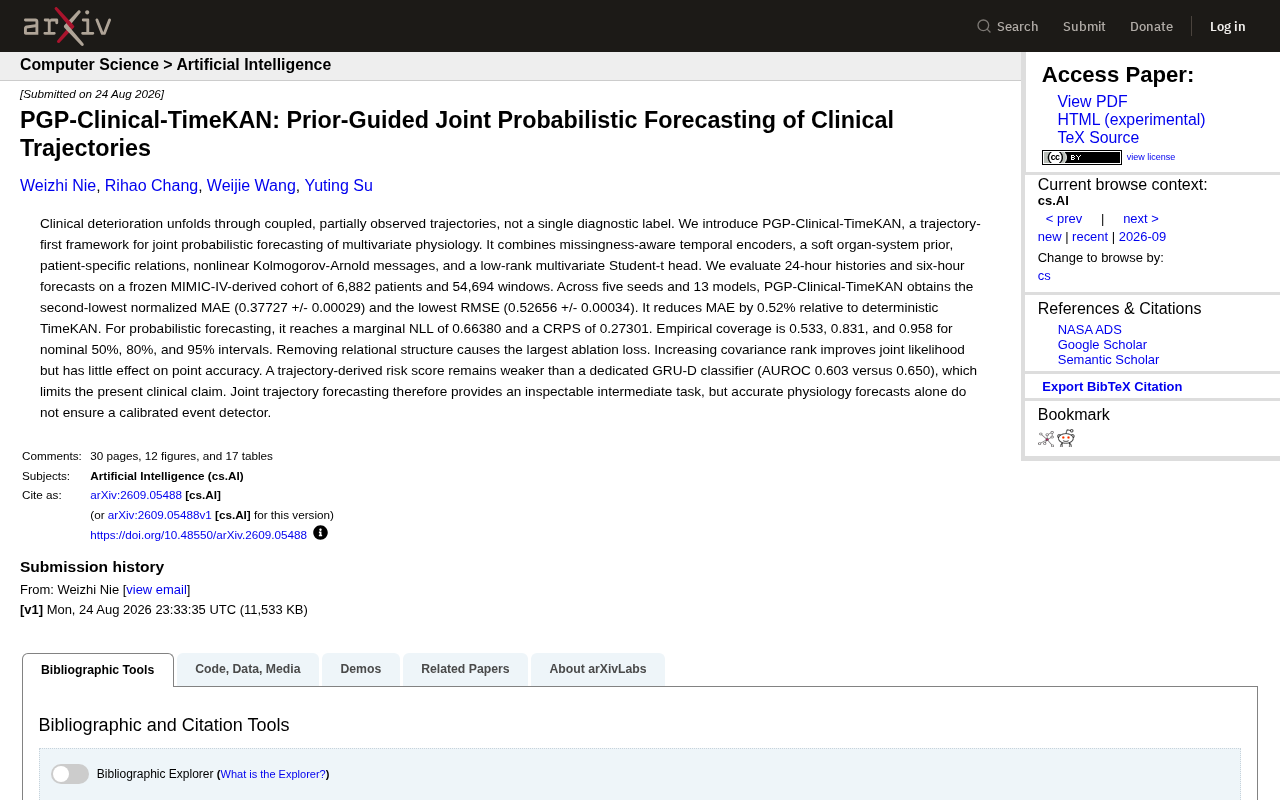
PGP-Clinical-TimeKAN: A Detailed Guide to the Multivariate Physiological Indicator Joint Prediction Framework
An in-depth analysis of the PGP-Clinical-TimeKAN framework for joint probabilistic prediction of multivariate physiological indicators, covering trajectory-first paradigm, KAN message passing, MIMIC-IV validation, and ablation studies.
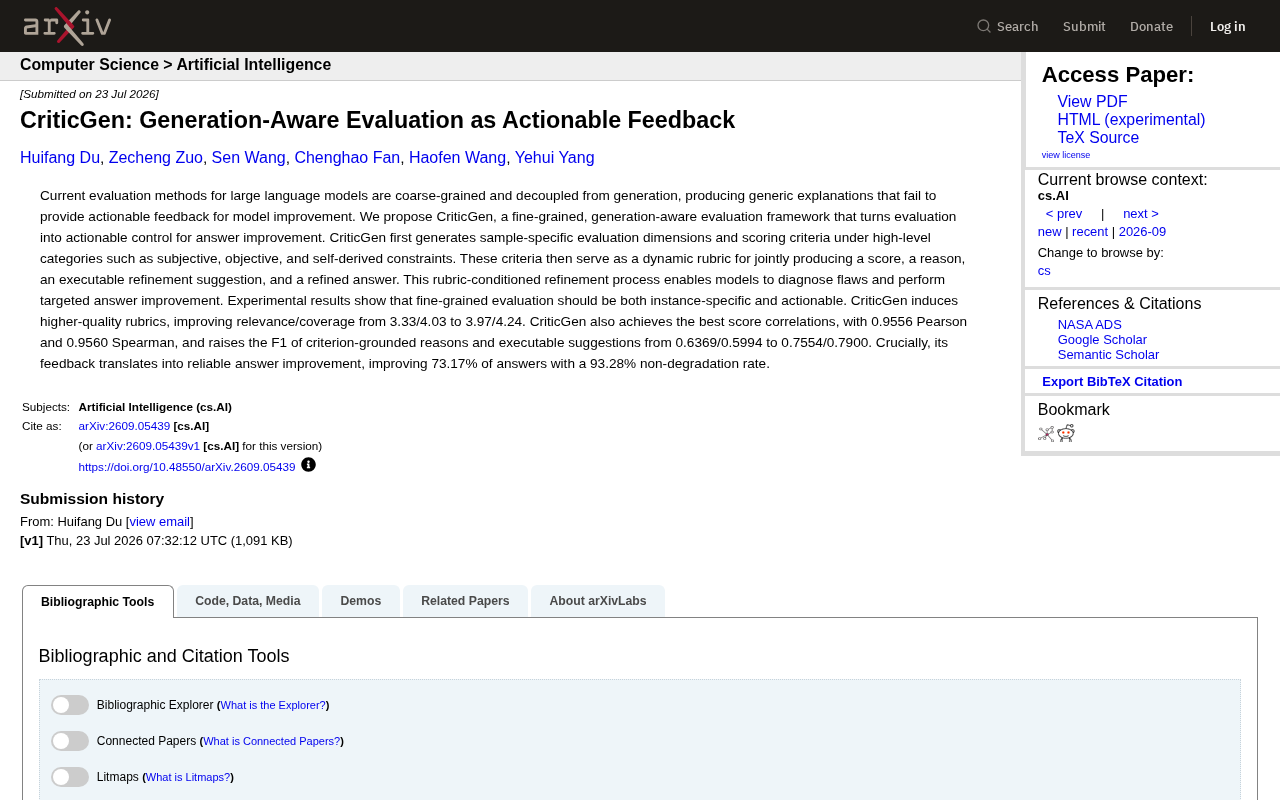
CriticGen: A New Framework That Transforms AI Evaluation into Actionable Improvement Feedback
CriticGen proposes a generation-aware evaluation framework that transforms AI assessment from passive scoring to an active optimization loop, achieving 73.17% answer improvement and 93.28% non-degradation rate.
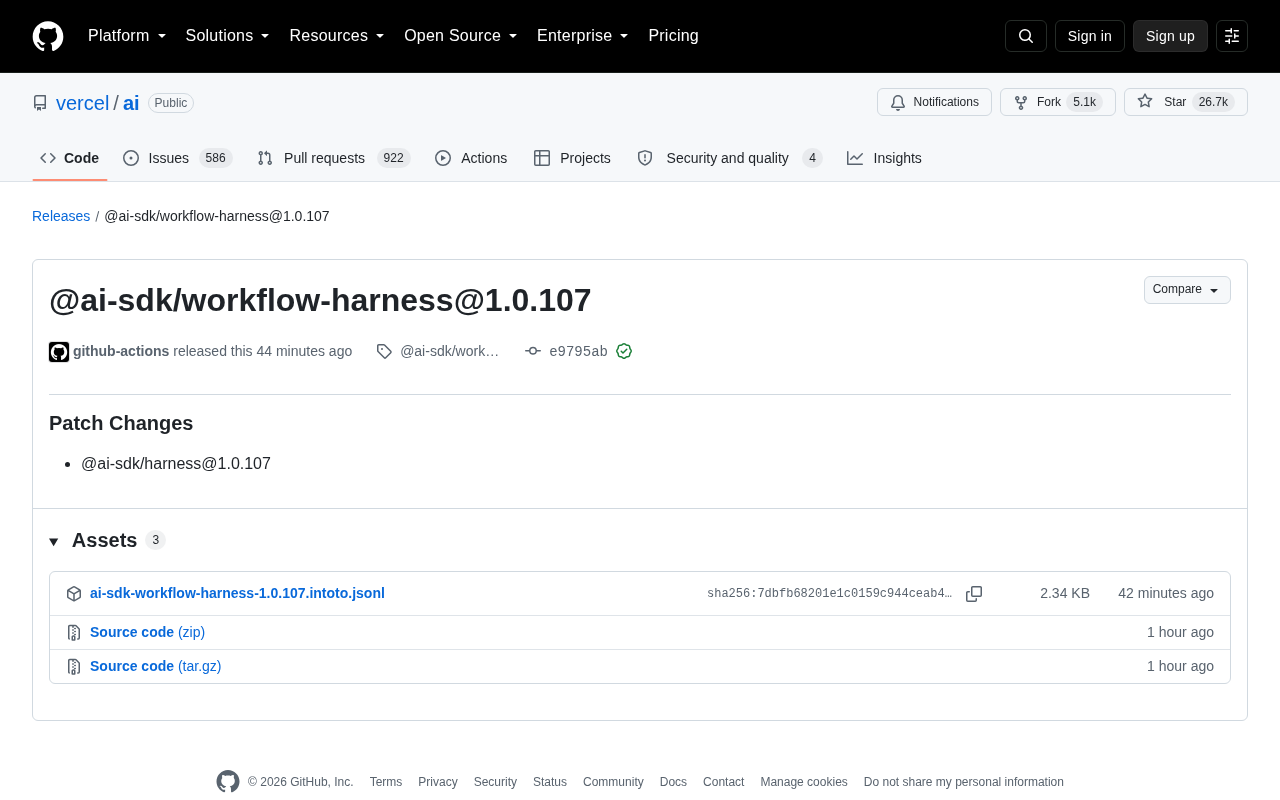
Vercel AI SDK workflow-harness Update Analysis
Deep analysis of Vercel AI SDK workflow-harness 1.0.107 update: architecture design, engineering practices, and developer value for building reliable AI apps.