Google Cuts Off Search for AI-Free Schools: The Logic Behind It and Industry Repercussions
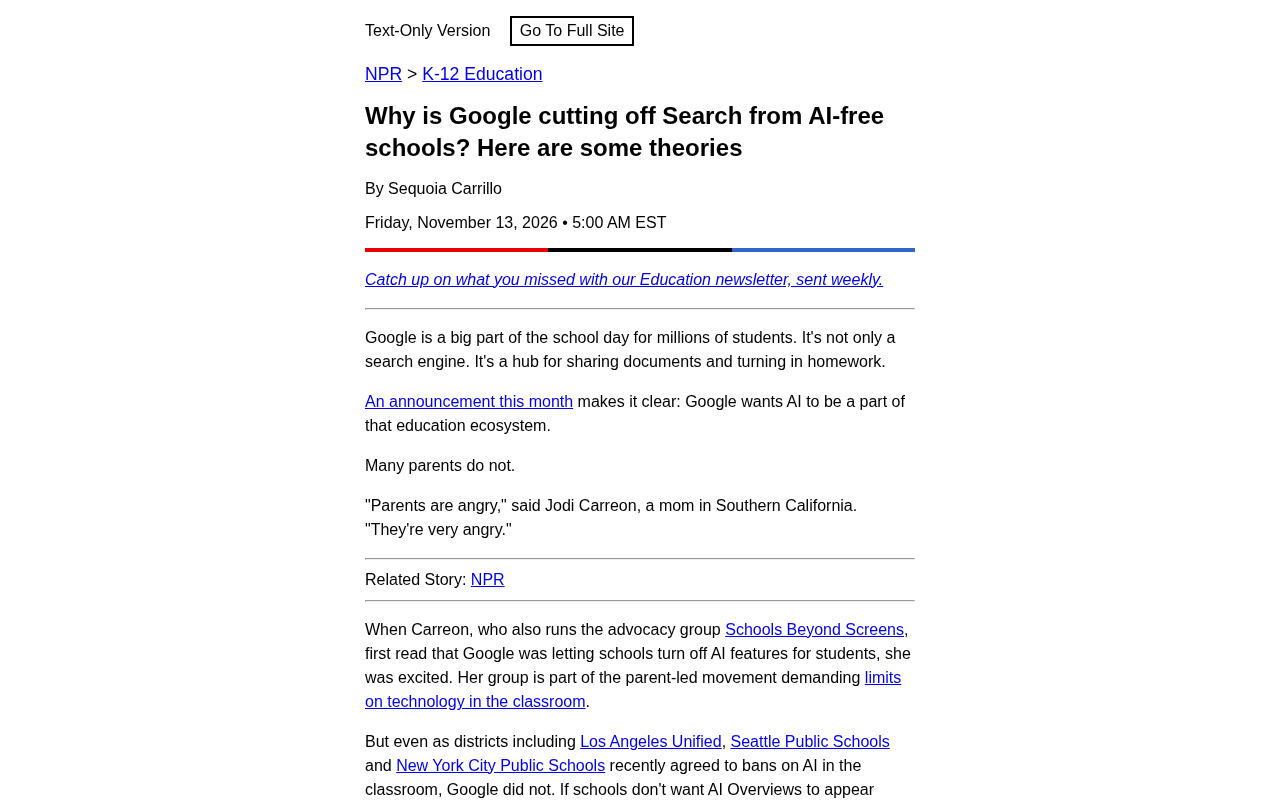
Google restricts search for schools declaring themselves AI-free, and the community offers three explanatory theories, prompting reflection on education policy.
The article examines Google's restriction of search services for "AI-free" schools and outlines three Hacker News theories: search itself is deeply AI-dependent and cannot be delivered in non-AI form; compliance and liability risks drive a defensive cutoff; and restricting service creates reverse incentives to promote AI adoption. It also analyzes the direct challenges to schools' access to teaching resources and the pressure to reassess "AI-free" policies, noting that the tension between service boundaries and user policies is becoming a new normal.
Origins: When "AI-free" Meets Search Cutoff
According to discussions in the Hacker News community, Google recently took measures to restrict search services for schools that explicitly ban the use of AI tools. This development has drawn attention in the tech community. Although discussion is still in its early stages, it touches on a key contradiction: when educational institutions try to maintain an "AI-free" environment amid the AI wave, how will Google, as an AI infrastructure provider, respond? Public information is currently limited, and Google has not yet provided a detailed official explanation, but several speculative theories have already emerged in the community.
Theory 1: Search Itself Is Already an AI Product and Cannot Be "De-AI-ified"
One view holds that modern search engines have long depended deeply on AI technology—from query understanding and ranking algorithms to result summaries, AI is a core component of the search experience. For schools that declare themselves "AI-free," Google may believe there is a fundamental conflict between their terms of use and how the product actually operates. In other words, search services cannot be delivered in a "non-AI" form, and continuing to provide the service would instead create cognitive confusion. This theory interprets the cutoff as an inevitable consequence of product logic rather than a punitive measure.
Modern search engines' dependence on AI does not stop at a single stage; it runs through the entire retrieval pipeline. Take Google as an example: its core ranking system RankBrain has used machine learning since 2015 to understand the relevance between queries and documents; language models such as BERT are used to parse the semantics of natural-language queries; and the recently launched AI Overviews directly generate summaries with large models. In addition, spelling correction, query expansion, spam identification, image understanding, and other stages also commonly use deep learning. This means that "turning off AI" is engineering-equivalent to dismantling the core architecture of the search product, rather than flipping a switch. If a school bans AI tools in its policy but still uses Google Search as teaching infrastructure, it is in fact using a service that is highly AI-driven internally—this is precisely the root of the terms conflict emphasized by this theory.
Theory 2: Driven by Compliance and Liability Risks
Another speculation points to the legal and compliance level. If a school explicitly bans AI tools while students indirectly use AI-generated results (such as AI overviews and intelligent summaries) through Google Search, liability attribution becomes blurry. Google may choose to proactively restrict service to avoid bearing unnecessary compliance risks in scenarios of policy conflict. This kind of "defensive cutoff" is not uncommon in terms-of-service negotiations between tech companies and educational institutions.
AI compliance in educational settings involves multiple dimensions: data protection (such as the collection and processing of minors' student data), academic integrity (whether AI-generated content counts as cheating), and the auditability of institutional internal policies. If a school declares itself "AI-free" but students obtain information through AI summaries in search results, the school may find it difficult to determine whether such behavior violates its own policy, leaving it passive in parent inquiries or academic disputes. For Google, continuing to provide services containing AI components to institutions that explicitly reject AI may trigger disputes over contract interpretation—terms of service usually preserve flexibility for product evolution, but institutional policies may be interpreted as restrictions on the form of service. Proactively restricting service can be seen as a risk-isolation measure: rather than bearing ambiguous liability in a policy conflict, it is better to align service boundaries with user policies.
Theory 3: Reverse Incentives to Drive AI Adoption
Some commentators have offered a more commercial interpretation: Google is making AI capabilities a core selling point of search, and restricting service for institutions that reject AI objectively creates a reverse incentive—either accept AI integration or lose the search entry point. Considering Google's penetration in the education market, this strategy may carry the intention of pushing institutions to reassess their AI policies. However, this theory currently lacks direct evidence and is only community speculation.
Practical Impact on Educational Institutions
Regardless of the reason, cutting off search poses a direct challenge to schools' daily teaching and resource access. Search engines are basic tools for teachers' lesson preparation and students' research, and alternatives (such as other search engines or academic databases) lag in coverage and ease of use. This incident also forces schools to re-examine the enforceability of "AI-free" policies: at a time when AI is already embedded in infrastructure, is complete isolation of AI realistic? Policymakers need to find a balance between idealized technological purism and practical teaching needs.
The actual impact of a search cutoff on teaching depends on a school's ability to substitute. Academic databases (such as JSTOR and PubMed) offer good coverage of specialized literature, but provide limited support for daily lesson preparation, general research, and rapid fact-checking; although other search engines (such as Bing and DuckDuckGo) can be used, they lag behind Google in index scale, result relevance, and integration of educational resources. More importantly, many schools' information literacy courses, research assignment templates, and teacher training materials all default to Google as the entry point, so the migration cost is not only technical but also involves curriculum design and teacher habits. This incident therefore also constitutes a stress test: schools need to assess their dependence on a single search entry point and consider building multi-source retrieval strategies to reduce vulnerability to policy adjustments.
Industry Signal: Service Boundaries in the AI Era Are Being Redrawn
From a broader perspective, this matter reflects the reconstruction of the power relationship between service providers and users in the AI era. When AI becomes an underlying product capability, rejecting AI is no longer just a usage preference and may trigger chain reactions at the service level. Educational institutions, enterprise users, and even individual consumers need to realize that the more deeply integrated a service is with AI, the less bargaining room users have for "non-AI options." If Google's move becomes a precedent, other AI-driven platforms may follow with similar strategies, which deserves continued observation.
"AI-free" policies are technically very difficult to fully isolate because AI has sunk down to become a default component of many basic services. Beyond search, office suites (smart completion, meeting transcription), email (spam filtering, smart replies), and learning management systems (automated grading, content recommendations) all embed AI capabilities. If institutions pursue a strictly non-AI environment, they need to review the underlying implementation of every tool one by one, which is extremely costly in practice. This trend means that "non-AI options" are shifting from a default right to an exception clause that requires special negotiation. Especially in enterprise procurement and institutional contracts, AI usage terms, data training authorization, and service-form disclosure may become standard negotiation content. If Google's action is imitated by other platforms, it will further accelerate this shift.
One-line Summary
Google restricts search for schools that declare themselves AI-free, and the community offers three explanatory theories, prompting reflection on education policy.
Paragraph Summary
The article centers on the incident in which Google restricted access to search services for "AI-free" schools and sorts out three speculations from the Hacker News community: the search product itself depends deeply on AI and cannot be delivered in a non-AI form; compliance and liability risks drive Google to adopt a defensive cutoff; and restricting service creates a reverse incentive to promote AI adoption. The article further analyzes the direct challenge the cutoff poses to schools' access to teaching resources, points out the gaps in coverage and ease of use among alternatives, and notes that it forces educational institutions to reassess the enforceability of "AI-free" policies. From an industry perspective, this matter reflects that the more deeply integrated a service is with AI, the less bargaining room users have for non-AI options, and the tension between service boundaries and user policies is becoming a new normal.
Related articles

Gemini 4 Dual Models Exposed, Genie 4 World Model Launches, AI R&D Self-Accelerates
November 19 AI evening news roundup: DeepMind Gemini 4 Sodium rumors surface, Cursor launches Gemini 4 Neon scoring 63.7% on CursorBench 4.1; Genie 4 world model goes live with real-time editing and native audio; WorkBuddy integrates GPT-6.2 series; OpenAI discloses AI chip design efficiency gains and RSI research metrics.
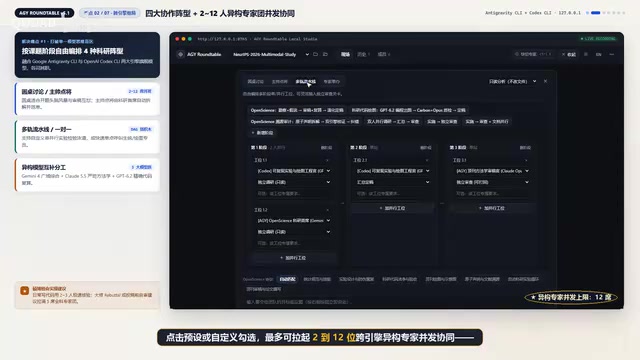
HY Roundtable: A Local Open-Source Multi-Agent Roundtable Where Multiple LLMs Blind-Review and Challenge Each Other's Papers
HY Roundtable is a local open-source multi-agent roundtable tool that brings Gemini 4, Claude Opus 5.5, and GPT 6.2 into a local seminar room to blind-review, cross-examine, and recompute code before submission, with built-in Open Science protocols for statistics and figures.

GPT 6.2, Fable 5.2, Gemini 4 Tested: Which Builds the Best Game UI from a Single Image?
Bilibili creator tests GPT 6.2, Fable 5.2, and Gemini 4 generating full game UI from one image: all work functionally, but fidelity and interaction quality differ sharply. Fable 5.2 looks best but caused infinite-loop crashes; GPT 6.2 is balanced but drifts from icons; Gemini 4 looks cheap. Includes LGUI Agent workflow and engine export details.