HY Roundtable: A Local Open-Source Multi-Agent Roundtable Where Multiple LLMs Blind-Review and Challenge Each Other's Papers
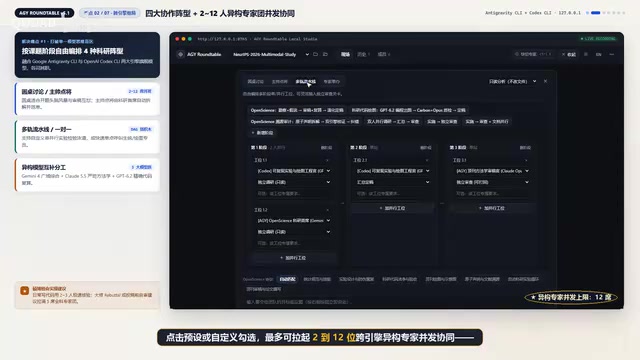
HY Roundtable uses multi-model blind review and mutual challenge to catch statistical and figure flaws before submission.
HY Roundtable is a local open-source multi-agent research collaboration tool that replaces compliant single-model feedback with model-on-model debate. It brings cross-engine heterogeneous experts like Gemini 4, Claude Opus 5.5, and GPT 6.2 into one workspace, supporting 2–12 concurrent experts across four formations. Its core workflow is pre-submission red-team review: blind isolation followed by cross-examination, where different models independently discover and recompute statistical flaws, and the chair summarizes a remediation plan. It includes seven Open Science protocols for statistics and figures, supports hot-swapping under rate limits with context inheritance, runs purely on Python's standard library on a local loopback port, and reuses local CLI login state with no extra API bills.
Writing code, running ablations, drawing publication-quality figures, rushing submissions and revisions—when you chat with a single LLM for research, it always agrees with you and praises your work, yet fails to spot a single critical reviewer-level flaw. HY Roundtable, a local open-source multi-agent tool recently shared on Bilibili, attempts to solve this pain point with "model-on-model debate": it brings Gemini 4, Claude Opus 5.5, and GPT 6.2 into the same local seminar room to thoroughly review for holes before submission.
Multi-Model Roundtable: From "Praised in One-on-One Chats" to "Blind Review and Mutual Challenge"
The core design of HY Roundtable is to place multiple cross-engine heterogeneous experts into the same collaborative space. The interface lets you freely switch among four collaboration formations based on the research stage: roundtable discussion, commander-assigns-generals, multi-track pipeline, and one-on-one dedicated handling. By clicking a preset or customizing, you can bring up to 2–12 cross-engine heterogeneous experts to collaborate concurrently.
The division of labor has a distinct "academic review" flavor: Gemini 4 serves as the research lead and coordinator, Claude Opus handles blinded methodological review, GPT 6.2 runs code recomputation, and Gemini Carbon oversees figures. This design attempts to break the four-dimensional blind spots of a single model that "says only nice things to please you"—the same manuscript is examined from different angles by different models, and they interrogate one another.
Pre-Submission Red-Team Review: Two Rounds of Interrogation Catch Critical Flaws
The original article demonstrates a pre-submission red-team review. The first round enables true blind screening and physical isolation: the five experts cannot see each other and independently hunt for critical flaws. In the second round of cross-examination, Claude directly catches the critical flaw in the first draft—treating serial sections as independent samples, a case of pseudoreplication—and calls it out on the spot.
GPT 6.2 then independently recomputes the raw CSV data table, correcting it to Bootstrap confidence intervals clustered by independent patient and Holm-adjusted P values. Finally, the chair summarizes an actionable remediation plan with a cross-engine item-by-item verification checklist.

This "blind review—interrogation—summary" workflow essentially introduces the adversarial nature of peer review into the writing process. Multi-source cross-validation here is not just a concept: the same statistical defect is independently discovered and recomputed by different models, making the conclusion noticeably more credible than single-model self-checking.
Pseudoreplication is a common class of design flaw in statistical inference: when samples are non-independent (e.g., multiple serial sections from the same patient, repeated measurements from the same animal, multiple wells in the same culture dish), treating them as independent observational units in a test artificially inflates the effective sample size, leading to underestimated standard errors, too-small P values, and overly narrow confidence intervals, thereby raising the false positive rate. The correct approach is to first identify the truly independent experimental units, then aggregate at the unit level or use methods such as mixed-effects models and cluster-robust standard errors to handle the correlation structure. The "treating serial sections as independent samples" that Claude caught in the original article is a textbook case of pseudoreplication; the subsequent switch to Bootstrap confidence intervals clustered by independent patient and Holm correction is precisely the remedy for this flaw.
Bootstrap confidence intervals and Holm correction are two statistical tools often used together. Bootstrap empirically estimates the sampling distribution of a statistic by resampling the original sample with replacement many times, thereby constructing confidence intervals; when the sample has a clustered structure, a "cluster Bootstrap" that resamples entire cluster units is needed to preserve within-group correlation and produce more honest interval widths. Holm correction is a multiple-comparison correction method: when multiple hypotheses are tested simultaneously in the same study, the family-wise error rate rises with the number of tests; Holm progressively tightens the significance threshold by rank order (slightly more liberal than Bonferroni but still controls the family-wise error rate), reducing unnecessary loss of power while ensuring rigor. Together, the two correct the pseudoreplication problem from both the interval-estimation and significance-decision levels.
Built-in Open Science Protocols: Dual Gatekeeping of Statistics and Figures
To address the rework pain points in research code and paper figures, the system has seven built-in Open Science protocols, including statistical power, Fisher's three principles of experimental design, and publication-quality figures. Switching to the pure-white gallery of artifacts and research figures, you can not only one-click toggle among SVG, PNG, and true 600 DPI TIF, zoom to 150% to check font sizes, but also compare figure differences before and after remediation side by side.
Mechanical verification items include source-table value mapping, color-blind-safe palettes, and Shade256 evidence-prime original images, eliminating mislabeled positions, corrected P values, or falsely claimed resolutions at the root. For master's and PhD students who need to repeatedly revise figures, this kind of automated verification can save a great deal of time spent on eyeball comparison.

Statistical power refers to the probability of correctly rejecting the null hypothesis when the alternative hypothesis is true, usually denoted as 1−β, with a conventional threshold of 0.8. It is mutually constrained by sample size, effect size, and significance level α: the smaller the effect size and the higher the required power, the larger the required sample size. A priori power analysis is used to determine the minimum sample size, while post hoc power can be used to explain whether a "non-significant" result truly reflects no effect or simply insufficient sample size. Fisher's three principles of experimental design refer to randomization, replication, and blocking/local control: randomization avoids systematic bias, replication provides error estimation, and blocking controls variation and improves precision by stratifying known nuisance factors. Together, the three form the cornerstone of frequentist experimental design and are an important basis for judging whether a study can support causal conclusions.
Quota Exhaustion and Breakpoint Handoff: Designed for All-Night Reviewing
The design that best understands the moment master's and PhD students break down is handling the situation at 2 a.m. when the main model suddenly returns 429 and runs out of quota. Clicking an expert's seat at any time during the roundtable allows instant hot-swapping, or one-click binding of cross-model quota substitutes for everyone. Once rate limiting is triggered, the orchestrator automatically inherits the full role specification and prior context, completing up to two seamless cross-model handoffs—all-night review never gets interrupted.
This mechanism of "role specification and context inheritance" is a relatively rare but practical engineering detail in multi-agent orchestration—it downgrades a model call failure from "workflow interruption" to "seamless replacement."
Local Execution with Zero Extra API Bills
HY Roundtable requires no extra top-up for expensive third-party API bills. It directly reuses the local official Anti-Gravity and Codex CLI login state and runs on the 127.0.0.1 local loopback port using only the pure Python standard library. Manuscripts and raw experimental data are never uploaded to third-party relays, which is especially critical for data-sensitive researchers.

The interface also supports one-click switching between a dark geek theme and a light academic-feel theme. From proposal-stage experimental design and statistical code recomputation to pre-submission red-team blind review and rebuttal drills, HY Roundtable is positioned as "putting five strict reviewers inside your computer." The project is fully open source on GitHub; double-click the launch script and the meeting starts in 30 seconds.
It should be noted that the original article's descriptions of model versions, maximum number of collaborators, and other details all come from the UP host's sharing; readers still need to verify the specific capability boundaries themselves. But the idea of "multi-model adversarial review" does offer an actionable patch for the blind spots of single-model writing.
One-line Summary
HY Roundtable uses multi-model blind review and mutual challenge to catch statistical and figure flaws before submission.
Paragraph Summary
HY Roundtable is a local open-source multi-agent research collaboration tool that replaces the compliant feedback of single-model writing with "model-on-model debate." It brings cross-engine heterogeneous experts such as Gemini 4, Claude Opus 5.5, and GPT 6.2 into the same collaborative space, supporting up to 2–12 concurrent experts with four switchable formations: roundtable discussion, commander-assigns-generals, multi-track pipeline, and one-on-one dedicated handling. The core workflow is pre-submission red-team review: the first round is blind-screened and isolated with independent hunting, and the second round is cross-examination, where different models separately discover and recompute statistical flaws before the chair summarizes a remediation plan. The system includes seven built-in Open Science protocols—statistical power, Fisher's three principles of experimental design, publication-quality figures, and more—that automatically verify value mapping, color-blind-safe palettes, and resolution. Engineering-wise, it supports hot-swapping under rate limiting and cross-model quota substitutes, with automatic inheritance of role specifications and context; it runs on the local loopback port using only the pure Python standard library and reuses local CLI login state, with no extra API bills.
Related articles

Three Major Browsers Join Forces: Helping AI Write More Modern Web Code
Chrome, Firefox, and Edge jointly launch a free "modern web guidance" skills package to teach AI coding assistants to write more modern web code. One command integrates it into tools like Cursor, automatically scanning for safely upgradable code patterns—but human review is still required.

Fake Claude Code Extension Leaks Cursor Keys — Users Should Check Immediately
A fake Claude Code extension appeared in Cursor's marketplace and was removed within 11 hours, but leaked keys from a third-party vendor may have accessed chat histories of users without privacy mode enabled. Developers who used Cursor and pasted private keys between 2025 and 2026 should rotate credentials immediately and check privacy settings.
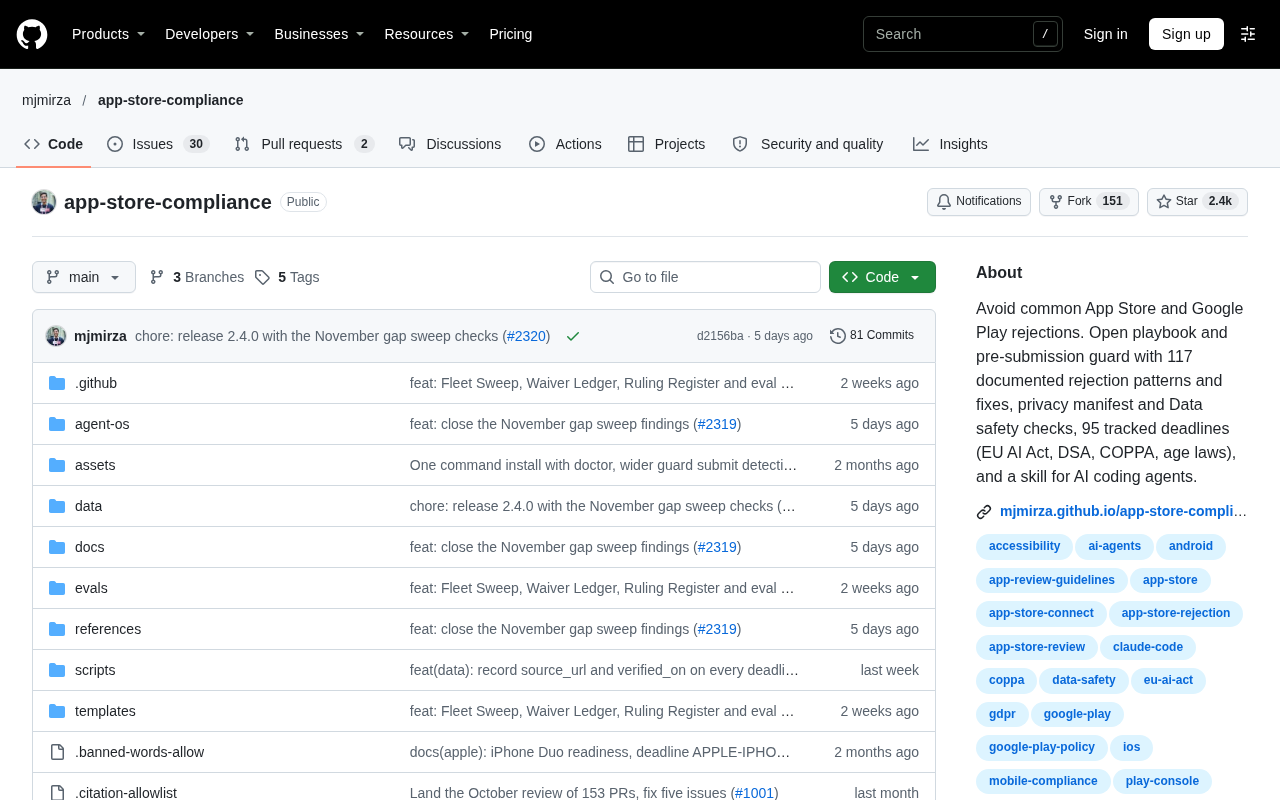
App Store Submission Pitfall Guide: Open-Source Tool Helps You Avoid 117 Rejection Patterns
GitHub open-source project mjmirza/app-store-compliance documents 117 App Store and Google Play rejection patterns with fixes, offering privacy manifest checks, 95 regulatory deadline tracking, and AI coding agent compliance automation.