Gemini 4 Dual Models Exposed, Genie 4 World Model Launches, AI R&D Self-Accelerates

Google expands its model matrix, world models and office agents launch, AI accelerates chip R&D in reverse
The article summarizes AI industry developments around November 19: Google's model matrix continues to expand, with the rumored Gemini 4 Sodium not yet officially confirmed, while the launched Gemini 4 Neon scores 63.7% on CursorBench 4.1 and becomes the new main model for editors at a cost of $6.54 per task; Genie 4 launches on Project Genie, adding native audio and real-time editing, moving world models from demos to editable tools; Tencent WorkBuddy Pro integrates the GPT-6.2 series, bringing office agents into multi-model scheduling; ChatGPT Accounting Edition and the OpenAI-AMD chip design collaboration show AI penetrating core business processes; an OpenAI internal report discloses exponential growth in AI usage and advocates publishing RSI metrics; the Responses API background mode saves up to 40%. The overall trend is that model selection is shifting from "who scores highest" to "how much effective reasoning you get per dollar."
Google's Model Matrix Expands Again: Sodium Rumors and Neon Launch
According to industry leaks compiled by Bilibili creator "AI Morning News" in their November 19 evening program, developer Wilson posted that DeepMind is expected to release the fast frontier model Gemini 4 Sodium the next day, with an introductory price of $11.75 per million tokens, later rising to $16.50. This information currently comes from a single developer channel only; Google has not officially confirmed it, and no other mainstream sources have corroborated it, so specific specifications await official launch. The program also mentioned that in multi-task performance, Sodium is being compared with Argon, Carbon, Hydrogen, and other models, but verifiable benchmark details are lacking.
In contrast to the rumors are concrete product actions already in place: Cursor officially announced the launch of Gemini 4 Neon, whose default reasoning tier scored 63.7% on the CursorBench 4.1 benchmark, a 6.4 percentage point improvement over Gemini 4 Hydrogen's 57.3%. Google CEO Pichai subsequently replied confirming that Neon also ranks first on the Cursor benchmark. From the Pareto frontier curve published by Cursor, Neon's official pricing is $3 per million input tokens and $15 per million output tokens, with an average cost per task controlled at $6.54—the combination of high scores and controllable unit price is the core reason it is regarded as the new main model for mainstream editors.
The signal in this information is worth noting: Google's model naming has formed a multi-tier sequence including Sodium, Argon, Carbon, Hydrogen, Neon, and others, covering different ranges from entry-level pricing to high-performance reasoning. For developers, the real basis for choice is shifting from "who scores highest" to "how much effective reasoning you get per dollar."
Pareto frontier is a common framework for evaluating model cost-effectiveness: the horizontal axis is typically usage cost, the vertical axis is benchmark score, each model is plotted as a point, and the curve formed by points on the "upper-left" boundary is the Pareto frontier. Models on the frontier mean they have the highest score at the same cost, or the lowest cost at the same score; models enclosed by the frontier are not dominant in either dimension. By publishing this curve, Cursor is effectively showing that Neon is not dominated by other candidate models in the "score—unit price" trade-off, which is an important basis for considering it the new main model.
Genie 4 Launches: World Model Moves from Demo to Usable
Google DeepMind officially announced that Genie 4 is now live on Project Genie, adding native audio, real-time editing, and a new agent that assists in building interactive virtual worlds. The demo shows that users can directly input new prompts while exploring generated worlds, add characters or switch scenes in real time, and native audio responds synchronously, greatly increasing the degree of interaction freedom.

In terms of availability, Project Genie is currently open to eligible Google AI Ultra subscribers, and Pro subscribers can join the waitlist starting today. The same-series Genie 3 also received a simultaneous upgrade, extending the explorable duration per generation from 60 seconds to 3 minutes, and launching a community gallery to support discovery and derivative creation. The significance of this upgrade is that it turns "generating a world" into "continuously modifying within a world," and the world model is shifting from a one-off demo to a reusable creation tool.
World model refers to a generative model that can learn and simulate environment dynamics. It does not just generate an image or a video, but maintains an interactive virtual scene state that evolves over time. After users input actions or prompts, the model needs to predict what the environment will look like next, including object positions, character behavior, and physical consistency. Compared with ordinary video generation, world models emphasize explorability and state persistence, and therefore have higher requirements for long-term consistency, real-time response, and controllable editing. The Genie series focuses its upgrades on explorable duration and real-time editing, which is precisely centered on these capabilities.
Office Agents Move Toward Multi-Model Scheduling
Tencent's office agent WorkBuddy International officially announced that WorkBuddy Pro now integrates three OpenAI models: GPT-6.2 Astra for deep thinking, GPT-6.2 Sol for extremely fast responses, and GPT-6.1 Terra for broad exploration, providing tiered compute options within workflows.

Previous financial reports disclosed that WorkBuddy's daily active users have exceeded 10 million. After the international edition added the GPT-6.2 series, different reasoning tiers can be flexibly scheduled within the same workflow according to task complexity. Community feedback also points out that international edition Pro users can similarly choose Gemini 4 Carbon and Argon. The coexistence of multiple models is becoming the standard form for enterprise and office agents—the idea of a single model handling everything is becoming unsustainable under the dual pressure of cost and task matching.
Vertical Scenarios and Chip Design: AI Enters Core Business Processes
ChatGPT officially announced the launch of ChatGPT Accounting Edition, adding accounting plugins and partner plugins to assist with high-frequency manual processes such as month-end reporting, bank reconciliation, data entry, and audit preparation. It currently supports integration with mainstream financial software including QuickBooks, Oracle NetSuite, Bill, and FreshBooks. The common feature of such implementations is that AI no longer remains in general Q&A, but is embedded in business processes with clear inputs and outputs and compliance requirements.
A deeper change is taking place in semiconductor design. OpenAI officially disclosed the results of its collaboration with AMD: in less than 5 months, on the basis of years of optimization by AMD engineers, AI models found up to about 14% combined improvements in performance, power, and area for the intellectual property and design of flagship GPUs; the same method was also used to optimize OpenAI's first self-developed inference chip. To bring chip design capabilities to a broader range of hardware teams, OpenAI also announced a collaboration with Synopsys to integrate model capabilities into its design and verification toolchain.
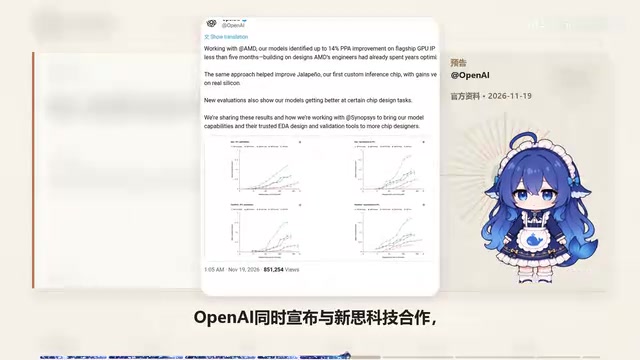
The Ibex and Pico RV32 chip evaluations simultaneously released officially show that GPT-6.2 Astra clearly widens the gap with previous-generation models on RTL code optimization and spec-to-RTL tasks, validating the practical value of high-end reasoning models in hardware engineering.
RTL (Register Transfer Level) is a key abstraction layer in chip design. Engineers use hardware description languages (such as Verilog) to describe how circuits register and transfer data in each clock cycle, which is then synthesized into a gate-level netlist by tools. RTL code optimization and "spec-to-RTL" are among the most time-consuming and experience-dependent steps in hardware engineering: the former requires rewriting logic while satisfying timing, area, and power constraints, and the latter requires converting natural language specifications into verifiable circuit descriptions. AI's performance on these two types of tasks directly determines whether it can enter the main chip design workflow, rather than merely serving as an auxiliary documentation tool.
AI Accelerates AI R&D Itself: RSI Metrics Put on the Table
OpenAI published its latest internal research report, disclosing exponential growth in AI usage: the top 10% of researchers consume about $23,000 worth of tokens per day, a 105% surge compared with September; the median researcher uses $2,400 per day. Agents can already complete 46% of research tasks that take 2–4 hours without assistance, directly doubling from 23% in March.

In response to this trend, OpenAI advocates that frontier labs should track and disclose metrics related to "recursive self-improvement" (RSI) to improve transparency in R&D acceleration and improve technology governance. The report also emphasizes that humans remain central in research decision-making, and that researchers' investment in safety and alignment is growing faster than in any other single area. The tension here is worth noting: the proportion of research tasks handled by AI has doubled, but decision-making authority and safety investment are still explicitly retained on the human side—this is the basic framework of the current external narrative of leading labs.
Developer Cost Reduction: Background Mode Saves Up to 40%
OpenAI Developers officially announced the public beta of background mode for the Responses API. For single-turn or multi-turn tasks that do not need to return promptly, developers can set the first response target to 2 hours or 8 hours; token fees for GPT-6.2 Astra and Sol can be up to 40% cheaper than the standard tier, with the 2-hour tier saving 30% and the 8-hour tier saving 40%, suitable for batch asynchronous agent jobs.
This feature points to the same trend as Neon's pricing strategy mentioned earlier: inference costs are being split into "latency tiers" for sale. For batch tasks, the trade-off space of exchanging latency for cost is already considerable; for interactive applications, it still comes back to the balance between unit task cost and response speed.
Editor's Observation
Looking at the information from that evening together, several threads interlock: Google is using multiple model tiers to cover price and performance ranges, Genie 4 is pushing world models into an editable state, office agents and accounting plugins are embedding AI into business processes, and usage data from chip design and R&D itself shows that AI is in turn accelerating AI. The coexistence of rumors and official releases is normal for this kind of news brief; unconfirmed information such as Sodium should be treated with caution, while published benchmarks and pricing can serve as practical references for developer model selection.
Related articles

Three Major Browsers Join Forces: Helping AI Write More Modern Web Code
Chrome, Firefox, and Edge jointly launch a free "modern web guidance" skills package to teach AI coding assistants to write more modern web code. One command integrates it into tools like Cursor, automatically scanning for safely upgradable code patterns—but human review is still required.

Fake Claude Code Extension Leaks Cursor Keys — Users Should Check Immediately
A fake Claude Code extension appeared in Cursor's marketplace and was removed within 11 hours, but leaked keys from a third-party vendor may have accessed chat histories of users without privacy mode enabled. Developers who used Cursor and pasted private keys between 2025 and 2026 should rotate credentials immediately and check privacy settings.
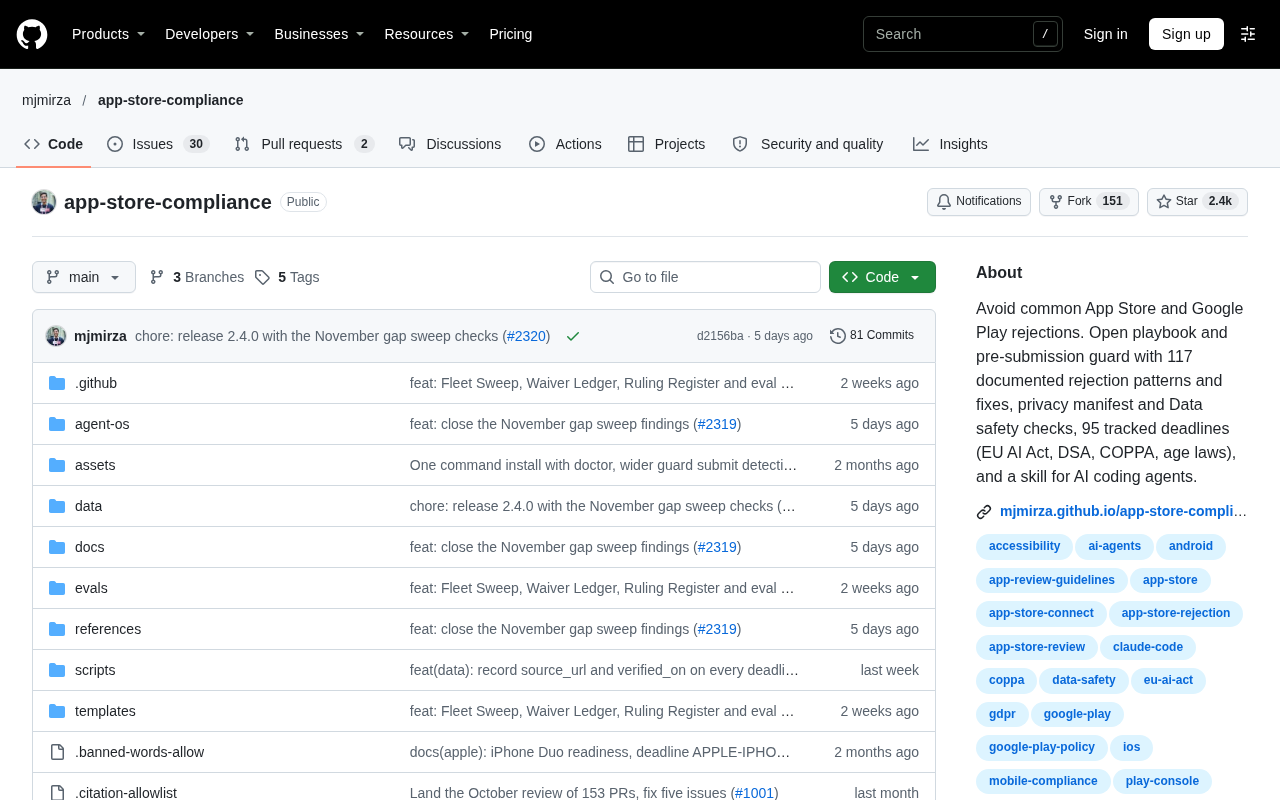
App Store Submission Pitfall Guide: Open-Source Tool Helps You Avoid 117 Rejection Patterns
GitHub open-source project mjmirza/app-store-compliance documents 117 App Store and Google Play rejection patterns with fixes, offering privacy manifest checks, 95 regulatory deadline tracking, and AI coding agent compliance automation.