Google DeepMind Launches New Institute to Bring the AGI Debate into the Open

Google DeepMind launches an institute to move AGI from a lab topic into the realm of public governance.
Google DeepMind has announced a new institute designed to bring the big questions around AGI into public discussion, marking a shift in the AI industry from pure capability competition toward governance and social consensus. The article notes that AGI debate has long been trapped between two extremes — superintelligence doom and overhype — lacking structured middle-ground dialogue. DeepMind's move aims to "widen" rather than resolve this conversation, though developer-initiated debate platforms face inherent credibility challenges. Whether the institute truly opens itself to dissenting voices remains to be seen, as key details about its operations and funding have yet to be disclosed.
The Signal Behind a Brief Announcement
Google DeepMind has announced the creation of a new institute aimed at bringing the major questions surrounding artificial general intelligence (AGI) into public discussion. The announcement itself was brief, but the signal it sends is worth paying attention to: the trajectory of AGI is no longer being treated as a technical matter to be decided behind closed laboratory doors, but as a public agenda requiring broader societal participation.
For those who have long tracked the AI frontier, the fact that DeepMind — one of the world's most influential AI research institutions — is proactively building a platform to "openly debate" AGI is a thought-provoking move. It signals that practitioners are beginning to acknowledge that AGI is not just a question of capability, but one of governance, ethics, and social consensus.
Background: What Is AGI? AGI (Artificial General Intelligence) refers to an AI system capable of performing any cognitive task across domains, much like a human — in contrast to today's "narrow AI" systems that excel only at specific tasks. There is enormous disagreement in the field over whether AGI is achievable and when. Optimists (including some researchers at OpenAI and DeepMind) argue that current large language models are already approaching the threshold of AGI; skeptics contend that existing systems still lack genuine reasoning, causal understanding, and autonomous goal-setting. Because the definition of "AGI" is itself contested, public debate around it is especially complex — participants are often talking about entirely different things while using the same word.
Why Bring the AGI Debate "into the Open"?
Over the past few years, AGI has gradually moved from a concept that once felt like science fiction into mainstream technology and policy discourse. Discussions around it have tended to cluster at two extremes: on one end, fears about the uncontrolled risks of superintelligence; on the other, skepticism that the whole thing is overhyped. What has been conspicuously absent is the middle ground — structured, sustained, publicly accessible dialogue.
The core logic behind DeepMind's new institute is to widen this debate. The operative word here is "widen" — not to reach conclusions, but to bring in more stakeholders and a broader range of perspectives. When an organization with access to frontier model capabilities actively invites outside viewpoints, it is, in some sense, building a buffer mechanism against potential risks and disagreements.
A Shift from Technical Race to Public Governance
This move reflects a deeper transformation underway in the AI industry: a shift from purely competing on model capabilities toward simultaneously prioritizing social acceptance and governance frameworks. When the pace of technological advancement risks outstripping the speed of regulation and public understanding, creating channels for open dialogue becomes a necessary investment in reducing systemic risk.
The question worth asking is this: how can a "debate platform" initiated by the very developers of the technology guarantee independence and genuine critical engagement? The institution's credibility will depend on whether it truly opens itself to researchers, policymakers, and members of the public who hold dissenting views — rather than simply becoming a vehicle for positioning or public relations. That is the core criterion by which outside observers will judge its effectiveness.
Background: AI Governance AI Governance is an interdisciplinary field that has emerged in recent years, concerned with how to manage the development and deployment of AI through policy and regulation, industry standards, international agreements, and public participation. Multiple governance approaches have emerged globally: the EU's legislative regulatory path, represented by the AI Act; the US's more flexible regulatory approach centered on executive orders and voluntary commitments; and the "responsible AI" self-regulatory frameworks promoted by major labs. Governance institutions initiated by developers themselves — such as the institute DeepMind has now established — represent an extension of industry self-regulation. The inherent tension is that the regulator and the regulated overlap significantly, making institutional independence and critical oversight structurally difficult to guarantee. Scholars refer to this phenomenon as "regulatory capture," and it is a central reference point for evaluating the actual effectiveness of such institutions.
What This Means for the Industry and the Public
For the industry, this may encourage more organizations to follow suit — institutionalizing discussions around AGI safety, ethics, and governance rather than leaving them scattered across papers and interviews. For the public, it offers a window into understanding what AGI actually means and what kinds of impact it might bring.
A word of caution: the information publicly available at this stage remains quite limited. Details about the institute's operational model, funding sources, participant composition, and intended outputs have yet to be fully disclosed. The extent to which it will genuinely "widen" the debate — rather than primarily operating at the level of agenda-setting — remains to be tested by the actions that follow.
Conclusion
The future of AGI will not be determined by any single technical path, but will be shaped by the interplay of technology, governance, and social consensus. DeepMind's decision to proactively bring these big questions into the public sphere signals, at minimum, an attitude: when it comes to a technology that may fundamentally reshape human society, developing it behind closed doors is no longer an appropriate choice. The real value of this initiative will depend on whether the debate it fosters proves sustained, genuinely open, and substantive.
Related articles

Prompt → MCP → Agent → Skill: The AI Terminology Evolution Chain Explained in 5 Minutes
A clear guide to five core AI concepts — Prompt, MCP, Agent, Skill, and Cowork — and how they connect in a layered evolution chain from simple instructions to multi-agent teamwork.
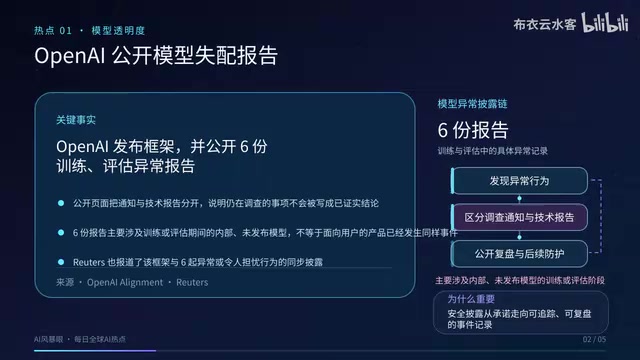
OpenAI Discloses Model Anomalies, DeepMind Launches AGI Forum, NVIDIA Partners on Grid Power Management
Sept 17 AI roundup: OpenAI publishes model anomaly disclosure framework with 6 reports, Google DeepMind launches AGI public forum, NVIDIA leads AI energy management alliance with 18 partners.

Build a Local AI Agent with Python in 10 Minutes: Ollama + PydanticAI in Action
A hands-on guide to building a fully local AI agent with Python, Ollama, and PydanticAI in 10 minutes — covering model selection, tool functions, and conversation loops.