Google Gemini 4 Hydrogen Released: 2.5x Faster for Everyday Coding and Agent Tasks

Google launches Gemini 4 Hydrogen, focused on fast, low-cost everyday coding and agent tasks.
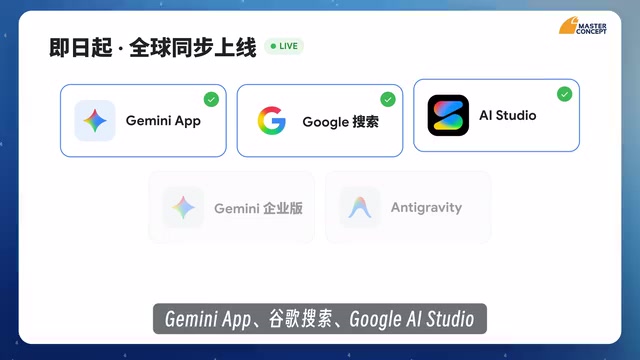
Google has officially released Hydrogen, the newest member of the Gemini 4 series, focused on speed and efficiency for everyday coding and agent tasks, launched simultaneously worldwide on the Gemini App, Google Search, AI Studio, Enterprise, and Anti-Gravity. Hands-on tests show it generates a 3D scene in just three minutes at a cost of under $1, far below competitors. Compared with the previous-generation Gemini 3.8 Flash, it is 2.5x faster, terminal coding success rose from 18.2% to 57%, and fabricated content dropped by more than 5x. It took first place in seven of ten official tests, with a composite index of 51 surpassing Argon and a cost of only one-third of Sonnet. The product line has clear division of labor: Hydrogen for everyday execution, Carbon for hard problems, and Argon for complex reasoning.
Article Content
Google has officially launched Hydrogen, the newest member of the Gemini 4 family, focused on speed and efficiency and designed for everyday coding and agent tasks. Unlike previous launches, users worldwide don't have to wait this time — it's available simultaneously on the Gemini App, Google Search, Google AI Studio, Gemini Enterprise, and Anti-Gravity. According to hands-on data shared by a Bilibili creator, Hydrogen shows clear efficiency advantages across multiple scenarios: for the same 3D scene generation task, Hydrogen completes it in three minutes while GPT takes twenty; for the same animation, Opus costs $18 while Hydrogen costs less than $1.
Performance Leap: Compared with the Previous Generation and Competitors
Compared with the previous-generation Gemini 3.8 Flash, Hydrogen is 2.5x faster, its success rate on terminal coding tasks rose from 18.2% to 57%, and fabricated content dropped by more than 5x. In Google Search, Hydrogen can directly present images, maps, and comparison tables, making information more intuitive.
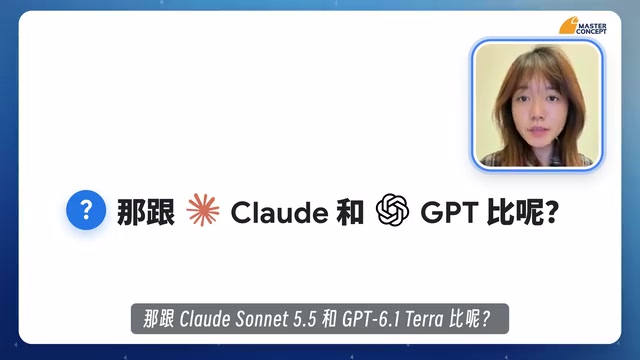
Against lightweight models such as Cloud Sonnet 5.5 and GPT Terra 6.1, Hydrogen took first place in seven of ten official tests, scoring 51 on the default-tier composite index — surpassing its own Argon model to reach the top score — while costing only one-third of Sonnet and taking less than half the time. These figures come from official tests and the creator's hands-on trials, with multiple sources corroborating Hydrogen's competitiveness among lightweight models.
Terminal Coding Tasks refer to programming operations performed in a command-line environment, such as file operations, script writing, system configuration, and version control. Unlike graphical interfaces or pure code generation, these tasks require the model to understand terminal output, handle errors, and execute multi-step instructions, placing higher demands on context understanding and tool-calling ability. Hydrogen's jump from 18.2% to 57% on this metric means it has evolved from "occasionally helpful" to "can complete most scenarios independently" — which is the core basis for its positioning as an everyday coding assistant.
The composite index is a benchmark scoring system Google designed for lightweight models, typically calculated as a weighted combination of speed, accuracy, cost, and task coverage. A score of 51 surpassing its own Argon model shows Hydrogen has a clear edge in the "cost-effectiveness" dimension — Argon has stronger reasoning, but its higher unit cost means it falls short of Hydrogen after composite weighting.
Real-World Experience: From E-commerce Sites to Real-Time House Building
Hydrogen doesn't just look good on benchmarks — it performs well in real applications too. A single prompt combined with Anti-Gravity's front-end design skill can generate a complete e-commerce website, with scroll-driven storytelling and 3D product displays delivered in one go. In Gemini Island, users can build houses in real time on a voxel island with a single sentence and switch to first-person view to explore. In Google Sheets, Hydrogen can turn thousands of cells into animated pixel art; give it a YouTube talk and it automatically creates slides and checks the layout.
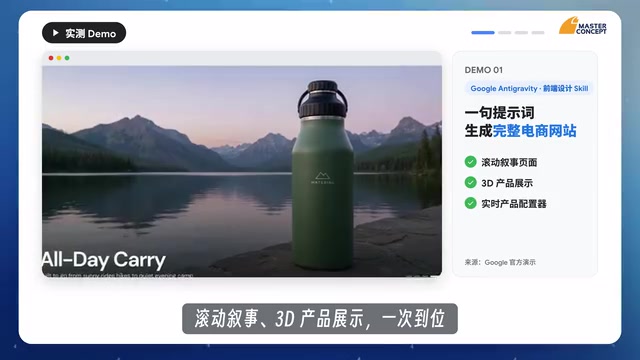
These cases demonstrate Hydrogen's flexibility and completeness on agent tasks, making it especially suited to everyday development scenarios that require rapid iteration.
Anti-Gravity's front-end design skill is a preset capability package Google provides for its agent platform, allowing the model to directly generate interactive web components, layouts, and animations without users describing CSS or JavaScript line by line. It translates "one-sentence requirements" into structured front-end code and, combined with Hydrogen's fast generation, compresses front-end prototyping that traditionally takes hours into minutes.
Gemini Island is a voxel sandbox environment built by Google to demonstrate agents' real-time operation capabilities in 3D space. Voxels are a way of building 3D graphics with a cubic grid, similar to the visual style of Minecraft. Hydrogen's ability to build houses on the island in real time from natural-language instructions and switch to first-person view shows it possesses spatial reasoning and real-time scene modification capabilities, not just text or code generation.
Product Line Division of Labor: How to Choose Between Hydrogen, Carbon, and Argon
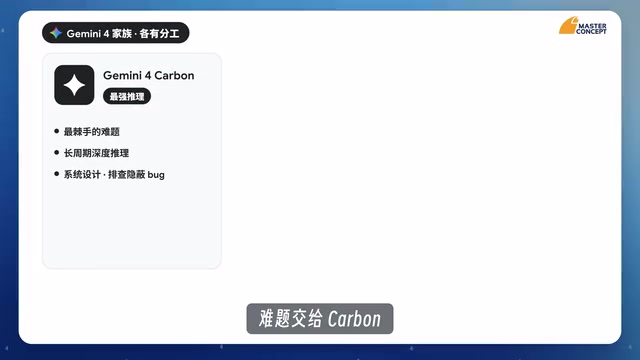
The Gemini 4 series isn't just Hydrogen. The newly launched Carbon and Argon each have their roles: hard problems go to Carbon, complex reasoning to Argon, and everyday execution to Hydrogen. On pricing, Hydrogen costs $1.5 for input and $7.5 for output; Carbon and Argon cost $4 and $20 respectively after the promotional period. When combined with OrcaSoulStrator, Carbon sets the plan while Hydrogen works in parallel, saving 24% of quota and improving speed by 19%.
For team users, Google says they can contact the company to apply for trials of the full Gemini 4 series. Hydrogen's simultaneous launch and low-price strategy may further drive adoption of lightweight AI models, especially in coding assistance and agent automation.
OrcaSoulStrator is Google's accompanying agent orchestration layer, responsible for distributing tasks among multiple Gemini 4 models. Its logic separates planning from execution: the more capable Carbon creates plans and breaks down steps, then Hydrogen executes specific subtasks in parallel. This division avoids using high-cost models for simple repetitive work, saving 24% of quota and improving speed by 19%. For teams, the value of the orchestration layer lies in turning model selection from a "single choice" into "combined scheduling," dynamically matching compute to task complexity.
One-line Summary
Google launches Gemini 4 Hydrogen, focused on fast, low-cost everyday coding and agent tasks.
Paragraph Summary
Google has officially released Hydrogen, the newest member of the Gemini 4 series, focused on speed and efficiency for everyday coding and agent tasks, launched simultaneously worldwide on the Gemini App, Google Search, AI Studio, Enterprise, and Anti-Gravity. Hands-on tests show it generates a 3D scene in just three minutes at a cost of under $1, far below competitors. Compared with the previous-generation Gemini 3.8 Flash, it is 2.5x faster, terminal coding success rose from 18.2% to 57%, and fabricated content dropped by more than 5x. It took first place in seven of ten official tests, with a composite index of 51 surpassing Argon and a cost of only one-third of Sonnet. The product line has clear division of labor: Hydrogen for everyday execution, Carbon for hard problems, and Argon for complex reasoning.
Related articles

OMLX 0.7.1 Integrates Splash: Major Speedup for MLX Model Inference on Mac
OMLX 0.7.1 adds Splash as an external engine, letting standard MLX models (Qwen 3.6 35B) match Splash custom setups at 92.8 tokens/s. Setup, D-Flash2 requirements, and M1/M2 compatibility explained.

Running Uncensored AI Locally on Your Phone: LFM3 Hands-On Test and Guide
Learn how to run Liquid AI's LFM3 1.7B uncensored model locally on iPhone and Android—no GPU or network needed. Includes On Device LLM and Layla steps, speed tests, and privacy benefits.

Claude Launches Collaborative Sheets and Whiteboards, Taking On Microsoft and Google Directly
Anthropic rolls out beta Claude Sheets and Whiteboards to paid users, enabling one-prompt spreadsheets with formulas and turning verbal plans into collaborative boards—taking on Microsoft and Google directly.