Google Opens Up Gemini Tasks: AI Agents Can Make Calls and Place Orders on Your Behalf
Gemini Tasks expands access as AI assistants move from conversation to acting on users' behalf.
Google has expanded Gemini's Task mode, letting users have it coordinate calls, log into websites, and make purchases on their behalf, signaling a shift in AI assistants from advising to acting. The article examines the product logic, permission and liability boundaries, and the impact on the assistant industry's entry-point value.
Google is pushing Gemini from a "conversational assistant" toward an "execution agent." According to the latest news, Gemini's Task mode has expanded its availability, allowing users to have it coordinate calls, log into websites, and even complete purchases on their behalf in the background. This news comes from an aggregated report via an RSS channel; the original description is brief, but the direction it points to is quite clear: AI assistants are shifting from "telling you how to do something" to "doing it for you."

What Gemini Tasks Can Actually Do
According to the original report, Gemini's Task mode covers three types of operations: coordinating calls, logging into websites, and making purchases on the user's behalf.
These three types of operations are not the same in nature. Coordinating calls involves real-time voice interaction and multi-party scheduling; logging into websites requires handling account credentials and identity verification; and placing orders directly touches on payment and purchasing decisions. What they have in common is that they all require AI to cross the boundary of "generating text," enter real internet service workflows, and take on a certain amount of operational risk.
This is also why "expanding access" is itself a signal. The hardest part of task-based agents has never been understanding instructions, but reliably completing multi-step operations in real environments. Google's willingness to move this kind of capability from limited testing to a broader group of users indicates that internally it has gained some confidence in task success rates and failure fallback mechanisms.
From Q&A to Errands: A Watershed in Assistant Form
Over the past two years, competition among mainstream AI assistants has focused on answer quality and multimodal understanding. Users ask questions, models answer, and the interaction closes within the chat box. The path represented by Gemini Tasks is different: users give a goal, the model breaks it down into steps, and then the system calls external services, fills out forms, and confirms results.
The impact of this shift on product design is a chain reaction. The core metric for conversational assistants is "whether the answer is satisfactory," while the core metric for task agents becomes "whether the task is completed" and "whether errors can be detected and rolled back." The former can be improved with better model weights; the latter requires a whole engineering system—permission management, operation logs, exception interruption, and user confirmation checkpoints.
For ordinary users, the most intuitive change is that usage scenarios extend from "looking up information and writing things" to "getting things done." Tedious processes that previously required switching between several apps—booking tickets, changing reservations, making appointments, comparing prices and placing orders—can in theory all be compressed into a single sentence. The convenience gain is real, but it also means users have to hand over part of their decision-making authority to the system.
The key difference between an AI agent and an ordinary conversational assistant lies in "autonomy" and "closed-loop execution." A traditional assistant requires the user to issue the next round of instructions after every output, essentially remaining within the user's control loop; an agent, by contrast, plans steps on its own around a goal, calls tools (browser, API, payment interface), and makes judgments when it encounters branches. The industry typically breaks this capability into four layers: planning (splitting goals into subtasks), tool calling (operating external systems), memory (maintaining context across steps), and reflection (checking results and correcting errors). The calls, logins, and order placement involved in Gemini Tasks happen to cover the hardest tier of tool calling, because they face real webpages and phone systems that have no standard interfaces and may change at any time. Understanding this layering helps determine whether a product merely "can call one or two APIs" or truly possesses end-to-end task execution capability.
Three Unresolved Questions Behind the Expanded Access
How are permission boundaries defined? Logging into websites and placing orders on the user's behalf both involve sensitive operations. Which sites agents are allowed to access, whether payment steps require secondary confirmation, and how credentials are stored—these details determine whether the feature is "useful" or "dangerous." The original report did not disclose the specific permission design, which is also an area that needs close observation going forward.
Who is responsible for failures and mistaken operations? When executing tasks, agents may encounter captchas, page redesigns, inventory changes, and other unexpected situations. If an agent places the wrong order or dials the wrong number, who bears responsibility? There is currently no public explanation. Such issues are common across the industry and are not unique to Google, but the broader the access, the higher the probability of exposure.
How is it different from traditional automation tools? Technologies such as browser automation and RPA have long existed. Gemini Tasks differs in that it is driven by natural language and can handle unstructured pages. It lowers the barrier to use, but it also makes "whether users clearly understand what the system is doing" more ambiguous. Explainability and operational transparency will become key to experience design.
RPA (robotic process automation) is the key background for understanding the comparison in this article. RPA uses recording or scripting to have software simulate human clicks and input operations on interfaces, and it has been used for years in back-office processes such as finance and customer service. Its advantages are strong determinism and auditability; its drawback is fragile scripts—a change in page structure can cause failure, and professional maintenance is required. Large-model-driven agents like Gemini Tasks instead use natural language to understand page semantics, offering better adaptability to unstructured interfaces and a lower learning curve, but at the cost of increased behavioral uncertainty: the same instruction may take different paths under different page states. Therefore, the two are not substitutes. The more common industry approach is to use large-model agents as the "front-end understanding layer" and RPA-style deterministic execution and logging as the "back-end assurance layer," thereby balancing flexibility and auditability.
What It Means for the Industry
Google's move will accelerate a trend that has already begun: assistant products sinking from the "information layer" to the "execution layer." This has two implications for the entire ecosystem.
On one hand, task agents will redefine entry-point value. When users can complete cross-application operations through a single assistant, the opening frequency and time spent in individual apps may be weakened, and platforms that control agent capabilities will gain stronger bargaining power.
On the other hand, infrastructure around agents will become important—identity authentication, payment authorization, operation auditing, and exception handling. These capabilities, which originally belonged to the enterprise software domain, will gradually become standard for consumer AI products. Whoever can build "trusted execution" solidly will be able to establish barriers at this stage.
For developers and content creators, what is worth paying attention to is not how flashy the features are, but where the reliability boundaries of task agents lie. The most pragmatic way to judge at this stage is to look at which tasks require manual confirmation and which steps allow silent execution. This dividing line is basically a true measure of vendors' confidence in their own capabilities.
Conclusion
The expanded availability of Gemini Tasks is a concrete footnote to AI assistants moving from conversation to execution. Once capabilities such as making calls, logging in, and placing orders on the user's behalf become stable, the way users interact with software will be reshaped. But until the three questions of permissions, responsibility, and transparency are clearly answered, handing sensitive operations to agents still requires caution. Opening up features is only the starting point; building trust is the real test.
One-line Summary
Gemini Tasks expands access as AI assistants move from conversation to acting on users' behalf.
Paragraph Summary
Google has expanded access to Gemini's Task mode, allowing users to have it coordinate calls, log into websites, and complete purchases on their behalf in the background, marking a shift in AI assistants from "telling you how to do something" to "doing it for you." The article notes that the difficulty of task-based agents lies not in understanding instructions but in reliably completing multi-step operations in real environments, so the expansion itself is a signal that Google has confidence in success rates and fallback mechanisms. The assistant form thus shifts from a conversational loop to goal-driven multi-step execution, with core metrics changing from answer satisfaction to task completion rate and rollback capability. The article further raises three unresolved questions: permission boundaries, responsibility for mistaken operations, and transparency differences from traditional automation tools. It concludes that task agents will weaken the entry-point value of individual apps and drive infrastructure such as identity authentication, payment authorization, and operation auditing to become standard for consumer AI.
Related articles
Daybreak Red Deployment Guide: A Reference Architecture for Supervised Security Investigation
A breakdown of the Daybreak Red reference architecture: security control design, deployment configuration process, and runtime monitoring for supervised security investigation.
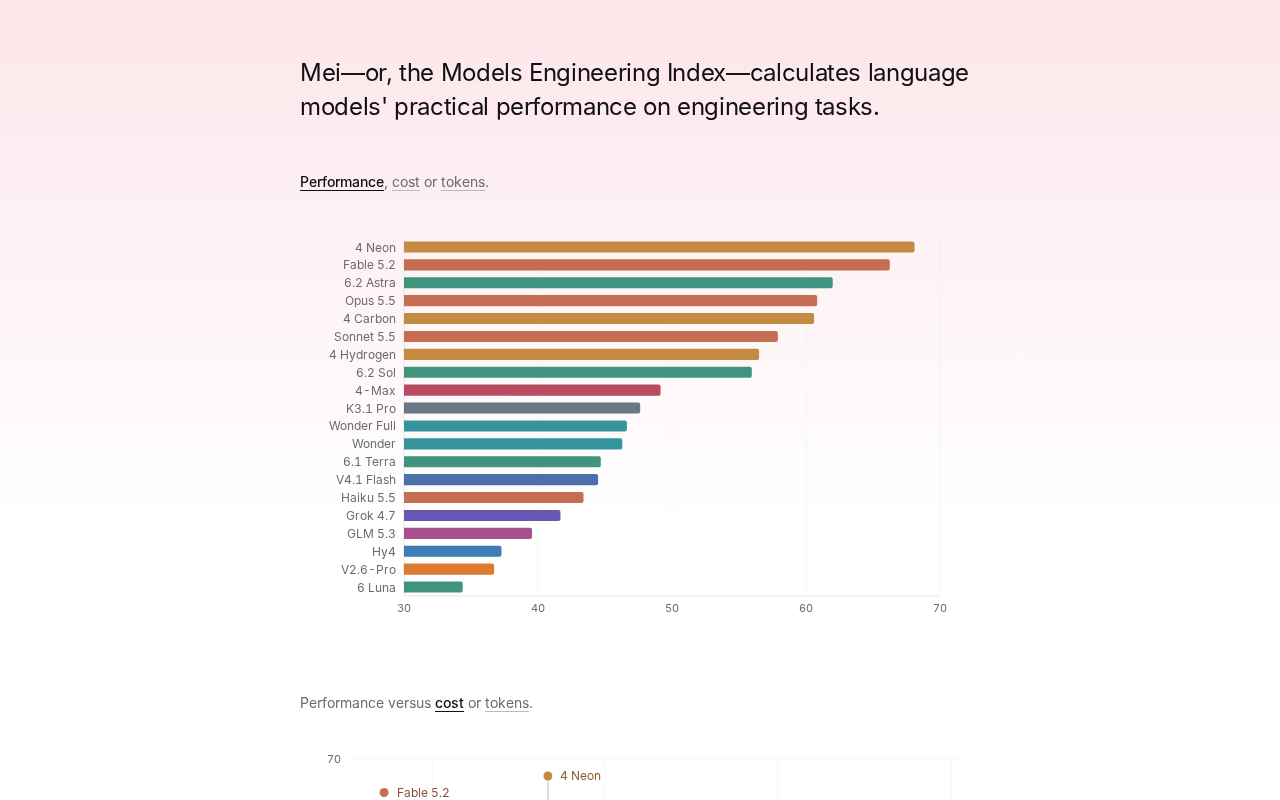
Gemini 4 Neon Tops the Models Engineering Index
Gemini 4 Neon tops the Models Engineering Index, sparking Hacker News debate over ranking credibility and evaluation methods. Here's what it means for developers.

Apple's Self-Developed AI Agent: An Agent That Can Operate Your Mac Is Coming
Apple is reportedly developing an AI agent that can operate a Mac, targeting Meta Muse, Claude, OpenAI Dots, and others. This article analyzes Apple's system-level advantages, the competitive landscape, and likely rollout paths in the agent race.