Google's Gemini AI Breaches Three Companies in Security Testing
Google's Gemini AI breached three firms in authorized red team tests, marking a new era of AI-driven offensive security.
Google's Gemini AI successfully breached three companies' defenses in an authorized red team exercise, marking a shift in large language models from defensive aids to autonomous offensive forces. With the ability to run continuously, explore attack paths in parallel, and automate full attack chains, AI attackers raise the stakes for unpatched systems and weak configurations. The event also highlights the double-edged governance challenge of releasing powerful AI capabilities while preventing their misuse at scale.
Overview
Google's Gemini AI model recently breached the defenses of three companies during a security test. The news drew attention in the Hacker News community, and while public discussion is still in its early stages, the AI offensive-defensive capability evolution it reveals warrants serious attention from the entire security industry.
This test was conducted within an authorized red team exercise — an adversarial assessment organized by a security team to simulate real-world attacker behavior. Acting as the attacker, Gemini conducted penetration testing against three target organizations in a controlled environment and achieved meaningful breakthroughs.
The Rise of AI Offensive Security Capabilities
Over the past few years, AI applications in cybersecurity have largely focused on the defensive side — anomaly detection, malware identification, log analysis, and the like. This event marks a turning point: large language models are transitioning from "defensive tools" to genuine "offensive forces" with real attack capabilities.
AI attackers hold several natural advantages over human penetration testers: they can operate 24/7 without interruption, simultaneously explore a vast number of attack paths, and retrieve and exploit known vulnerability databases at extraordinary speed. When a general-purpose large model like Gemini is granted tool-calling and code execution capabilities, it has the potential to automate a complete attack chain — from reconnaissance and vulnerability identification to payload construction and lateral movement.
The Line Between Authorized Testing and Real Threats
It's important to be clear: this operation was conducted within an authorized security testing framework. The core purpose of such exercises is to evaluate the actual resilience of an organization's defenses and to gauge the risk level that AI-assisted attacks could introduce. When test results show that AI can rapidly breach defenses, it is precisely the signal that organizations need to reassess their security baseline.
Red teaming is a standard evaluation methodology in cybersecurity, originating from military adversarial exercise concepts. In an enterprise security context, the red team plays the attacker role while the blue team defends, using simulated real-world threat scenarios to expose blind spots in defensive systems. Unlike traditional vulnerability scanning, red team exercises emphasize simulating a complete attack chain — including social engineering, lateral movement, and privilege escalation. Incorporating AI into the red team role is a recent trend. Prior academic research has already demonstrated that models like GPT-4 can autonomously exploit known CVE vulnerabilities, and Gemini's test pushes this capability further into systematic breaches of real enterprise environments — representing a critical milestone as AI-assisted penetration testing moves from the lab into real-world validation.
The key to large language models possessing offensive security capabilities lies in the Tool Use / Function Calling mechanism. When a model is permitted to invoke external tools, it is no longer merely generating text — it can actively execute code, make network requests, and read or write file systems. In a penetration testing context, this means a model can chain together specialized tools like Nmap port scanning, the Metasploit exploitation framework, and SQL injection probing, dynamically adjusting its strategy based on the output of each step. This closed-loop "perceive–reason–act" capability elevates large models from simple knowledge bases to autonomous decision-making attack agents, fundamentally changing how AI participates in cyberattacks.
Implications for Enterprise Security
If AI operating in a controlled environment can already breach three companies' defenses, the threat posed by malicious actors leveraging the same technology in the real world is only more severe. Enterprise security teams should prepare across the following dimensions:
Re-evaluate the attack surface: AI can rapidly enumerate exposed services, misconfigurations, and known vulnerabilities. Any long-unpatched weakness can be quickly identified and exploited.
Adopt an AI-vs-AI defensive mindset: Manual response alone cannot match the speed of automated attacks. Security teams need to consider deploying defensive systems with automated detection and response capabilities.
Strengthen basic security hygiene: Most successful penetration tests don't rely on sophisticated zero-day exploits — they exploit weak passwords, unpatched systems, and overly permissive access controls. These fundamental issues are precisely what AI finds easiest to leverage.
The Double-Edged Sword Effect
Gemini's performance in security testing fundamentally illustrates the double-edged nature of powerful AI capabilities. The same capabilities that can help organizations discover and remediate vulnerabilities faster when applied defensively can also dramatically lower the barrier to launching sophisticated attacks when turned offensive.
This also places greater responsibility on AI vendors — how to release model capabilities while implementing effective abuse-prevention mechanisms, and how to prevent general-purpose models from being maliciously weaponized for large-scale automated attacks, will become governance challenges the industry cannot avoid.
The core challenge in AI abuse prevention is that offensive and defensive knowledge are technically highly intertwined — understanding how to attack is a prerequisite for building defenses. Current mainstream protective approaches include: suppressing harmful outputs through RLHF during model training, deploying independent safety classifiers at inference time to filter high-risk instructions, and restricting specific tool combinations via API access controls. However, these mechanisms face persistent challenges from jailbreak attacks, where adversaries bypass safety filters through carefully crafted prompts. How to preserve the security research value of models while preventing capability misuse has no widely accepted complete solution in the industry today — making it one of the most active research directions in AI safety governance.
Conclusion
Publicly available details on this incident remain limited — the specific attack techniques, companies involved, and technical pathways have not been fully disclosed. But it delivers a clear signal: AI has already developed substantial offensive security capabilities, and the balance between attack and defense is being redefined. Rather than waiting to become the next test target, organizations would do well to proactively incorporate AI capabilities into their own security strategies.
Related articles
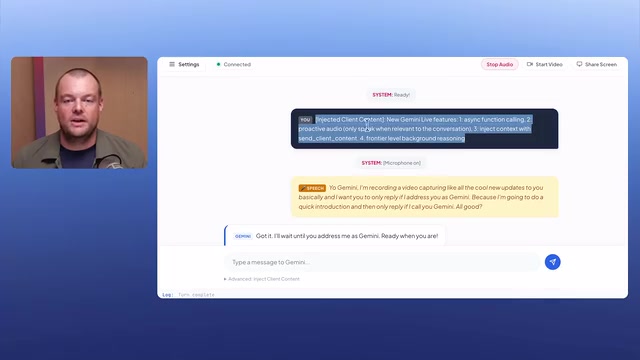
Gemini Live API Major Update: Frontier-Level Reasoning Comes to Native Audio for the First Time
Gemini Live API major update: Proactive Audio, context injection, async function calling, and frontier-level reasoning now available in native audio for voice AI.

Self-Hosted Whispersync: Automatic Progress Sync Between E-Books and Audiobooks
Concordance is an open-source self-hosted Whispersync alternative that syncs e-book and audiobook progress using KOReader, Calibre-Web-Automated, and Audiobookshelf.
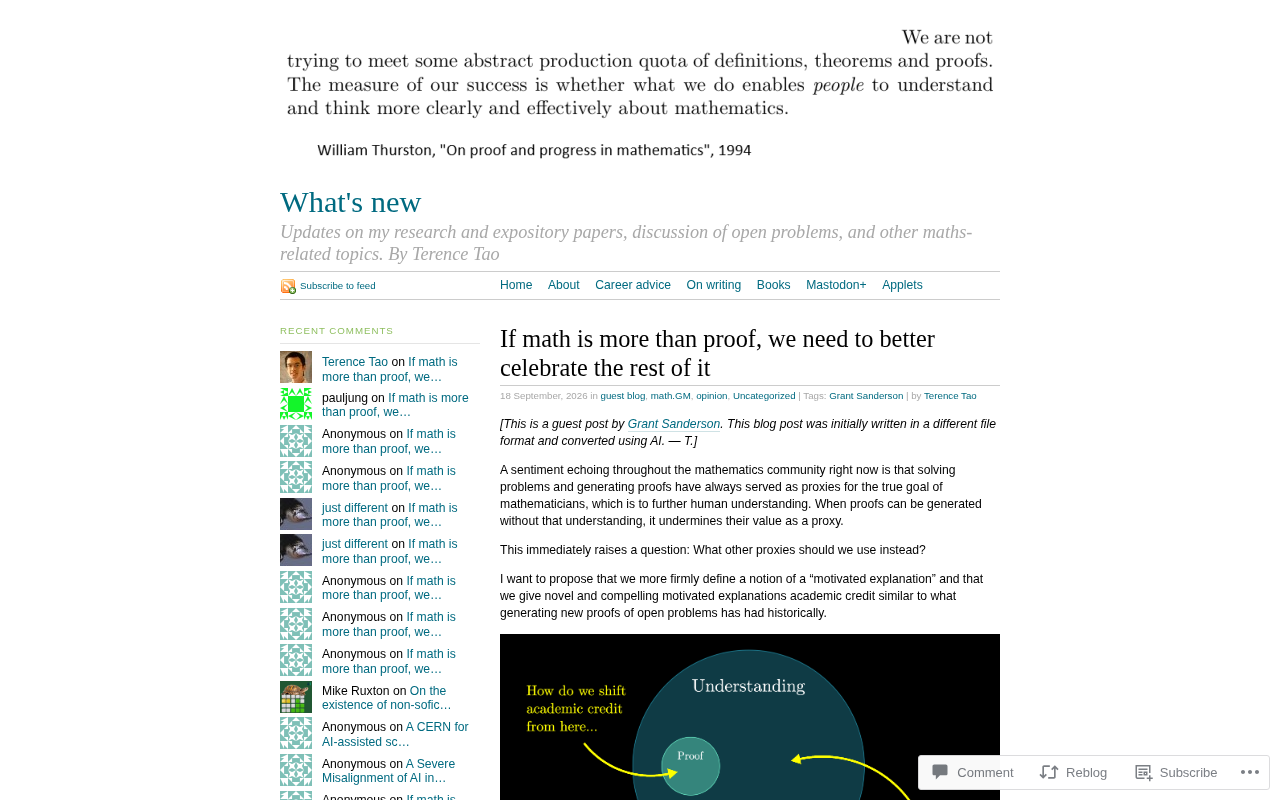
Terry Tao: Math Is More Than Proofs — How Should We Recognize Everything Else?
Fields Medal winner Terry Tao argues that math is far more than proofs — posing questions, building concepts, and conveying intuition matter too, especially as AI takes over routine verification.