Google Search Upgrade: Powered by Gemini 4 Hydrogen, Complex Questions Finally Get Answers

Google Search AI Mode, powered by Gemini 4 Hydrogen, shifts from keyword retrieval to complex problem solving.
The article covers a major upgrade to Google Search AI Mode, powered by Gemini 4 Hydrogen, aimed at transforming it from an information retrieval tool into a problem-solving engine. The upgrade focuses on three areas: holistically understanding complex queries with multiple sub-questions and implicit conditions, reorganizing related links around the question's context to support answer credibility, and making visual elements carry information rather than merely illustrate. Google chose to inject Gemini capabilities into its existing search product rather than build a standalone chatbot, preserving the link ecosystem while introducing reasoning—though actual answer quality and multimodal latency remain to be tested in real-world scenarios. For users, longer, more colloquial questions with conditions will get better answers.
The Next Stop for Search: From Keyword Matching to Complex Problem Solving
Since the birth of search engines, there has been a fundamental contradiction: users type in keywords, but what's in their heads is a complete question. When you ask "why has my cat been meowing at dawn lately, is it sick, should I rush to the vet," traditional search can only extract a pile of keywords and return a bunch of links you have to piece together yourself.
Google is trying to end this experience. According to the latest news, Google Search's AI Mode has received a major upgrade, powered under the hood by Gemini 4 Hydrogen, with the goal aimed squarely at "answering your most complex questions." This isn't a simple model iteration—it's a shift in the positioning of the search product: from an information retrieval tool to a problem-solving engine.

What Exactly Does Gemini 4 Hydrogen Change
According to officially disclosed information, this upgrade focuses on three levels: understanding complex queries, presenting related links, and the richness of visual responses.
A Better Grasp of What "Complex" Really Means
Complex questions typically contain multiple sub-questions, implicit conditions, and even emotional appeals. Gemini 4 Hydrogen lets AI Mode stop chopping questions into fragments when handling such queries, and instead attempt to understand intent as a whole. This means when you throw out a cross-domain, multi-constraint question, the system has a chance to deliver a structured, complete answer rather than making you jump back and forth between a dozen tabs.
Reorganizing Related Links
Notably, Google hasn't abandoned links just because answers are AI-generated. The upgraded AI Mode emphasizes "relevance" when presenting links—not ranked by authority or click-through rate, but organized around the context of the current question. This is actually addressing a core controversy of generative search: why should users trust the answers AI gives? The answer is traceable source support.
Visual Answers Are No Longer Just Illustrations
The phrase "richer visual responses" reveals another direction. In traditional search, image results and answer text are disconnected, whereas AI Mode attempts to make visual elements part of the answer itself—using charts and diagrams to carry information rather than decorate it.
A key challenge of generative search is "grounding": answers generated by large models may contain factual errors or hallucinations, and the link ecosystem is precisely the mechanism that mitigates this problem. The so-called traceable source support means that while the system provides a synthesized answer, it annotates which web pages the conclusion is based on, allowing users to click and verify against the original text. This both enhances credibility and preserves a certain traffic entry point for content creators. Unlike traditional ranking by authority or click-through rate, organizing links around the question's context means link selection serves the argumentative structure of the current answer rather than generalized popularity.
The Search War Behind This Upgrade
Placing this upgrade within the larger competitive landscape makes the logic clearer. Generative AI products are eroding the entry-point value of traditional search, and users are increasingly accustomed to asking questions directly to chatbots. Google's response strategy isn't to build a separate product from scratch, but to inject Gemini capabilities into search—a container that already has an enormous user base.
AI Mode's positioning is delicate: it retains the form of search and the link ecosystem while introducing the reasoning capabilities of large models. This is a safer path than "tearing it all down and starting over," and one more aligned with Google's business interests. For users, the benefit is not needing to change their habits; for the content ecosystem, links still have a chance to be distributed.
But the challenges are equally obvious. The answer quality for complex questions depends heavily on model reasoning capability, and whether Gemini 4 Hydrogen's actual performance can live up to the promise of "better answers" still needs real-world testing. Additionally, the enrichment of visual responses places higher demands on both the quality and latency of multimodal generation.
"AI Mode" can be understood as a hybrid form within the search product: it provides a conversational answer area driven by large models alongside traditional results pages, while still retaining links and sources. Compared with standalone chatbots, the advantage of this approach lies in reusing existing distribution channels and the advertising and content ecosystem, lowering user migration costs. The cost is that answer quality must simultaneously meet the higher demands of search scenarios for accuracy, timeliness, and verifiability—not just conversational fluency.
What It Means for Ordinary Users
In the short term, what you can expect is: entering longer, more colloquial questions—even ones with conditional clauses—into the search box, with a rising probability of getting useful answers. Scenarios that previously required repeated follow-up questions and piecing together answers yourself—such as making purchase decisions, troubleshooting, or understanding policy terms—will become the main beneficiary areas of AI Mode.
In the long term, the boundary between search and conversation will blur further. The signal Google's upgrade sends is clear: the search box won't disappear, but it will become an entry point that can understand complex questions. Whether that entry point ultimately leads to ten links or a complete answer depends on the reliability of the model's reasoning each time.
Multimodal generation refers to a model's ability to understand and generate content in multiple forms such as text, images, and charts. In search scenarios, making visual elements carry information itself requires the model not only to draw charts but also to ensure that the data and annotations in the charts are consistent with the textual conclusions, and to complete generation within acceptable latency. This imposes additional burdens on both reasoning speed and the rendering pipeline, and is one of the main engineering challenges when "richer visual responses" are implemented.
Related articles

OpenAI to Shut Down Agent Builder and Two Other Services on November 30, Developers Must Migrate Urgently
OpenAI will shut down Agent Builder, the evals dashboard, and reusable prompts on November 30; evals is already read-only. Here's the scope, OpenAI's migration paths (Agent SDK, PromptFu, your own code), and what developers should export and rebuild this week.
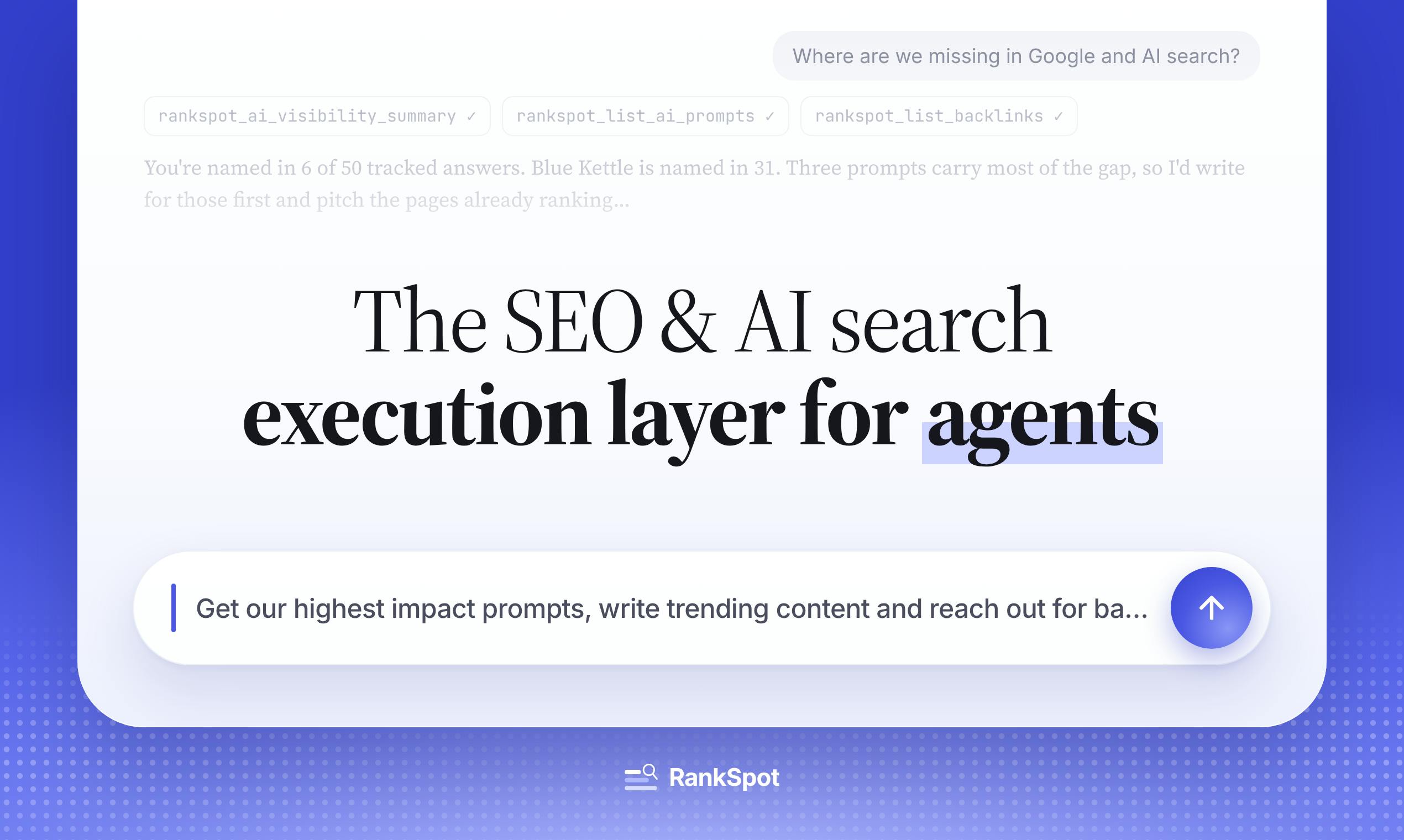
RankSpot: A Pay-Per-Use SEO & AI Search Execution Layer That Lets Agents Write, Publish, and Build Backlinks for You
RankSpot is an SEO & AI search execution layer for AI Agents. Connect via MCP to Claude or ChatGPT to write, publish & build backlinks. Pay-per-use, $3/article.

Appxiom: Giving AI Coding Assistants Production Context
Appxiom gives AI coding agents production context—crashes, jank, memory leaks, failed network calls—across Android, iOS, Flutter, KMP, and Web, ranking bugs by Goal Friction Impact.