Google WeatherNext 3: A Comprehensive Upgrade to the AI Weather Forecasting Model
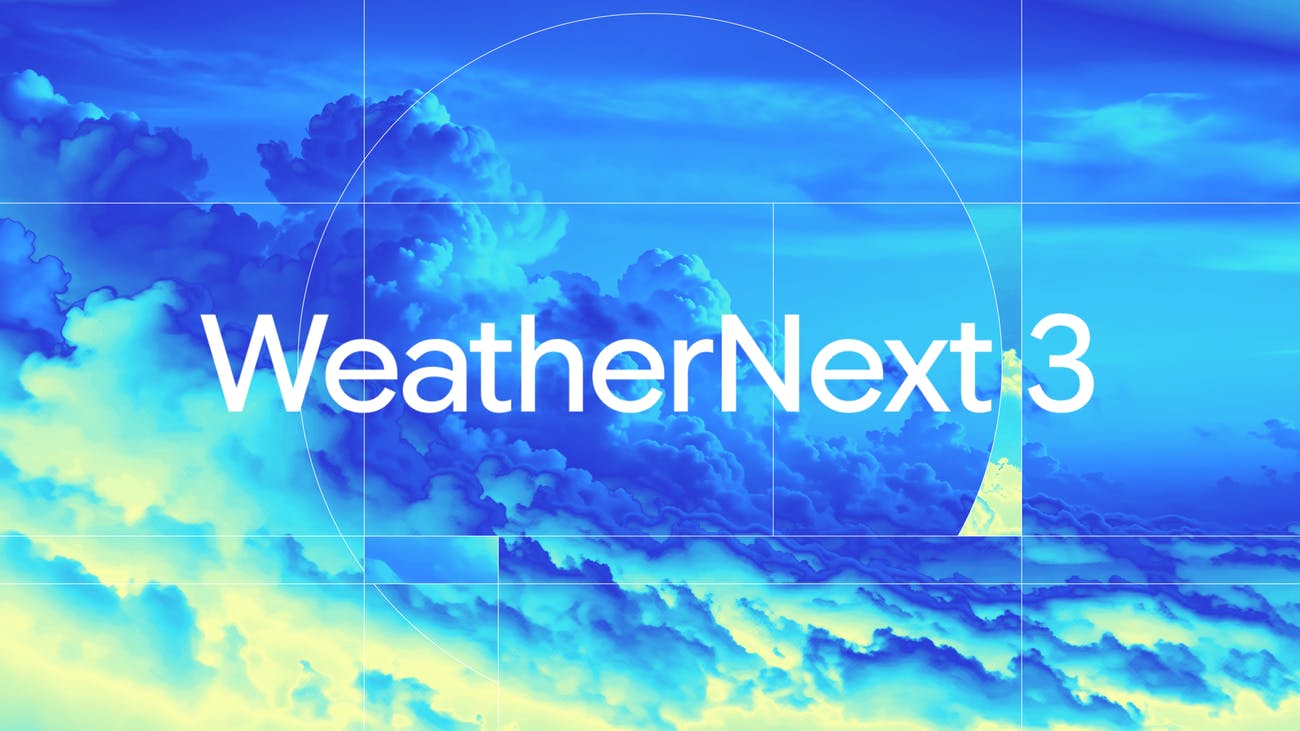
Google's WeatherNext 3 brings AI-powered weather forecasting with real-time data to billions of users.
Google has released WeatherNext 3, its most advanced AI weather forecasting model, featuring real-time satellite data integration, hourly forecast refreshes, higher spatial resolution, precise precipitation prediction, and dedicated clean energy variables. Deeply integrated across Google Search, Gemini, Maps, and Cloud, it marks a paradigm shift from traditional numerical weather prediction to data-driven AI inference, serving both everyday users and the energy industry.
Google Launches Its Most Advanced Global Weather AI Model
Google recently officially launched its flagship AI weather forecasting model, WeatherNext 3, on Product Hunt. Personally endorsed by Google CEO Sundar Pichai, the model quickly climbed to the top of the rankings after its debut. Google positions it as "the most advanced and accurate global weather AI model to date," marking another significant breakthrough in AI-powered meteorological prediction.
Unlike traditional Numerical Weather Prediction (NWP), which relies on large-scale physical equation simulations, WeatherNext 3 is built entirely on deep learning technology and can deliver more accurate forecasts in significantly less time. Traditional NWP originated in the 1950s, with its core principle being to treat the atmosphere as a fluid dynamics system and simulate its future state by solving a set of partial differential equations—including the Navier-Stokes equations, thermodynamic equations, and moisture conservation equations. This approach requires dividing the global atmosphere into millions of three-dimensional grid cells and performing numerical integration at each time step for every grid cell. For example, a single 10-day global forecast run by the European Centre for Medium-Range Weather Forecasts (ECMWF) requires hours of supercomputer time. AI approaches like WeatherNext bypass the process of explicitly solving physical equations, instead using deep neural networks to learn the statistical patterns of atmospheric evolution from decades of ERA5 reanalysis datasets. Once trained, the inference process takes only seconds to minutes. This trend is reshaping the entire meteorological industry—shifting from supercomputer-dependent numerical simulation to data-driven AI inference.
Comprehensive Core Capability Upgrades
Compared to its predecessors, WeatherNext 3 achieves significant improvements across multiple dimensions, directly impacting forecast practicality and accuracy.
Real-Time Satellite Data Integration
The new model integrates real-time satellite data for the first time, no longer relying solely on historical observations and fixed-cycle ground data. Instead, it can dynamically assimilate the latest weather observation information. Weather satellites fall into two main categories: geostationary orbit satellites (such as the U.S. GOES series and China's Fengyun-4) are positioned approximately 36,000 kilometers above the equator, providing continuous, uninterrupted observation of specific regions with temporal resolution as fine as once per minute; polar-orbiting satellites (such as the NOAA series and Europe's MetOp) operate at approximately 800 kilometers altitude, orbiting the Earth about 14 times per day to provide global coverage with high-resolution data. Traditional AI weather models typically use reanalysis data from institutions like ECMWF as initial fields, which incur delays of several hours due to quality control and assimilation processing. WeatherNext 3 directly taps into real-time satellite observation streams, capturing the latest changes in atmospheric conditions more quickly. For rapidly evolving extreme weather events—such as rapid typhoon intensification or sudden heavy rainfall—the inclusion of real-time data significantly improves the reliability of nowcasting. This real-time data assimilation capability was previously a key advantage of traditional NWP systems, and the AI model's achievement of this breakthrough marks a notable leap in technological maturity.
Hourly Refresh and Higher Spatial Resolution
WeatherNext 3 supports hourly forecast refreshes paired with higher spatial resolution, giving users weather information at a finer granularity. Spatial resolution refers to the smallest geographic unit size that a model can distinguish—early global AI weather models (such as GraphCast and Pangu-Weather) typically had a resolution of 0.25 degrees (approximately 25 kilometers), a scale at which many local weather phenomena like individual thunderstorm cells, valley breezes, and urban heat island effects cannot be effectively represented. Traditional forecasts typically update on 6-hour or longer cycles, while hourly refreshes mean users can perceive weather changes more promptly—particularly critical for time-sensitive industries like transportation, logistics, and agriculture.
Precise Precipitation Prediction
Precipitation prediction has always been one of the most challenging aspects of weather forecasting, especially the spatiotemporal positioning of localized heavy rainfall. The fundamental reason is that precipitation processes involve multi-scale nonlinear mechanisms including cloud microphysics, convective triggering, and orographic lifting—a rainstorm may span only tens of kilometers, last less than an hour, and feature extremely uneven precipitation distribution. Traditional NWP requires parameterization schemes to approximate these sub-grid scale processes, while AI models face the challenge of severely imbalanced precipitation event distributions in training data (extreme precipitation events are far rarer than no-precipitation or light-precipitation samples). WeatherNext 3 has specifically enhanced its precise precipitation prediction capability, likely combining higher-resolution training data, loss function designs tailored specifically for precipitation, and multi-source observation data fusion strategies. It can more accurately determine the timing, location, and intensity of rainfall, offering direct practical value for urban flood prevention, travel planning, and similar scenarios.
Dedicated Weather Variables for Clean Energy
WeatherNext 3 introduces clean energy-related variables, a noteworthy new direction. Electricity generation from renewable energy sources like solar and wind is highly dependent on weather conditions—photovoltaic generation is directly related to surface solar irradiance (including Global Horizontal Irradiance/GHI, Direct Normal Irradiance/DNI, and Diffuse Horizontal Irradiance/DHI), influenced by cloud cover, aerosol concentration, and solar elevation angle. Wind power generation depends primarily on wind speed at hub height (typically 80–120 meters), and the relationship between wind speed and wind power follows a cubic function, meaning small errors in wind speed prediction are amplified several-fold in energy output forecasts.
By providing dedicated forecast variables for clean energy scenarios, Google is clearly targeting the enormous energy industry market. In electricity market trading, power generators must submit generation plans hours to days in advance, and forecast deviations directly lead to financial losses or grid imbalance penalties. Grid dispatch, energy trading, and energy storage management all require precise weather forecasting as a basis for decision-making. According to the International Energy Agency (IEA), global renewable energy generation exceeded 30% of total generation in 2023 and is expected to surpass 50% by 2030. In high-penetration renewable energy grid integration scenarios, precise weather forecasting is crucial for grid frequency stability, energy storage system dispatch, and cross-regional power allocation. Every 1% improvement in forecast accuracy can save billions of dollars in dispatch costs for the global energy system. As the global energy mix accelerates its transition toward renewables, the commercial potential of AI weather models in this domain cannot be underestimated.
Deep Integration with Google's Product Ecosystem
The greatest strategic value of WeatherNext 3 lies in its comprehensive integration into Google's product matrix, spanning:
- Google Search: Users can get AI model forecast results directly when searching for weather
- Gemini: Google's AI assistant gains weather capabilities for more natural weather interactions
- Google Maps: Combines geographic location to provide weather information better suited to travel needs
- Google Maps Platform: Opens weather data capabilities to developers
- Google Cloud: Provides scalable meteorological AI services for enterprise customers
This "develop once, deploy everywhere" strategy demonstrates Google's ability to rapidly transform cutting-edge AI research into scaled applications. The leap from academic papers to real services for billions of users involves massive engineering challenges including model compression, inference latency optimization, real-time data pipeline construction, and multi-platform adaptation. For everyday users, this means access to top-tier AI weather forecasting without installing a dedicated weather app—simply through the Google products they already use daily.
Industry Significance of AI Weather Forecasting
The WeatherNext series represents a milestone achievement from Google DeepMind's sustained investment in meteorological AI. DeepMind's efforts in this field began with the MetNet series of models, followed by the landmark GraphCast model in 2023. GraphCast is based on a Graph Neural Network (GNN) architecture that models the Earth's surface and atmosphere as a multi-layered graph structure, propagating information between nodes via message-passing mechanisms. In ECMWF's WeatherBench 2 benchmark tests, its 10-day forecast accuracy surpassed the then state-of-the-art HRES system on over 90% of metrics. Around the same time, Huawei's Pangu-Weather adopted a 3D Swin Transformer architecture, and NVIDIA's FourCastNet employed Adaptive Fourier Neural Operators (AFNO), each showcasing different technical approaches and driving rapid progress across the entire field.
In recent years, AI weather models have demonstrated two core advantages over traditional numerical forecasting: higher computational efficiency (prediction speeds thousands of times faster than traditional methods) and comparable or even superior prediction accuracy. The foundation of this transformation is the combination of vast historical meteorological data with deep learning architectures. AI models can learn the complex patterns of weather evolution from massive datasets without explicitly solving physical equations. Although AI models still face challenges with extremely rare events (due to scarce training samples, models tend to regress toward climatological means), their performance is sufficiently reliable for routine forecasts and mainstream weather scenarios.
With WeatherNext 3's deep integration into Google's ecosystem, AI weather forecasting is moving from the laboratory into the daily lives of billions of users, and the paradigm shift in meteorological prediction is substantively underway.
Summary
WeatherNext 3 brings together real-time satellite data, hourly refreshes, higher resolution, precise precipitation prediction, and clean energy variables into a unified system, reaching new heights in both accuracy and practicality. Through scaled deployment across Search, Gemini, Maps, and other products, Google is making cutting-edge meteorological AI capabilities accessible to every ordinary user. As the model continues to iterate, AI may fundamentally change the way we understand and respond to weather.
Related articles
OpenAI Declares the AGI Era Has Arrived: Conceptual Controversies and Technical Realities
OpenAI launches GPT-6 Astra claiming the AGI era has arrived, sparking controversy. Deep analysis of AGI definition ambiguity, technical progress realities, industry standards battle, and practical impacts on users and developers.
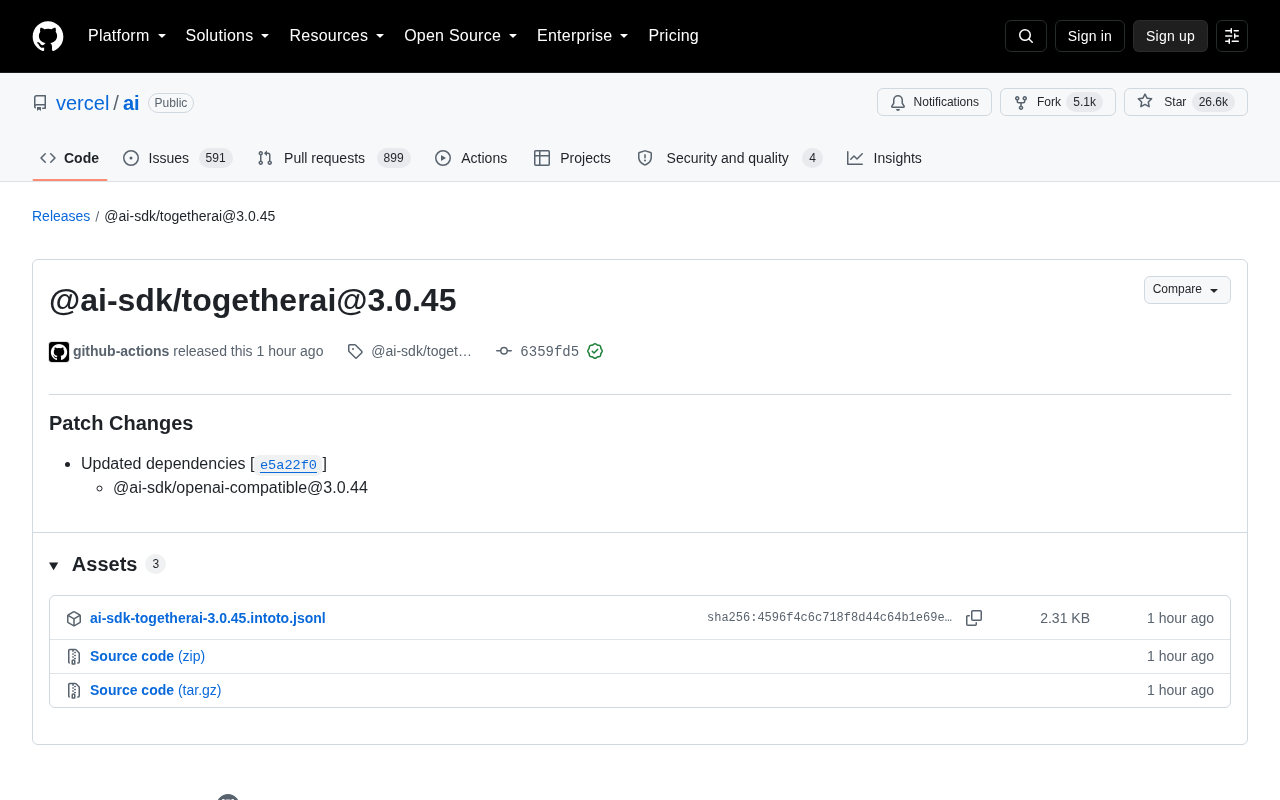
Vercel AI SDK TogetherAI Adapter 3.0.45 Update Analysis
Analysis of @ai-sdk/togetherai 3.0.45 patch update covering dependency sync, OpenAI compatibility layer architecture, and semantic versioning strategy in Vercel AI SDK.
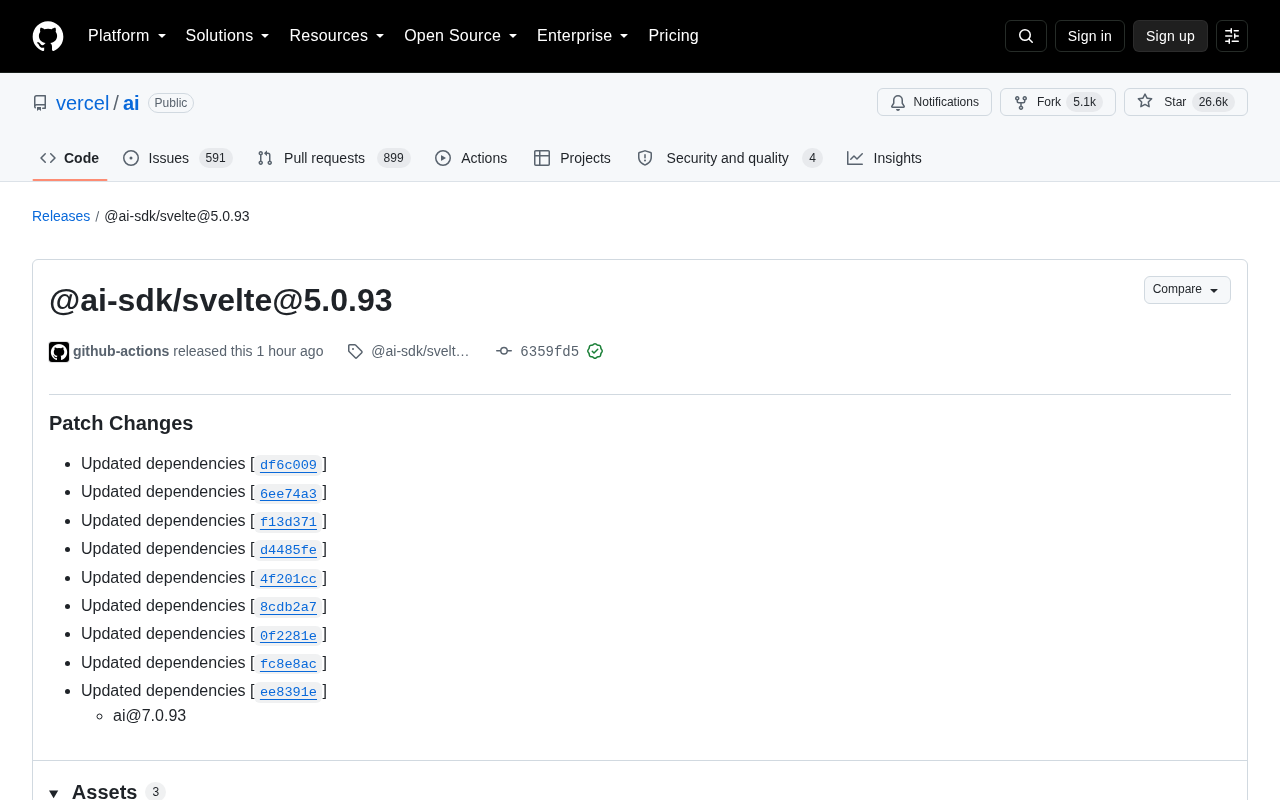
Deep Dive into Vercel AI SDK Svelte 5.0.93 Release Update
In-depth analysis of Vercel AI SDK Svelte 5.0.93 patch update, covering multi-framework adaptation, dependency sync, and automated release pipelines for Svelte AI app development.